
Anaerobic Digestion Technology: Recovering Energy from Kitchen Refuse and Industrial Food Waste
As municipal populations expand and commercial food processing operations scale up, managing organic discards has become a major environmental priority. Traditional disposal practices like landfilling and open dumping release harmful methane emissions and waste valuable resources.
Anaerobic digestion (AD) technology offers a transformative solution by converting kitchen refuse and industrial food waste into clean renewable energy and nutrient-rich bio-fertilizer. This comprehensive guide explores how modern digestion systems recover high-yield energy from organic waste streams while advancing circular economy goals.
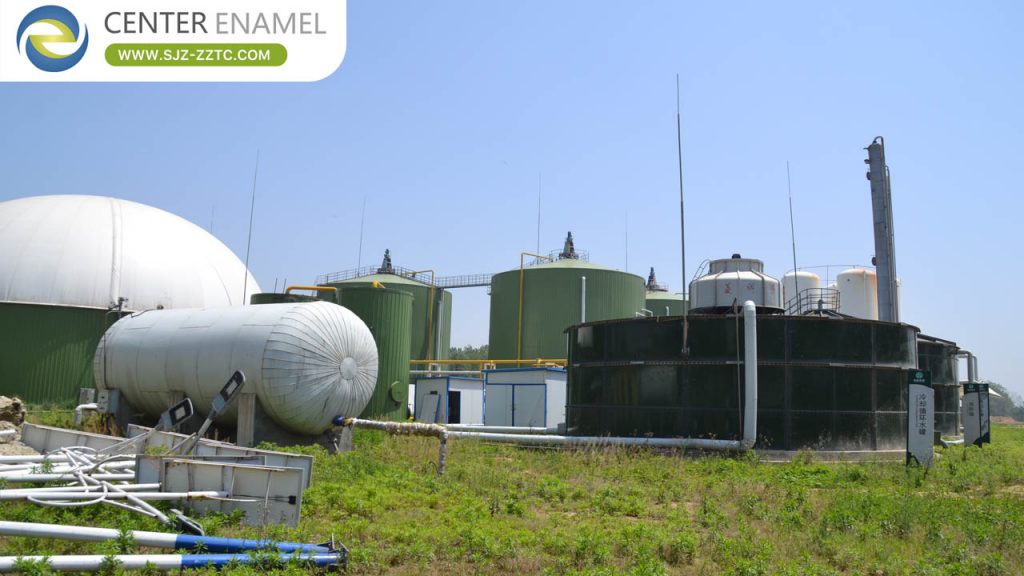
The Challenge and Opportunity of Food Waste Streams
Organic waste streams generated by residential kitchens, restaurants, food processing plants, and institutional cafeterias possess unique characteristics that require specialized technical solutions:
- High Moisture and Biodegradability: Food waste typically contains high moisture content (often 75% to 90%) and a dense concentration of volatile solids, making it highly reactive and biodegradable.
- Rapid Acidification Risks: Because microorganisms break down the starches and sugars in food waste rapidly, volatile fatty acids (VFAs) can accumulate quickly. Without proper buffering or co-digestion, this rapid acid spike can cause the reactor to "sour."
- Contamination Challenges: Commercial and municipal food waste often contains packaging contaminants such as plastics, glass, and metals, which require rigorous front-end sorting and maceration.
How Anaerobic Digestion Recovers Energy from Food Waste
Transforming kitchen refuse and industrial food waste into power involves a tightly controlled biological and engineering sequence:
- Pre-Treatment and Depackaging: Raw waste undergoes mechanical sorting, depackaging, screening, and wet maceration to eliminate inorganic contaminants and create a pumpable organic slurry.
- Co-Digestion and Nutrient Balancing: To prevent acidification and optimize microbial performance, food waste is frequently co-digested with carbon-rich agricultural materials or wastewater sludge, establishing a balanced carbon-to-nitrogen (C:N) ratio of 20:1 to 30:1.
- Advanced Bioreactor Fermentation: The conditioned slurry enters a sealed, heated bioreactor (such as a Continuous Stirred-Tank Reactor [CSTR], thermophilic packed-bed system, or high-solid dry digester). Specialized anaerobic bacteria and methanogenic archaea execute four core phases: hydrolysis, acidogenesis, acetogenesis, and methanogenesis.
- Biogas Upgrading and Energy Generation: The resulting biogas—consisting typically of 50% to 75% methane ($CH_4$) and 25% to 45% carbon dioxide ($CO_2$)—is collected in reactor gasholders. It is then channeled into Combined Heat and Power (CHP) engines for electricity and heat, or upgraded into high-purity biomethane (Renewable Natural Gas) for grid injection.
Comparative Data Table: Food Waste Digestion Technologies
| Technology Parameter | Complete Mix CSTR Systems | Thermophilic Packed-Bed Reactors | High-Solid Dry Digesters |
| Ideal Feedstock Type | Pumpable liquid slurries and screened food waste | High-strength liquid waste and segregated kitchen refuse | Stackable, high-solid organic waste (20%–40% TS) |
| Operating Temperature | Mesophilic (37°C) or Thermophilic (52°C) | High-temperature thermophilic environment | Mesophilic or thermophilic batch chambers |
| Hydraulic Retention Time | 20 to 30 days | Rapid hydraulic throughput (< 10 days) | 3 to 4 weeks (Batch cycle basis) |
| Energy Recovery Efficiency | High methane yield with stable co-digestion | Excellent organic loading capacity in compact footprints | Processes bulky organic waste without excess water dilution |
Frequently Asked Questions (FAQ)
Q1: Why is anaerobic digestion preferred over landfilling for kitchen and food waste?
A: Anaerobic digestion captures methane gas in a controlled, sealed environment to generate clean renewable energy and fertilizer, whereas landfills allow fugitive greenhouse gas emissions to escape into the atmosphere while wasting valuable nutrients.
Q2: How do industrial facilities prevent food waste digesters from turning sour?
A: Food waste degrades rapidly into volatile fatty acids (VFAs). Facilities prevent acidification by monitoring the FOS/TAC stability ratio, utilizing co-digestion with alkaline materials like manure, and carefully controlling the daily organic loading rate.
Q3: What happens to the final byproduct after biogas is extracted from food waste?
A: The residual material, known as digestate, is processed and stored in containment units. Because it is rich in bioavailable nitrogen, phosphorus, and potassium, it is safely recycled as a high-grade organic bio-fertilizer in agriculture.