
Biogas Production from Restaurant Waste: Turning Commercial Kitchen Scraps into Clean Power
The global hospitality and food service industry generates millions of tons of organic discards annually. From uneaten plate scraps and vegetable trimmings to commercial cooking oils and expired ingredients, restaurant waste represents a major municipal disposal challenge. When sent to landfills, this high-energy organic matter decomposes anaerobically under uncontrolled conditions, releasing massive quantities of fugitive greenhouse gases.
Biogas production from restaurant waste offers a powerful circular economy solution. By processing commercial kitchen refuse through advanced anaerobic digestion (AD), food service operations and municipal waste facilities can capture fugitive emissions, generate baseload renewable energy, and recover nutrient-rich bio-fertilizer.
The Unique Properties of Restaurant Waste as a Feedstock
Unlike homogeneous agricultural manure or woody crop residues, restaurant waste has extreme chemical and physical characteristics that require precise engineering and operational management:
- High Energy Density: Restaurant waste is exceptionally rich in soluble carbohydrates, starches, animal proteins, and fats, oils, and greases (FOGs), yielding significantly higher methane volumes per ton compared to farm slurry.
- High Moisture and Rapid Biodegradability: With a moisture content often exceeding 80%, kitchen refuse is fluid and degrades rapidly, allowing microorganisms to convert it quickly into biogas.
- The Acidification Risk (Sourness): Because sugars and starches break down swiftly into volatile fatty acids (VFAs), overloading a digester with pure restaurant waste can cause a sudden pH drop, stalling methanogenic activity.
- Contamination Challenges: Commercial kitchen refuse frequently contains non-organic contaminants such as plastic packaging, paper napkins, aluminum foil, and cutlery, requiring rigorous front-end sorting.
The Multi-Step Processing Pipeline
Converting restaurant waste into clean energy requires a specialized engineering workflow:
- Front-End Sorting and Depackaging: Raw waste undergoes manual or mechanical screening, magnetic separation, and industrial depackaging to remove inert debris like plastics and metals.
- Wet Maceration and Slurry Blending: Cleaned food scraps are shredded and mixed with water or recycled liquid digestate inside reception tanks to form a uniform, pumpable organic slurry.
- Co-Digestion for Process Stability: To neutralize the rapid acidification risk of restaurant waste, operators practice co-digestion—mixing high-energy kitchen scraps with nitrogen-buffered agricultural manure or municipal wastewater sludge to optimize the Carbon-to-Nitrogen (C:N) ratio (20:1 to 30:1).
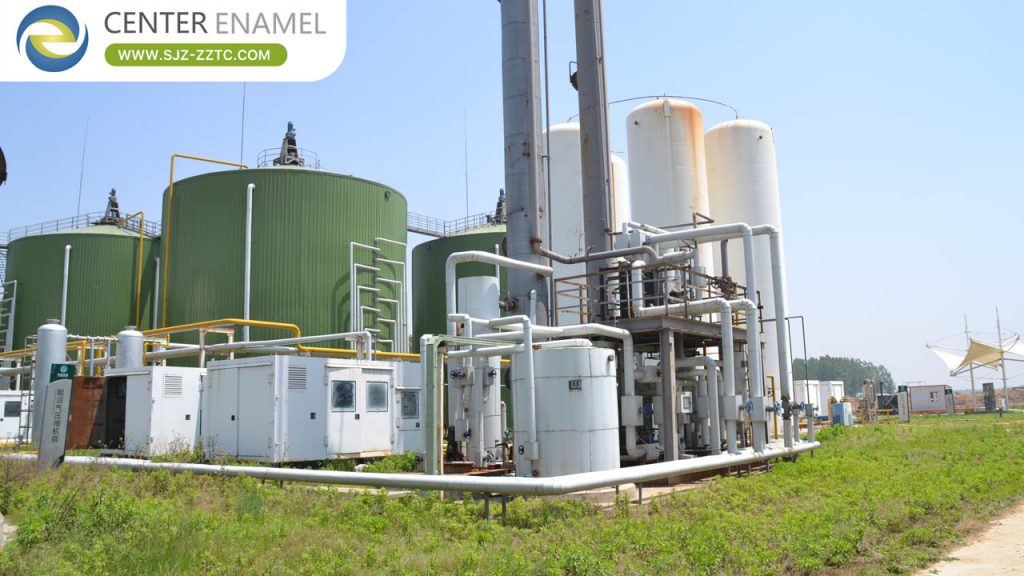
- Anaerobic Digestion & Gas Upgrading: The conditioned slurry is pumped into heated, sealed bioreactors (such as Continuous Stirred-Tank Reactors). Specialized microbial communities execute hydrolysis, acidogenesis, acetogenesis, and methanogenesis, producing high-purity biogas for Combined Heat and Power (CHP) engines or grid injection.
Comparative Data Table: Restaurant Waste vs. Traditional Substrates
| Substrate Parameter | Restaurant Kitchen Waste | Livestock Manure | Co-Digested Blend (Restaurant Waste + Manure) |
| Methane Potential | Very High (450–600 $m^3$/ton VS) | Moderate (200–350 $m^3$/ton VS) | High and Balanced |
| Digestion Speed | Extremely Fast | Slow to Moderate | Steady and Controlled |
| System Acidification Risk | High (Severe VFA accumulation risk) | Low (Natural ammonium buffering) | Neutralized via natural buffering |
| Pre-Treatment Requirements | Heavy sorting, depackaging, and maceration | Minimal screening | Moderate blending |
Frequently Asked Questions (FAQ)
Q1: Can pure restaurant waste be fed directly into an anaerobic digester?
A: Feeding pure restaurant waste directly into a digester is rarely recommended. Because it degrades so rapidly into volatile fatty acids, it can cause the reactor to acidify ("sour") and crash. Successful facilities use co-digestion, mixing restaurant waste with manure or wastewater sludge to maintain stable pH levels.
Q2: How do biogas plants handle fats, oils, and greases (FOG) from restaurant kitchens?
A: Fats, oils, and greases have an extremely high methane potential. However, in excessive concentrations, they can coat microbial cells or cause severe reactor foaming. Facilities manage FOG by metering controlled, continuous doses into the digester alongside solid organic slurries.
Q3: What happens to non-organic packaging mixed into restaurant food waste?
A: Modern commercial biogas facilities utilize advanced front-end pre-treatment systems—including industrial depackagers, hydro-cyclones, and mechanical screens—to separate, wash, and eject plastics, paper, and metal contaminants before the organic fraction enters the anaerobic reactor.