
Cow Dung to Biogas for Dairy Farms: Turning Waste into Clean Power
Intensive dairy farming operations generate vast quantities of daily bovine manure. Managing this massive slurry stream traditionally requires large open-air storage lagoons, which pose severe environmental challenges, including heavy odor emissions, groundwater contamination risks, and unmanaged releases of fugitive methane and nitrous oxide.
Transitioning from passive storage to active anaerobic digestion changes this equation entirely. Converting cow dung to biogas for dairy farms transforms a costly waste management burden into a high-value operational asset, providing on-site renewable energy, reducing greenhouse gas emissions, and producing high-grade organic bio-fertilizer.
Why Dairy Farms Provide an Ideal Biogas Ecosystem
Dairy farming operations possess unique logistical and biological advantages that make them prime candidates for successful commercial biogas production:
- Consistent Substrate Supply: Unlike seasonal agricultural residues, dairy cows produce a steady, year-round volume of manure, ensuring continuous, predictable feedstock supply for the biodigester.
- Natural pH Buffering Capacity: Bovine manure is naturally rich in ammonium and carbonates, offering excellent biochemical buffering that protects the reactor from rapid acidification (sourness) even during load fluctuations.
- Co-Digestion Synergy: While raw cow dung has a moderate energy density, dairy farms are frequently situated near agricultural crop production (such as corn silage) or regional food processing facilities. Co-digesting manure with carbon-rich co-substrates dramatically boosts daily methane yield.
Engineering Infrastructure for Dairy Biogas Plants
Scaling biogas production to match a dairy farm's herd size requires robust, industrial-grade engineering infrastructure:
- Collection and Pumping: Raw slurry is scraped or flushed from barns into pre-pit reception tanks, where mechanical screens remove coarse bedding materials (like sand or long straw).
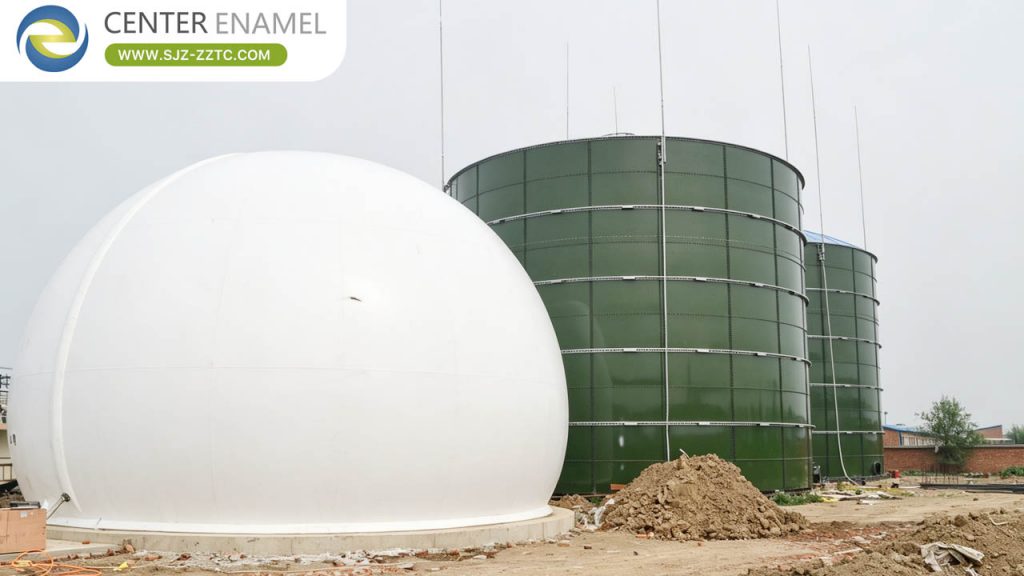
- Anaerobic Bioreactors: Modern dairy biogas plants utilize sealed, continuously heated reactors—predominantly Continuous Stirred-Tank Reactors (CSTR) built with high-integrity Glass-Fused-to-Steel (GFS) or reinforced concrete tanks. These tanks resist hydrogen sulfide corrosion and ensure decades of structural safety.
- Biogas Upgrading & Combined Heat and Power (CHP): Collected biogas is scrubbed of moisture and hydrogen sulfide (H_2S) before being routed into CHP engines to generate electricity and thermal heat for farm operations, or upgraded into Renewable Natural Gas (RNG) for pipeline injection.
Comparative Data Table: Dairy Farm Scale vs. Biogas Configuration
| Dairy Herd Size | Typical Daily Slurry Volume | Recommended Digester Technology | Primary Energy Utilization |
| Small-Scale (100–300 cows) | 10 to 30 m3/day | Fixed-dome or small-scale CSTR | On-site cooking, heating, or small generator |
| Mid-Scale (500–1,500 cows) | 50 to 150 m3/day | Single-stage CSTR with GFS tanks | Combined Heat and Power (CHP) for farm electricity |
| Large-Scale (2,000+ cows) | 200+ m3/day | Dual-stage CSTR with co-digestion & RNG upgrading | Grid-injection biomethane or heavy fleet fuel |
Frequently Asked Questions (FAQ)
Q1: How much electricity can a dairy farm generate from cow dung biogas?
A: Energy output depends directly on herd size and feed composition. On average, manure from a single dairy cow combined with standard co-substrates can generate enough daily biogas to produce roughly 2 to 3 kWh of electricity, scaling significantly higher for medium-to-large commercial herds.
Q2: What happens to the leftover manure after biogas is extracted?
A: The residual material, known as digestate, is stored in secondary containment tanks. Because anaerobic digestion preserves essential macro-nutrients (nitrogen, phosphorus, potassium) while drastically reducing odor and pathogen loads, digestate serves as a superior, high-grade organic fertilizer for farm feed crops.
Q3: Can sand bedding used in dairy barns damage biogas equipment?
A: Yes. Traditional sand bedding settles at the bottom of digester tanks and causes abrasive wear on pumps, agitators, and pipes. Modern dairy biogas plants either install mechanical sand-grit removal systems on the front-end or transition to recycled manure solids or organic bedding alternatives.