
Demystifying the Membrane Bioreactor (MBR) Working Principle: How It Works
As modern wastewater treatment evolves toward higher efficiency and smaller footprints, understanding the mechanics behind advanced technologies is essential. Among them, the Membrane Bioreactor (MBR) has become the gold standard for high-purity water reclamation. By combining biological organic breakdown with physical membrane filtration, MBR systems bypass the limitations of traditional settling tanks.
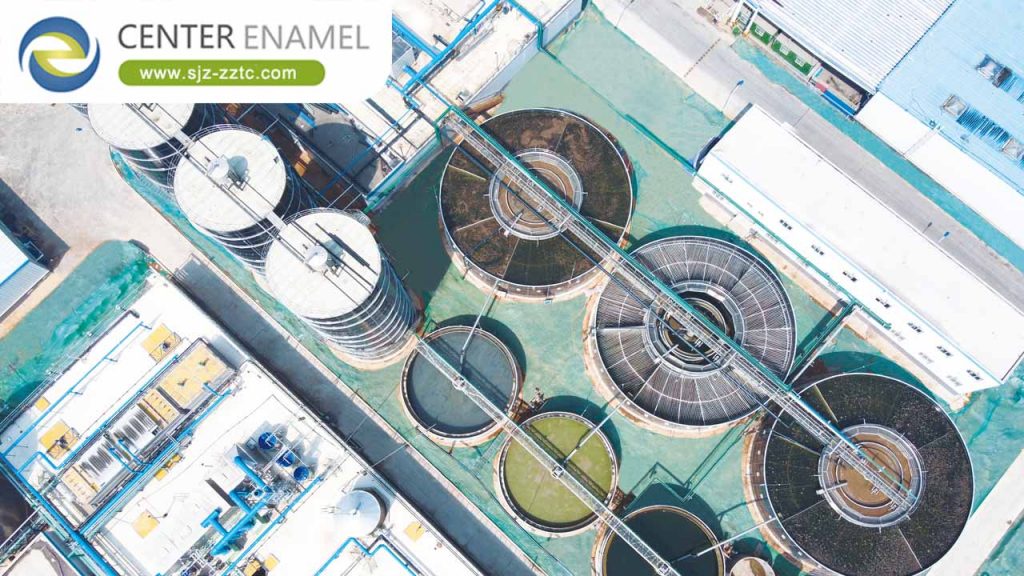
Exploring the membrane bioreactor working principle reveals how biological science and advanced materials engineering integrate to produce crystal-clear effluent.
Core Working Principle of a Membrane Bioreactor
At its core, an MBR system operates on a dual-stage mechanism that merges biological wastewater degradation with low-pressure physical membrane separation:
- Biological Decomposition (Suspended Growth): Wastewater enters an aeration basin where a dense concentration of active microorganisms (bacteria and protozoa) metabolizes dissolved organic pollutants, converting Biochemical Oxygen Demand (BOD) and Chemical Oxygen Demand (COD) into carbon dioxide, water, and new microbial biomass.
- Physical Membrane Separation: Instead of routing the mixture to a gravity settling clarifier, the treated water (mixed liquor) is drawn through microfiltration (MF) or ultrafiltration (UF) membrane modules. The microscopic membrane pores act as an absolute physical barrier, retaining all suspended solids, bacteria, and pathogens inside the reactor while letting purified water pass through.
Step-by-Step MBR Operational Mechanism
The day-to-day operation of an MBR facility follows a continuous, highly controlled workflow:
- Step 1: Screening and Pre-Treatment: Raw wastewater passes through fine mechanical screens (typically 1 to 2 mm) to remove hair, plastics, and debris that could puncture or clog the delicate membrane fibers.
- Step 2: Biological Aeration & High MLSS Maintenance: In the bioreactor, continuous aeration supplies dissolved oxygen for aerobic respiration. Unlike conventional plants, MBRs maintain very high Mixed Liquor Suspended Solids (MLSS) concentrations—ranging from 8,000 to 12,000 mg/L—allowing the system to process massive organic loads in a compact space.
- Step 3: Membrane Filtration via Vacuum Suction: Submerged hollow-fiber or flat-sheet membrane modules use gentle vacuum suction to pull permeate water through the membrane walls. Because the pore sizes range from $0.04\text{ }\mu\text{m}$ to $0.4\text{ }\mu\text{m}$, suspended particles, colloids, and microbes cannot cross.
- Step 4: Continuous Air Scouring and Fouling Control: Air diffusers mounted directly beneath the membrane modules continuously release coarse air bubbles. This upward air-water shear force scours the membrane surface, preventing organic and inorganic matter from building up (cake layer formation).
Comparative Data Table: MBR Working Characteristics vs. Conventional Activated Sludge
| Operational Parameter | Membrane Bioreactor (MBR) Principle | Conventional Activated Sludge (CAS) Principle |
| Solid-Liquid Separation | Absolute physical barrier via MF/UF membranes | Gravity settling in secondary clarifiers |
| Biomass Density (MLSS) | High (8,000 – 12,000+ mg/L) | Low to moderate (2,000 – 4,000 mg/L) |
| Hydraulic Retention Time (HRT) | Shorter (3 to 5 hours) | Longer (6 to 8 hours) |
| Footprint Requirement | Compact (30% to 50% smaller footprint) | Large spatial requirement for clarifiers |
| Effluent Quality (BOD / TSS) | Exceptional (BOD < 5 mg/L, TSS near zero) | Standard (BOD 10–20 mg/L, TSS 10–20 mg/L) |
Frequently Asked Questions (FAQ)
Q1: How do membranes replace secondary clarifiers in the MBR working process?
A: In an MBR, microfiltration or ultrafiltration membrane modules are submerged directly in the aeration tank. They act as an absolute physical sieve that blocks all suspended biomass and solids, eliminating the need for gravity settling clarifiers entirely.
Q2: What is the purpose of air scouring in MBR systems?
A: Air scouring involves continuous air bubble generation beneath the membrane modules. The resulting upward fluid turbulence sweeps across the membrane surfaces, preventing suspended solids and biological debris from forming a clogging cake layer.
Q3: Why can MBR systems operate at much higher MLSS concentrations than traditional plants?
A: Traditional plants are limited by the settling velocity of sludge in clarifiers (high MLSS causes sludge wash-out). Because MBRs use physical membranes rather than gravity settling, they can sustain high microbial densities safely, boosting treatment capacity within a smaller tank.