
Process for Producing Biogas by Dry Fermentation of Crop Straws: A Complete Engineering Guide
Agricultural crop residues—such as wheat, corn, and rice straw—represent an enormous, underutilized energy reserve. However, processing fibrous agricultural biomass in traditional wet anaerobic digesters frequently triggers operational bottlenecks, such as severe floating crust formation, intensive water consumption, and high heating energy requirements.
To overcome these hurdles, modern bioenergy engineering utilizes dry fermentation (also known as solid-state anaerobic digestion or high-solid AD). The process for producing biogas by dry fermentation of crop straws allows facilities to handle stackable, fibrous agricultural materials efficiently, transforming waste into clean renewable energy and high-grade organic bio-fertilizer without massive water dilution.
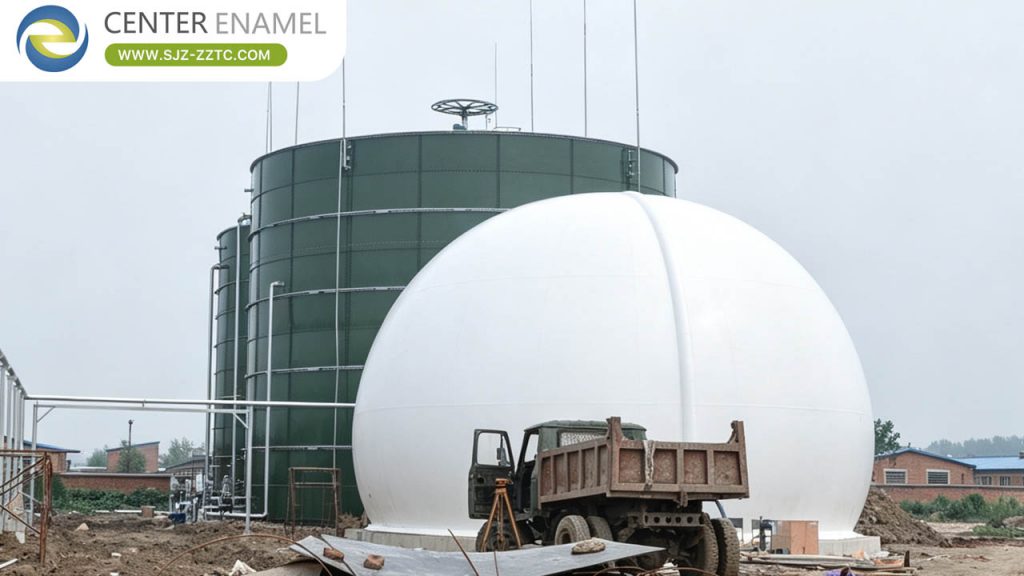
What is Dry Fermentation?
Unlike wet anaerobic digestion systems—which operate at a total solids (TS) concentration below 12%—dry fermentation processes organic biomass with a Total Solids content ranging from 20% to 40%.
- Solid-State Matrix: The straw remains stackable and retains its structural integrity rather than forming a fluid slurry.
- Inoculation-Driven Biology: Because dry systems do not rely on mechanical pumps to mix fluid slurries, they utilize leachate percolation and active digestate inoculation to distribute microorganisms evenly throughout the solid biomass matrix.
Step-by-Step Process for Dry Fermentation of Straws
Producing biogas from crop residues via dry fermentation follows a structured, multi-stage engineering pipeline:
1. Feedstock Preparation and Pre-Treatment
Raw crop straw is collected, shredded, and chopped into optimal lengths (typically 50 mm to 100 mm). While dry fermentation handles fibrous material better than wet systems, minor mechanical pre-treatment or thermal softening helps disrupt the tough lignocellulosic matrix, accelerating microbial hydrolysis.
2. Inoculation and Blending
To jump-start anaerobic microbial activity, the chopped straw is thoroughly blended with active "inoculum"—mature, nutrient-rich digestate from a running reactor. This introduces an established consortium of hydrolytic, acidogenic, acetogenic, and methanogenic microorganisms directly to the fresh carbon source.
3. Loading into Solid-State Digesters (Batch or Continuous)
The inoculated straw is loaded into industrial dry fermentation units, most commonly garage-type batch digesters or specialized plug-flow reactors:
- Sealed Conditions: The heavy industrial doors are sealed airtight to establish a strict oxygen-free environment.
- Leachate Percolation: Nutrient-rich liquid from a collection tank is sprayed over the stacked straw matrix, trickling down through the biomass to maintain moisture (55%–65%), regulate temperature (mesophilic or thermophilic), and wash out metabolic inhibitors.
4. Anaerobic Bioconversion (The Fermentation Phase)
Inside the sealed solid-state chamber, microorganisms break down the complex carbohydrates (cellulose and hemicellulose) over a typical batch cycle of 21 to 28 days, converting the organic carbon into high-quality raw biogas (primarily methane and carbon dioxide).
5. Gas Collection and Digestate Valorization
- Biogas Upgrading: The generated biogas is captured via roof gas holders, cleaned of moisture and hydrogen sulfide (H2S), and routed to Combined Heat and Power (CHP) engines or upgrading skids.
- Digestate Extraction: After the batch cycle completes, the spent straw material is unloaded. A portion is recycled as active microbial inoculum, while the remainder is processed into solid organic fertilizer.
Comparative Data Table: Wet Digestion vs. Dry Fermentation for Straw
| Operational Parameter | Wet Anaerobic Digestion (CSTR) | Dry Fermentation (Solid-State AD) |
| Total Solids (TS) Content | Low (4% to 12% TS) | High (20% to 40% TS) |
| Water Consumption | Very High (Requires heavy dilution) | Low (Primarily leachate recirculation) |
| Handling of Fibrous Straw | Prone to floating crusts and clogging | Excellent; handles stackable, bulky straw easily |
| System Configuration | Continuous liquid stirred tanks | Batch garage-type or continuous plug-flow systems |
| Energy Footprint for Heating | Higher (due to large liquid volumes) | Lower (optimized thermal mass of solids) |
Frequently Asked Questions (FAQ)
Q1: Why is dry fermentation preferred over wet digestion for processing crop straws?
A: Crop straws are bulky, fibrous, and lightweight. In wet digesters, raw straw tends to float to the top and form dense scum layers that clog pumps and agitators. Dry fermentation (solid-state AD) operates at 20% to 40% total solids, allowing it to process stackable biomass directly without requiring heavy water dilution or intensive fluid mixing.
Q2: How do microorganisms reach the straw in a dry fermentation system if it is not pumped?
A: Instead of mechanical mixing, dry fermentation systems utilize leachate percolation. Active, nutrient-rich liquid is continuously sprayed over the stacked straw matrix, trickling downward to supply moisture, distribute active microbes, and maintain optimal biological activity throughout the solid biomass.
Q3: How long does a standard dry fermentation batch cycle take for crop residues?
A: A typical batch dry fermentation cycle for agricultural crop residues lasts between 21 and 28 days, depending on the operating temperature (mesophilic at 37°C or thermophilic at 55°C) and the level of pre-treatment applied to break down the straw's lignocellulosic structure.