
What Are the Different Types of Anaerobic Digesters? A Comprehensive Engineering Guide
Anaerobic digestion (AD) systems convert organic waste—such as livestock manure, municipal wastewater sludge, and commercial food waste—into renewable biogas and nutrient-rich fertilizer. Because waste streams vary significantly in moisture content, viscosity, and chemical composition, engineers have developed a wide array of reactor configurations.
Understanding the types of anaerobic digesters is essential for project developers, environmental engineers, and agricultural planners seeking to optimize operational efficiency and maximize methane yields.
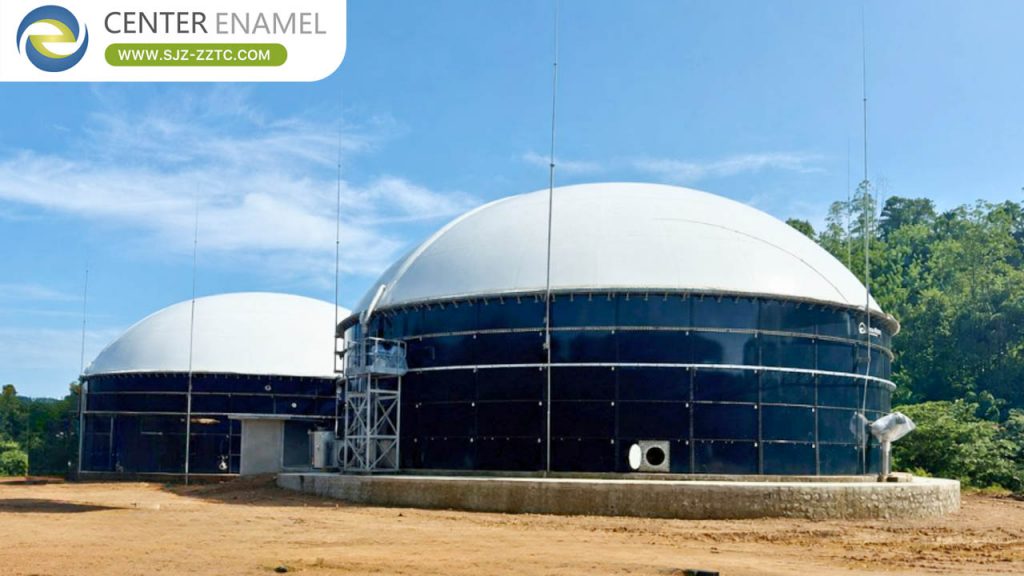
Core Classification Methods for Anaerobic Digesters
Anaerobic digesters are generally classified based on operational parameters, feedstock consistency, and microbial retention dynamics:
- Wet vs. Dry Digestion:
- Wet Digesters (Low-Solids): Process feedstocks with less than 15% total solids in a pumpable slurry format.
- Dry Digesters (High-Solids): Handle stackable, solid biomass with total solids exceeding 15% to 40% with minimal water input.
- Growth Configuration:
- Suspended Growth Systems: Microorganisms mix freely with the reactor liquid (e.g., CSTR, UASB).
- Attached Growth Systems: Microorganisms form a biofilm on supporting packing media (e.g., anaerobic filters).
Major Types of Anaerobic Digestion Systems
1. Continuous Stirred-Tank Reactors (CSTR / Complete Mix Digesters)
- How It Works: Organic slurries are fed continuously into a sealed tank where mechanical agitators or recirculation pumps maintain a uniform mixture of microbes and waste.
- Ideal Feedstock: Manure slurries and co-digested food waste with 3% to 10% total solids.
- Key Advantage: Highly reliable, stable, and widely proven for large commercial and municipal facilities.
2. Plug Flow Digesters
- How It Works: Designed as long, narrow horizontal tanks where fresh influent pushes older material progressively forward as a "plug". Internal mechanical mixing is generally unnecessary.
- Ideal Feedstock: Viscous, high-solid dairy manure (11% to 14% total solids).
- Key Advantage: Simple mechanical design with minimal moving parts, reducing maintenance costs on agricultural farms.
3. Upflow Anaerobic Sludge Blanket (UASB) Reactors
- How It Works: High-rate liquid wastewater flows upward through a dense, self-suspended blanket of granulated anaerobic bacterial biomass without requiring packing media.
- Ideal Feedstock: Low-solids, high-strength industrial wastewaters (from breweries, dairies, and food processing).
- Key Advantage: Delivers massive chemical oxygen demand (COD) removal in a remarkably compact spatial footprint.
4. Covered Anaerobic Lagoons
- How It Works: Large, deep earthen basins lined with impermeable membranes and fitted with floating gas-collection covers to capture methane.
- Ideal Feedstock: Dilute agricultural flush manure or large-volume wastewater.
- Key Advantage: Lowest upfront capital and maintenance costs for large-scale livestock operations.
5. Solid-State (Dry) Anaerobic Digesters
- How It Works: Operates in batch-mode inside gas-tight garage-style fermenter boxes where stackable solid organic waste is loaded and processed over multi-week cycles.
- Ideal Feedstock: Yard trimmings, organic municipal solid waste, and dry agricultural biomass.
- Key Advantage: Eliminates the need for extensive water dilution, handling high-solids waste efficiently.
Comparative Data Table: Anaerobic Digester Technologies
| Digester Type | Total Solids (TS) Range | Primary Mixing Method | Ideal Application Scale | Key Engineering Feature |
| CSTR / Complete Mix | 3% – 10% | Mechanical agitators / Pumps | Commercial & municipal co-digestion | Uniform slurry mixing, high operational stability |
| Plug Flow | 11% – 14%+ | None (Plug-flow displacement) | Dairy and livestock farms | Handles viscous manure without internal clogging |
| UASB Reactor | < 3% | Upflow hydraulic liquid velocity | Industrial high-strength wastewater | High-rate granular sludge blanket, compact footprint |
| Covered Lagoon | < 2% | Passive natural flow | Large swine & dairy CAFOs | Low capital cost, passive biogas capture |
| Solid-State (Dry) | 20% – 40% | Batch leachate recirculation | Organic municipal solid waste facilities | Processes stackable dry waste without dilution |
Frequently Asked Questions (FAQ)
Q1: What is the main difference between wet and dry anaerobic digesters?
A: Wet digesters process pumpable slurries containing less than 15% total solids, whereas dry (solid-state) digesters process stackable, high-solid organic waste (up to 40% solids) in batch chambers with minimal water addition.
Q2: Which anaerobic digester type is best suited for dairy farms with thick manure?
A: Plug flow digesters are traditionally preferred for dairy manure with a high solids content (11% to 14%+) because they process viscous slurries horizontally without requiring complex mechanical mixing.
Q3: How do UASB reactors achieve high efficiency without mechanical agitators?
A: Upflow Anaerobic Sludge Blanket (UASB) reactors rely on upward hydraulic flow to suspend a dense bed of granulated bacterial biomass. This high concentration of retained microorganisms rapidly degrades dissolved organic matter at high loading rates within a compact reactor.