
100kW Biogas Project in India | CSTR Process & EPC Contractor Solutions
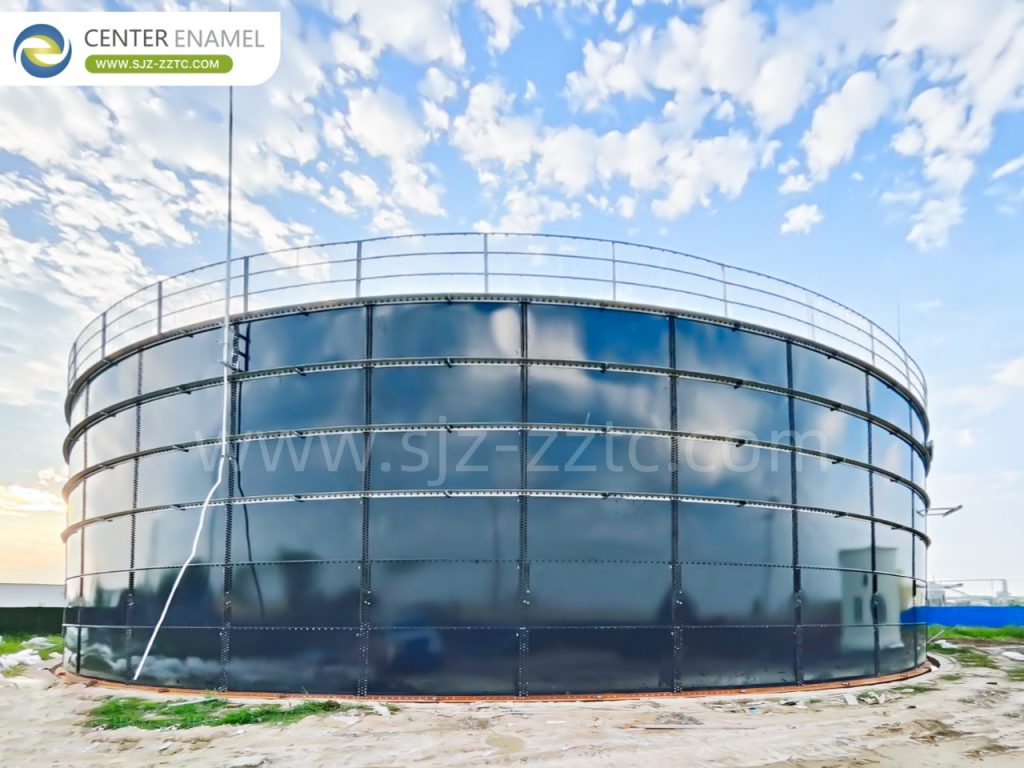
India’s rapidly growing livestock sector produces massive volumes of animal manure and flushing wastewater daily. Without proper management, this organic waste leads to methane emissions, groundwater contamination, and air quality issues. However, a new Biogas Project in India is turning this environmental liability into a renewable energy asset.
Using the proven CSTR Process (Continuously Stirred Tank Reactor), a 100kW biogas plant combined with a cogeneration (CHP) system is now operational. This facility processes animal manure and farm flushing water from local livestock operations, producing clean electricity for the grid or on-farm use. Led by an experienced EPC Contractor, the project demonstrates a replicable model for decentralized renewable energy across rural India.
This article explores the technical design, operational advantages, and long-term economic benefits of this medium-temperature anaerobic digestion facility.
Why India Needs More Biogas Projects for Livestock Waste
India has one of the largest livestock populations in the world, including cattle, buffalo, and poultry. Each animal produces several kilograms of manure daily. When mixed with water used to wash animal sheds, the result is a large volume of high-organic-strength slurry.
Common challenges from untreated livestock wastewater include:
High BOD and COD levels that pollute rivers and ponds.
Methane release – a greenhouse gas 25 times more potent than CO₂.
Pathogen spread from manure to human communities.
Odor nuisance for nearby villages.
The Indian government actively supports Biogas Project development through programs like SATAT and GOBARdhan. Converting livestock waste into energy helps achieve:
National clean energy targets.
Improved rural sanitation.
Reduced fertilizer import costs (digestate replaces chemical fertilizers).
This 100kW facility represents a scalable answer to these national priorities.
Project Overview: 100kW Biogas with Cogeneration
| Parameter | Detail |
| Location | India (specific state upon request) |
| Feedstock | Livestock manure + animal shed flushing water |
| Technology | Mesophilic anaerobic digestion (CSTR Process) |
| Electrical Output | 100kW continuous |
| CHP Unit | Combined heat and power (biogas engine + generator + heat recovery) |
| Scope by EPC Contractor | Master planning, preliminary planning, implementation planning, site management, and full project commissioning |
The facility operates year-round, processing a steady flow of farm waste. The biogas engine produces electricity, while waste heat from the engine jacket water and exhaust gas is recovered to maintain digester temperature-a highly efficient design.
CSTR Process: The Core of the Anaerobic Digestion System
The CSTR Process (Continuously Stirred Tank Reactor) is the most reliable technology for high-solids, heterogeneous feedstock like livestock manure and wash water. Unlike simple lagoon digesters, a CSTR ensures complete mixing and stable gas production.
How the CSTR Process Works in This Biogas Project
The system includes four main stages:
Step 1-Feedstock Preparation
Manure and flushing water are collected from the farm via gravity drains or screw pumps. A macerator and sand trap remove coarse solids and grit to prevent pump damage.
Step 2-CSTR Digester
The homogenized slurry enters a sealed, heated, and continuously mixed tank. Medium-temperature (mesophilic) operation-around 37–40°C-is maintained by:
Hot water circulation from the CHP unit’s heat exchanger.
Insulated tank walls to reduce heat loss.
Internal mixing (mechanical stirrer or recirculated biogas) keeps microbes in close contact with fresh organic matter. This prevents stratification, scum formation, and dead zones-common problems in unmixed digesters.
Step 3-Biogas Capture
The produced biogas (approx. 55–65% methane, 35–45% CO₂) rises to the top of the digester. A gas holder (integrated membrane or separate dome) stores the gas before combustion.
Step 4-Digestate Storage
The fully digested effluent is stored in an open or covered tank. It is odorless and nutrient-rich, used as liquid fertilizer for nearby fields.
Why CSTR Is Ideal for Indian Livestock Waste
- Handles total solids up to 10–12% without dilution.
- Tolerant of daily fluctuations in manure volume and composition.
- Proven over decades in thousands of farm biogas plants worldwide.
- Easier to operate than high-rate systems like UASB when feedstock is not purely soluble.
The CSTR Process gives this Biogas Project the robustness required for Indian conditions: variable water availability, seasonal changes in animal numbers, and limited operator training.
The Role of an EPC Contractor in Delivering Turnkey Solutions
A Biogas Project involves civil works, mechanical engineering, electrical integration, and biological commissioning. Most farm owners lack in-house expertise for all these disciplines. That is why hiring a single EPC Contractor is critical for success.
An EPC Contractor (Engineering, Procurement, Construction) takes full responsibility from concept to handover. For this 100kW plant, the EPC Contractor delivered:
Master and Preliminary Planning
- Site selection and soil testing.
- Feedstock quantification (tons per day of manure + wastewater).
- Biogas yield estimation (typically 20–30 m³ biogas per ton of mixed waste).
- Grid interconnection study or captive use design.
Implementation Planning
Detailed engineering of the CSTR digester (volume, mixing type, heating demand).
Procurement of all components: pumps, piping, CHP engine, gas treatment (H₂S removal), safety devices.
Civil drawing and tank specification (glass-fused-to-steel or concrete).
Site Management & Construction
On-site supervision of tank assembly, pipeline installation, and electrical wiring.
Quality control and safety compliance.
Coordination between civil, mechanical, and electrical subcontractors.
Project Realization & Handover
Biological startup: gradual feeding to activate methane-producing microbes.
Operator training for daily feeding, mixing checks, and safety protocols.
Performance testing to guarantee 100kW output at specified feedstock rate.
Cogeneration (CHP): Maximizing Energy Efficiency
A standard biogas engine produces electricity-but it also produces large amounts of heat. If that heat is wasted, overall efficiency drops below 40%. In this project, the EPC Contractor integrated a combined heat and power (CHP) system, boosting total efficiency to over 85%.
Heat Recovery for the CSTR Process
The CHP unit captures:
Engine jacket cooling water (85–90°C).
Exhaust gas (450–550°C via a heat exchanger).
This hot water circulates through:
Heat exchangers inside or outside the CSTR digester to maintain mesophilic temperature.
Space heating for farm buildings (if needed in colder Indian regions).
Crop drying (tentative future expansion).
By recovering waste heat, the plant runs without external fossil fuel heating-even during cool winter nights in northern India. This dramatically improves the economics of the Biogas Project.
Electrical Output Use Options
- Sell 100kW to the local grid under a power purchase agreement (PPA).
- Supply electricity to the same farm for milking machines, water pumps, lighting, and feed grinders.
- Combine both uses with a net meter.
For a typical Indian farm cluster, 100kW can power 100–150 households or a medium-sized dairy operation.
Environmental and Economic Benefits
Environmental Impact
- Methane avoidance: Instead of releasing methane from manure lagoons, the CSTR Process captures and combusts it into CO₂ (much lower global warming potential).
- Water quality protection: Treated digestate has lower BOD and pathogen counts than raw manure.
- Reduced chemical fertilizer use: Digestate returns nitrogen and phosphorus to soil.
- Odor control: A properly operated biogas plant produces very little smell compared to raw manure storage.
Economic Returns for the Farm or Investor
- Electricity revenue: 100kW × 24 hours × 365 days = 876,000 kWh per year. At a conservative ₹6/kWh feed-in tariff, annual revenue ≈ ₹5.2 million (approx. $62,000 USD).
- Savings on diesel/grid power if used captive.
- Heat savings: No need to purchase LPG or diesel for heating the digester.
- Digestate value: Free organic fertilizer reduces farm input costs.
- Carbon credits: Eligible for voluntary or compliance carbon markets (methane avoidance methodology).
Payback period for a 100kW Biogas Project in India typically ranges from 4 to 7 years, depending on capital subsidy availability (up to 40% from government schemes).
Technical Durability: Tanks and Components for Indian Climate
The EPC Contractor selected corrosion-resistant materials suitable for India’s varied climate-from humid coastal regions to hot dry inland areas.
Anaerobic Digester Tank Options
Glass-Fused-to-Steel (GFS) : Highly resistant to H₂S and organic acids. Bolted assembly allows future expansion. Used for the main CSTR reactor.
Epoxy-coated steel for secondary digestate storage.
Concrete for equalization basins (if locally preferred).
Gas Treatment
Raw biogas contains H₂S (hydrogen sulfide), which corrodes engines. A biological or chemical desulfurization system reduces H₂S below 200 ppm.
CHP Engine Specification
100kW continuous rating.
Spark-ignited gas engine designed for low methane (above 50% CH₄).
Automatic start/stop and load following.
Remote monitoring for maintenance alerts.
All mechanical components are sourced from reputable suppliers, with critical spares kept on-site for high uptime.
Scaling Up: From 100kW to Larger Biogas Plants
The success of this 100kW plant provides a blueprint for larger applications:
500kW to 1MW plants for large cattle feedlots or multiple village collection points.
Centralized biogas hubs where waste from several small farms is trucked to one facility.
Biogas upgrading to bio-CNG (compressed natural gas) for vehicle fuel-especially valuable in states with CNG vehicle markets.
The same CSTR Process and EPC Contractor model applies directly. Only the number of tanks, engine size, and gas treatment complexity change.
A Replicable Model for Indian Agriculture
This Biogas Project in India demonstrates that livestock waste is not a problem-it is a resource. By applying the CSTR Process inside a professionally engineered digester, and by installing a CHP unit for heat recovery, the project produces reliable 100kW power, improves farm sanitation, and reduces greenhouse gas emissions.
The delivery model-full turnkey responsibility by a qualified EPC Contractor – removes technical and management barriers that have historically caused biogas failures. With master planning, site management, and commissioning all handled by one accountable partner, the farm owner can focus on core agricultural activities while enjoying lower electricity bills and a cleaner environment.
For government agencies, financial institutions, and private investors, this project proves that decentralized biogas is mature, bankable, and ready for rapid deployment across India’s rural heartland.
Frequently Asked Questions (FAQs)
Q1: Why is the CSTR Process the best choice for a livestock Biogas Project in India?
The CSTR Process (Continuously Stirred Tank Reactor) handles high-solid feedstock like manure and flushing water without clogging or scum formation. Center Enamel designs CSTR digesters with durable glass-fused-to-steel tanks that resist corrosion and maintain stable mesophilic temperatures for maximum biogas yield.
Q2: How does hiring an EPC Contractor like Center Enamel reduce project risk?
A full-service EPC Contractor manages everything from planning and tank manufacturing to site construction and commissioning. Center Enamel provides turnkey solutions including master planning, implementation, and on-site management, ensuring the 100kW plant is delivered on time and performs as designed.
Q3: Can Center Enamel build a 100kW Biogas Project in any part of India?
Yes. Center Enamel has extensive experience delivering biogas EPC projects in tropical and challenging environments. Their bolted glass-fused-to-steel tanks are prefabricated for rapid assembly in any Indian location, and their CHP-integrated systems work reliably under local climate and feedstock conditions.