
5 Types of Biogas Plants Explained: Engineering Designs and Applications
Selecting the correct biogas plant configuration is essential for maximizing organic waste breakdown, optimizing methane yield, and ensuring long-term operational efficiency. Because waste streams vary widely—ranging from rural livestock manure and agricultural crop residues to high-strength municipal and industrial wastewater—engineer-designed systems have evolved into several distinct architectural models.
Understanding the unique structural characteristics, operating mechanisms, and ideal applications of different biogas plants is critical for project developers and environmental engineers. Here is a comprehensive breakdown of the 5 primary types of biogas plants.
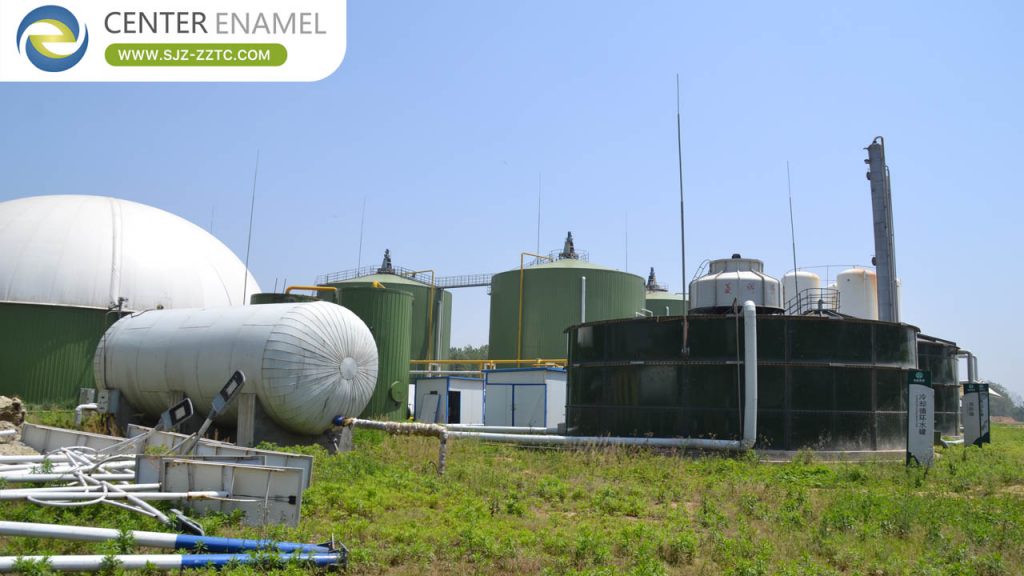
1. Fixed-Dome Biogas Plants
- Design & Architecture: A fixed-dome plant consists of a completely underground, rigid masonry or concrete structure featuring a subterranean fermentation chamber coupled with an integrated, non-movable gas storage dome at the top.
- Operating Mechanism: As biogas is produced by anaerobic bacteria, it accumulates in the upper dome, displacing the liquid digestate outward into an adjoining expansion (displacement) chamber.
- Key Advantages: Fixed-dome systems have no moving mechanical parts, making them highly durable with a structural lifespan exceeding 20 years. Being built underground also provides natural thermal insulation against seasonal climate shifts.
2. Floating-Drum Biogas Plants
- Design & Architecture: This traditional design features an underground digester pit paired with an inverted movable gasholder drum (typically constructed from steel or fiberglass) that floats directly on top of the fermenting slurry or a liquid water seal.
- Operating Mechanism: As biogas is generated, the drum rises vertically to accommodate the volume. When gas is consumed, the drum lowers, maintaining a constant, steady operating gas pressure.
- Key Advantages: The floating drum provides an instant visual indicator of stored gas volume. However, steel drums require periodic maintenance and repainting to prevent corrosion from hydrogen sulfide ($H_2S$) exposure.
3. CSTR (Continuous Stirred Tank Reactor) Plants
- Design & Architecture: CSTR systems are heavy-duty, industrial-scale aerobic/anaerobic reactors equipped with powerful internal mechanical agitators or continuous mixers.
- Operating Mechanism: Substrates are fed into the reactor regularly (often daily or continuously), and an equal volume of treated digestate overflows automatically. Modern commercial installations utilize robust Glass-Fused-to-Steel (GFS) bolted tanks to resist corrosive organic acids.
- Key Advantages: CSTR plants are the gold standard for large-scale agricultural and municipal waste facilities processing high-solid feedstocks, food waste, and co-digestion slurries with high operational reliability.
4. Plug Flow Biogas Plants
- Design & Architecture: Engineered as long, narrow horizontal concrete trenches or flexible-lined channels where fresh feedstock enters at one end and moves progressively toward the exit in a sequential "plug" motion.
- Operating Mechanism: As new high-solid slurry is added, it pushes the older material forward through the channel without requiring complex internal mechanical mixing systems.
- Key Advantages: Exceptionally well-suited for high-viscosity feedstocks like dairy cattle manure (11% to 14% total solids), preventing channeling and ensuring every batch undergoes a predictable retention duration.
5. UASB (Upflow Anaerobic Sludge Blanket) Digester
- Design & Architecture: A high-rate liquid wastewater treatment reactor designed without physical packing media, relying instead on self-immobilized biological granules.
- Operating Mechanism: Untreated liquid effluent flows upward from the bottom of the reactor, passing through a dense, suspended blanket of granulated anaerobic bacteria that rapidly break down dissolved organic pollutants.
- Key Advantages: UASB reactors handle massive Chemical Oxygen Demand (COD) loading rates within a very compact spatial footprint, making them ideal for high-strength industrial wastewaters from breweries, distilleries, and food processing plants.
Comparative Data Table: 5 Biogas Plant Types Summary
| Biogas Plant Type | Ideal Application Scale | Primary Substrate / Feedstock | Gas Storage & Pressure Dynamics | Key Structural Feature |
| 1. Fixed-Dome | Rural households & farms | Animal manure & food scraps | Fixed volume / Variable pressure | Underground masonry, zero moving parts |
| 2. Floating-Drum | Small to medium farms | Manure & agricultural slurry | Variable volume / Constant pressure | Movable inverted drum for easy visual monitoring |
| 3. CSTR Plant | Large commercial & municipal | Mixed organic waste, sludge, co-digestion | External dual-membrane gasholder | Internal mechanical mixers inside GFS tanks |
| 4. Plug Flow | Dairy & livestock operations | High-solid dairy cattle manure | External gasholder | Long horizontal trench; handles viscous waste |
| 5. UASB Reactor | Industrial wastewater plants | High-load liquid effluents (COD-heavy) | External gasholder | Upflow design with dense granular sludge blanket |
Frequently Asked Questions (FAQ)
Q1: What is the main difference between a fixed-dome and a floating-drum biogas plant?
A: A fixed-dome plant uses a stationary underground masonry structure where gas pressure fluctuates as gas volume changes. A floating-drum plant utilizes a movable drum that rises and falls with gas production, maintaining a stable, constant operating gas pressure.
Q2: Why are CSTR (Continuous Stirred Tank Reactor) plants preferred for large commercial projects?
A: CSTR plants handle continuous, automated daily feeding and large volumes of mixed organic waste (such as food waste and livestock manure). Equipped with robust internal mixers and corrosion-resistant GFS tanks, they provide high process stability and high-capacity methane yields.
Q3: How does a UASB reactor treat industrial wastewater without mechanical filters?
A: A UASB reactor forces liquid wastewater upward through a self-suspended blanket of granulated anaerobic bacteria. This high concentration of retained biological mass rapidly degrades dissolved organic pollutants at high flow rates within a compact footprint.