
Composition of Biogas: A Detailed Breakdown of Gas Components and Quality
Biogas is a complex, combustible gaseous mixture produced through the anaerobic digestion of organic matter in an oxygen-free environment. Understanding the precise chemical breakdown of biogas is essential for plant engineers, operators, and energy strategists. The proportion of each substance directly dictates the energy content, calorific value, and purification requirements necessary for industrial application or natural gas grid injection.
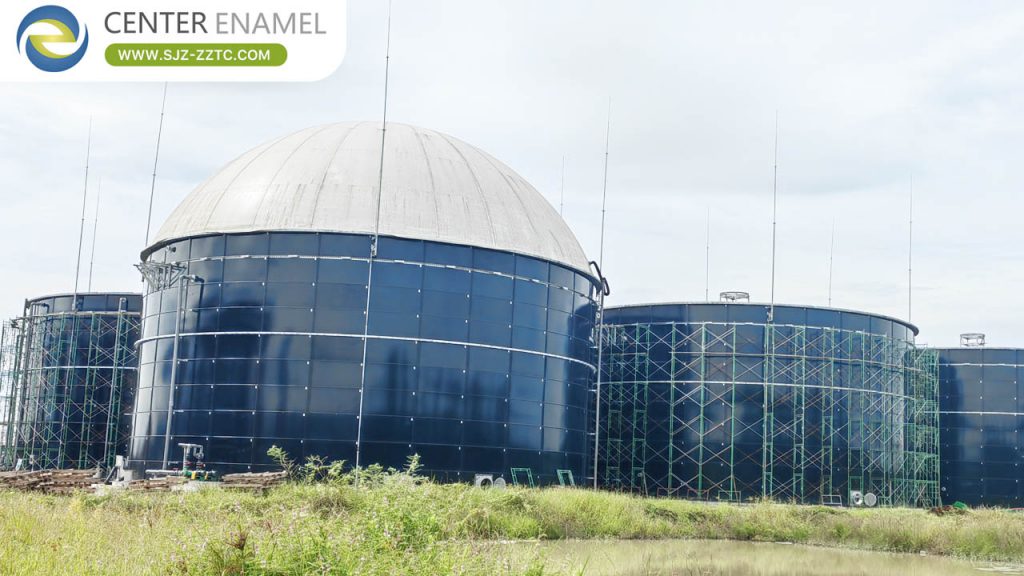
Biogas Composition Data Table
The table below outlines the typical percentage distribution of various substances and chemical symbols found in raw biogas, alongside a comparison with conventional natural gas:
| Substance | Chemical Symbol | Percentage / Proportion (%) | Primary Characteristics & Impact |
| Methane | CH4 | 50% – 70% | The primary energy-rich, combustible component providing the fuel value. |
| Carbon Dioxide | CO2 | 30% – 40% | Non-combustible inert gas that dilutes the overall calorific value. |
| Hydrogen | H2 | 5% – 10% | High-energy intermediate gas supporting microbial synthesis pathways. |
| Nitrogen | N2 | 1% – 2% | Inert gas resulting from baseline air ingress or substrate handling. |
| Water Vapour | H2O | 0.3% | Saturated moisture content requiring condensation control and drying. |
| Hydrogen Sulphide | H2S | Traces | Corrosive and toxic trace gas requiring active desulfurization. |
| Natural Gas (Comparison) | CH4 (Erdgas) | 80% – 90% | Fossil fuel baseline featuring higher methane purity prior to grid use. |
Analysis of Major and Minor Components
1. Methane (CH4) – The Energy Carrier
Methane is the core combustible fraction of biogas, typically ranging between 50% and 70%. The higher the methane concentration, the greater the lower heating value (LHV) and energy output of the gas. In comparison, standard fossil natural gas (Erdgas) contains an even higher concentration of methane (80% to 90%), which is why raw biogas often undergoes an upgrading stage to remove impurities and reach natural gas standards.
2. Carbon Dioxide (CO2) and Inert Diluents
Carbon dioxide makes up roughly 30% to 40% of raw biogas. Because CO2 is entirely non-combustible, it acts as an inert diluent that lowers the overall energy density per cubic meter. Upgrading technologies—such as water washing, pressure swing adsorption (PSA), or membrane separation—are deployed to strip away CO2 when producing high-purity biomethane.
3. Trace Gases and Corrosive Elements
While minor components like Hydrogen Sulphide (H2S) appear only in trace amounts, they pose significant operational challenges. When combined with water vapour (H2O), H2S forms corrosive acids that damage CHP engines, pipes, and metal tanks. Consequently, biological or chemical desulfurization and moisture traps are critical components of any industrial biogas plant layout.
Frequently Asked Questions (FAQ)
Q1: Why does the methane percentage in biogas fluctuate?
A: Methane concentration varies depending on the type of organic feedstock used (e.g., food waste vs. manure), digester temperature stability, hydraulic retention time, and biological process efficiency.
Q2: How does raw biogas differ from fossil natural gas?
A: While both are rich in methane, natural gas is extracted from underground geological reserves and typically contains 80% to 90% methane. Raw biogas is produced via short-term anaerobic digestion, containing 50% to 70% methane alongside substantial carbon dioxide and trace moisture.
Q3: Why must hydrogen sulphide (H2S) be removed from biogas?
A: Hydrogen sulphide is a toxic and highly corrosive trace gas. When burned in engines or boilers, it reacts with water vapour to form sulfurous and sulfuric acids, causing severe corrosion and premature failure of mechanical equipment.