
8 Most Frequently Asked Questions About Farm Biogas Projects by Global Clients
As a biogas project solutions provider, we receive inquiries every day from farm owners and project developers around the world. From "should we do it at all" to "how do we do it," from investment budgets to operational risks, the questions cluster around eight key areas. This article addresses each one and, drawing on Center Enamel's project experience in more than 100 countries, offers practical, actionable answers.
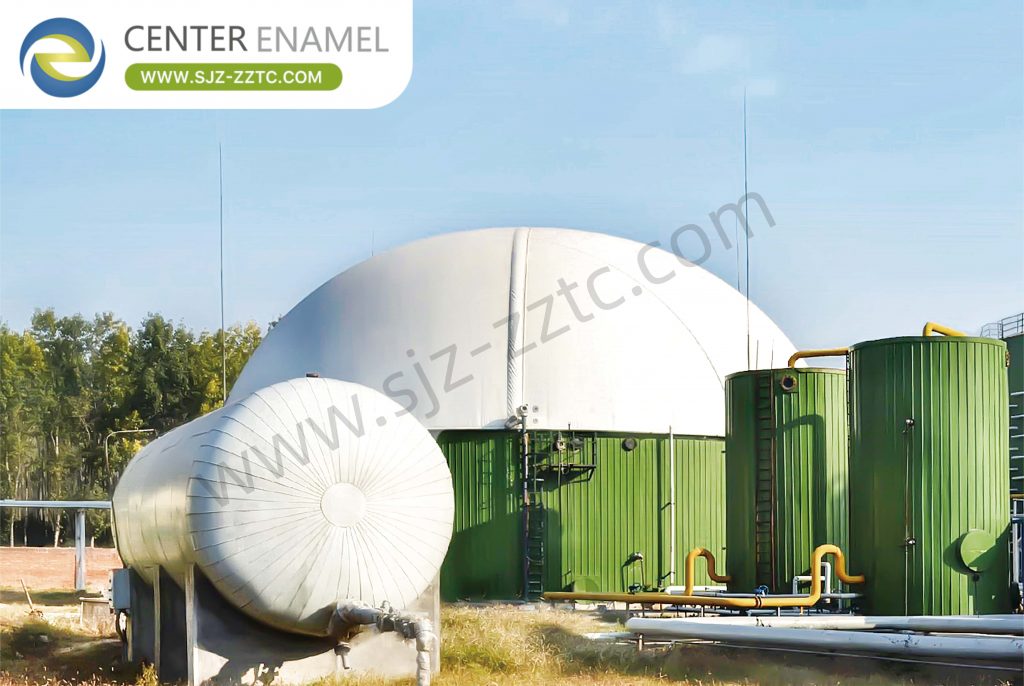
Stage 1: Should We Do It?
1. Can't farms just discharge manure directly or return it to the fields? Why is a biogas project necessary?
Direct discharge is definitely not acceptable. Untreated discharge causes rivers to turn black and foul, contaminates groundwater, and produces severe odors. In most countries it is illegal and subject to fines, production limits, or even shutdown. Environmental regulations around the world generally state clearly that untreated livestock and poultry waste may not be discharged directly into the environment.
"Direct land application" sounds reasonable, but the risks are underestimated. Uncomposted manure contains large amounts of pathogens and parasite eggs; when applied to fields it can spread pests and diseases, or undergo secondary fermentation in the soil, burning seedlings and releasing ammonia. Modern farming widely uses feed additives and veterinary drugs, so manure may contain antibiotic and heavy metal residues; direct land application can pollute soil and groundwater and even affect food safety. Even on the land-application route, manure must first undergo sealed anaerobic fermentation for at least 30–45 days to achieve harmlessness before it can be applied.
The value of a biogas project goes far beyond "treating pollution." It converts manure into three things: energy (biogas can be used for power generation, heating, or upgraded to biomethane), fertilizer (digestate and biogas slurry are safer organic fertilizers that can replace part of chemical fertilizer use), and compliance and revenue (meeting environmental regulations, with construction subsidies or carbon credit revenue available in some countries). One clarification, however: not every farm must build a biogas project. Small and medium-sized farms with sufficient surrounding farmland for absorption can equally follow a "full collection, sealed fermentation, then land application" model-the key is a rainproof, seepage-proof storage facility, adequate fermentation, and application at appropriate rates. Large-scale farms with concentrated manure and high treatment demand are the better fit for a dedicated biogas project.
2. Is my farm's scale suitable for biogas? What conditions need to be met?
This is a question that requires scientific evaluation; it cannot be answered with a blanket rule. The core criteria are three: whether manure generation exceeds the absorption capacity of surrounding farmland, whether the feedstock characteristics suit anaerobic digestion, and whether the investment capacity and O&M conditions are in place.
Small farms: limited necessity. If surrounding farmland can fully absorb the manure, a manure yard with "three protections" (rainproof, seepage-proof, overflow-proof) and a hardened wastewater pond, with the fermented material used entirely in agriculture, is sufficient to meet environmental requirements.
Medium and large pig farms: the best fit for biogas. Pig farms generate large volumes of wastewater-roughly 5–10 liters per head per day-and rely heavily on water-flush manure removal. Manure from medium and large pig farms generally cannot be fully absorbed by surrounding farmland, so solid-liquid separation equipment should be installed: solids are shipped out or made into organic fertilizer, while wastewater enters the biogas digester and the digestate is used on surrounding farmland; any excess digestate is further treated to meet discharge standards.
Chicken, cattle, and sheep farms: a common misconception needs correcting. Some people said that "biogas makes little sense for chicken, cattle, and sheep farms," which is not accurate. In fact, large-scale chicken farms and cattle farms are precisely among the key scenarios for the biogas projects we deliver, but the technical approach must be tailored to the feedstock:
Chicken farms: Chicken manure is high in organic matter and nitrogen and has the highest gas potential of all manures (approximately 30–45 m³ of biogas per tonne of fresh manure), but it is prone to ammonia inhibition and acidification when digested alone. The solution is co-digestion with cattle manure or straw, combining the high gas potential of chicken manure with the stability of cattle manure; mixed digestion stabilizes gas production at 23–27 m³/t. For large-scale layer farms whose surrounding farmland cannot absorb all the manure, a biogas project with co-digestion is entirely feasible.
Cattle farms: Cattle manure has relatively low gas potential (approximately 15–25 m³/t), with low dry matter and high lignocellulosic content, but it digests stably and resists acidification, making it a good partner for high-nitrogen feedstocks such as chicken manure. For large-scale dairy farms with concentrated manure and limited surrounding land for absorption, a biogas project is likewise a reasonable option. The original statement that "cattle and sheep farms generate little wastewater" applies to grazing or small-scale operations; large-scale confined cattle operations produce substantial wash water and manure volumes and must be treated differently.
Conclusion: The criterion is not "what species you raise" but the combination of scale, manure concentration, and surrounding absorption capacity. Chicken and cattle farms are equally suitable for biogas at scale; only the process design needs to be customized to feedstock characteristics.
3. How much gas can biogas feedstock produce? What affects gas yield?
Reference biogas yields by fresh manure type (35°C mesophilic digestion, standard conditions):
| Feedstock type | Biogas yield (m³/t fresh manure) | Characteristics |
| Cattle manure (dairy/beef) | 15–25 | Lower yield but stable, resists acidification, suits co-digestion |
| Pig manure (water-flush) | 20–30 | Moderate C/N ratio, mainstream feedstock for large-scale biogas |
| Chicken manure (fresh layer manure) | 30–45 | Highest yield, but prone to ammonia inhibition; needs mixing with cattle manure/straw |
| Duck/goose manure | 22–32 | Between pig and chicken manure |
| Mixed manure (design value) | 22–28, with 25 as the estimation baseline | Standard for feasibility studies and environmental assessments |
Dry matter conversion (for resource potential calculation): Livestock manure produces approximately 0.30–0.49 m³ of biogas per kg of total solids (TS); volatile solids (VS) produce approximately 0.25–0.38 m³ of CH₄ per kg VS, with methane comprising 55%–60% of biogas. Example: mixed manure at TS ≈ 8% and VS ≈ TS × 75% gives VS = 60 kg per tonne of manure, a theoretical methane yield of about 18 m³, equivalent to about 30 m³ of biogas (theoretical upper limit); applying an 80% efficiency factor gives about 24 m³, consistent with the engineering range.
Key factors affecting gas yield:
Moisture content: More flush water and thinner manure mean lower gas yield per tonne; dry manure collection can double the yield.
Temperature: Mesophilic 35°C is optimal; ambient temperature in winter reduces gas production by 30%–50%; thermophilic 55°C can increase it by about 20%.
Process and retention time: CSTR complete mixing with 25–30 days retention reaches the upper limit; simple earthen ponds achieve only 15–20 m³/t.
Feedstock pairing: Chicken manure alone yields high gas but is prone to ammonia toxicity; mixing with cattle manure or straw significantly improves stability.
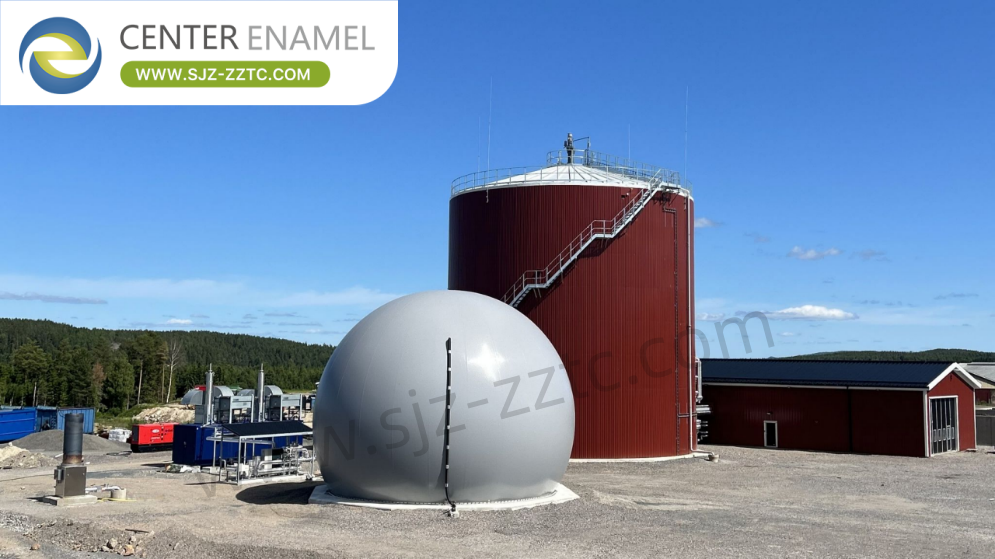
Stage 2: How Much Does It Cost, and How Long Is the Payback?
4. How much does a biogas project cost? Where does the money mainly go?
Biogas project investment spans a wide range-from hundreds of thousands of US dollars for small and medium-sized farms to tens of millions of US dollars for large centralized treatment projects. In US dollar terms, the main cost components are:
| Cost component | Share (typical) | Description |
| Digester/reactor | 30%–45% | Core equipment; material and volume drive the main investment |
| Feed-in and pretreatment | 10%–15% | Solid-liquid separation, mixing tank, feed pumps, etc. |
| Biogas upgrading and utilization | 15%–25% | Desulfurization, dewatering, gas storage, generator sets or upgrading equipment |
| Civil works and installation | 15%–20% | Foundations, piping, electrical, insulation, etc. |
| Design and project management | 5%–10% | Engineering design, commissioning, training |
There is no "one-size-fits-all" price for a biogas project; investment depends mainly on farm scale, manure treatment volume, and the final objective. For a medium-to-large farm, a full turnkey project covering feedstock management, digestion, and biogas power generation typically has a total startup cost in the multi-million US dollar range.
This may look like a large investment, but two points deserve attention:
Multiple revenue streams: Beyond savings on electricity and fuel, benefits include digestate replacing chemical fertilizer, avoidance of environmental fines, and carbon credit or construction subsidy revenue.
Flexible investment: For a single farm, a phased build-out or a lightweight "digestion + digestate land application" configuration can significantly reduce the initial investment to the hundreds of thousands to low millions of US dollars range.
The core factor affecting both cost and long-term value: GFS tanks vs. concrete tanks.
Glass-Fused-to-Steel (GFS) Tanks: Fired at 820°C–930°C, the enamel layer chemically bonds to the steel plate, providing excellent resistance to hydrogen sulfide and volatile organic acid corrosion. With a design life of up to 30 years, GFS tanks are far superior to traditional concrete tanks, which are prone to cracking and leakage due to settlement, require long curing periods, and are difficult to maintain or expand. Modular bolted installation greatly shortens on-site construction time and facilitates future capacity expansion.
5. Are operating costs high? How long is the payback period?
Operating costs mainly include: labor (close to a full-time O&M operator is needed for daily checks of electromechanical systems, control systems, biogas and instrumentation, pH and temperature, etc.), equipment maintenance (engine oil, filters, spark plugs-oil changes every 500–1,500 operating hours, major overhaul at around 20,000 hours), desulfurization agent, insulation energy, insurance, and more.
Payback periods vary significantly by project scale and revenue model:
Power generation/CHP model: Where electricity prices are reasonable and there are feed-in subsidies or self-use displacing high-cost electricity, payback is typically 4–7 years. A techno-economic analysis of municipal-scale anaerobic digestion systems found a payback period of about 4.06 years under optimized configuration.
Biomethane/upgrading-to-grid model: Revenue depends heavily on local natural gas prices and incentive policies (such as carbon credits, RINs, etc.), so payback fluctuates widely.
Projects driven primarily by environmental compliance: Payback is not the primary goal, but digestate replacing chemical fertilizer, savings on discharge fees/fines, and possible construction subsidies can significantly improve overall economics.
Key variables: whether feedstock is free or low-cost, whether gas yield reaches the design value, the operating efficiency of biogas utilization equipment, and local energy prices and policies. We recommend building a financial model with actual feedstock and local prices during the feasibility study rather than applying generic figures.
Stage 3: How to Operate and Maintain, and What Are the Risks?
6. What routine maintenance does a biogas project need? What usually causes no or low gas production?
The core of routine maintenance is maintaining a stable environment for the anaerobic microbial community. Four things matter most:
① Maintain stable pressure inside the digester. Keep feed-in and discharge rates as consistent as possible, balance the volume of feedstock entering with the volume of waste leaving, and remove generated biogas promptly to keep digester pressure stable and ensure normal methanogen activity.
② Maintain a stable microbial population. Keep the total daily feed volume steady; never suddenly increase feeding, which would wash out microbes with the sudden increase in discharge, and never suddenly reduce feeding, which would starve the microbes and reduce their numbers.
③ Prevent inhibitory wastewater from entering. When livestock are heavily treated with disinfectants, antimicrobials, or insecticides, barn wastewater should be kept out of the digester. Use drugs with short residue periods where possible; physical disinfection methods such as UV and ultrasound can reduce drug residues that inhibit digestion.
④ Adjust pH promptly. When the fermentation liquor becomes too acidic, dilute the volatile acids to raise pH, add wood ash or an appropriate amount of ammonia water, or use limewater to adjust. Once any link in the chain fails, a vicious cycle follows: gas production drops → microbial growth slows → mixing performance declines → digestion degree falls further. Equipment inspection and repair must therefore be timely.
Common causes of no or low gas production: sudden temperature drops (no insulation in winter), abrupt changes in feed concentration, entry of toxic substances (disinfectants/antibiotics), ammonia inhibition (excessively high chicken manure share), mixing failures, and leaks in the tank or piping.

7. What safety risks need attention during operation?
Safety risks in biogas projects concentrate in three areas:
Biogas explosion: Methane is explosive when it meets an ignition source at concentrations of 5%–15%. All electrical equipment must be explosion-proof, open flames are strictly prohibited in the tank area, and gas detection alarms must be installed.
Hydrogen sulfide poisoning: Biogas and digestate contain H₂S; before entering a tank or inspecting piping, ventilation and testing are mandatory, and solo work is strictly prohibited.
Confined space entry: Digesters, gas holders, inspection wells, and similar structures are confined spaces; before entry, oxygen levels and toxic gases must be tested, and respiratory protection and an attendant must be in place.
In addition, winter pipe freezing, feed inlet blockages, and overflow are operational issues to guard against.
8. What can you provide? Why choose Center Enamel?
Center Enamel (Shijiazhuang Zhengzhong Technology Co., Ltd.) has focused on tank manufacturing and anaerobic digestion system solutions for decades, with products deployed in more than 100 countries worldwide. Our clients include farms, food and beverage companies, municipal wastewater treatment plants, and renewable energy project developers.
For farm biogas projects, we provide:
Glass-Fused-to-Steel (GFS) Tanks: Fired at 820°C–930°C, the enamel layer chemically bonds to the steel plate, providing excellent resistance to hydrogen sulfide and volatile organic acid corrosion. With a design life of up to 30 years, GFS tanks are far superior to traditional concrete tanks, which are prone to cracking and leakage due to settlement, require long curing periods, and are difficult to maintain or expand.
CSTR process integration: Tailored to feedstock characteristics such as the ammonia inhibition risk of chicken manure and the lower gas potential of cattle manure, we provide co-digestion pairing design and CSTR reactor configuration to ensure thorough mixing of microbes and feedstock and maximize gas production efficiency.
Full-process support: From feed-in pretreatment, tanks, and mixing systems to biogas purification and storage (double-membrane gas holders/aluminum domes), and on to generator sets or upgrading-to-grid solutions-customized to project needs.
International certifications: Products comply with standards including AWWA D103-09, ISO 28765, and NSF/ANSI 61, meeting the compliance and acceptance requirements of projects worldwide.
A farm biogas project is not a question of "whether it can be built" but of "how to design it correctly." Chicken, cattle, and pig manure each have different gas production characteristics and inhibition risks; tank material determines maintenance costs 20 years from now, and process configuration determines whether actual gas production reaches the design value. If you are evaluating a farm biogas project, send us your manure type, herd size, surrounding absorption conditions, and objectives (environmental compliance / energy self-use / organic fertilizer / carbon revenue), and Center Enamel's technical team can provide an initial process match and tank solution recommendation.
Contact us to get a biogas project consultation tailored to your farm's specific conditions.