
CSTR Reactor for Glass-Fused-to-Steel (GFS) Tanks
In today's competitive industrial landscape, efficiency and precision are paramount. Continuous Stirred Tank Reactors (CSTRs) have emerged as a cornerstone technology for a variety of chemical, pharmaceutical, and food processing applications. At Center Enamel, we leverage decades of expertise to design and manufacture advanced CSTR systems that deliver optimal performance, process consistency, and scalability .
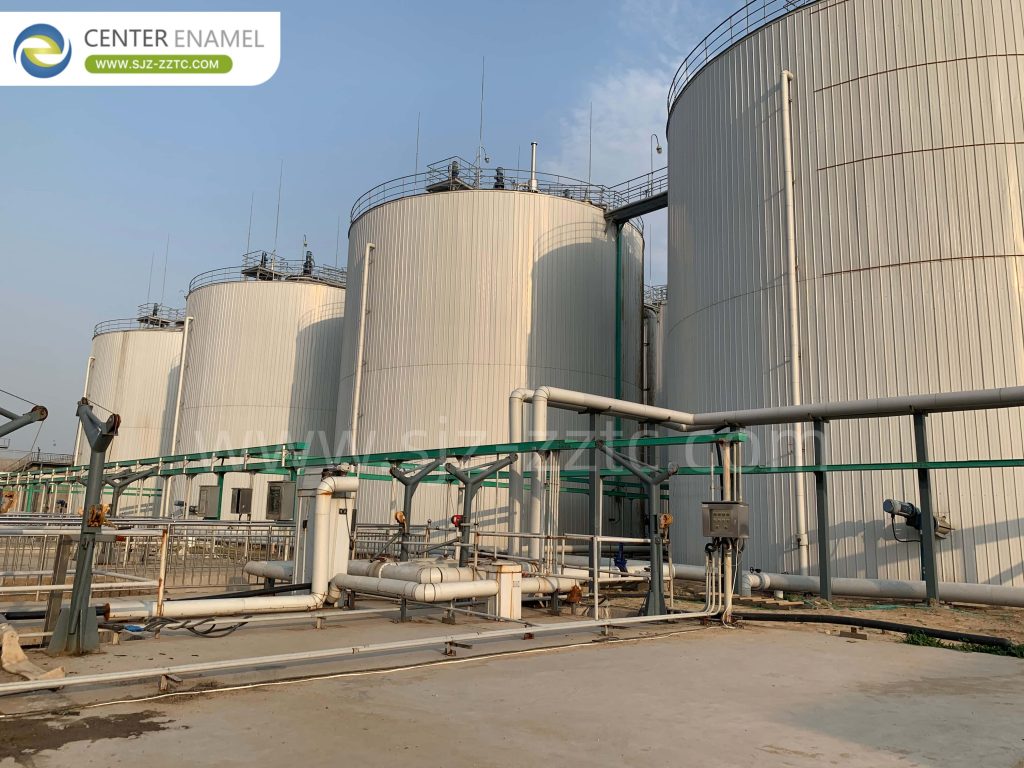
A Continuous Stirred Tank Reactor is a type of reactor in which reactants are continuously fed into the vessel and mixed thoroughly, ensuring a homogeneous reaction environment. Unlike batch reactors, where reactions occur in discrete cycles, CSTRs allow for uninterrupted processing. This continuous operation enables steady-state conditions, improved product quality, and consistent output—all critical factors in large-scale production and research applications .
Key Advantages of Continuous Stirred Tank Reactors
Uniform Mixing and Enhanced Product Consistency
One of the most significant benefits of a CSTR is its ability to maintain a homogenous mixture throughout the reactor. The continuous agitation and stirring facilitate uniform temperature, concentration, and reaction rates across the entire reactor volume. This uniformity minimizes the formation of by-products, ensures consistent product quality, and supports tighter process control. Homogeneity ensures that reactants are evenly distributed, reducing localized concentration gradients that can lead to inefficient reactions or the creation of unwanted side products. Consistent agitation also helps in dissipating heat, minimizing the risk of hot spots that can lead to side reactions or even thermal runaway .
Continuous Operation and Improved Throughput
CSTRs are designed for continuous processing, allowing for a steady stream of production without the downtime associated with batch operations. This continuous flow not only improves overall production throughput but also simplifies process scheduling and inventory management. The ability to maintain steady-state processing enables stable and predictable operating conditions, leading to better control over reaction kinetics. This means a continuous feed and withdrawal of materials, which reduces idle time and ensures that production is maintained around the clock .
Superior Heat Transfer Capabilities
Efficient heat management is critical in maintaining optimal reaction conditions and ensuring safety, especially in exothermic reactions. The design of CSTRs typically includes advanced agitation and cooling systems that promote excellent heat transfer. Continuous stirring enhances heat transfer from the reaction mixture to the reactor walls or cooling jackets, preventing temperature build-up. Maintaining a consistent reaction temperature helps prevent thermal runaway and ensures reaction efficiency .
Operational Flexibility and Adaptability
The design of continuous stirred tank reactors lends itself to a high degree of operational flexibility. CSTRs can handle a wide range of reaction types—from simple mixing processes to complex catalytic reactions—making them versatile tools in both research and industrial settings. They are capable of processing reactions involving a variety of feedstocks, including solids, liquids, and gases. Advanced control systems allow for real-time adjustments to mixing speeds, temperature, and flow rates, ensuring optimal reaction conditions are maintained even when feedstock characteristics vary .
Reduced Fouling and Maintenance Requirements
Fouling—the accumulation of unwanted materials on reactor surfaces—can impede reactor efficiency and increase maintenance costs. The continuous mixing inherent in CSTRs helps to minimize fouling, thereby extending the reactor's operational life and reducing downtime. The vigorous stirring action prevents the deposition of solids and other contaminants on the reactor walls, providing a self-cleaning action. Reduced fouling means fewer cleaning cycles and less frequent maintenance shutdowns .
The Role of Glass-Fused-to-Steel Technology
At Center Enamel, our CSTR solutions are built on the foundation of our core technology: Glass-Fused-to-Steel (GFS) tanks. This superior material is what gives our reactors their exceptional durability and long service life. The GFS manufacturing process involves fusing a porcelain enamel coating to a steel sheet at high temperatures (820°C–930°C), creating an inseparable bond that combines the strength and flexibility of steel with the unparalleled corrosion resistance of glass .
Performance Comparison: GFS CSTR vs. Traditional Materials
| Evaluation Parameter | Center Enamel GFS CSTR | Cast-in-Place Concrete | Uncoated Field-Welded Steel |
| Corrosion & Acid Resistance | Permanent glass enamel fusion resists organic acids, H₂S, and volatile compounds | Moderate; vulnerable to carbonation, acid etching, and structural seepage | Poor; unprotected carbon steel corrodes rapidly under moist anaerobic conditions |
| Installation Speed & Modularity | Rapid modular bolted assembly completed in 3–5 weeks | Slow civil construction requiring 6–12 months | Slow field erection requiring complex manual welding |
| Volumetric Scalability | High; modular bolted panels allow seamless future capacity expansion | Permanent monolithic structure; impossible to expand without reconstruction | Rigid structure; expanding capacity requires complex field cutting |
| Maintenance Requirements | Zero repainting required; inert glass surface resists biofilm | High; requires structural sealing maintenance | High; periodic recoating required |
This use of GFS technology offers significant advantages for CSTRs:
Superior Corrosion Resistance: The inert glass surface is highly resistant to corrosive chemicals, ensuring the structural integrity of the reactor for decades, even when dealing with aggressive industrial media .
Rapid and Safe Installation: The modular, bolted design of GFS tanks allows for quick and safe on-site assembly, significantly reducing project timelines and labor costs .
Low Maintenance: The durable GFS coating and robust design minimize the need for maintenance, reducing operational downtime and costs .
Longevity: GFS tanks are built to last, providing a reliable and stable platform for continuous processes, ensuring a high return on investment .
Project Cases
Our expertise and product quality are demonstrated through our extensive portfolio of successful projects across the globe.
| Project Name | Units | Total Capacity (m³) | Industry / Application | Key Features |
| Muyuan Group Hubei Suizhou Livestock Wastewater Project | 4 | 10,750 | Livestock wastewater | Large-scale livestock wastewater treatment, demonstrating high-volume processing capability |
| Henan Shuanghui Group Wastewater Treatment Project | 3 | 4,142 | Meat processing wastewater | Foundational and reliable water treatment solution for a major meat processing company |
| Coca-Cola (Jiangsu) Beverage Wastewater Treatment Project | 2 | 3,026 | Beverage industry wastewater | Tailored solution for a demanding public utility client |
| Inner Mongolia Dairy Wastewater Treatment Project | 1 | 1,162 | Dairy industry wastewater | Reliable solution for the dairy industry |
| Beijing Urban Wastewater Treatment Project | 1 | 1,010 | Municipal wastewater | Meets rigorous demands of urban water management |
| Caijiaying Gold Mine Wastewater Treatment Project | 2 | 2,020 | Mining effluent | Expertise in treating complex mining effluents |
| Lu'an City Food Waste Anaerobic Digestion Project (Anhui) | 1 | 1,000 | Food waste treatment | GFS + CSTR technology, secondary fermentation, high suspended solids tolerance |
Total: 7 projects, 14 units, approximately 23,110 m³ combined capacity
Project Overview: Food Waste Anaerobic Digestion Project in Anhui Province
Project Background
In a recent milestone achievement, the installation of an advanced anaerobic digestion tank for food waste treatment in Lu'an City, Anhui Province, was successfully completed by Shijiazhuang Zhengzhong Technology Co., Ltd. (Center Enamel), working alongside project stakeholders and the company's specialized engineering team .
Scope of Work
Design: Customized CSTR reactor configuration with GFS tank technology
Manufacturing: Glass-Fused-to-Steel panels with 2-enameling, 2-firing process
Installation: Complete assembly and commissioning on-site
Commissioning: System startup and operational optimization
Technologies Used
Continuous Stirred Tank Reactor (CSTR) + Glass-Fused-to-Steel (GFS)
The anaerobic digestion tank boasts an effective volume of 1,000 cubic meters and utilizes state-of-the-art Glass-Fused-to-Steel (GFS) technology configured as a Continuous Stirred Tank Reactor (CSTR) .
Project Specifications
| Parameter | Specification |
| Location | Lu'an City, Anhui Province, China |
| Effective Volume | 1,000 cubic meters |
| Technology | GFS + CSTR |
| Function | Secondary fermentation for food waste |
| Feedstock | High suspended solids, concentrated organic wastewater |
| Application | Food waste, kitchen residue, agricultural farming wastewater |
Project Results and Benefits
High-Solids Tolerance: Effectively manages a complex blend of high suspended solids, concentrated organic wastewater, and active anaerobic microorganisms
Pollutant Degradation: Efficiently breaks down stubborn organic pollutants, making it an ideal solution for complex high-strength applications
On-Time Delivery: Project completed meeting all technical specifications and timelines without interruption
Client Testimonial
"Center Enamel's engineering experts collaborated closely with our team to ensure timely execution, meeting all technical specifications and project timelines without interruption. The GFS CSTR solution has proven highly effective for our food waste treatment requirements."
— Project Stakeholder, Lu'an City Food Waste Treatment Facility
Frequently Asked Questions (FAQ)
What is a CSTR reactor and how does it work?
A Continuous Stirred Tank Reactor (CSTR) is a vessel where reactants are continuously fed, and products are continuously removed under steady-state conditions. An agitation system ensures the vessel contents are uniform, with the concentration and temperature of the exit stream identical to the concentration and temperature within the tank .
Why are Glass-Fused-to-Steel tanks preferred for CSTR applications?
GFS tanks offer superior corrosion resistance against aggressive chemicals, hydrogen sulfide (H₂S), and organic acids. The glass-steel fusion at 820°C–930°C creates an inert, non-porous surface that resists chemical attack, while the modular bolted design enables rapid assembly and future capacity expansion .
What is the service life of a GFS CSTR reactor?
Center Enamel's GFS CSTR reactors are designed for a service life exceeding 30 years. The permanent glass enamel fusion resists corrosion and wear, eliminating the need for repainting or coating maintenance .
What industries use CSTR reactors?
CSTR reactors are deployed across diverse sectors including anaerobic digestion (food waste, livestock manure, agricultural residues), wastewater treatment (industrial effluents, leachate), chemical synthesis, and pharmaceutical processing .
How does CSTR handle fluctuating organic loads?
The CSTR's full mixing capability ensures immediate load homogenization. When high-COD wastewater enters, it is instantly diluted by the vast volume of mixed liquor and neutralized by existing alkalinity, preventing pH crashes and maintaining process stability .
What quality standards do Center Enamel's CSTR reactors meet?
Center Enamel's CSTR reactors comply with AWWA D103-09, NSF/ANSI 61, ISO 28765, and ISO 9001/EN 1090 standards. Every GFS panel undergoes a 1500V "Holiday Test" to ensure zero microscopic voids in the coating .
Why Choose Center Enamel?
Center Enamel's CSTR solutions are at the forefront of industrial reactor technology. With a commitment to engineering excellence, environmental compliance, and cost efficiency, our solutions are designed to meet the stringent demands of diverse industries.
Proprietary enamel formulas: Over 200 patented recipes for superior corrosion resistance
International certifications: ISO 28765, AWWA D103-09, NSF/ANSI 61 compliant
Full-lifecycle EPC service: From design and production to installation and commissioning
Global track record: Proven performance across 100+ countries
For professionals seeking to optimize their production capabilities and achieve superior operational efficiency, Center Enamel's continuous stirred tank reactors offer a sophisticated and proven solution.
Contact Center Enamel today to learn how our customized CSTR solutions can be integrated into your process operations.