
Advanced Anaerobic Solutions and CSTR Process for Nepal Biogas Project
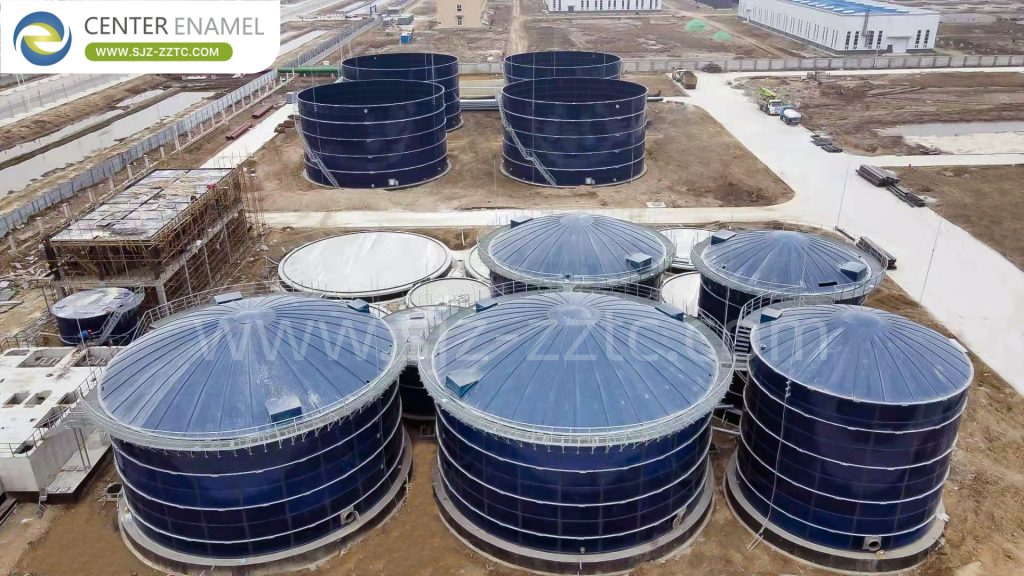
Nepal is an agricultural inland country nestled in the Himalayas, with agriculture supporting most rural livelihoods and massive livestock farming across villages and hillsides. Abundant cattle manure, crop residues, agro-processing wastewater and organic household waste form rich raw materials for local Biogas Project. Since the 1970s, Nepal has promoted household biogas production using cattle dung, proving that biogas can cover a large part of residential cooking and lighting demands. With growing population and rural industrialization, traditional scattered biogas facilities can no longer meet demand, making standardized Anaerobic Solutions and mature technologies like CSTR Process essential for modernizing Nepal’s biogas industry.
Advantages of Biogas Project for Nepal’s Energy Development
Biogas projects bring remarkable economic, environmental and social benefits to Nepal’s energy development.
First, they reduce heavy reliance on imported fossil fuels and unstable grid power, realizing rural energy independence.
Second, organic waste such as livestock manure and crop straw is recycled to avoid river pollution, air pollution from straw burning and greenhouse gas emissions.
Third, biogas replaces firewood for cooking, effectively curbing deforestation and protecting Himalayan ecological vegetation.
Fourth, digested slurry and residues become high-quality organic fertilizer, lowering farmers’ chemical fertilizer costs and boosting crop yields.
Lastly, large-scale Biogas Project creates local construction, operation and maintenance jobs, driving rural economic growth under Nepal’s green development roadmap.
Nepal National Biogas and Renewable Energy Policy
The Nepalese government has long prioritized renewable energy and rural biogas promotion. It offers subsidies, low-interest loans and technical support for household and community biogas plants to encourage wider adoption. Policies strongly advocate organic waste recycling, low-carbon rural development and clean energy popularization.
Meanwhile, Nepal actively introduces international advanced Anaerobic Solutions and standardized EPC contractors to upgrade small traditional biogas ponds into industrial-grade biogas projects. The nation also aligns with global carbon reduction goals, supporting biogas power generation, agricultural circular economy and eco-village construction, creating a favorable policy environment for applying CSTR Process and other high-efficiency anaerobic technologies nationwide.
Four Main Anaerobic Technologies for Nepal Biogas Project
Center Enamel provides four mature anaerobic technologies tailored to Nepal’s mountainous terrain, scattered rural settlements and diverse organic waste features, covering CSTR Process, UASB, USR and IC processes.
CSTR Process (Completely Stirred Tank Reactor):As the most widely applied solution in Nepal’s livestock farms and agro-processing plants, the CSTR Process adopts high-torque mechanical stirring to fully mix organic waste and microbial sludge. It handles high-solids materials like cattle manure and crop residues well, prevents sediment stratification, ensures stable fermentation and steady biogas output. It is the top choice for medium and large-scale Biogas Project in Nepal’s rural and industrial zones.
UASB Process (Upflow Anaerobic Sludge Blanket):Proven globally and widely used in South Asia, UASB allows wastewater to flow upward through dense granular sludge to decompose organic matter efficiently. It features simple structure, easy maintenance and stable operation, perfectly suitable for Nepal’s food processing and light industry wastewater biogas treatment.
USR Process (Upflow Solid Reactor):Optimized for high-concentration and high-suspended-solid waste, the USR Process has low operation cost and strong raw material adaptability. It fits Nepal’s decentralized rural small-scale biogas projects well, requiring less land and simple daily management.
IC Process (Internal Circulation):As a high-rate anaerobic technology, the IC Process uses self-produced biogas to drive internal liquid circulation. Its volumetric load is 3–5 times higher than traditional reactors, saving land and delivering outstanding COD removal efficiency. It is ideal for large-scale industrial biogas projects in Nepal’s southern plain industrial hubs.
Core Equipment for Nepal Biogas Project
To match Anaerobic Solutions and CSTR Process, Center Enamel supplies complete reliable equipment for Nepal biogas projects. GFS Tanks serve as core anaerobic fermentation tanks, resisting pH 1–14 corrosion, seismic shocks and strong sunlight, adapting to Nepal’s mountain climate and acidic organic waste. Supporting equipment includes FBE Tanks for water regulation and storage, double membrane gas holders for airtight biogas collection and storage, and aluminum dome roofs that resist humid mountain air and avoid rainwater dilution. All equipment is factory prefabricated, easy to assemble and durable, forming a full-turnkey biogas system for Nepalese clients.
Why Center Enamel Is the Preferred EPC Contractor
Center Enamel stands out as the most trusted EPC contractor for Nepal’s Biogas Project and Anaerobic Solutions for multiple key reasons:
- Offers one-stop turnkey services covering project design, equipment manufacturing, installation, commissioning and after-sales support, greatly reducing clients’ coordination costs.
- Delivers customized Anaerobic Solutions tailored to Nepal’s local raw materials, project scales, mountain terrain and regional environmental conditions.
- GFS tanks and supporting equipment feature long service life and low maintenance cost, effectively improving clients’ long-term investment returns.
- Provides full-cycle professional technical guidance to solve on-site operation and technical problems in real time throughout the project lifecycle.
- Integrates core technology, complete equipment, standardized construction and industry standards, making it a highly reliable long-term partner for Nepal’s biogas development and organic waste treatment industry.
Professional Installation Process of Center Enamel
Center Enamel adopts a mature, terrain-adaptive installation process perfectly suited to Nepal’s complex mountainous landforms, remote villages and underdeveloped infrastructure:
- Adopts hydraulic jacking top-down installation with no high-altitude scaffolding required, suitable for mountainous, narrow and remote areas where large cranes cannot work smoothly.
- All tank parts are fully factory prefabricated with zero on-site welding; the whole structure is assembled only with high-strength bolts.
- Avoids welding failure risks caused by Nepal’s high humidity, dust and complex alpine climate conditions.
- Bolted tank structure removes the long curing period required by traditional concrete projects, enabling fast commissioning and putting Nepal biogas projects into formal operation in a short time.
Center Enamel Typical Biogas Project Cases
Case1: Singapore Biogas Project
Process Stage: CSTR
Tank Dimensions:
φ18.34 × 8.4 m (H) — 1 Unit
φ8.41 × 9.0 m (H) — 1 Unit
φ11.46 × 7.2 m (H) — 1 Unit
Total Volume: 3,458 m³
Completion Year: 2021
Case2: Canada Biogas Project
Tank Dimensions: φ8.4 × 7.2 m (H) — 2 Units
Total Volume: 798 m³
Completion Year: 2024
Nepal’s abundant livestock manure and agricultural residues provide solid raw material foundation for local Biogas Project, while national renewable energy policies further boost the demand for professional Anaerobic Solutions and mature CSTR Process. Center Enamel integrates diversified anaerobic technologies, complete biogas equipment, professional EPC service advantages and terrain-adaptive installation technology, delivering one-stop customized turnkey solutions for Nepal. Cooperating with Center Enamel helps Nepal accelerate rural clean energy popularization, organic waste recycling and circular agriculture development, supporting ecological protection, energy independence and long-term sustainable rural revitalization across the country.