
Advanced Anaerobic Solutions and GFS Tanks for India Biogas Project
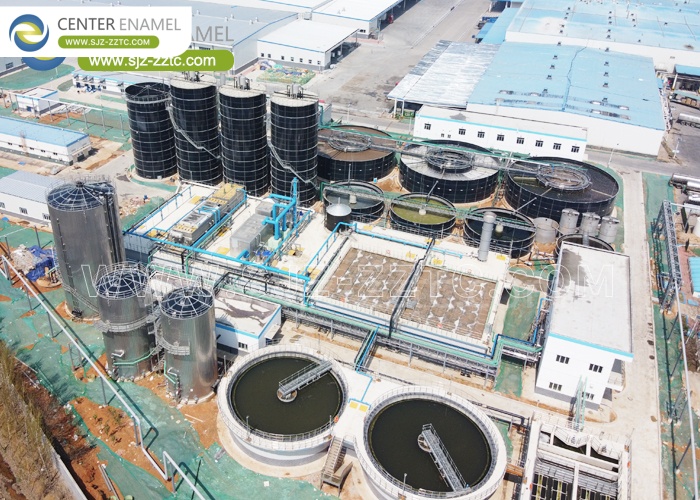
India is one of the world’s fastest-growing economies with a vast agricultural base, massive livestock farming, and extensive food and cassava processing industries. All these sectors generate enormous volumes of organic waste, including agricultural residues, livestock manure, food processing wastewater, and industrial organic effluents. These waste streams, if left untreated, not only pollute soil, rivers, and groundwater but also release harmful greenhouse gases into the atmosphere.
Meanwhile, they serve as a rich, renewable raw material source for Biogas Project development across the country. Biogas produced from organic waste has emerged as a game-changing clean energy alternative in India, helping the nation reduce reliance on fossil fuels, cut carbon emissions, solve environmental pollution problems, and boost rural and industrial energy self-sufficiency. With the rising demand for green energy and strict environmental regulations, adopting professional Anaerobic Solutions has become essential for every large-scale biogas initiative in India.
Working Principle of Biogas Generation
Biogas is primarily generated through natural anaerobic digestion, a biological process where microorganisms break down biodegradable organic matter in an oxygen-free environment. The entire biogas generation principle follows a four-stage natural degradation process: hydrolysis, acidogenesis, acetogenesis, and methanogenesis.
First, complex organic substances like starch, cellulose, protein, and sugar in agricultural waste or industrial wastewater are decomposed into simple soluble small molecules through hydrolysis.
Next, acid-producing bacteria convert these simple substances into volatile fatty acids and alcohols during acidogenesis. In the acetogenesis phase, these intermediate products are further decomposed into acetic acid, hydrogen, and carbon dioxide.
Finally, methanogenic archaea consume acetic acid and hydrogen to produce methane and carbon dioxide, forming the main components of biogas.
This naturally occurring fermentation process is precisely simulated and optimized in industrial biogas plants, where controlled temperature, pH value, and microbial activity ensure stable, high-yield biogas production. Well-designed anaerobic systems can efficiently convert waste into usable biogas, which can be used for power generation, heat supply, cooking fuel, and industrial steam production, perfectly aligning with India’s renewable energy development goals.
Biogas Application and Circular Economy Value
In India’s industrial and rural biogas landscape, biogas utilization and waste recycling have become core trends driving sustainable development. Large-scale food processing, cassava starch factories, sugar mills, and dairy plants across India discharge high-concentration organic wastewater daily. Without proper treatment, this wastewater damages aquatic ecosystems and endangers public health. By deploying professional biogas facilities, these enterprises can turn waste into treasure.
The captured biogas can be converted into electricity to power factory operations or provide thermal energy for production processes, significantly cutting industrial energy costs. In rural India, household and community-scale biogas projects utilize cattle manure and crop residues to generate clean biogas for daily cooking and heating, reducing firewood consumption and deforestation.
Moreover, the anaerobic digestion byproduct—biogas slurry and residue—is high-quality organic fertilizer, which can be returned to farmland to improve soil fertility and promote green agricultural development. This closed-loop circular economy model makes biogas projects an indispensable part of India’s environmental protection and rural revitalization strategy, and high-performance Anaerobic Solutions are the core guarantee for realizing this circular economy.
Main Anaerobic Technologies for India Biogas Projects
To adapt to diverse organic waste characteristics and project scale demands in India, Center Enamel provides mature and customized anaerobic technologies for local Biogas Project, including CSTR, USR, UASB, and IC processes.
CSTR (Completely Stirred Tank Reactor) is highly suitable for Indian biogas projects with high solid content raw materials such as livestock manure and pulp residues. Its high-torque mechanical stirring system fully mixes microbial sludge and organic wastewater, avoiding sediment accumulation and stratification of starch and fiber particles. It features stable operation, strong impact load resistance, and consistent biogas output, making it ideal for zero-waste industrial processing plants and large livestock farms in India.
USR (Upflow Solid Reactor) is optimized for high-concentration organic waste with high suspended solids, widely applied in rural and small-to-medium industrial biogas projects in India. It has a simple structure, low operation cost, and strong adaptability to complex raw materials, perfectly fitting India’s scattered rural waste resource utilization needs.
UASB (Upflow Anaerobic Sludge Blanket) is a globally proven classic anaerobic process. Wastewater flows upward through a dense anaerobic granular sludge blanket to achieve efficient organic matter degradation. It is reliable, easy to maintain, and widely used in food processing and cassava wastewater treatment biogas projects across South Asia, including India.
IC (Internal Circulation) process represents the top-tier high-rate anaerobic technology, specially designed for large-scale industrial biogas projects in India. It uses self-produced biogas to drive internal liquid circulation, forming intense mixing inside the reactor. Its volumetric loading rate is 3 to 5 times that of traditional anaerobic reactors, with outstanding COD removal efficiency and a space-saving vertical structure, becoming the preferred option for large starch factories and industrial parks in India.
Comprehensive Advantages of Center Enamel in India Biogas Projects
Owns Asia’s largest and most professional GFS tank manufacturing base, with strong production capacity and standardized prefabrication to ensure timely equipment delivery even for remote Indian project sites.
Possesses over 200 patented enamel formulas and independent enamel frit production, enabling equipment to resist corrosion from acidic wastewater, residues and India’s tropical humid climate.
Complies with international standards including ISO 28765, AWWA D103-09, OSHA and NSF/ANSI 61; every steel plate undergoes 1500-volt high-voltage spark testing to guarantee no coating defects.
Acts as the main drafter of China’s GFS tank industry standard, setting global quality benchmarks for biogas project construction.
Has rich tropical project experience in Southeast Asia, fully adapting to India’s high temperature, high humidity and monsoon climate.
Core Equipment Supplied by Center Enamel for Biogas Projects
GFS Tanks: Sintered above 820°C with molecular fusion of glass enamel and steel plates; resistant to corrosion in pH 1–14, seismic stable and UV aging resistant, ideal for cassava and food processing wastewater in India.
FBE Tanks: Used for regulating tanks and treated water storage in biogas systems.
Double membrane gas holders: Realize airtight collection and safe storage of biogas.
Aluminum dome roofs: Resist humid and saline coastal air, protecting facilities from rainwater dilution.
Provides full sets of matched core and auxiliary equipment to form complete turnkey biogas project solutions.
Why Center Enamel Is the Preferred EPC Contractor
Offers one-stop turnkey services covering project design, equipment manufacturing, installation, commissioning and after-sales support, reducing clients’ coordination costs.
Delivers customized Anaerobic Solutions tailored to local raw materials, project scales and regional environments across India.
GFS tanks and supporting equipment feature long service life and low maintenance cost, improving clients’ long-term investment returns.
Provides full-cycle professional technical guidance to solve on-site operation and technical problems in real time.
Integrates technology, equipment, construction and industry standards, making it a reliable partner for India’s biogas and wastewater treatment industry.
Professional Installation Process of Center Enamel
Adopts hydraulic jacking top-down installation, no high-altitude scaffolding required; suitable for mountainous, narrow and remote areas with limited crane access.
All tank parts are factory prefabricated with zero on-site welding, assembled entirely by high-strength bolts.
Avoids welding failure risks caused by India’s high humidity and dusty construction environment.
Bolted structure eliminates long curing time needed for concrete projects, enabling fast commissioning and quick project operation.
Classic Successful Biogas Project Cases of Center Enamel
Case 1: Singapore Biogas Project
Process Stage: CSTR
Tank Dimensions:
φ18.34 × 8.4 m (H) — 1 Unit
φ8.41 × 9.0 m (H) — 1 Unit
φ11.46 × 7.2 m (H) — 1 Unit
Total Volume: 3,458 m³
Completion Year: 2021
Case 2: France Biogas Project
Process Stage: CSTR
Tank Dimensions: φ18.33 × 8.4 m (H) — 1 Unit
Total Volume: 2,215 m³ — 1 Unit
Completion Year: 2021
In conclusion, India’s abundant agricultural and industrial organic waste resources create huge development potential for Biogas Project, while efficient and reliable Anaerobic Solutions are the core support for sustainable project operation. As a professional EPC contractor, Center Enamel relies on diversified anaerobic technologies, high-performance GFS Tanks and complete supporting equipment, outstanding comprehensive advantages, efficient installation process and rich project experience, providing one-stop turnkey solutions for India’s biogas industry. Choosing Center Enamel means obtaining high-quality, durable and cost-effective biogas project infrastructure, helping India accelerate energy independence, environmental pollution control and circular economic development, and jointly writing a new chapter of sustainable green energy development。