
Advanced Anaerobic Solutions and GFS Tanks for South Korea Biogas Project
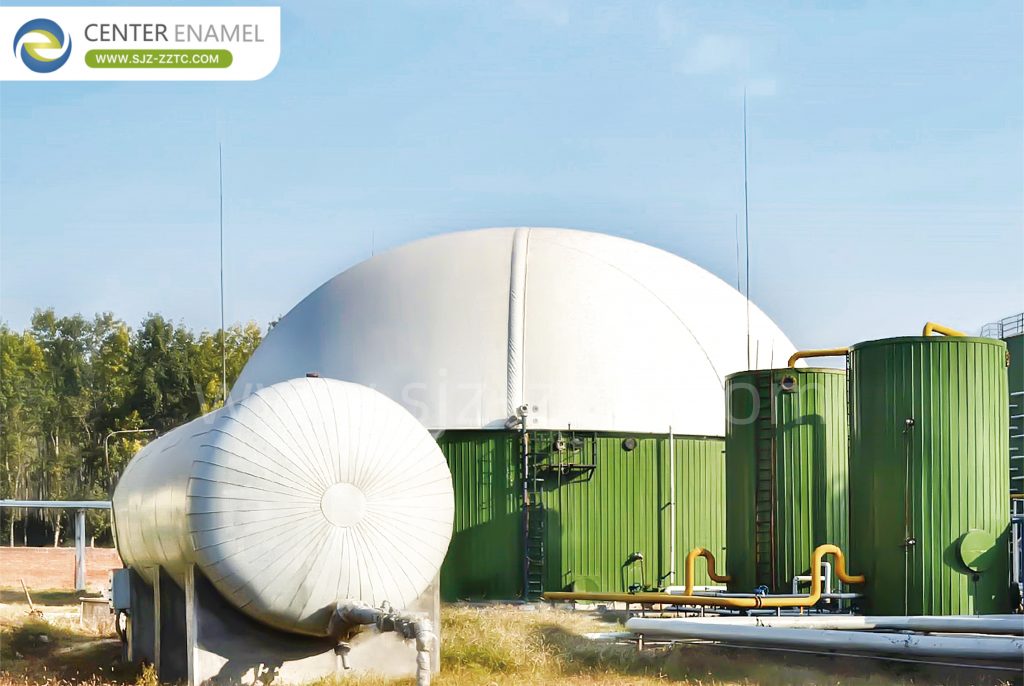
South Korea is a highly industrialized and urbanized country with developed agriculture, livestock breeding, food processing, catering industry and municipal waste management systems. A large amount of organic waste is generated every day across cities, rural areas and industrial parks, becoming stable raw materials for local Biogas Project construction.
With limited domestic fossil energy reserves and strict national carbon neutrality goals, South Korea actively promotes waste-to-energy strategies. Traditional landfill and incineration methods can no longer meet high-standard environmental requirements. Adopting professional Anaerobic Digestion technology and durable GFS Tanks has become an indispensable choice for South Korea’s ecological environmental protection and clean energy transition.
Sources of Biogas Raw Materials in South Korea
South Korea has diversified and concentrated raw material sources supporting Anaerobic Digestion and biogas production:
- Food and catering waste: Household kitchen waste, restaurant residues and food waste sorted from urban communities, featuring high organic content and easy microbial fermentation.
- Livestock manure: Massive cattle, pig and poultry manure from large-scale breeding farms nationwide, the most traditional and stable raw material for rural and industrial biogas projects.
- Industrial organic wastewater: Wastewater from food processing, beverage factories, brewery and agro-industrial enterprises, rich in starch, protein and soluble organics.
- Municipal green and organic solid waste: Garden pruning waste, agricultural crop residues and sorted domestic organic waste, suitable for mixed anaerobic fermentation.
These standardized organic waste resources provide sufficient and stable raw material guarantee for the large-scale promotion of Biogas Project and Anaerobic Digestion technology in South Korea.
Advantages of Biogas Project for Korea Energy Development
Developing Biogas Project brings remarkable economic, environmental and social benefits to South Korea’s energy and sustainable development.
First, biogas eases South Korea’s high dependence on imported fossil fuels, supplements urban and industrial clean energy supply, and optimizes the national energy structure while enhancing energy security.
Second, Anaerobic Digestion realizes harmless disposal and resource recycling of food waste, livestock manure and industrial organic wastewater, reducing landfill occupation, lowering incineration pollutant emissions and cutting greenhouse gas output.
Third, biogas can be used for power generation, industrial heating and urban auxiliary energy supply, helping South Korea steadily achieve carbon neutrality and low-carbon city construction targets.
Fourth, biogas digestate byproducts are processed into high-quality organic fertilizer and soil conditioner, supporting eco-agriculture and urban greening construction, reducing chemical fertilizer usage.
In addition, large-scale biogas projects drive the development of environmental protection industry, create professional technical jobs, and strengthen South Korea’s leading edge in circular economy and renewable energy technology.
Korea National Biogas & Renewable Energy Policy
The South Korean government has formulated strict and forward-looking renewable energy, carbon neutrality and organic waste recycling policies. The government strongly advocates waste reduction, harmless treatment and resource utilization, providing financial subsidies, tax incentives and technical support for industrial, municipal and rural Biogas Project.
South Korea actively introduces international advanced Anaerobic Digestion technologies and professional EPC contractors to build high-standard modern biogas plants. Authorities encourage the application of CSTR, UASB, USR and IC anaerobic processes, as well as high-performance GFS Tanks in waste treatment and energy recycling projects. The country prioritizes biogas power generation, thermal utilization and comprehensive resource recovery, creating a favorable policy environment for the widespread application of biogas infrastructure nationwide.
Four Main Anaerobic Technologies for Korea Biogas Project
Center Enamel provides four mature and customized anaerobic technologies perfectly adapted to South Korea’s compact land use, high environmental standards and diverse organic waste characteristics: CSTR, UASB, USR and IC Process.
CSTR (Completely Stirred Tank Reactor)CSTR is ideal for South Korea’s high-solid waste biogas projects such as livestock manure and food catering residues. High-torque mechanical stirring fully mixes microbial sludge and organic raw materials, avoiding sediment accumulation and material stratification. It runs stably with strong impact load resistance and stable biogas output, suitable for large breeding farms and food industrial parks.
UASB Process (Upflow Anaerobic Sludge Blanket)UASB is a globally classic and proven Anaerobic Digestion technology. Organic wastewater flows upward through dense anaerobic granular sludge blanket to efficiently degrade organic pollutants. It covers small land area, operates stably and requires low maintenance, widely used in food processing and brewery wastewater biogas treatment in South Korea.
USR Process (Upflow Solid Reactor)USR Process is optimized for high-concentration and high suspended solid organic waste. It features simple structure, low operating cost and strong raw material adaptability, perfectly fitting small and medium-sized biogas projects in South Korea’s rural and suburban areas.
IC (Internal Circulation) ProcessIC is high-rate efficient anaerobic technology, utilizing self-produced biogas to drive internal liquid circulation. Its volumetric loading rate is 3–5 times higher than traditional reactors, with outstanding COD removal efficiency and space-saving layout. It is the preferred solution for large-scale industrial biogas projects in South Korea’s urban industrial complexes.
Core Equipment for South Korea Biogas Project
To support Biogas Project and Anaerobic Digestion operation, Center Enamel supplies a full set of core and auxiliary equipment for South Korean clients.
Glass-Fused-to-Steel (GFS) Tanks
- Core equipment for USR reactors, equalization tanks, and water storage systems.
- Super corrosion resistance: Withstands pH 1–14, adapts to acidic and corrosive industrial wastewater.
- Weather resistance: Resists tropical high temperature, humidity, and UV radiation.
- Fast installation: Factory prefabricated, bolted assembly, no on-site welding.
- Long service life: Over 30 years with low maintenance.
Double Membrane Gas Holder
Safely stores biogas produced in the treatment process and supports stable energy supply.
Tank Roof Systems
Air Membrane Roof, Enamel Roof, Aluminum Dome Roof, and FRP Roof provide windproof, rainproof, corrosion-resistant, and gas-tight protection.
FBE Tanks
Cost-effective for equalization tanks, intermediate tanks, and clean water storage.
Complete Auxiliary Systems
Pretreatment, agitation, feeding, sludge discharge, and automatic control systems form a fully automated and stable treatment system.
Why Center Enamel Is the Preferred EPC Contractor
Center Enamel stands out as the most trusted EPC partner for South Korea’s Biogas Project and Anaerobic Digestion development:
- Offers one-stop turnkey services covering project design, equipment manufacturing, installation, commissioning and after-sales support, simplifying client project coordination.
- Delivers customized anaerobic solutions tailored to South Korea’s land conditions, four-season climate and local organic waste features.
- GFS Tanks and supporting equipment own long service life and low maintenance cost, effectively improving long-term investment returns.
- Provides full-cycle professional technical guidance to solve on-site operation and technical problems in real time.
- Integrates core technology, complete equipment, standardized construction and international industry standards, becoming a reliable long-term partner for Korea’s renewable energy and waste treatment industry.
Professional Installation Process of Center Enamel
Center Enamel’s installation process is fully adapted to South Korea’s compact construction sites, strict construction standards and complex terrain:
- Adopts hydraulic jacking top-down installation, no high-altitude scaffolding required, suitable for narrow urban sites and limited hoasting space.
- All tank components are factory prefabricated with zero on-site welding, assembled entirely by high-strength bolts.
- Avoids welding failure risks caused by South Korea’s humid climate, low temperature in winter and dusty construction conditions.
- Bolted structure eliminates the long curing period of concrete projects, realizing fast commissioning and rapid project operation.
Classic Successful Biogas Project Cases of Center Enamel
Case1: Indonesia Biogas Project
Tank Application: Palm Oil Wastewater Treatment Plant
Tank Model: Ø19.86 × 8.4 m
Number of Tanks: 3 GFS Tanks
Installation: 7 personnel, 40 days
Installation Date: November 2009
Case2: Malaysia Biogas Project
Tank Dimensions: φ22.93 × 12.325 m (H) — 1 Unit
Total Volume: 5,087 m³ — 1 Unit
Completion Year: 2025
South Korea has abundant livestock manure, food waste and industrial organic waste, laying a solid foundation for Biogas Project development. Strict carbon neutrality policies and clean energy demand further boost the application of mature Anaerobic Digestion technology and high-performance GFS Tanks. Center Enamel provides diversified anaerobic processes, full-set supporting equipment, professional EPC advantages and standardized installation, delivering one-stop turnkey solutions. Cooperation with Center Enamel helps South Korea promote organic waste recycling, clean energy replacement and low-carbon urban sustainable development.