
Advanced Anaerobic Technologies for Indonesia Food Processing Wastewater Treatment Project
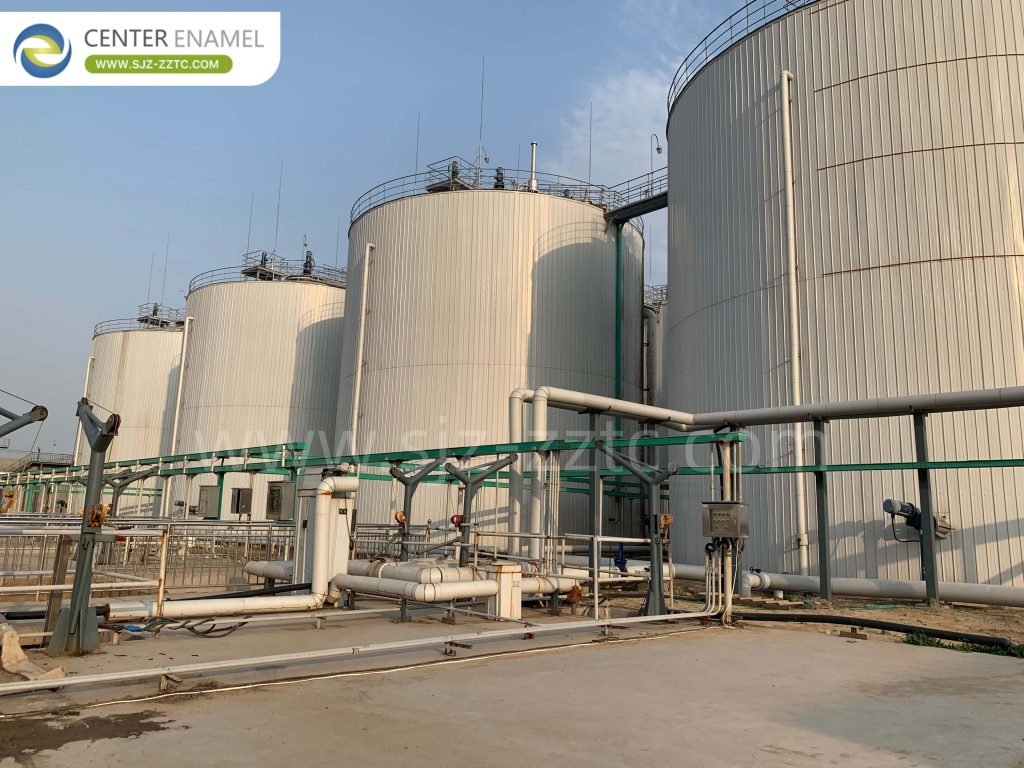
As one of the largest and fastest-growing economies in Southeast Asia, Indonesia has a booming food processing industry covering palm oil, cassava starch, seafood, fruit and vegetable canning, beverages, and snack production. Supported by abundant agricultural resources, a large domestic market, and growing export demand, the sector has become a pillar of national manufacturing. However, rapid industrial expansion has led to a sharp rise in high-strength organic wastewater discharge. Food Processing Wastewater Treatment Project has become a mandatory requirement for enterprises to comply with Indonesia’s environmental regulations, control operational costs, and achieve sustainable industrial development.
Center Enamel (Shijiazhuang Zhengzhong Technology Co., Ltd), a global leading EPC general contractor for high-concentration organic wastewater treatment and biogas projects, delivers full-scope turnkey solutions tailored for Indonesia’s food processing sector. Backed by mature Anaerobic Technologies and highly adaptable USR Process, combined with high-performance core equipment such as GFS tanks, we help local food factories achieve stable effluent compliance, efficient biogas energy recovery, and long-term reliable operation. This article introduces wastewater characteristics, advanced anaerobic processes, core equipment, engineering advantages, installation services, and successful cases to serve as a practical reference for Indonesian food enterprises in selecting technical routes and EPC partners.
Overview of Indonesia’s Food Processing Industry and Wastewater Treatment Challenges
Indonesia’s food processing industry is dominated by palm oil, cassava starch, seafood, and fruit and vegetable processing, which generate large volumes of high-organic, high-solid wastewater. The Indonesian government has implemented strict environmental laws and discharge standards to protect rivers, coastal areas, and tropical ecosystems. Factories failing to build compliant Food Processing Wastewater Treatment Project systems face fines, production restrictions, or mandatory shutdowns.
Food processing wastewater in Indonesia shows typical characteristics:
Extremely high organic load: COD ranges from 8,000 to 40,000 mg/L due to starch, sugar, fat, and protein.
High suspended solids (SS): Residues, fibers, and sediment cause blockages, equipment abrasion, and sediment buildup.
Strong acidification tendency: Fast fermentation lowers pH rapidly, inhibiting microbes and corroding ordinary structures.
Periodic fluctuations: Seasonal raw material supply causes large variations in flow and concentration.
High biodegradability: Ideal for anaerobic treatment to remove organics and recover biogas.
Effective treatment requires a combined system of pretreatment, high-rate anaerobic treatment, and post-treatment. Among available Anaerobic Technologies, USR Process is particularly well-suited for Indonesia’s high-SS, high-starch food wastewater.
Analysis of Food Processing Wastewater Generation Principles
Food processing wastewater originates from washing, peeling, slicing, blanching, fermentation, refining, and equipment cleaning. Despite differences between products, the wastewater shares key traits:
- High organic concentration leading to severe oxygen depletion risk.
- High solids causing system clogging and maintenance burdens.
- Acidification leading to corrosion and microbial inhibition.
- Fluctuating loading requiring high system resilience.
- Strong biodegradability supporting efficient anaerobic conversion.
In Indonesia, cassava starch and palm oil processing produce the most challenging wastewater with high cyanide potential, high solids, and rapid acidification. A robust Food Processing Wastewater Treatment Project must include robust pretreatment, efficient anaerobic digestion, and reliable post-treatment.
Anaerobic Technologies for Indonesia Food Processing Wastewater Treatment Project
Anaerobic treatment is the core of high-efficiency food wastewater management, offering low energy use, high loading, less sludge, and renewable biogas. Center Enamel provides four proven Anaerobic Technologies for Indonesia, with USR Process as the preferred solution.
USR Process (Upflow Solid-state Anaerobic Reactor)
USR Process is specially designed for high-SS, high-solid food wastewater and is widely applied in Indonesian starch, palm oil, and seafood processing.
Working principle: Wastewater flows upward through a concentrated sludge layer; solids and microbes are retained via sedimentation, achieving long SRT and high degradation efficiency.
Core advantages: Simple structure, no complex three-phase separator or mechanical stirring; low investment and operation cost; strong anti-clogging ability; high stability under tropical climate; ideal for high-SS food wastewater.
Application scenarios: Cassava starch, palm oil, fruit and vegetable, seafood, and small-to-medium food enterprises in Indonesia.
CSTR Process (Completely Stirred Tank Reactor)
CSTR uses full mechanical mixing to handle high-solid, high-impurity wastewater, preventing crusting and ensuring stable biogas production for zero-waste facilities.
UASB Process (Upflow Anaerobic Sludge Blanket)
UASB uses granular sludge for efficient soluble organics removal, widely used in beverage, sugar, and refined starch processing.
IC Process (Internal Circulation Reactor)
IC is a high-rate system with 3–5 times higher loading than conventional reactors, ideal for large-scale industrial zones and high-capacity food parks.
For Indonesia’s Food Processing Wastewater Treatment Project, Center Enamel customizes processes based on water quality, flow, land, and energy needs, with USR Process as the cost-effective, stable core solution.
Overall Advantages of Center Enamel in Indonesia Food Processing Wastewater Treatment Project
Adaptation to tropical and coastal environments
Systems resist high temperature, humidity, UV radiation, coastal salt spray, and seismic risks, ensuring long service life across Indonesia.
Customized process design
Targeted pretreatment (desanding, degreasing, pH adjustment, cyanide removal) plus USR-led anaerobic and post-treatment ensures stable compliance for high-SS, acid-prone wastewater.
Wastewater treatment and energy recycling
Biogas recovered via Anaerobic Technologies is used for on-site power generation, drying, and heating, significantly lowering energy costs.
Compliance with local and international standards
Designs meet Indonesia’s environmental requirements and international certifications including ISO, AWWA, OSHA, and NSF/ANSI 61.
Full-process EPC turnkey service
One-stop solution covering design, production, transportation, installation, commissioning, training, and after-sales to minimize risks and coordination.
Core Equipment Provided by Center Enamel
Glass-Fused-to-Steel (GFS) Tanks
Flagship equipment for USR reactors, equalization tanks, and effluent storage.
Super corrosion resistance: Fused above 820°C, resistant to pH 1–14, suitable for acidic and corrosive food wastewater.
Seismic & weather stability: Bolted structure, UV-resistant, salt-spray-proof, long service life.
Fast installation: Factory prefabricated, bolted on site, short construction cycle.
Fusion Bonded Epoxy (FBE) Tanks
Cost-effective for equalization, intermediate, and clean water tanks with uniform, durable coating.
Biogas storage and utilization equipment
Double membrane gas holders and aluminum dome roofs ensure safe, efficient biogas recovery.
Complete auxiliary equipment
Grilles, desanders, oil separators, mixing systems, and automatic controls form a fully integrated solution.
Why Center Enamel Is the Preferred EPC Contractor
Asia’s largest GFS tank manufacturing base
Stable large-scale production ensures quality and on-time delivery even for remote Indonesian sites.
Strong R&D and patented formulas
Over 200 patented enamel formulas and in-house frit production provide superior corrosion resistance.
Strict quality control
1500V high-voltage spark test per plate; full compliance with global standards ensures zero defects.
Industry standard leader
Main drafter of China’s GFS tank industrial standard, setting global quality benchmarks.
Extensive Southeast Asia experience
Proven track record in Indonesia, Thailand, Malaysia, and Vietnam; familiar with local policies and geology.
Full-life cycle service
Continuous support from consultation to maintenance ensures stable long-term operation.
Efficient Installation Process in Indonesia
Hydraulic jacking system
Top-down installation without high scaffolding, suitable for narrow or remote sites.
Factory prefabrication and bolted assembly
No on-site welding avoids humidity-related quality risks; fast and safe construction.
Rapid commissioning
No curing period compared to concrete; early startup and faster ROI.
Localized construction cooperation
Collaboration with local teams ensures smooth execution and timely support.
Classic Successful Cases of Center Enamel in Food Processing
Case 1: Shandong Food Wastewater Project
Tank Dimensions: φ7.64*9.6 m (H) 1 unit
Total Volume: 440 m³
Completion Time: 2025
Case 2: Zhejiang Food Wastewater Expansion and Renovation Project
Tank Dimensions: Ф14.52*10.8 m (H) 1 unit
Total Volume: 1787 m³ 1 unit
Completion Time: 2023
Indonesia’s food processing industry is accelerating green transformation, making Food Processing Wastewater Treatment Project essential for regulatory compliance and circular economy. Center Enamel provides reliable, cost-effective solutions using advanced Anaerobic Technologies and optimized USR Process, supported by high-performance GFS tanks and full EPC services. We help enterprises achieve stable effluent discharge, biogas energy recovery, and long-term operational benefits. As a trusted EPC partner, Center Enamel will continue to support Indonesia’s food industry in meeting global environmental standards and boosting sustainable competitiveness.