
Advanced Anaerobic Technologies for Thailand Food Processing Wastewater Treatment Project
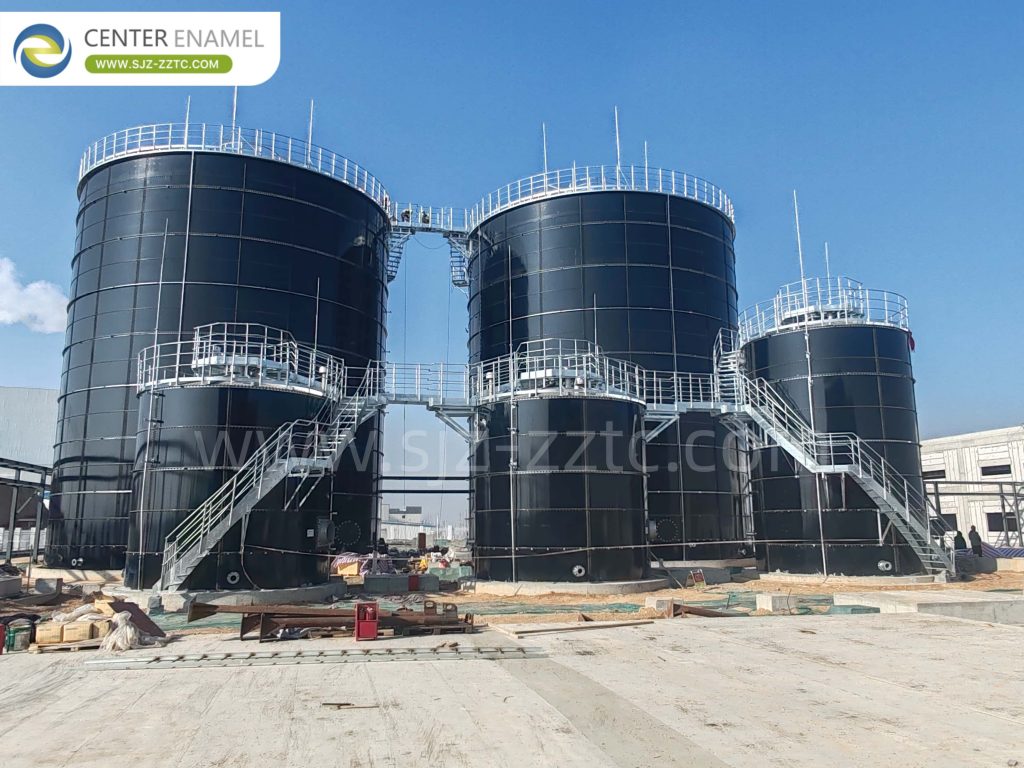
As a key manufacturing hub in Southeast Asia, Thailand’s food processing industry has maintained steady growth, covering starch, sugar, seafood, canned food, beverage, and meat processing. With the rapid expansion of production capacity, Food Processing Wastewater Treatment Project has become a core link for enterprises to meet environmental regulations, control operating costs, and realize resource recycling. Food processing wastewater is characterized by high organic concentration, high suspended solids, high oil content, and periodic fluctuations in water quality and volume. If not properly treated, it will seriously affect water ecological safety and sustainable operation of enterprises.
Center Enamel (Shijiazhuang Zhengzhong Technology Co., Ltd), as a global leading EPC general contractor of high-concentration organic wastewater treatment and biogas engineering, provides full-process turnkey solutions for Thailand’s food processing enterprises. With mature Anaerobic Technologies, reliable core equipment, and rich project experience, we help food factories achieve stable discharge of wastewater, efficient energy recovery, and long-term stable operation of projects. This article focuses on the characteristics of Thailand’s food processing wastewater, mainstream anaerobic treatment processes (including USR Process), core equipment, engineering advantages, installation services, and classic cases to provide a reference for Thailand’s food processing industry in selecting technical routes and EPC partners.
Analysis of the Generation Principle of Food Processing Wastewater
Food processing wastewater mainly comes from cleaning, peeling, slicing, blanching, fermentation, refining, and equipment washing in the production chain. Different raw materials and processes lead to great differences in wastewater composition, but they share common pollutant characteristics:
High organic load: A large amount of starch, sugar, protein, fat, and fiber are dissolved or suspended in water, resulting in COD concentration often ranging from 8,000 to 40,000 mg/L, which is a typical high-concentration organic wastewater.
High suspended solids (SS): Residues such as pulp, sediment, meat scraps, and bran lead to easy sedimentation and blockage of pipelines and equipment, increasing system wear and maintenance difficulty.
Acidification tendency: Carbohydrates and proteins are easily fermented and degraded to produce organic acids, causing a drop in pH, which affects microbial activity and corrodes conventional storage structures.
Periodicity and fluctuation: Production is affected by raw material supply and orders, resulting in large changes in water volume and concentration, putting forward high requirements for system impact resistance.
Biodegradability: Most pollutants are biodegradable, suitable for biological treatment, especially anaerobic biological treatment, which can convert organic matter into biogas while removing pollutants, realizing waste-to-energy.
In Thailand, starch processing, cassava processing, fruit and vegetable juice, and canned food production are pillar industries, and their wastewater has the characteristics of high starch content, rapid acidification, and high treatment difficulty. Therefore, a targeted Food Processing Wastewater Treatment Project must adopt a combined process of pretreatment + high-efficiency anaerobic + post-treatment to ensure stable compliance and resource recovery.
Anaerobic Technologies for Thailand’s Food Processing Wastewater Treatment Project
Anaerobic biological treatment is the core technology of high-concentration food processing wastewater treatment, with the advantages of low energy consumption, high organic load, sludge reduction, and biogas recovery. For Thailand’s food processing industry, Center Enamel optimizes and integrates four mainstream anaerobic processes: CSTR, USR Process, UASB, IC, to adapt to different wastewater characteristics and working conditions.
CSTR Process (Completely Stirred Tank Reactor)
CSTR is a fully mixed anaerobic reactor, suitable for high-solid and high-impurity food processing wastewater such as pulp mixture, fruit and vegetable residue, and starch processing residue.
Working principle: Adopt high-torque mechanical stirring to fully mix influent, sludge, and organic matter, avoid crusting and sediment accumulation, maintain uniform reaction environment, and ensure stable methane production.
Advantages: Strong impact resistance, good adaptability to high SS and high-impurity wastewater, stable operation, suitable for zero-waste recycling projects.
Application scenarios: Starch factories with high residue content, fruit and vegetable processing, and comprehensive food waste treatment bases in Thailand.
USR Process (Upflow Solid-state Anaerobic Reactor)
USR Process is a high-efficiency anaerobic reactor specially designed for wastewater with high suspended solids and high solid organic matter, which is very suitable for Thailand’s food processing wastewater with high SS and high starch characteristics.
Working principle: Wastewater enters from the bottom, flows upward through the sludge layer, fully contacts with anaerobic microorganisms; solid particles and microorganisms are retained in the reactor by sedimentation, achieving a long solid retention time (SRT) and microbial retention time (MRT), greatly improving degradation efficiency and biogas yield.
Core advantages: Simple structure, no need for complex three-phase separator or mechanical stirring, low investment and operation cost; strong adaptability to high SS, not easy to block; high organic load, stable operation under tropical climate.
Application scenarios: Thailand’s cassava starch, fruit and vegetable processing, aquatic product processing, and small and medium-sized food enterprises pursuing cost-effective solutions.
UASB Process (Upflow Anaerobic Sludge Blanket)
UASB is a widely used mature anaerobic process in Southeast Asia, forming high-activity granular sludge to efficiently degrade soluble organic matter.
Working principle: Wastewater flows upward through the granular sludge bed, organic matter is degraded by microorganisms to produce biogas; the three-phase separator at the top realizes gas-liquid-solid separation, automatically refluxes sludge, and maintains high sludge concentration in the reactor.
Advantages: Mature technology, stable operation, high volumetric load, suitable for soluble organic wastewater.
Application scenarios: Beverage, sugar, and refined starch processing with high soluble organic matter content in Thailand.
IC Process (Internal Circulation Reactor)
IC is a high-efficiency internal circulation anaerobic reactor, representing the advanced level of high-rate anaerobic technology, suitable for large-scale and high-load food processing plants.
Working principle: Use the lifting effect of biogas to drive internal liquid circulation, strengthen mass transfer, with volumetric loading rate 3–5 times that of traditional reactors, small footprint and high treatment efficiency.
Advantages: Small floor area, high COD removal rate, fast startup, suitable for large industrial parks and centralized treatment projects.
Application scenarios: Large-scale starch, beverage, and food industrial clusters in Thailand.
For Thailand’s Food Processing Wastewater Treatment Project, Center Enamel will select a single or combined anaerobic process based on water quality, water volume, land conditions, and energy demand, with USR Process as a cost-effective preferred solution for high-solid food wastewater, balancing efficiency, investment, and operation.
Overall Advantages of Center Enamel in Thailand’s Food Processing Wastewater Treatment Project
Adaptation to Thailand’s climate and geological conditions
Thailand has a tropical monsoon climate with high temperature, humidity, and coastal salinity; some areas have requirements for seismic performance. Center Enamel’s system is designed for corrosion resistance, UV resistance, and seismic resistance, adapting to complex on-site environments.
Customized solutions for food processing characteristics
Aiming at high starch, high SS, easy acidification, and periodic fluctuations of food wastewater, we provide targeted pretreatment (desanding, oil removal, pH adjustment, cyanide removal for cassava) + anaerobic + post-treatment combined process to ensure stable compliance.
Integration of treatment and energy recovery
While treating wastewater, recover biogas for factory power generation, drying, or boiler heat energy, reducing energy costs and helping Thailand’s food enterprises achieve green low-carbon and energy independence.
Compliance with local and international standards
Products and designs comply with Thailand’s industrial and environmental standards, as well as international certifications such as ISO, AWWA, ensuring project acceptance and long-term operation.
Full-process EPC service
Covering design, production, transportation, installation, commissioning, and after-sales, providing real turnkey solutions, reducing customer coordination links and project risks.
Core Equipment Provided by Center Enamel for Food Processing Wastewater Treatment
Center Enamel provides a full set of core equipment for Food Processing Wastewater Treatment Project, with material performance and process matching leading in the industry.
Glass-Fused-to-Steel (GFS) Tanks
As the company’s flagship product, GFS tanks are the preferred container for anaerobic reactors, regulating tanks, and effluent storage in food wastewater treatment.
Corrosion resistance: Fused at high temperature above 820°C, forming a molecular bond, resistant to pH 1–14, adapting to acidic, corrosive food wastewater.
Seismic and weather resistance: Bolted connection structure, good seismic performance; resistant to tropical UV, humidity, and coastal salt spray, long service life.
Quick installation: Factory prefabrication, on-site bolt assembly, short construction period, suitable for rapid project delivery in Thailand.
Fusion Bonded Epoxy (FBE) Tanks
Used for auxiliary structures such as regulating tanks, intermediate water tanks, and clean water tanks, with electrostatic powder coating, uniform coating, cost-effective, and good durability.
Biogas utilization and storage equipment
Double membrane gas holder: Sealed and safe, efficiently collects biogas from anaerobic systems, supporting power generation or thermal energy utilization.
Aluminum dome roof: Resists humid and salt spray environment, prevents rainwater dilution, protects the treatment system.
Supporting integrated equipment
Including pretreatment units (grille, desander, oil separator), mixing system, sludge discharge system, automatic control system, etc., to form a complete closed-loop solution.
Why Center Enamel Is the Preferred EPC Contractor for Thailand’s Food Processing Wastewater Treatment Project
Asia’s leading manufacturing base
Has the largest GFS tank production base in Asia, with automated production lines, ensuring product quality consistency and large-scale supply capacity, meeting the delivery needs of remote projects in Thailand.
Strong R&D and patented technology
Possesses more than 200 patented enamel formulas, self-produced enamel frit, with better corrosion resistance and durability than general coatings, adapting to the special corrosiveness of food wastewater.
Strict quality control system
Products comply with ISO 28765, AWWA D103-09, OSHA, NSF/ANSI 61 and other standards; each steel plate passes 1500V high-voltage spark test, zero defect in coating.
Formulator of industry standards
As the main drafter of China’s GFS tank industry standard, it leads industry technical specifications and quality benchmarks, with reliable technical strength.
Rich experience in Southeast Asian projects
Deeply engaged in Southeast Asia for many years, has completed numerous food, starch, and aquaculture wastewater treatment projects in Thailand, Malaysia, Indonesia, etc., familiar with local policies, geology, and construction habits.
Full-life cycle service
Provide pre-sales consultation, planning and design, equipment supply, construction and installation, commissioning training, and after-sales maintenance to ensure long-term stable operation of the project.
Efficient Installation Process of Center Enamel in Thailand
Thailand has complex terrain, some project sites are remote with inconvenient transportation; Center Enamel’s installation process is optimized for rapid and safe construction.
Jacking system technology
Adopt hydraulic jacking system for top-down installation, no need for high-altitude scaffolding, suitable for narrow sites and areas where cranes cannot enter.
Factory prefabrication and on-site assembly
All components are prefabricated in the factory, on-site only bolt assembly, no on-site welding, avoiding welding quality problems caused by high temperature and humidity, ensuring construction quality.
Short commissioning cycle
Compared with traditional concrete tanks, GFS tanks have no maintenance period, fast commissioning, helping enterprises put into operation as soon as possible and recover investment.
Localized construction team
Cooperate with local engineering teams in Thailand, familiar with local construction specifications and cultural habits, ensuring smooth project progress and timely response.
Classic Successful Cases of Center Enamel in Food Processing Wastewater Treatment
Case 1: Indonesian Food Processing Wastewater Treatment Project
Tank Dimensions:
φ12.99*4.8 m (H) 3 tanks
φ6.88*3.6 m (H) 2 tanks
Total Volume: 2176 m³
636 m³ 3 tanks
134 m³ 2 tanks
Completion Time: 2025
Case 2: Xinjiang Food Wastewater Treatment Project
Tank Size: φ15.29*9.6 m (H) 1 unit
Total Volume: 1762 m³ 1 unit
Completion Time: 2023
Thailand’s food processing industry is in a critical period of upgrading and green transformation. Food Processing Wastewater Treatment Project is not only an environmental compliance requirement but also an important way to reduce costs, increase efficiency, and realize circular economy. As a global leading EPC contractor, Center Enamel relies on mature Anaerobic Technologies (including USR Process with high cost performance), high-quality GFS tank core equipment, customized solutions, and full-process service capabilities to provide reliable support for Thailand’s food processing enterprises.
Whether it is cassava starch, fruit and vegetable, beverage, or canned food processing, Center Enamel can provide targeted design and stable operation solutions according to water quality, scale, and site conditions, helping enterprises achieve wastewater up-to-standard discharge, biogas energy recovery, and long-term project benefits. In the future, Center Enamel will continue to deepen the Thai market, contribute professional strength to the sustainable development of Thailand’s food processing industry, and become a long-term trusted partner for local enterprises.