
Advanced Biogas Plant Design and UASB Process Optimization for Sustainable Wastewater Treatment
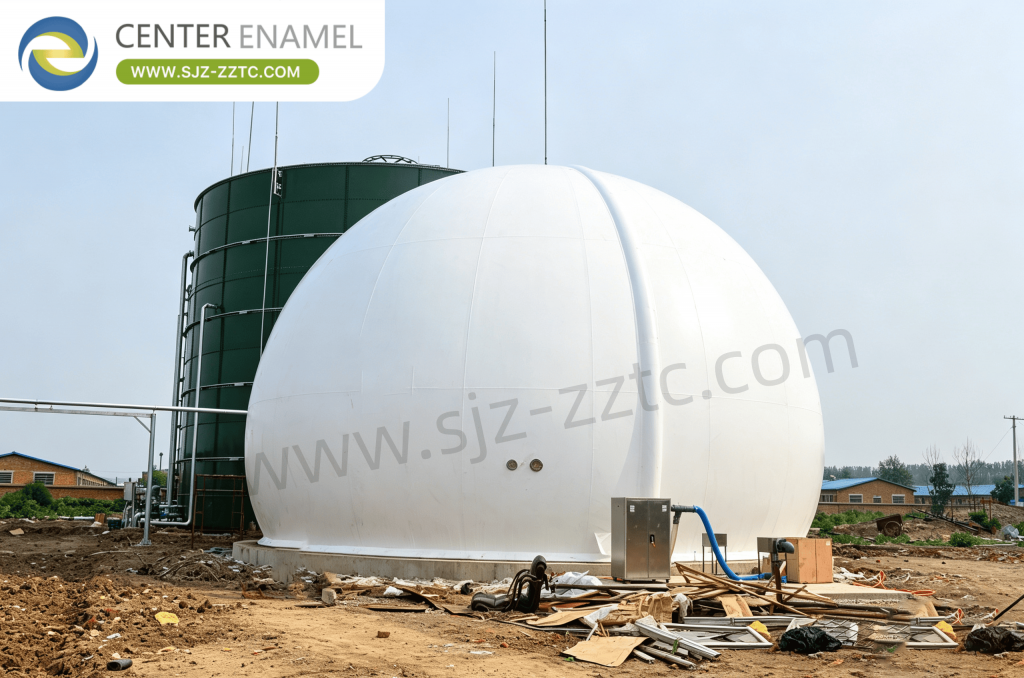
The livestock manure treatment market is transitioning from environmental compliance-driven to dual-value-driven by energy and fertilizer valorization. The European digestate concentration fertilizer market is mature, and large-scale biogas projects in North America commonly include digestate processing centers. In terms of business model innovation, the asset-light model of farmers paying per volume treated has been piloted successfully in some countries. China's "biogas operation outsourcing" model is beginning to penetrate county-level projects.
Digital technology-driven precision nutrient management platforms are emerging as new industry links connecting farms, treatment centers, and agricultural end-users. In terms of process equipment, CSTR is the mainstream anaerobic digestion process for treating livestock manure. After anaerobic digestion, manure produces biogas for power generation or grid-injection purification, while digestate is processed into organic fertilizer for farmland application. GFS tanks, with strong corrosion resistance and low maintenance costs, are widely used in manure treatment projects on large-scale farms in North America, Europe, and China, particularly suited to the corrosive environments of high ammonia-nitrogen and high hydrogen sulfide in manure.
As market dynamics shift toward energy recovery and nutrient management, the industry is increasingly focusing on precision and longevity. A successful Biogas Plant Design must integrate these advanced economic models with infrastructure that ensures long-term operational viability. By aligning processing needs with robust containment strategies, facility owners can effectively transition toward more profitable waste-to-energy models.
GFS Tanks Adaptable to Complex Operating Conditions Across All Industries
Center Enamel has independently developed over 200 specialized enamel frit formulations and supporting patents, capable of customizing anti-corrosion enamel based on customer storage media, with adaptability comprehensively superior to concrete tanks. Concrete tanks use a single material, only suitable for neutral clean water storage. When storing corrosive materials such as livestock manure, palm oil mill effluent, chemical wastewater, food waste digestate, high-salinity wastewater, etc., additional anti-corrosion linings must be applied. These linings are prone to failure, preventing long-term stable operation and cannot adapt to alternating high/low concentration storage conditions.
GFS tanks can be specifically formulated with specialized enamels resistant to strong acids, strong alkalis, high organic content, and high salinity. A single tank can switch between multiple wastewater and fermentation feedstock storage requirements. They are universally applicable across biogas anaerobic digestion, municipal wastewater, livestock farming, food processing, and industrial water treatment scenarios, eliminating the need to rebuild tanks for media changes, perfectly meeting the needs of diversified, multi-condition environmental protection projects.
The resilience of storage equipment is fundamental to maintaining the continuous biological processes required in industrial wastewater systems. Utilizing GFS tanks ensures that the storage phase is protected against chemical degradation, providing a reliable foundation for all downstream treatment technologies. This flexibility allows for seamless integration into diverse process layouts, reducing the need for costly infrastructure modifications.
UASB Process Advantages
No mechanical mixing equipment is required, with sludge suspension achieved through hydraulic action, resulting in very low overall energy consumption. High-concentration anaerobic granular sludge can be cultivated, with high sludge concentration, strong activity, excellent settleability, low sludge washout, and low sludge yield, significantly reducing sludge disposal costs. The integrated design combines reaction, sedimentation, and separation simultaneously, with small footprint and moderate capital investment. Simple structure with low failure rates and convenient maintenance. High volumetric loading rate with excellent organic pollutant degradation efficiency and good shock load resistance. Stable biogas production with high resource recovery value. The process is mature and widely adopted, with well-established construction, commissioning, and O&M systems, suitable for large-scale industrial wastewater treatment.
Efficiency in pollutant degradation is the primary goal of any high-performance anaerobic treatment system. The UASB Process is globally recognized for its ability to convert organic pollutants into biogas while maintaining low operational energy demands. By leveraging this process, plants can achieve a superior balance between high-capacity throughput and environmental compliance.
Livestock Wastewater Environmental Toxicity of Pollutants
No synthetic chemical toxicity, no hazardous substances-very low risk of acute or chronic toxicity. Pollution impacts are primarily biological and nutrient pollution. All pollutants are natural organics from livestock metabolites and feed residues, with no inhibition of microbial activity and no toxicity to soil, water, or aquatic organisms. However, they are rich in nitrogen, phosphorus, and suspended impurities, carrying E. coli, parasite eggs, and pathogens. Direct discharge without treatment rapidly causes eutrophication, black-odor conditions, mosquito breeding, and disease transmission. Long-term discharge causes soil compaction and elevated nutrient levels in groundwater-persistent ecological pollution, but no hazardous substance accumulation or carcinogenic/mutagenic risks.
Understanding the specific biological nature of agricultural wastewater is critical for selecting the appropriate treatment strategy. When managing this stream, the priority is to neutralize nitrogen and phosphorus through engineered biological sequences. Successful treatment not only prevents ecological damage but also transforms the waste into safe, reusable resources.
Full-Process Standardized Installation Quality Control
Demonstrating high-standard installation quality through long-term stable global project performance, Center Enamel has established full-chain quality control standards across four dimensions: factory protection, on-site assembly construction, completion inspection, and long-term warranty-ensuring quality control for every GFS tank. At the factory stage, all enameled panels, seals, and structural components receive rust-proof and moisture-proof independent packaging with dedicated protective supports-preventing damage during sea and land transport and avoiding enamel coating damage. On-site construction strictly follows unified assembly process specifications-panel by panel tightening and leak testing in layers, with air-tightness and verticality testing after each tank section completion-dual-membrane covers and anaerobic piping undergo simultaneous pressure testing and acceptance.
Differentiated quality acceptance standards are customized for different regions: EU/US projects follow stringent CE/NSF inspection criteria; Southeast Asian hot humid regions receive enhanced corrosion protection and sealing acceptance; remote African sites have additional foundation settlement re-inspection procedures. Upon project completion, complete construction inspection reports, pressure test records, and anti-corrosion appearance acceptance documents are issued, with full photo/video archives retained. Over 10,000 tanks delivered globally have operated long-term without large-scale leakage or structural deformation-preventing future O&M issues at source.
Rigorous quality control during installation is the final step in guaranteeing that the design intent is realized in the field. Establishing a standardized, multi-dimensional QC framework ensures that every component performs as expected in challenging global environments. This commitment to execution excellence minimizes future maintenance burdens and maximizes the return on infrastructure investment.
Center Enamel's Extensive Global Benchmark Project Cases
Center Enamel's project portfolio covers over 100 countries across Southeast Asia, Africa, Europe, and the Americas-30,000+ mature projects-accumulating complete industry solutions across palm oil, livestock, municipal, brewing, and food waste biogas-rapidly matching customized solutions for different regional climates, water quality, and regulations.
A wealth of global experience provides the technical data needed to optimize solutions for every specific regional requirement. By drawing on tens of thousands of successful installations, the project team can proactively resolve site-specific issues before they impact the construction timeline. This extensive knowledge base serves as a cornerstone for delivering reliable environmental engineering projects worldwide.
Aluminum Alloy Trough Deck Roof
Aluminum Alloy Trough Deck Roof is a cost-effective economical tank cover solution for clean water and wastewater storage scenarios, primarily designed for drinking water, production wastewater, and firewater reserve tanks, balancing practicality and cost advantages. The main body is integrally formed from anti-corrosion aluminum alloy plates, paired with aluminum support trusses. Its lightweight design imposes less load on the tank foundation, reducing civil construction investment. A naturally formed dense oxide protective layer on the surface resists rain and mild wastewater corrosion, withstands outdoor sun and rain exposure, and effectively blocks wind, rain, insects, fallen leaves, and odor volatilization, protecting water quality by preventing dust and debris from falling in and causing secondary contamination.
The flat roof structure is neat and orderly, allowing installation of maintenance walkways, guardrails, vents, and level monitoring ports on top, facilitating daily inspection and equipment maintenance. The simple sealing structure enables straightforward installation with short construction timelines, and virtually eliminates the need for anti-corrosion painting maintenance, resulting in extremely low operational costs. It is suitable for various small, medium, and large atmospheric pressure water storage tanks, and has been widely implemented in waterworks clear water tanks, industrial circulating water tanks, park firewater tanks, and domestic wastewater temporary storage facilities. It is highly compatible with water storage applications that do not require biogas collection or high-pressure sealing.
Frequently Asked Questions (FAQ)
How does Center Enamel approach Biogas Plant Design?
Center Enamel integrates proprietary GFS tank technology with professional engineering to create customized designs. We prioritize site-specific needs, regulatory compliance, and budget efficiency, ensuring the plant balances high biogas energy yields with durable infrastructure that withstands corrosive industrial and agricultural waste environments for long-term stability.
Why is the UASB Process ideal for industrial wastewater?
The UASB process is a highly efficient anaerobic technology that utilizes an upward flow to maintain a dense sludge bed, maximizing pollutant degradation without needing energy-intensive mechanical mixing. Its compact design, low sludge production, and excellent shock load resistance make it the preferred choice for scaling large industrial treatment projects.
What makes GFS tanks essential for Livestock Wastewater Treatment?
Livestock wastewater is highly corrosive and rich in ammonia. Our GFS tanks use specialized enamel coatings that prevent rust and chemical damage, significantly outperforming traditional concrete tanks. This durability ensures a leak-free, low-maintenance storage solution that is vital for the long-term, successful operation of agricultural biogas and treatment facilities.