
Advanced Biogas Solutions for India’s Solid Waste Challenge: GFS Tanks and CSTR Process Solution
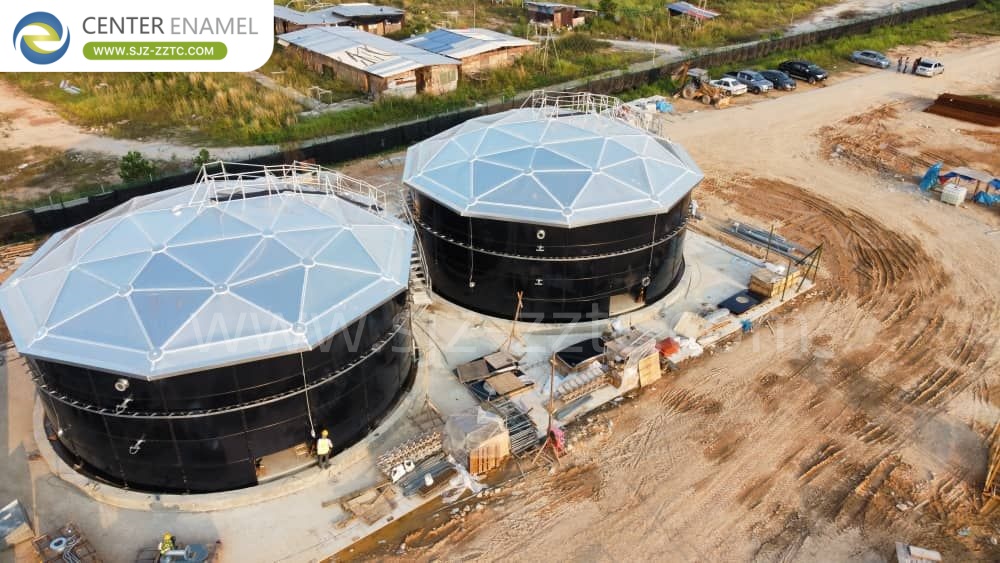
India faces a mounting challenge in managing its vast quantities of Solid waste. With rapid urbanization and population growth, the nation generates millions of tons of municipal and agricultural waste daily, straining traditional disposal methods. However, this challenge presents a tremendous opportunity to convert this organic burden into a clean, renewable energy source through advanced Biogas Solutions. At the heart of this transformation are robust Glass-Fused-to-Steel (GFS Tanks) and efficient anaerobic digestion technologies like the CSTR Process, which are pivotal in establishing sustainable waste-to-energy infrastructure across the country.
The Origins and Challenges of Solid Waste in India
The primary sources of Solid waste in India are multifaceted, stemming from daily household activities, commercial establishments, and the vast agricultural sector. Municipal Solid Waste (MSW) primarily consists of organic kitchen scraps, food leftovers, and vegetable peels, which have high moisture content and are ideal for biological treatment. Furthermore, India's position as a leading agricultural producer results in enormous quantities of crop residues, manure from its large livestock population, and other agro-industrial byproducts.
The treatment of this Solid waste is fraught with challenges. Historically, a significant portion ends up in overloaded and unengineered landfills, causing severe land and groundwater contamination. The uncontrolled decomposition of this organic matter releases large volumes of methane—a potent greenhouse gas—into the atmosphere, contributing to climate change. Traditional methods like open dumping and incineration are not only environmentally unsustainable but also inefficient, failing to capture the inherent energy value of the waste. The lack of sufficient treatment capacity, coupled with the high moisture content of Indian waste, makes anaerobic digestion the most practical and sustainable solution for both urban and rural areas.
The Science of Transformation: How Solid Waste Becomes Biogas
Converting Solid waste into a valuable energy source is achieved through anaerobic digestion, a natural biological process that occurs in the absence of oxygen. This engineered process involves four key stages: hydrolysis, acidogenesis, acetogenesis, and methanogenesis. Specialized microbial communities break down complex organic polymers found in food scraps and manure into simpler compounds. In the final stage, methanogenic archaea convert these compounds into biogas, a renewable fuel primarily composed of methane (CH₄) and carbon dioxide (CO₂).
This captured biogas is a versatile energy carrier. It can be used directly for heating in boilers, combusted in a generator to produce electricity, or upgraded to Compressed Biogas (CBG) for use as a clean transportation fuel. The nutrient-rich digestate remaining after the process can be processed into a valuable organic fertilizer, closing the loop and supporting sustainable agriculture. This transformation turns a significant environmental liability into a source of clean energy and economic opportunity.
The Core Technology: The CSTR Process Explained
At the core of many successful Solid waste to energy projects is the CSTR (Continuous Stirred-Tank Reactor) Process. This advanced anaerobic treatment technology is specifically designed to handle the high-suspended solids and high-concentration organic matter typical of Indian Solid waste. The CSTR reactor is equipped with a mechanical stirring device that ensures the fermentation raw materials and microorganisms are in a complete and homogeneous mixed state within a closed tank.
By operating with continuous or semi-continuous feeding at a constant temperature, the CSTR Process creates an optimal environment for microbial activity, effectively degrading organic matter and maximizing biogas yields. This robust mixing action is crucial for preventing sedimentation and scum formation on the surface, which are common issues in treating high-solids waste, ensuring a stable and efficient fermentation process. For the varied and complex composition of Indian waste, the CSTR Process offers superior resilience and performance.
Center Enamel: Professional Design for Indian Biogas Projects
Center Enamel provides comprehensive, professional design services for biogas projects tailored to India's unique environmental conditions and waste characteristics. Our expert engineering team conducts a thorough evaluation of site-specific factors, including the exact composition of the incoming Solid waste, total volume, and local climatic conditions, to engineer a highly efficient system.
By integrating the proven CSTR Process with durable infrastructure, we ensure every facility is optimized for long-term reliability and maximum gas production. Our design philosophy emphasizes simplified operation and maintenance, empowering local operators to manage their systems with confidence. From customized process packages to full EPC (Engineering, Procurement, and Construction) services, Center Enamel ensures that Indian biogas projects are built to stringent international standards, including ISO9001, CE/EN1090, and AWWA D103, guaranteeing world-class quality and performance.
GFS Tanks and Double Membrane Roof: A Superior Solution
For high-performance Biogas Solutions in India's demanding environments, Center Enamel recommends pairing its industry-leading GFS Tanks with an advanced Double Membrane Roof.
GFS Tanks are the premier choice for biogas infrastructure due to their exceptional corrosion resistance. The enamel frit is fused to the steel at temperatures exceeding 800°C, creating an inert, non-porous coating that is immune to the aggressive hydrogen sulfide (H₂S) and organic acids generated during anaerobic digestion. This ensures a service life exceeding 30 years with minimal maintenance. The Double Membrane Roof, under normal working conditions, is the preferred storage solution for biogas. It offers significant advantages, including cost optimization and exceptional space efficiency. By integrating the gas holder directly on top of the tank, it dramatically reduces the floor area required and saves on the foundation construction costs associated with traditional ground-mounted gas holders. This combination provides a safe, cost-effective, and space-efficient method for storing the generated biogas.
Comprehensive Storage and Cover Solutions
Center Enamel offers a diverse portfolio of storage tanks and cover solutions to meet the specific needs of any project:
Storage Tanks:
Galvanized Steel Tanks: Offer a tough, wear-resistant protective coating for cost-effective storage.
Fusion Bonded Epoxy (FBE) Tanks: In partnership with AkzoNobel, these tanks provide an innovative, high-performance coating for superior protection.
Stainless Steel Tanks: AISI 304/316 grade tanks are ideal for the most stringent applications, including high-purity liquids in harsh environments.
Tank Cover Solutions:
Aluminum Geodesic Dome Roof: Features advanced corrosion resistance, expansive clear span capability, and minimal maintenance.
Glass-Fused-to-Steel Roof: Provides airtightness, ideal for pressurized structures and odor control, with a cone shape supported by beams.
Single and Double Membrane Roof: The superior option for anaerobic digestion, providing airtightness for biogas collection in a cost-effective integrated design.
Aluminum Alloy Trough Deck Roof: An economical option for applications without airtightness requirements, such as potable water and firewater storage.
Stainless Steel Roof: Offers super anti-corrosion performance, airtightness, and a long service life for demanding environments.
FRP Roof: A suitable, non-airtight option for applications like drinking water and wastewater storage, available in dome or flat shapes.
Essential Biogas Project Ancillary Equipment
A complete and efficient biogas plant requires a suite of reliable ancillary equipment. Center Enamel provides a full range of supporting technologies:
Gas Holder: Provides safe and flexible storage for the produced biogas.
Black Membrane: Often utilized in containment applications for improved efficiency.
Solid-Liquid Separator: Efficiently splits the digestate into solid and liquid fractions for easier handling and use.
Torch System: Safely flares excess biogas when pressure management is required.
Lifting Pump: Ensures reliable transfer of slurry between treatment units.
Dehydration and Desulfurization Tank: Purifies raw biogas by removing moisture and corrosive hydrogen sulfide.
Screw Sludge Dewatering Machine: Drastically reduces the volume of final sludge for simplified disposal.
Efficient Installation of GFS Tanks
Center Enamel's GFS Tanks are engineered for rapid and efficient on-site assembly, a critical advantage for projects in India. The bolted, modular design eliminates the need for on-site welding and long curing periods typical of concrete or welded tanks. Using a hydraulic jacking system, tanks can be erected quickly, safely, and to the highest standards, even in congested urban environments. This prefabricated approach ensures consistent quality, reduces construction timelines significantly, and minimizes the impact of weather-related delays, enabling faster project commissioning and quicker returns on investment.
Center Enamel: Your One-Stop Biogas Solution Provider
Center Enamel serves as a dedicated one-stop solution provider for complete biogas projects across India. With over 36 years of international expertise and the largest manufacturing capacity for GFS Tanks in Asia, we offer comprehensive EPC services from initial design and process packaging to equipment supply and final commissioning.
Our key advantages include:
Customized Anaerobic Solutions: Tailored designs based on local waste composition, climate, and stringent discharge standards.
Strong Engineering Capacity: Asia’s largest GFS tank manufacturing base ensures stable quality, short delivery, and large-scale supply.
Strict International Quality Control: Products comply with ISO, AWWA, and NSF/ANSI 61 global standards.
Patented Material Technology: Over 200 patented enamel formulas provide superior corrosion resistance and long service life.
Full-Life Cycle Service: Covers design, production, installation, commissioning, and long-term after-sales maintenance.
Proven Global Experience: With successful installations in over 100 countries, Center Enamel adapts proven international innovations to satisfy local regulatory standards and unique operating environments.
Proven Project Reference Case Studies
Biogas Project in Malaysia
Tank dimensions: φ22.93m x 12.325m (H) (1 unit)
Total volume: 5,087 m³ (1 unit)
Completion year: 2025
Biogas Project in Singapore
Process: CSTR
Tank dimensions:
φ18.34m x 8.4m (H) (1 unit)
φ8.41m x 9.0m (H) (1 unit)
φ11.46m x 7.2m (H) (1 unit)
Total volume: 3,458 m³
Completion year: 2021
Conclusion
Transitioning from traditional waste disposal to advanced Biogas Solutions is a strategic investment for India's sustainable future. By viewing Solid waste not as a liability but as a valuable resource, India can resolve its waste management crisis, generate clean energy, and mitigate climate change. Partnering with Center Enamel provides access to world-class engineering, field-proven technologies like the CSTR Process, and the most resilient GFS Tanks available. This comprehensive approach ensures the development of robust, profitable, and future-ready biogas infrastructure, driving India towards its ambitious renewable energy and circular economy goals.
FAQ Section
1. Why is the GFS tank superior to other tank types for India's CSTR biogas projects?
GFS tanks, or Glass-Fused-to-Steel tanks, offer exceptional corrosion resistance, with a service life of over 30 years, making them ideal for the aggressive chemical environment of biogas production.
2. How does the CSTR Process handle India's high-solid solid waste?
The CSTR (Continuous Stirred-Tank Reactor) Process uses mechanical stirring to keep high-solids organic waste and microorganisms in a complete, uniform mixture, preventing sedimentation and maximizing biogas production.
3. What are the main benefits of converting India's solid waste into biogas?
Converting solid waste into biogas provides a renewable energy source, reduces landfill burden, lowers greenhouse gas emissions by capturing methane, and creates organic fertilizer to support agriculture.