
Advanced Biogas Technology and UASB Process for Bangladesh Biogas Project
Bangladesh is a densely populated agricultural country with a thriving farming industry, abundant livestock breeding, rice cultivation, food processing and agro-industrial sectors. Large amounts of livestock manure, crop residues, rice straw, food processing wastewater and domestic organic waste are generated every day across rural and urban areas of Bangladesh. These organic wastes are ideal raw materials for local Biogas Project development.
For decades, Bangladesh has promoted household small biogas plants to meet rural cooking and basic energy needs. With rapid industrialization, population growth and stricter environmental regulations, traditional small biogas facilities can no longer meet large-scale demand. Adopting standardized Biogas Technology and mature processes such as UASB Process has become inevitable for Bangladesh’s modern biogas industrial upgrading.
Advantages of Biogas Project for Bangladesh Energy Development
Developing Biogas Project brings huge economic, environmental and social benefits to Bangladesh’s energy system.
Firstly, biogas reduces the country’s heavy dependence on imported fossil fuels and unstable national grid power supply, effectively promoting rural and industrial energy independence.
Secondly, it realizes resource recycling of livestock manure and agricultural waste, avoiding river water pollution, odor pollution and greenhouse gas emissions caused by random waste stacking.
Thirdly, biogas replaces firewood for daily cooking, reduces deforestation, and protects Bangladesh’s fragile ecological and wetland environment.
Fourthly, the by-products of anaerobic digestion, biogas slurry and residue, are high-quality organic fertilizers that cut farmers’ chemical fertilizer costs and improve crop yields.
In addition, large-scale biogas projects create local employment in construction, operation and maintenance, boosting rural economic development and supporting Bangladesh’s national clean energy strategy.
Bangladesh National Biogas & Renewable Energy Policy
The Bangladesh government has always attached great importance to the development of renewable energy and rural biogas construction. The state provides financial subsidies, low-interest loans and technical training support for household, community and industrial biogas plants. Relevant policies strongly advocate organic waste recycling, low-carbon rural construction and popularization of clean energy.
Meanwhile, Bangladesh actively introduces international advanced Biogas Technology and professional EPC contractors to upgrade traditional small biogas ponds into standardized industrial biogas projects. The country also actively responds to global carbon reduction targets, encouraging biogas power generation, circular agriculture and ecological village construction, creating a favorable policy environment for the wide application of UASB Process, CSTR, USR and IC anaerobic technologies nationwide.
Biogas Production Process
The industrial biogas production process in Bangladesh follows a systematic workflow as shown in the diagram:
Pre-treatment: Raw organic waste passes through a Mechanical Bar Screen to remove large impurities, then enters a Homogenization Tank for uniform mixing and pH adjustment.
Anaerobic Digestion: The homogenized waste flows into the CSTR reactor for anaerobic fermentation, where microorganisms break down organic matter to produce biogas.
Gas Storage & Treatment: Raw biogas is collected in a Gas Holder, then goes through Biogas Dehydration and Desulfurization processes to remove moisture and sulfur compounds. After treatment, it is pressurized by a Booster Fan and measured via a Flowmeter before utilization.
Biogas Utilization: Purified biogas can be used for power generation (Biogas Generator), heat supply (Boiler), direct combustion (Torch), or further processed into CNG.
Digestate Treatment: The discharged digestate enters a Buffer Tank, then undergoes Solid-Liquid Separation. The solid fraction becomes Fibrous Digestate Organic Fertilizer, while the liquid fraction is treated in a Black Film Pond before being safely returned to farmland.
Four Main Anaerobic Technologies for Bangladesh Biogas Project
Center Enamel provides four mature and customizable anaerobic technologies suitable for Bangladesh’s terrain, climate and waste characteristics, including CSTR, USR, UASB Process and IC Process.
CSTR (Completely Stirred Tank Reactor)CSTR is suitable for biogas projects with high solid content raw materials such as livestock manure and pulp residues in Bangladesh. High-torque mechanical stirring fully mixes microbial sludge and organic wastewater, preventing sediment accumulation and particle stratification. It runs stably with strong anti-impact load capacity and stable biogas output, ideal for zero-waste processing factories and large livestock farms.
USR (Upflow Solid Reactor)USR is optimized for high-concentration and high suspended solid organic waste. It features simple structure, low operating cost and strong adaptability to complex raw materials. It is very suitable for scattered rural and small and medium-sized biogas projects in Bangladesh.
UASB Process (Upflow Anaerobic Sludge Blanket)As the core recommended Biogas Technology for Bangladesh, UASB Process is a globally proven classic anaerobic process. Wastewater flows upward through a dense anaerobic granular sludge blanket to efficiently degrade organic pollutants. It is reliable, easy to maintain and highly adaptable to South Asian climate, widely used in Bangladesh’s food processing, rice mill and cassava wastewater biogas treatment projects.
IC (Internal Circulation) ProcessIC is a high-rate advanced anaerobic technology, applying self-produced biogas to drive internal liquid circulation. Its volumetric loading rate is 3 to 5 times higher than traditional reactors, with high COD removal efficiency and space-saving layout. It is the best choice for large-scale industrial biogas projects in Bangladesh’s industrial parks.
Core Equipment for Bangladesh Biogas Project
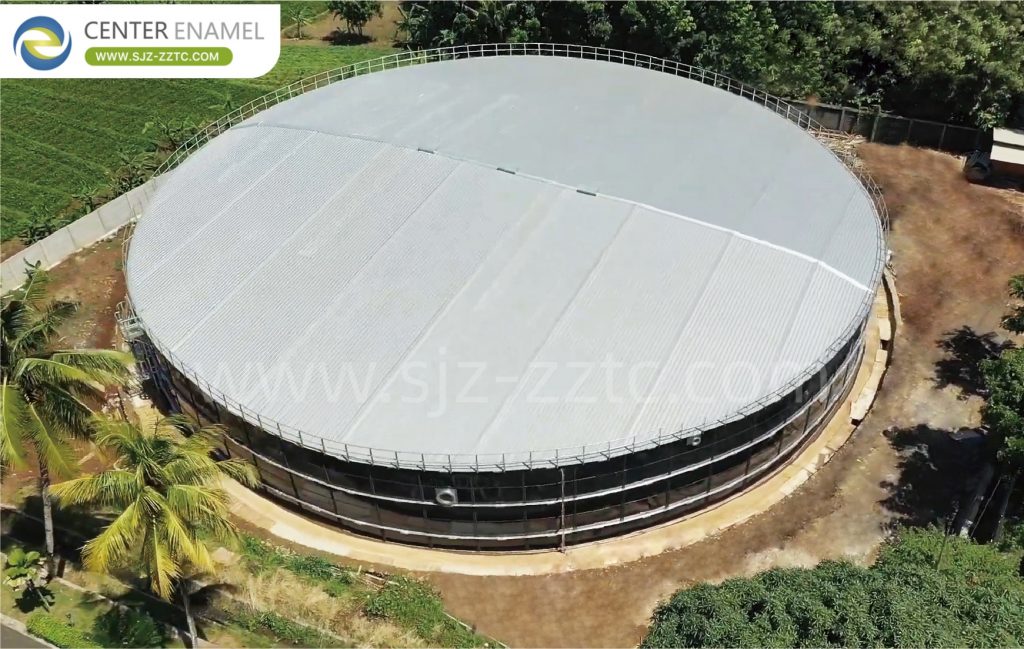
To support Biogas Technology and UASB Process application, Center Enamel provides a full set of core and supporting equipment for Bangladesh biogas projects. GFS Tanks are the core anaerobic fermentation equipment, sintered at over 820°C with molecular fusion of glass enamel and steel plates. They withstand pH 1–14 corrosion, have excellent seismic performance and UV aging resistance, adapting to Bangladesh’s humid climate and acidic organic wastewater.
Other supporting equipment includes: FBE Tanks for regulating tank and treated water storage; double membrane gas holders for airtight collection and safe storage of biogas; aluminum dome roofs resistant to humid coastal air to prevent rainwater dilution of treatment facilities. All equipment is perfectly matched to form a complete turnkey biogas project solution for Bangladesh clients.
Why Center Enamel Is the Preferred EPC Contractor
Center Enamel stands out as the most trusted EPC contractor for Bangladesh’s Biogas Project and Biogas Technology deployment, with unmatched advantages:
- Offers one-stop turnkey services covering project design, equipment manufacturing, installation, commissioning and after-sales support, greatly reducing clients’ coordination costs.
- Delivers customized Anaerobic Solutions tailored to local raw materials, project scales and regional environments across Bangladesh, avoiding generic design flaws.
- GFS tanks and supporting equipment feature long service life and low maintenance cost, effectively improving clients’ long-term investment returns.
- Provides full-cycle professional technical guidance to solve on-site operation and technical problems in real time throughout the project lifecycle.
- Integrates core technology, complete equipment, standardized construction and industry standards, making it a highly reliable long-term partner for Bangladesh’s biogas and wastewater treatment industry.
Professional Installation Process of Center Enamel
Center Enamel has developed a mature, terrain-adaptive installation process perfectly suited to Bangladesh’s delta terrain, narrow construction sites and humid monsoon climate:
Adopts hydraulic jacking top-down installation, eliminating the need for high-altitude scaffolding; suitable for narrow rural sites, flood-prone areas and remote locations with limited crane access.
All tank parts are fully factory prefabricated with zero on-site welding, assembled entirely by high-strength bolts.
Avoids welding failure risks caused by Bangladesh’s high humidity, frequent rainfall and dusty construction environment.
Bolted tank structure removes the long curing period required by traditional concrete projects, enabling fast commissioning and quick project operation to meet the country’s urgent clean energy demand.
Classic Successful Biogas Project Cases of Center Enamel
Case1: Canada Biogas Project
Tank Dimensions: φ8.4 × 7.2 m (H) — 2 Units
Total Volume: 798 m³
Completion Year: 2024
Case2: Indonesia Biogas Project
Tank Application: Palm Oil Wastewater Treatment Plant
Tank Model: Ø19.86 × 8.4 m
Number of Tanks: 3 GFS Tanks
Installation: 7 personnel, 40 days
Installation Date: November 2009
Bangladesh’s abundant agricultural and livestock organic waste lays a solid foundation for Biogas Project development. Favorable national policies and energy demand further drive the popularization of advanced Biogas Technology and mature UASB Process. Center Enamel provides diversified anaerobic technologies, complete biogas equipment, professional EPC services and terrain-adaptive installation solutions, delivering one-stop customized turnkey solutions. Cooperation with Center Enamel helps Bangladesh advance clean energy promotion, organic waste recycling and circular agriculture, supporting energy independence and sustainable rural development.