
Advanced EPC Contractor and Biogas Technology for Thailand Kitchen Waste Biogas Project
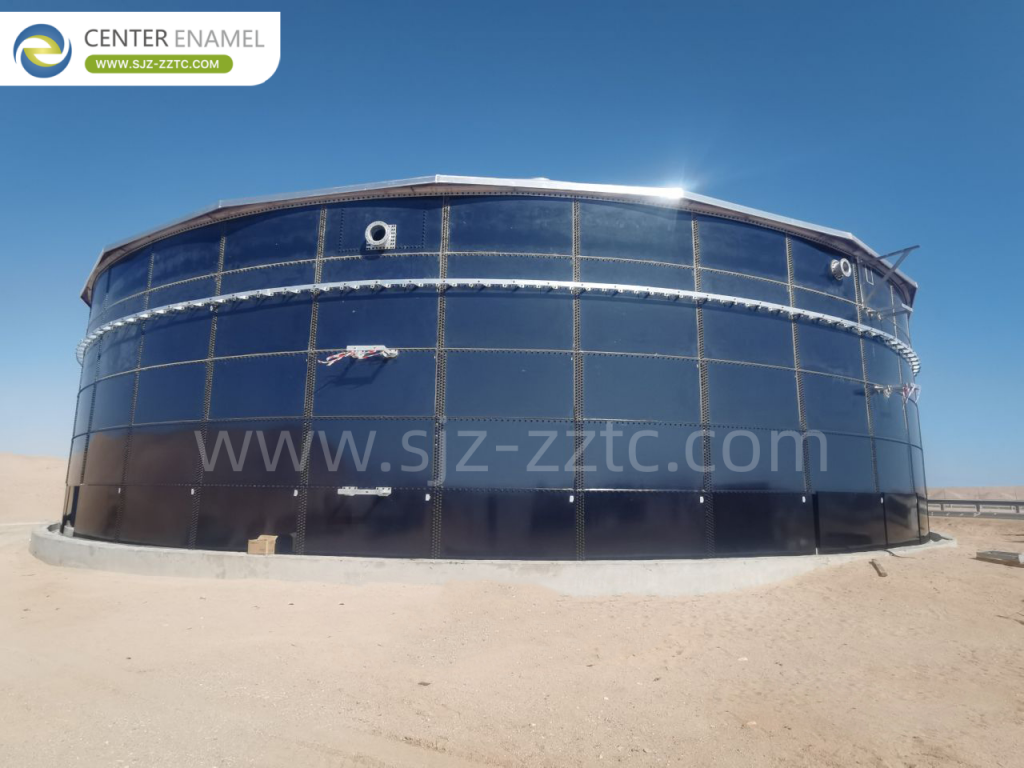
With the rapid economic growth, booming tourism industry and continuous population expansion in Thailand, kitchen waste output has increased year by year, bringing severe environmental and social pressure. Traditional waste disposal methods can no longer meet Thailand’s demands for ecological protection and renewable energy development.
As a professional global EPC Contractor, Center Enamel provides full-turnkey Kitchen Waste Biogas Project solutions with mature Biogas Technology and high-performance GFS tanks, converting massive kitchen waste into clean Biogas Power to help Thailand realize waste resource utilization and sustainable low-carbon development.
Source of Kitchen Waste
Kitchen waste, also known as food waste, is a kind of high-biodegradable organic waste, serving as the core raw material for the Kitchen Waste Biogas Project. Its sources in Thailand are wide and concentrated, mainly divided into household and commercial sources. Household kitchen waste includes daily leftovers, fruit and vegetable peels, expired grain and food, eggshells and daily food residues.
Commercial kitchen waste accounts for the largest proportion, mainly generated from tourist resort restaurants, street food stalls, hotel catering departments, urban canteens and food processing factories across Thailand. Rich in carbohydrates, protein and fat, kitchen waste has high moisture content and excellent biodegradability, which lays a solid foundation for efficient biogas production.
Overview of Kitchen Waste Production in Thailand
Thailand’s catering and tourism industries are pillar sectors of its economy, leading to a huge volume of kitchen waste generation every year. At present, Thailand produces approximately 18,000 tons of municipal solid waste daily, among which kitchen waste accounts for more than 65% of the total waste volume. Bangkok, Phuket, Chiang Mai and other core tourist and urban areas are the main waste-generating regions.
Affected by the tropical humid climate and prosperous catering industry, local kitchen waste features high organic content, high water content and fast decay speed. The annual growth rate of kitchen waste in Thailand remains at 5%-8%, and the continuous growth of waste has become a key problem restricting urban environmental governance.
Challenges of Kitchen Waste Treatment in Thailand
Thailand is facing prominent dilemmas in kitchen waste treatment, restricting urban environmental improvement and energy development:
Backward traditional disposal methods: Most kitchen waste is directly landfilled or openly dumped, resulting in an extremely low resource utilization rate.
Serious landfill saturation: Urban landfill space is increasingly scarce, and overloaded landfills generate large amounts of leachate and odor, polluting soil and groundwater.
Accelerated waste decay in tropical climate: High temperature and humidity speed up food waste decomposition, breeding bacteria and pests and causing public health risks.
Insufficient clean energy supply: Thailand has long been troubled by a shortage of renewable energy, while heavy reliance on fossil fuels brings growing carbon emission pressure.
In this context, the Kitchen Waste Biogas Project based on advanced Biogas Technology has become the most effective solution.
How Does Kitchen Waste Produce Biogas?
The biogas generation process of kitchen waste relies on mature anaerobic digestion Biogas Technology, which decomposes organic matter in an oxygen-free closed environment. The whole process includes four core stages:
Hydrolysis: Large-molecule organic substances in kitchen waste are broken down into small-molecule soluble materials.
Acidification: Acid-producing bacteria further convert those small molecules into volatile fatty acids.
Acetogenesis: Acetogenic bacteria transform the intermediates into acetic acid and hydrogen.
Methanation: Methanogenic bacteria react to produce biogas, mainly consisting of 55%–70% methane and carbon dioxide.
After purification and desulfurization, high-purity biogas can be directly used for Biogas Power generation, heating, and other applications, realizing full resource utilization of kitchen waste.
Benefits of Kitchen Waste-to-Biogas Projects for Thailand
The promotion of Kitchen Waste Biogas Project brings dual environmental and economic benefits to Thailand. In terms of environmental protection, it radically reduces landfill and open dumping of kitchen waste, cuts down leachate and odor pollution, and reduces methane greenhouse gas emissions generated by waste decay, helping Thailand achieve carbon reduction goals. In terms of energy utilization, the project converts waste into clean Biogas Power, effectively making up for the shortage of local renewable energy and optimizing Thailand’s energy structure.
In addition, the residual digestate after anaerobic digestion can be processed into organic fertilizer, which is applicable to Thailand’s agricultural planting industry, forming a complete circular economy chain. Meanwhile, the project improves urban environmental quality, reduces public health risks, and promotes sustainable urban development.
Advanced Anaerobic Biogas Technology: CSTR, UASB, USR, IC
Center Enamel adopts four core advanced anaerobic processes to support efficient and stable operation of Kitchen Waste Biogas Project, adapting to different waste characteristics and project scales.
CSTR (Continuous Stirred-Tank Reactor): It is the most widely used process for kitchen waste treatment. The built-in stirring system realizes full mixing of materials and microorganisms, with strong anti-shock load capacity. It is perfectly suitable for high-solid and high-viscosity kitchen waste, ensuring uniform fermentation and stable biogas yield.
UASB (Upflow Anaerobic Sludge Blanket): This process relies on high-activity granular sludge, with high organic load and high COD removal efficiency. It is suitable for pretreated soluble kitchen waste, featuring small floor area and high operational efficiency.
USR (Upflow Solid Reactor): With simple structure and low investment cost, it has excellent anti-clogging performance. It is very suitable for small and medium-sized kitchen waste biogas projects in Thailand’s suburban and rural areas, with low operation and maintenance costs.
IC (Internal Circulation): As an efficient high-load reactor, its treatment efficiency is 3-5 times that of traditional processes. It is applicable to large-scale urban kitchen waste centralized treatment projects, realizing high-efficiency biogas production and saving land resources.
Advantages of GFS Tanks in Kitchen Waste Biogas Projects
GFS Tanks (Glass-Fused-to-Steel Tanks) are the core equipment of the Kitchen Waste Biogas Project, perfectly adapting to Thailand’s tropical climate and project operation requirements:
Ultra-strong corrosion resistance: The high-temperature fused enamel layer withstands acid, alkali, and salt spray erosion, effectively resisting corrosive substances in kitchen waste and adapting to Thailand’s hot and humid coastal environment.
Excellent airtightness: Prevents biogas leakage, ensures safe and efficient biogas collection, and maintains stable Biogas Power output.
Modular prefabricated structure: Supports factory production and on-site bolted assembly, realizing fast installation and short project construction period.
Long service life and low maintenance: Service life exceeds 30 years; the smooth surface is not prone to scaling, resulting in low long-term operating costs.
Flexible expandability: Can be expanded or upgraded as waste volume increases, fully meeting the long-term operation needs of the biogas project.
Why Choose Center Enamel as Biogas Project EPC Contractor
As a professional and authoritative EPC Contractor in the global biogas industry, Center Enamel offers irreplaceable advantages for Thailand’s Kitchen Waste Biogas Project:
Independent R&D and manufacturing capacity: With more than 200 patented enamel technologies, we fully guarantee stable and reliable equipment quality.
One-stop full turnkey EPC services: We cover complete project delivery including design, production, transportation, construction, commissioning, and after-sales maintenance.
Customized biogas technology solutions: Familiar with Southeast Asian environmental policies and tropical construction conditions, we tailor systems to Thailand’s kitchen waste features.
Strict international quality certification: All products comply with ISO and global industry standards, ensuring stable operation, high biogas output, low failure rate, and maximum economic benefits for clients.
Center Enamel’s Professional GFS Tanks Installation
Center Enamel has established a mature and standardized GFS Tanks installation system tailored to Thailand’s local construction environment:
Advanced hydraulic jacking top-down installation: No high scaffolding required, ensuring high construction safety even in narrow urban project sites.
Modular bolted assembly: No on-site welding, effectively avoiding quality risks caused by Thailand’s high temperature and humidity.
Professional on-site engineering support: A full-time technical team provides on-site guidance and training, cooperating with local teams to improve efficiency and shorten project duration.
Strict commissioning and testing: Comprehensive airtightness and pressure tests are conducted after installation to ensure GFS Tanks meet biogas project operation standards and secure stable long-term Biogas Power production.
Center Enamel’s Typical Project Cases
Case 1: Singapore Biogas Project
Process Section: CSTR
Tank Dimensions:
φ18.34*8.4 m (H) 1 unit
φ8.41*9.0 m (H) 1 unit
φ11.46*7.2 m (H) 1 unit
Total Volume: 3458 m³
Completion Time: 2021
Case 2: France Biogas Project
Process Section: CSTR
Tank Dimensions: φ18.33*8.4 m (H) 1 unit
Total Volume: 2215 m³ 1 unit
Completion Time: 2021
Kitchen Waste Biogas Project is a core sustainable solution for Thailand to solve kitchen waste pollution and develop clean energy. With advanced diversified Biogas Technology, high-performance GFS tanks and professional full-service EPC Contractor capabilities, Center Enamel provides reliable waste-to-energy solutions for Thailand’s environmental governance and energy upgrading. Rich overseas project experience and customized technical support ensure stable Biogas Power output and long-term project benefits, helping Thailand build a low-carbon, circular and eco-friendly urban development system.