
Advanced IC Process and Anaerobic Digestion for Industrial Wastewater Treatment
The global industrial wastewater treatment landscape is undergoing a profound transformation. As industries expand and environmental regulations tighten, the demand for high-efficiency, energy-saving treatment solutions has never been greater. The Asia-Pacific region, particularly China, has emerged as the world’s largest industrial wastewater treatment market, with operation and maintenance services steadily gaining share as the industry shifts from project construction to long-term operational management. Meanwhile, North America focuses on upgrading existing facilities, Europe emphasizes high-value resource recovery, and the Middle East-driven by water scarcity-urgently seeks advanced treatment and reuse technologies. Manufacturing transfer in Southeast Asia further drives local demand for industrial wastewater treatment facility construction.
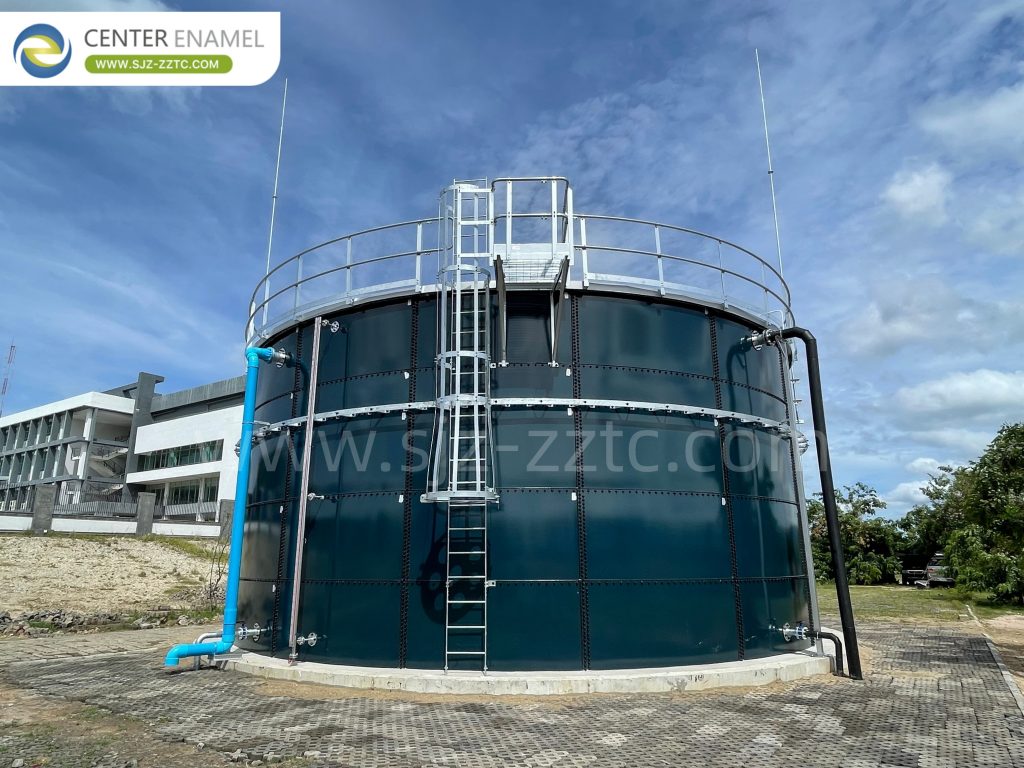
Amid this global shift, two technologies have risen to prominence for their ability to handle the most challenging waste streams: the IC Process and Anaerobic Digestion. Together, they form the backbone of modern high-strength industrial wastewater treatment, enabling industries to achieve compliance while recovering energy and reducing operational costs. Center Enamel has been at the forefront of this technological evolution for over three decades, delivering integrated solutions that combine proven anaerobic processes with proprietary Glass-Fused-to-Steel tank technology.
Why Industrial Wastewater Demands Specialized Treatment
Industrial wastewater differs fundamentally from municipal sewage. It is characterized by extreme variability, complex composition, and often inhibitory substances that challenge conventional biological treatment. The new energy industry chain-lithium batteries, photovoltaics, and hydrogen-has introduced particularly complex waste streams requiring customized solutions. Pharmaceutical wastewater, for instance, originates from chemical synthesis, fermentation antibiotics, traditional Chinese medicine, and biopharmaceuticals, with pollution-generating stages including raw material washing, reaction synthesis, fermentation culture, extraction crystallization, and filtration separation. Fermentation wastewater contains bacterial cell residues and spent culture media; chemical synthesis wastewater is rich in reaction byproducts and organic solvent residues; TCM wastewater concentrates herb decoction and alcohol precipitation stages.
What makes pharmaceutical wastewater especially difficult is the lack of stable production conditions in small and medium-sized companies, causing extreme fluctuations in both water quality and quantity-arguably the highest industry-wide pollution control difficulty. Effective treatment requires not merely robust equipment, but a process engineered to maintain stability under unpredictable conditions.
The IC Process: High-Rate Anaerobic Treatment Redefined
The IC Process-Internal Circulation Anaerobic Reactor-represents the third generation of high-rate anaerobic technology, building upon the foundational UASB design. Its core innovation lies in a built-in gas-lift internal circulation system that enables autonomous wastewater recirculation without external return pumps. This elegant engineering solution creates hydraulic internal circulation driven by biogas production, dramatically increasing upflow velocity and enhancing contact between anaerobic sludge and organic substrates.
The IC reactor features a dual-zone configuration: a lower main reaction zone where the bulk of organic degradation occurs, and an upper polishing zone that ensures thorough treatment before effluent discharge. Biogas generated in the lower zone is collected and channeled upward, creating a gas-lift effect that draws wastewater from the upper settling zone back down to the bottom-a continuous, self-sustaining circulation loop.
This internal circulation delivers several transformative advantages. The high upflow velocity dramatically improves mass transfer between microorganisms and organic matter, enabling extremely high organic loading rates compared to conventional anaerobic systems. The process achieves superior treatment efficiency with exceptionally high COD removal rates, while the inherent process stability accommodates variations in wastewater composition, flow, and temperature. The IC Process also generates significantly less excess sludge than aerobic alternatives, reducing disposal costs and operational burden.
With extremely high compactness, the IC Process is specifically engineered for high-concentration, high-flow industrial organic wastewater, combining efficiency, energy savings, and minimal footprint. It has become the core process for modern industrial high-strength wastewater treatment.
Anaerobic Digestion: Converting Waste into Value
Anaerobic Digestion is the biological process at the heart of the IC Process and other high-rate reactor systems. In the absence of oxygen, specialized microorganisms break down organic matter, producing biogas-a methane-rich renewable energy source-and digestate, a nutrient-rich byproduct suitable for agricultural use.
The strategic value of Anaerobic Digestion extends far beyond pollutant removal. Unlike aerobic treatment, which consumes substantial energy for aeration, anaerobic processes are net energy producers. The biogas generated can be captured and used to power boilers, generators, or combined heat and power systems, offsetting facility energy costs and reducing reliance on fossil fuels. This energy-positive characteristic makes Anaerobic Digestion central to carbon-neutral wastewater treatment strategies.
Recent research highlights Anaerobic Digestion’s expanding role in addressing recalcitrant organics and emerging contaminants. Pharmaceutical wastewater, in particular, contains complex compounds that resist conventional treatment. Advanced anaerobic technologies, including material intensification, co-digestion, bioaugmentation, and intelligent control systems, are being developed to enhance removal of these challenging pollutants while recovering bioenergy. For industries facing increasingly stringent discharge limits, Anaerobic Digestion offers a pathway to both compliance and resource recovery.
Center Enamel specializes in integrating the IC Process with Anaerobic Digestion for maximum treatment efficiency and biogas yield. The IC reactor’s multi-level anaerobic zones optimize contact between microbes and organic substrates, leading to higher degradation rates, increased process stability, and maximized biogas production.
Proven Project Performance
Center Enamel’s IC Process and Anaerobic Digestion solutions have been deployed across diverse industrial applications worldwide. The Pakistan Food Waste + Napier Grass Biogas Demonstration Project exemplifies the company’s capability in integrated anaerobic systems. As general contractor, Center Enamel employed CSTR as the core anaerobic process, using food waste and Napier grass as mixed fermentation feedstock. The system is equipped with a mechanical mixing system ensuring thorough contact between feedstock and anaerobic microorganisms, achieving efficient organic degradation with stable daily biogas production of 100 m³. This locally recognized official demonstration project validates gas production efficiency and long-term operational stability, with plans for multiple large-scale Napier grass biogas projects to support regional low-carbon development.
| Project | Location | Process | Feedstock | Biogas Output | Key Features |
| Pakistan Food Waste + Napier Grass Biogas Demonstration Project | Pakistan | CSTR | Food waste + Napier grass (mixed fermentation) | 100 m³/day | Mechanical mixing system; official local demonstration project; validates gas production efficiency and long-term operational stability |
This project demonstrates the effectiveness of Anaerobic Digestion in converting organic waste into clean energy while maintaining stable, long-term operation-a model that Center Enamel is now scaling for larger applications.
Glass-Fused-to-Steel Tanks: The Foundation of Reliable Anaerobic Systems
Even the most sophisticated anaerobic process requires a containment vessel that can withstand decades of exposure to corrosive wastewater, organic acids, and biogas. Center Enamel’s proprietary Glass-Fused-to-Steel (GFS) technology provides the ideal foundation for IC reactors and anaerobic digesters.
The GFS manufacturing process fuses a specially formulated glass coating onto high-strength steel panels at temperatures exceeding 800°C, creating a permanent, molecular-level bond between glass and steel. The result is a composite material that combines the structural strength of steel with the chemical inertness and corrosion resistance of glass. GFS tanks withstand a pH range from 1 to 14, resist organic fatty acids, volatile compounds, and sulfur-based corrosion, and maintain their integrity for over 30 years.
For IC reactors specifically, GFS tanks offer additional practical advantages. The modular, bolted construction enables rapid on-site assembly without specialized welding equipment or extensive civil works. The smooth, non-porous glass surface prevents material buildup and biofilm formation, reducing maintenance requirements. And because GFS tanks are modular, capacity can be expanded as production demands change-an important consideration for industries with fluctuating wastewater volumes.
Center Enamel has independently developed over 200 anti-corrosion enamel formulations, with proprietary double-sided double-layer enameling technology. The resulting GFS tank anti-corrosion service life exceeds 30 years-far surpassing concrete and ordinary equipment-making it suitable for global high-corrosion wastewater and biogas applications.
Integrated Solutions from a Proven Partner
Center Enamel’s capabilities extend beyond tank manufacturing. With over 30 years of experience in the environmental equipment field, the company has evolved from a specialized tank manufacturer into a comprehensive environmental EPC service provider. The company holds recognition as a National High-Tech Enterprise, National Specialized and Sophisticated “Little Giant,” and Manufacturing Single Champion. Its track record includes over 30,000 environmental projects delivered globally.
This integrated approach means Center Enamel can provide not only the IC reactor vessels and GFS tanks, but also the complete process design, auxiliary equipment, and ongoing operational support that turn a treatment system into a reliable, long-term asset. The company has fully integrated the entire chain from enamel frit R&D through intelligent equipment manufacturing to EPC project contracting.
The aluminum alloy trough deck roof represents one example of Center Enamel’s attention to practical operational needs. This cost-effective tank cover solution is designed for clean water and wastewater storage, balancing practicality with cost advantages. The integrally formed anti-corrosion aluminum alloy plates rest on aluminum support trusses, imposing minimal load on tank foundations and reducing civil construction investment. The naturally formed dense oxide protective layer resists rain and mild wastewater corrosion, while effectively blocking wind, rain, insects, fallen leaves, and odor volatilization-protecting water quality by preventing secondary contamination. The flat roof structure accommodates maintenance walkways, guardrails, vents, and level monitoring ports, facilitating daily inspection and equipment maintenance. With a simple sealing structure enabling straightforward installation and virtually no anti-corrosion painting maintenance, operational costs remain extremely low.
Ready to optimize your industrial wastewater treatment with IC Process and Anaerobic Digestion? Contact Center Enamel today for a customized solution tailored to your wastewater characteristics and operational requirements.
Frequently Asked Questions
What is the difference between IC Process and Anaerobic Digestion?
Anaerobic Digestion is the biological process of breaking down organic matter without oxygen. The IC Process is a specific high-rate reactor technology that implements Anaerobic Digestion using internal circulation for superior mass transfer and higher loading rates.
Can the IC Process treat pharmaceutical wastewater?
Yes. The IC Process is specifically designed for high-concentration, high-flow industrial organic wastewater, including pharmaceutical wastewater with complex, inhibitory compounds.
What tank material is used for IC reactors?
Center Enamel uses proprietary Glass-Fused-to-Steel (GFS) tanks for IC reactors. The glass coating resists the corrosive conditions of anaerobic digestion, provides a 30+ year service life, and enables rapid modular installation.