
Advanced Industrial Wastewater Treatment Technology and Engineering Solutions for Global Projects
Industrial wastewater treatment is becoming increasingly important as manufacturing industries expand and environmental regulations become more stringent worldwide. Industries such as chemicals, pharmaceuticals, new energy, food processing, and brewing generate wastewater containing complex pollutants, high organic concentrations, oils, suspended solids, and other substances that require specialized treatment approaches.
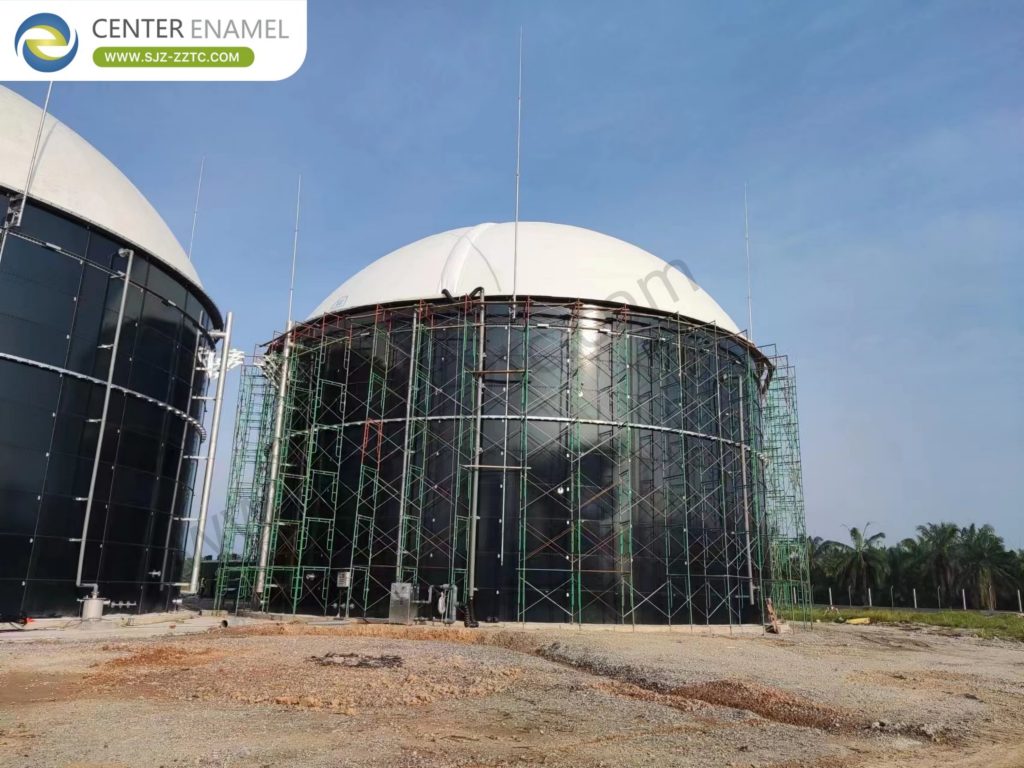
Traditional treatment methods may struggle to address increasingly complicated wastewater compositions while maintaining treatment efficiency and controlling operational costs. Consequently, selecting appropriate Wastewater Treatment Technology and reliable engineering equipment has become essential for industrial facilities seeking long-term environmental compliance and operational sustainability.
A successful Industrial Wastewater Treatment Project requires more than individual treatment equipment. It involves comprehensive wastewater analysis, appropriate process selection, customized engineering design, corrosion-resistant storage infrastructure, and reliable project execution.
Center Enamel specializes in environmental equipment manufacturing and engineering solutions, providing Glass-Fused-to-Steel (GFS) tanks, anaerobic treatment equipment, customized structural design, and integrated environmental EPC services. With extensive international installation experience and engineering capabilities, Center Enamel supports industrial wastewater and biogas projects across different industries and geographical conditions.
Industrial Wastewater Treatment: Industry Challenges and Growing Demand
Industrial wastewater treatment faces three major challenges: high treatment difficulty, high investment and operating costs, and high energy consumption.
Wastewater generated by new energy, chemical, and pharmaceutical industries often contains complex mixtures of organic and inorganic pollutants. Some industrial effluents also contain characteristic contaminants that conventional treatment processes cannot effectively remove without additional treatment stages.
As a result, industrial wastewater facilities increasingly require customized treatment systems that combine multiple technologies according to influent characteristics and discharge requirements.
Several major industry trends are shaping the development of industrial wastewater treatment:
Increasingly Stringent Environmental Standards
Governments and environmental authorities continue to strengthen industrial wastewater discharge requirements. Treatment facilities must address more demanding limits for organic pollutants, nitrogen, phosphorus, and industry-specific contaminants.
Higher Demand for Customized Treatment Processes
Different industries generate wastewater with significantly different chemical compositions, pollutant concentrations, and biological characteristics. Standardized treatment configurations may not be suitable for every application, creating demand for customized engineering solutions.
Pressure to Reduce Operational Costs
Energy consumption, chemical usage, sludge management, and equipment maintenance all contribute to wastewater treatment expenses. Industrial operators are therefore seeking technologies that balance treatment performance with long-term operating economics.
Digitalization and Low-Carbon Development
Modern wastewater treatment facilities are increasingly adopting intelligent monitoring, automated control, and resource recovery approaches to improve operational management and reduce environmental impact.
These challenges make technology selection and engineering design particularly important. A well-designed Industrial Wastewater Treatment Project must integrate treatment performance, structural reliability, operational convenience, and lifecycle cost considerations.
Dairy Wastewater Characteristics and Treatment Requirements
Dairy processing is an important example of an industry that generates high-strength organic wastewater. Its effluent contains significant quantities of lactose, milk proteins, fats, oils, and nutrients, creating specific requirements for wastewater collection, pretreatment, and biological treatment.
Although dairy wastewater is generally highly biodegradable, its organic concentration and intermittent discharge patterns can create considerable treatment challenges.
The following table summarizes its major water quality characteristics.
| Parameter | Typical Characteristics | Treatment Considerations |
| COD | 2,000–15,000 mg/L; high-concentration CIP wastewater may exceed 30,000 mg/L | Requires effective organic load reduction |
| Oil and Grease | 2,000–5,000 mg/L in whole milk wastewater | Requires grease separation and pretreatment |
| BOD/COD Ratio | 0.5–0.7 | Indicates good biodegradability |
| Protein | High concentration | Protein degradation may contribute to ammonia nitrogen |
| Nitrogen and Phosphorus | Relatively high | May require nutrient management and additional treatment |
| pH | Slightly acidic to neutral, potentially decreasing during fermentation | Requires pH monitoring and adjustment |
| Temperature | Approximately 20–40°C | Influences biological treatment conditions |
| Discharge Pattern | Intermittent fluctuations associated with CIP cleaning | Requires equalization and stable process control |
One of the most significant characteristics of dairy wastewater is its high oil and grease content. Fat particles can adhere to pipelines and equipment surfaces, resulting in scaling, blockage, and reduced operational efficiency.
Meanwhile, lactose and proteins are readily biodegradable but can rapidly ferment and produce organic acids when wastewater remains untreated for extended periods. This may cause pH fluctuations and affect subsequent biological treatment processes.
Therefore, effective pretreatment, equalization, and appropriate biological treatment are essential for managing dairy wastewater. The selected Wastewater Treatment Technology must accommodate variations in wastewater quality while maintaining stable treatment performance.
IC Anaerobic Reactor Technology and Its Working Process
For industrial wastewater containing high concentrations of biodegradable organic pollutants, anaerobic treatment can provide an effective solution for reducing organic loads.
The Internal Circulation (IC) reactor is an advanced anaerobic treatment technology developed from the Upflow Anaerobic Sludge Blanket (UASB) process. Its main feature is an internal gas-lift circulation system that uses biogas generated during treatment to drive wastewater and sludge circulation.
Unlike conventional systems that depend heavily on external return pumps, the IC reactor creates an internal hydraulic circulation process through the interaction between biogas production, gas-liquid separation, and gravity-driven sludge return.
The reactor generally consists of a lower main reaction zone and an upper polishing zone.
Lower Main Reaction Zone
Pretreated high-strength organic wastewater enters the reactor from the bottom and mixes with the recirculated sludge-water mixture.
The wastewater flows upward through the active anaerobic sludge bed, where microorganisms break down biodegradable organic substances. During this process, large quantities of biogas are generated.
The rising biogas carries the sludge-water mixture toward the upper gas-liquid separation area.
Gas-Liquid Separation and Internal Circulation
At the upper separation section, biogas is separated and collected for subsequent treatment or utilization.
After gas separation, the degassed sludge-water mixture returns through internal downcomers to the bottom of the reactor under gravity.
This creates an autonomous internal circulation process that repeatedly improves wastewater and sludge contact, supporting efficient organic pollutant degradation.
Upper Polishing Zone
After several circulation cycles, wastewater enters the upper reaction zone for further biological treatment and sludge-water separation.
Remaining biodegradable organic substances continue to be degraded, while suspended sludge settles back toward the lower reaction zone.
The treated effluent overflows from the reactor top, and excess or aged sludge is periodically discharged according to operating requirements.
This integrated circulation mechanism allows the IC reactor to achieve efficient continuous operation within a relatively compact reactor structure.
Key Advantages of IC Wastewater Treatment Technology
The IC reactor offers several engineering advantages for industrial wastewater applications, particularly where high organic concentrations and limited installation space create demanding treatment conditions.
High Organic Loading Capacity
The internal circulation system improves contact between wastewater and anaerobic microorganisms, making the technology suitable for selected high-strength organic wastewater streams.
Compact Reactor Configuration
The two-zone structure and enhanced hydraulic circulation enable high treatment efficiency within a relatively small installation footprint.
Reduced External Recirculation Requirements
Biogas-driven internal circulation reduces dependence on external return pumps, simplifying part of the hydraulic configuration.
Biogas Generation and Resource Recovery
Anaerobic microorganisms convert biodegradable organic substances into biogas, creating opportunities for renewable energy utilization.
Continuous Treatment Operation
The internal circulation mechanism supports continuous wastewater flow and repeated biological contact, contributing to stable reactor operation when properly designed and controlled.
However, IC technology is not suitable for every industrial wastewater stream. Wastewater containing excessive suspended solids, fats, or substances that inhibit anaerobic microorganisms may require additional pretreatment or a different reactor configuration.
Therefore, selecting the appropriate Wastewater Treatment Technology should always be based on wastewater characteristics, organic loading, treatment objectives, and site-specific engineering conditions.
South Africa Brewery High-Strength Wastewater Treatment Project
Practical project experience is an important indicator of a company's ability to supply reliable industrial wastewater treatment equipment.
Center Enamel's South Africa brewery wastewater treatment project demonstrates its experience in providing equipment solutions for high-strength organic wastewater generated by the food and beverage industry.
The project integrates Glass-Fused-to-Steel tanks and stainless steel tanks as the main equipment components, addressing different treatment and supporting storage requirements.
| Project Component | Equipment | Main Function |
| Anaerobic Treatment | GFS Tanks | Serve as the primary anaerobic treatment vessels for high-strength organic wastewater |
| Wastewater Transfer | Stainless Steel Tanks | Support wastewater transfer and process integration |
| Chemical Storage | Stainless Steel Tanks | Provide storage for supporting treatment chemicals |
Brewery wastewater typically contains high concentrations of COD, sugars, and readily biodegradable organic substances. These characteristics make anaerobic treatment an important component of the overall wastewater management system.
In this project, GFS tanks serve as the core anaerobic treatment infrastructure, supporting the degradation of organic pollutants generated by brewery production and cleaning operations.
Stainless steel tanks provide additional functions for wastewater transfer and chemical storage, helping integrate the supporting treatment processes.
The equipment configuration offers several advantages:
Corrosion-resistant infrastructure for industrial wastewater applications.
Modular tank construction for flexible assembly.
Integration of different tank materials according to process requirements.
Reliable equipment support for high-strength organic wastewater treatment.
Adaptability to industrial production and cleaning wastewater conditions.
Although brewery wastewater differs from dairy, chemical, and pharmaceutical effluents, this project demonstrates Center Enamel's practical experience in supplying equipment for challenging industrial organic wastewater applications.
Global Installation Experience Across Different Industries
Successful Industrial Wastewater Treatment Project delivery requires more than manufacturing high-quality equipment. International engineering projects must also account for local construction conditions, transportation requirements, environmental regulations, and geographical challenges.
Center Enamel began its overseas GFS tank installation activities in 2009, when the company dispatched an installation team to Niger, Africa, for a drinking water storage tank project.
In 2015, Center Enamel completed China's first GFS tank export and installation project in the United States, passing the relevant project acceptance requirements.
Over the years, its international project experience has expanded across Southeast Asia, Africa, the Americas, and other regions.
Its installations cover various applications, including livestock biogas, palm oil mill effluent (POME) treatment, municipal wastewater, and drinking water storage.
Different geographical conditions require different engineering approaches. For example, mountainous construction sites may present transportation and foundation challenges, while coastal environments require consideration of salt spray corrosion. Tropical regions also demand appropriate structural design for high temperatures, wind loads, and local environmental conditions.
Through years of international project implementation, Center Enamel has accumulated experience in adapting GFS tank engineering and installation solutions to different operating environments.
This experience provides an important foundation for delivering customized environmental equipment solutions for global industrial wastewater and biogas projects.
Professional Engineering Design and Customized Solutions
Engineering design is one of the most important stages in developing a reliable wastewater treatment facility.
Different industrial wastewater streams require different treatment configurations, storage capacities, corrosion protection systems, and structural arrangements. A standardized equipment solution may not adequately address every project's technical and environmental requirements.
Center Enamel's design team includes senior engineers registered in the Hebei Provincial Science and Technology Expert Database. Its engineering approach considers international equipment safety requirements and the specific conditions of overseas projects.
The team provides integrated engineering design support for applications including livestock biogas, POME treatment, municipal wastewater, hazardous waste storage, and seawater desalination.
Its design scope covers:
Tank Structural Engineering
Tank dimensions, steel plate thickness, reinforcement structures, foundation connections, and other structural components are evaluated according to project requirements.
Corrosion Protection and Sealing Design
Appropriate coating systems, sealing configurations, and material selections are determined according to wastewater composition and operating conditions.
Biogas Piping and Anaerobic Process Integration
For anaerobic digestion applications, engineering design can incorporate biogas piping arrangements and associated equipment interfaces.
Site-Specific Environmental Adaptation
Before finalizing the design, engineers evaluate important local conditions, including:
Seismic intensity and geological conditions.
Local wind pressure and environmental exposure.
Soil bearing capacity and foundation requirements.
Wastewater corrosivity and operating conditions.
Local environmental discharge regulations.
Available installation space and project budget.
Based on these factors, engineering measures such as reinforced anchor structures, thickened steel panels, and optimized sealing and corrosion protection configurations can be incorporated where necessary.
Center Enamel also provides customized equipment solutions according to customer requirements, wastewater loading conditions, plant layout, treatment objectives, and investment considerations.
This engineering approach helps balance structural safety, equipment durability, project economics, and local environmental adaptation.
Aluminum Alloy Trough Deck Roof for Industrial Storage Tanks
In addition to tank structures and treatment equipment, selecting an appropriate roof system is another important consideration in industrial wastewater infrastructure.
The Aluminum Alloy Trough Deck Roof is an economical tank cover solution designed primarily for atmospheric-pressure clean water and wastewater storage applications.
It is suitable for drinking water tanks, industrial production wastewater storage, firewater reserves, and other conventional storage facilities where airtight biogas collection is not required.
Lightweight Aluminum Alloy Construction
The roof is manufactured using anti-corrosion aluminum alloy plates supported by aluminum trusses.
Its lightweight structure reduces the additional load imposed on the tank foundation, potentially helping lower civil construction requirements.
Natural Corrosion Resistance
Aluminum alloy forms a dense oxide protective layer on its surface, providing resistance to outdoor weather exposure and mild wastewater corrosion.
This helps reduce the need for frequent anti-corrosion painting and maintenance.
Protection Against External Contamination
The roof structure helps prevent rainwater, insects, fallen leaves, dust, and other external contaminants from entering the tank, supporting better water storage conditions.
Convenient Maintenance and Equipment Installation
The flat roof configuration provides a practical arrangement for maintenance walkways, guardrails, ventilation equipment, and liquid-level monitoring ports.
Its relatively simple structural design also supports convenient installation and shorter construction periods.
Wide Range of Storage Applications
Typical applications include:
Waterworks clear water storage tanks.
Industrial circulating water tanks.
Industrial park firewater reserves.
Domestic wastewater temporary storage facilities.
Conventional production water storage tanks.
Important Application Limitation
The Aluminum Alloy Trough Deck Roof is designed for atmospheric-pressure storage applications. It is not intended for airtight biogas collection or high-pressure sealing requirements.
For anaerobic digestion systems that generate biogas, an appropriately engineered gas-tight roof or dedicated biogas collection structure must be selected instead.
Correct roof selection is therefore essential to ensuring compatibility between tank structures and their intended operating conditions.
Center Enamel: Your Partner for Global Industrial Wastewater Treatment Projects
Developing a successful industrial wastewater treatment facility requires the coordinated integration of process technology, equipment manufacturing, structural engineering, and international project execution.
From high-strength organic wastewater applications to complex industrial effluents, selecting the right Wastewater Treatment Technology is essential for achieving reliable treatment performance and long-term operational stability.
Center Enamel combines GFS tank manufacturing, customized engineering design, anaerobic process integration, and international installation experience to support industrial wastewater treatment and environmental infrastructure projects worldwide.
Its capabilities extend across different industrial applications, including food and beverage wastewater, livestock biogas, palm oil mill effluent, municipal wastewater, and other environmental engineering projects.
By considering wastewater characteristics, site conditions, corrosion protection requirements, and customer investment objectives, Center Enamel aims to deliver practical equipment and engineering solutions that support sustainable industrial development.
Planning an Industrial Wastewater Treatment Project? Contact Center Enamel to discuss your project requirements and explore customized GFS tank and environmental engineering solutions.
Frequently Asked Questions About Industrial Wastewater Treatment
What factors determine the selection of Wastewater Treatment Technology?
Technology selection depends on wastewater composition, COD concentration, suspended solids, pH, flow rate, discharge requirements, and operating costs. Industrial facilities may require combined physical, chemical, biological, and advanced treatment processes to achieve their treatment objectives.
What is the role of an IC reactor in an Industrial Wastewater Treatment Project?
An IC reactor uses biogas-driven internal circulation to improve contact between anaerobic microorganisms and organic wastewater. It is suitable for selected high-strength organic wastewater streams and can support COD reduction and biogas generation. Proper pretreatment and process control remain essential.
Why choose GFS tanks for industrial wastewater treatment?
GFS tanks combine steel structural strength with a corrosion-resistant glass coating. Their modular construction supports flexible installation, while their durable surface makes them suitable for demanding wastewater and biogas applications. They can serve as anaerobic reactors, equalization tanks, and other compatible storage vessels.