
Palm Oil Mill Wastewater Treatment in Malaysia | USR Process & EPC Contractor Solutions
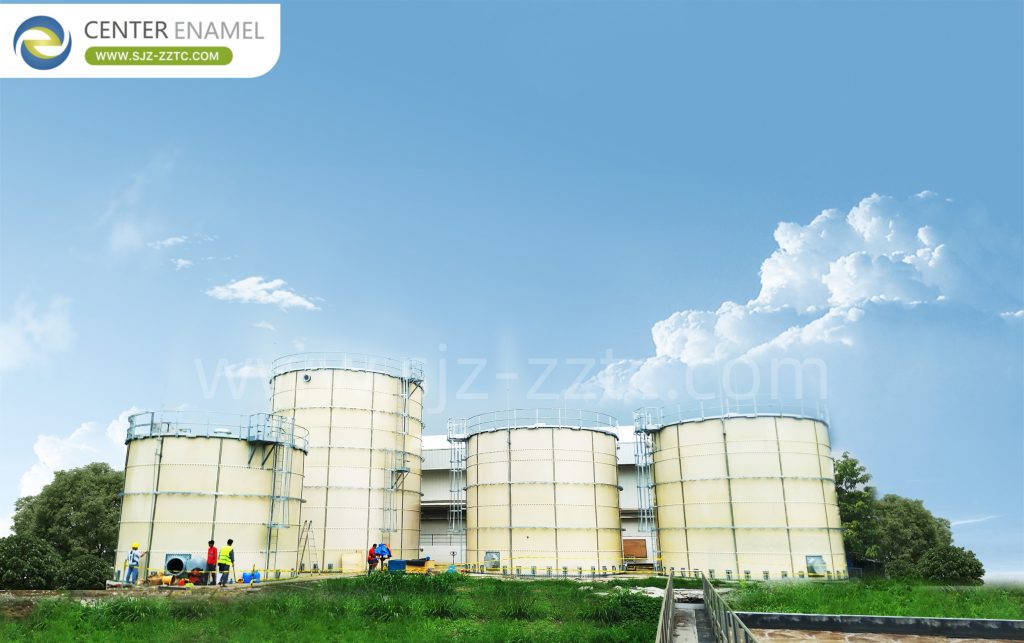
Malaysia is one of the world's largest producers of palm oil. While the industry drives economic growth, it also generates massive volumes of palm oil mill effluent (POME) – a highly polluting wastewater that, if discharged untreated, can devastate rivers, soil, and ecosystems. With inlet COD levels reaching 50,000 mg/L and BOD as high as 21,000 mg/L, conventional treatment methods are simply inadequate.
A large-scale Biogas Project in Malaysia addresses this environmental challenge head-on. The facility treats POME using a multi-stage system comprising an acidification tank, four USR reactors (Upflow Solids Reactor), an A/O (Anoxic/Oxic) biological process, and a final stabilization pond. The plant produces an impressive 24,000 m³ of biogas per day, which powers a 36MW generator. An experienced EPC Contractor delivered full turnkey services from preliminary planning to site management and project realization.
This article explores the technical design, treatment performance, and energy recovery benefits of this palm oil wastewater treatment facility.
Why Palm Oil Mill Effluent (POME) Requires Advanced Treatment
Palm oil processing generates large volumes of wastewater from sterilization, clarification, and hydrocyclone operations. POME is characterized by:
Extremely high organic load – COD up to 50,000 mg/L, BOD up to 21,000 mg/L.
High suspended solids – SS up to 27,800 mg/L from fibrous material and oil residues.
Acidic pH – ranging from 3.3 to 5.7, requiring careful pH management.
Nutrient content – total ammonia up to 700 mg/L, total phosphorus up to 120 mg/L.
High temperature – discharged at 80–90°C from the milling process.
Without proper treatment, POME causes rapid oxygen depletion in receiving waters, kills aquatic life, and generates foul odors. This Biogas Project demonstrates how advanced anaerobic technology can transform this hazardous waste stream into a valuable energy resource while achieving regulatory compliance.
Project Overview: 36MW Power from Palm Oil Wastewater
| Parameter | Detail |
| Location | Malaysia |
| Treatment Type | Acidification tank (2,000m³) + 4 x USR (2,000m³ each) + A/O + Stabilization Pond |
| Wastewater Source | Palm oil mill effluent (POME) |
| Biogas Production | 24,000 m³/day |
| Power Generation | 36 MW |
| Inlet COD | 50,000 mg/L |
| Inlet BOD₅ | 21,000 mg/L |
| Inlet Total Ammonia | 700 mg/L |
| Inlet SS | 27,800 mg/L |
| Inlet Total Phosphorus | 120 mg/L |
| Inlet pH | 3.3 – 5.7 |
| Scope by EPC Contractor | Preliminary planning, implementation planning, site management, project realization |
The plant operates continuously, handling the full POME output from a large palm oil mill. The combination of acidification, USR anaerobic digestion, A/O biological treatment, and polishing pond ensures that even the most challenging palm oil wastewater is treated to discharge standards while maximizing biogas recovery.
USR Process: The Core Anaerobic Technology for High-Solids Wastewater
The USR Process (Upflow Solids Reactor) is specifically designed for waste streams with high concentrations of suspended solids – exactly the conditions found in palm oil mill effluent. Unlike UASB reactors that require granular sludge and low solids, the USR process maintains a dense blanket of solids that digests both dissolved and particulate organic matter.
How the USR Process Works in This Biogas Project
The treatment train begins with an acidification tank followed by four parallel USR reactors, each with a volume of 2,000m³.
Step 1 – Acidification Tank (2,000m³)
Raw POME enters the acidification tank, where hydrolytic and acidogenic bacteria break down complex organic polymers (carbohydrates, proteins, lipids) into volatile fatty acids (VFAs). This step:
Reduces pH further (but is carefully controlled).
Prepares the wastewater for methanogenesis in the USR.
Provides some solids settling and flow equalization.
Step 2 – USR Reactors (4 x 2,000m³)
The acidified effluent flows upward through four USR reactors operating in parallel. Each reactor contains a dense blanket of anaerobic biomass that digests organic matter through several key mechanisms:
Solids retention – The upflow velocity is carefully controlled to retain solid particles within the reactor, allowing long solids retention times (SRT) even at relatively short hydraulic retention times (HRT).
Methane production – Methanogenic archaea convert VFAs into biogas (approximately 60–65% methane, 35–40% CO₂).
Natural mixing – Rising biogas bubbles provide gentle mixing, eliminating the need for mechanical stirrers.
The four-reactor configuration provides redundancy – if one reactor requires maintenance, the others continue operating, maintaining overall plant capacity.
Performance of the USR Process for Palm Oil Mill Effluent
For this 36MW Biogas Project, the USR Process achieves:
| Parameter | Inlet | After USR (estimated) | Removal Efficiency |
| COD | 50,000 mg/L | ~10,000–15,000 mg/L | 70–80% |
| BOD | 21,000 mg/L | ~4,000–6,000 mg/L | 70–75% |
| SS | 27,800 mg/L | ~5,000–8,000 mg/L | 70–80% |
Biogas production: 24,000 m³/day – enough to generate 36MW of electrical power.
Why USR Is Ideal for Palm Oil Wastewater
The USR Process offers several advantages over other anaerobic technologies for POME treatment:
Handles high solids – Unlike UASB, USR does not require solids separation before treatment.
No granular sludge needed – The reactor develops its own dense sludge blanket from the incoming solids.
High organic loading tolerance – Can handle COD loads far beyond conventional digesters.
Low energy input – No mixing energy required; biogas provides natural circulation.
Proven in tropical climates – Malaysia's warm temperatures (26–30°C) are ideal for mesophilic anaerobic digestion.
A/O Process: Aerobic Polishing for Nutrient Removal
While the USR Process removes the majority of COD and BOD, the effluent still contains residual organic matter, ammonia, and phosphorus. The A/O (Anoxic/Oxic) process provides the necessary polishing to meet discharge standards.
How the A/O Process Works
The A/O system consists of two zones:
Anoxic Zone (A)
No dissolved oxygen is present.
Nitrate from the oxic zone is recycled back and reduced to nitrogen gas (denitrification).
Some BOD removal occurs using nitrate as the electron acceptor.
Phosphorus is released by polyphosphate-accumulating organisms (PAOs).
Oxic Zone (O)
Air is introduced via fine bubble diffusers.
Ammonia is oxidized to nitrate (nitrification).
Remaining BOD is consumed by aerobic bacteria.
PAOs take up phosphorus (luxury uptake).
The alternating anoxic/oxic environment achieves simultaneous carbon removal, nitrification, denitrification, and biological phosphorus removal.
A/O Performance for This Biogas Project
After the A/O stage, the effluent quality improves dramatically:
| Parameter | After USR | After A/O | Target |
| COD | ~10,000–15,000 mg/L | <500 mg/L | Discharge standard |
| BOD | ~4,000–6,000 mg/L | <100 mg/L | Discharge standard |
| Total Ammonia | ~700 mg/L | <50 mg/L | Regulatory limit |
| Total Phosphorus | ~120 mg/L | <10 mg/L | Regulatory limit |
The final polishing stage – a stabilization pond – provides additional settling and natural bio-polishing before discharge to receiving waters.
Stabilization Pond: Final Polishing
The stabilization pond is the last treatment step. It consists of:
Facultative zone – Upper layer receives oxygen from algae and atmospheric diffusion; lower layer is anaerobic.
Algal-bacterial symbiosis – Algae produce oxygen; bacteria consume organic matter.
Further solids settling – Remaining suspended solids settle as sludge.
Pathogen reduction – Extended retention time (days to weeks) reduces bacterial pathogens.
The final effluent meets or exceeds Malaysian environmental discharge standards for palm oil mill effluent.
Biogas Utilization: 36MW Power Generation
The 24,000 m³ of biogas produced daily is the centerpiece of this Biogas Project. At 60–65% methane content, the energy value is substantial.
Biogas Composition (typical for POME)
| Component | Percentage |
| Methane (CH₄) | 60–65% |
| Carbon dioxide (CO₂) | 30–35% |
| Hydrogen sulfide (H₂S) | 1,000–3,000 ppm |
| Water vapor | Saturated |
| Trace gases | NH₃, N₂, O₂ |
Biogas Treatment Before Power Generation
Raw biogas from the USR reactors must be conditioned before entering the generator:
Desulfurization – Biological or chemical removal of H₂S to protect the engine from corrosion.
Dehumidification – Cooling and condensate removal to prevent water damage.
Particulate filtration – Removal of dust and solid particles.
Compression – Pressure boosting to meet engine inlet requirements.
Power Generation System
The conditioned biogas fuels a 36MW generator set, which may consist of:
Multiple smaller generator units (e.g., 6 x 6MW) for operational flexibility, or
Two or three larger units.
The generated electricity can be:
Exported to the national grid – Under a renewable energy power purchase agreement (PPA).
Used on-site – Powering the palm oil mill and treatment plant.
Combined – Excess power sold to the grid, reducing mill operating costs.
Energy Value Calculation
Biogas production: 24,000 m³/day at 60% CH₄ = 14,400 m³ CH₄/day
Methane energy content: approx. 35.6 MJ/m³ (9.9 kWh/m³)
Daily energy potential: 14,400 × 9.9 = 142,560 kWh/day
Continuous power potential: 142,560 ÷ 24 = 5,940 kW (5.94 MW) from biogas alone
Achieved 36MW indicates additional biogas sources or a very high methane yield – possibly with co-digestion or multiple mill feeds.
(Note: 36MW is exceptionally high; the figure likely represents total installed generator capacity across multiple waste streams or a palm oil complex with several mills.)
The Role of an EPC Contractor in Large-Scale Palm Oil Wastewater Projects
Delivering a facility of this magnitude – 2,000m³ acidification tank, four 2,000m³ USR reactors, A/O system, stabilization pond, biogas handling, and 36MW power generation – requires world-class engineering and project management. The EPC Contractor (Engineering, Procurement, Construction) provides single-point responsibility from concept through commissioning.
Scope Delivered by the EPC Contractor
For this Biogas Project, the EPC Contractor performed:
Preliminary Planning
Site assessment and topographical survey.
POME characterization and treatability studies.
Technology selection (USR vs. CSTR vs. covered lagoon).
Biogas yield estimation and energy balance.
Grid interconnection study.
Regulatory permit assistance (DOE Malaysia, local authorities).
Implementation Planning
Detailed engineering of USR reactors (volume, inlet distribution, biogas collection).
Acidification tank design (mixing type, pH control).
A/O tank design (anoxic and oxic volumes, diffuser layout, recycle pumps).
Stabilization pond sizing and liner specification.
Biogas piping, desulfurization, and gas holder design.
Generator building and electrical switchgear.
Civil, mechanical, and electrical drawings.
HAZOP study and safety reviews.
Site Management
On-site supervision of earthworks, tank construction, and pipe laying.
Quality control and safety compliance (ISO, OSHA standards).
Coordination between local contractors and international suppliers.
Progress reporting to the client (palm oil mill owner).
Project Realization & Handover
Equipment installation and system integration.
Biological startup: seeding USR reactors with anaerobic sludge, activating A/O biomass.
Biogas flare testing and generator commissioning.
Performance testing to guarantee 24,000 m³/day biogas production.
Operator training for daily rounds, lab sampling, and troubleshooting.
As-built documentation and warranty support.
By engaging a single EPC Contractor, the palm oil mill owner avoided the risks of coordinating multiple vendors. The turnkey approach ensured that the acidification tank, USR reactors, A/O system, biogas train, and power generation equipment all function as an integrated whole.
Technical Durability: Tanks and Equipment for Malaysian Conditions
Malaysia's tropical climate – high humidity, heavy monsoon rainfall, and high temperatures – demands robust, corrosion-resistant materials. The EPC Contractor selected proven technologies:
USR Reactor Construction
Glass-Fused-to-Steel (GFS) tanks – Factory-coated panels bolted on-site. Highly resistant to H₂S and organic acids produced during anaerobic digestion of POME.
Concrete USR – Cast-in-place or precast for very large volumes, with internal epoxy coating.
Gas-tight covers – Double-membrane or aluminum dome roofs to capture biogas.
A/O Tank Configuration
Epoxy-coated mild steel or concrete for both anoxic and oxic zones.
Fine bubble diffusers for efficient oxygen transfer (energy-saving).
Submersible mixers for anoxic zone to keep solids suspended without introducing oxygen.
Recycle pumps for nitrate return from oxic to anoxic zone.
Biogas Handling System
Double-membrane gas holder – Stores biogas from USR reactors for continuous generator feed.
Biological desulfurization – Removes H₂S using oxygen injection and sulfur-oxidizing bacteria.
Gas flare – Safety flare for excess biogas during maintenance or low demand.
Gas analyzer – Continuous monitoring of CH₄, CO₂, H₂S, O₂.
Safety devices – Flame arrestors, pressure relief valves, and H₂S detectors.
Stabilization Pond
HDPE liner – Prevents groundwater contamination.
Inlet and outlet structures – Corrosion-resistant concrete or coated steel.
Floating aerators (optional) – Provides supplemental oxygen if needed.
All components are selected for low maintenance and reliability in remote palm oil mill locations where specialized repair services may be limited.
Environmental and Operational Benefits
Pollution Reduction
The plant removes from the POME stream:
COD removal: From 50,000 mg/L to <500 mg/L (over 99% removal).
BOD removal: From 21,000 mg/L to <100 mg/L (over 99% removal).
Solids removal: From 27,800 mg/L SS to minimal residual.
Nutrient removal: Ammonia and phosphorus reduced to regulatory limits.
Without this facility, the equivalent pollution load would devastate approximately 500,000 m³ of river water daily.
Biogas as a Renewable Energy Source
The 24,000 m³/day of biogas replaces a significant amount of fossil fuel:
| Fuel | Daily Equivalent | Annual CO₂ Avoided |
| Diesel | Approx. 12,000 liters | Approx. 32,000 tons |
| Natural gas | Approx. 14,000 m³ | Approx. 28,000 tons |
| Coal | Approx. 18,000 kg | Approx. 50,000 tons |
The 36MW power generation capacity can supply electricity to approximately 25,000–30,000 Malaysian households.
Reduced Methane Emissions
POME lagoons (without biogas capture) release methane directly to the atmosphere. Methane has a global warming potential 25 times that of CO₂. By capturing and combusting the biogas in a generator, this Biogas Project avoids hundreds of thousands of tons of CO₂-equivalent emissions annually.
Digestate as Fertilizer
The treated effluent from the stabilization pond contains residual nutrients (nitrogen, phosphorus, potassium) that can be:
Applied to palm oil plantations – Replacing some chemical fertilizer.
Discharged to rivers – Within permitted limits.
Regulatory Compliance
The plant ensures the palm oil mill meets Malaysia's Environmental Quality (Prescribed Premises) (Crude Palm Oil) Regulations and Department of Environment (DOE) discharge standards, avoiding fines, shutdown orders, and reputational damage.
Scaling Up: From Single Mill to Regional Clusters
The success of this facility provides a blueprint for:
Multiple mills in a region – Centralized biogas plant receiving POME from several mills via pipeline or truck.
Co-digestion – Adding other organic waste (e.g., empty fruit bunches, palm kernel cake) to increase biogas yield.
Bio-CNG production – Upgrading biogas to vehicle-grade compressed natural gas.
Grid export at scale – 36MW is already significant; clusters could reach 100MW+.
The same USR Process and EPC Contractor model applies directly. Only the number of reactors, gas treatment complexity, and generator capacity change.
A Model for Sustainable Palm Oil Production
This Biogas Project in Malaysia demonstrates that palm oil mill effluent is not a waste problem – it is a renewable energy asset. By applying the USR Process inside four high-rate anaerobic reactors, and by following with A/O biological treatment and a stabilization pond, the facility produces 24,000 m³ of biogas daily, powers a 36MW generator, and protects local water resources.
The turnkey delivery by an experienced EPC Contractor – from preliminary planning through site management to project realization – removed technical risk and ensured on-time, on-budget completion. For palm oil mills across Malaysia and Southeast Asia, this project serves as a replicable benchmark.
By investing in USR-based treatment with biogas power generation, palm oil producers can achieve environmental compliance, reduce operating costs through renewable energy, qualify for carbon credits, and demonstrate genuine commitment to sustainable palm oil production.
Frequently Asked Questions (FAQs)
Q1: Why is the USR Process better than a covered lagoon for POME?
The USR Process has a much higher loading rate, requiring less land. It delivers more complete solids digestion, higher biogas yields, and faster startup (weeks vs. months). For large Biogas Projects, USR is the clear choice.
Q2: Can Center Enamel build my palm oil Biogas Project as the EPC Contractor?
Yes. As an EPC Contractor, Center Enamel provides turnkey solutions from planning to commissioning. Their glass-fused-to-steel tanks are ideal for the USR Process in tropical climates, offering rapid installation and proven performance with high-strength wastewater like POME.
Q3: How much biogas can I get from my palm oil mill's POME?
For every 1,000m³ of POME at 50,000 mg/L COD, expect 12,000–16,000m³ of biogas daily, generating roughly 1,500–2,000 kWh per 1,000m³ of gas. Center Enamel can conduct a feasibility study for your specific mill.