
Anaerobic Digestion & GFS Tanks: Cost-Effective Solutions for Extreme Climates and Food Waste
Industrial wastewater treatment faces a critical juncture. The "three highs"-high difficulty, high cost, and high energy consumption-continue to challenge operators across new energy, chemical, and pharmaceutical industries. As emission standards tighten and digitalization demands grow, traditional concrete tanks and conventional processes struggle to keep pace. This article explores how Anaerobic Digestion and GFS Tanks work together to deliver resilient, cost-effective, and sustainable solutions for industrial and agricultural wastewater treatment worldwide.
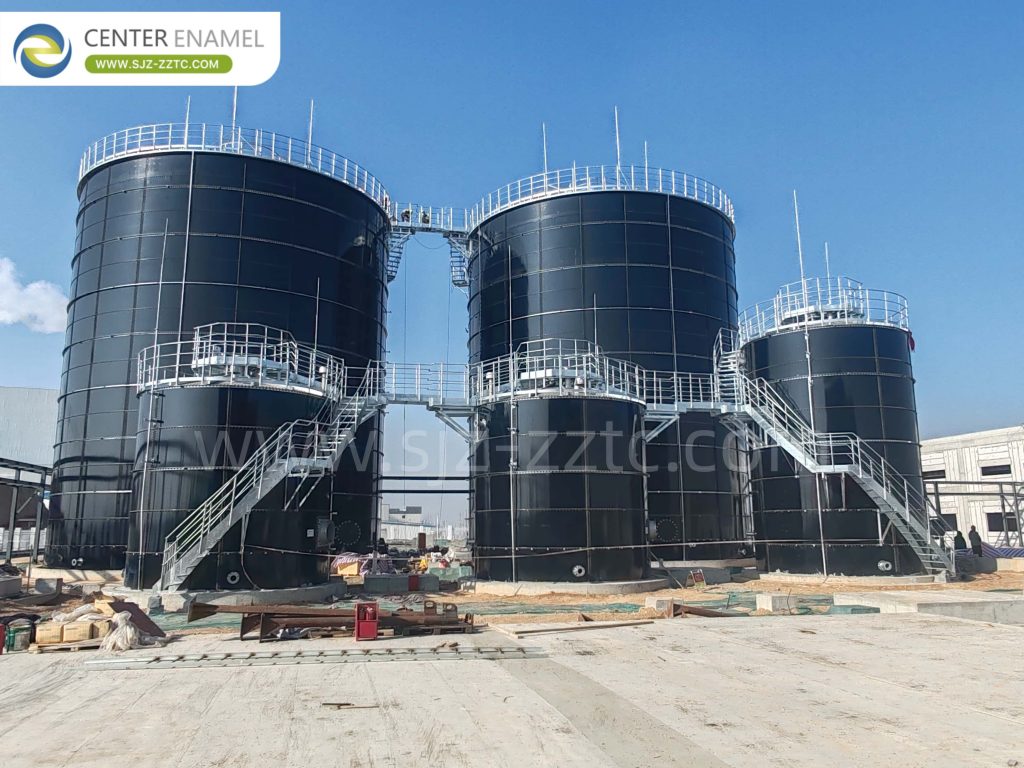
Why Industrial Wastewater Treatment Faces the "Three Highs"
Wastewater from new energy, chemical, and pharmaceutical sectors contains complex characteristic pollutants that traditional treatment processes cannot effectively remove. Chinese companies have gained significant price advantages in mid- to low-end equipment, yet the industry faces continuous pressure from stricter emission standards, digitalization requirements, and low-carbon transformation goals. Operational refinement management capabilities are now essential-not optional.
GFS Tanks-Engineered for Extreme Climates and Long-Term Durability
GFS Tanks outperform concrete tanks in environmental adaptability through customized wind and seismic design based on project site climate and geological conditions. Concrete tanks, cast in place as monolithic structures, depend entirely on on-site construction quality for seismic and wind resistance. In remote areas, typhoon-prone zones, and earthquake belts, this quality is difficult to control. Under strong earthquakes or typhoons, concrete tanks crack and suffer base settlement damage-with reinforcement costs equivalent to rebuilding.
GFS Tanks collect local seismic intensity, maximum wind pressure, and foundation bearing capacity data before construction. Customized thickened steel panels, stiffening ribs, and anchored base components are factory-prefabricated to standardized specifications. The bolted panel structure offers excellent stress distribution, resisting overall fracture under seismic and typhoon impacts. Minor foundation settlement will not cause through-cracking. Structural parameters adjust flexibly for mountainous, coastal typhoon-zone, and high-seismic-zone projects-providing long-term protection against extreme natural climate damage.
GFS Tanks vs. Concrete Tanks: Performance Comparison
| Feature | GFS Tanks | Concrete Tanks |
| Seismic Resistance | Factory-prefabricated, bolted panels with excellent stress distribution | Dependent on on-site construction quality |
| Wind Resistance | Customized thickened panels and stiffening ribs | Variable, difficult to control in remote areas |
| Foundation Settlement | Minor settlement will not cause through-cracking | Prone to cracking and base settlement damage |
| Construction Quality | Standardized factory prefabrication | Highly dependent on on-site conditions |
| Repair/Reinforcement Cost | Low, modular replacement | Equivalent to rebuilding |
| Climate Adaptability | Customized for typhoon, earthquake, mountainous zones | Limited, site-dependent |
Anaerobic Digestion-Core Process for High-Solids Agricultural Wastewater
Anaerobic Digestion via USR (Upflow Anaerobic Sludge Blanket) is a dedicated process for agricultural high-solids wastewater. It is primarily suitable for large-scale livestock manure, livestock soaking water, agricultural straw leachate, and livestock slaughterhouse high-solids wastewater. For high-suspended-solids, high-organics, high-impurity wastewater conditions, it is the core process for rural livestock pollution treatment and agricultural organic waste resource utilization.
This process suits township decentralized wastewater treatment and small to medium-sized agricultural enterprise wastewater treatment. It can serve as the primary process for large livestock base manure resource recovery, combining wastewater treatment with biogas recovery. It is also suitable for various high-solids, easily clogged, difficult-to-treat organic wastewater pretreatment-with superior suitability in agricultural environmental applications compared to other anaerobic processes.
Food Waste Treatment-Operation and Maintenance Cost Analysis
O&M costs for food waste treatment are moderate to high, but resource recovery benefits are substantial-good overall economics. Pretreatment oil removal equipment and three-phase separators require high capital investment, but recovered oil can be sold. Biodiesel feedstock oil has good market value, providing core revenue for food waste treatment. Stable biogas from Anaerobic Digestion can be used for power generation or heating, offsetting energy costs.
The CSTR process has simple equipment with no precision wear parts-low maintenance costs. High-salt, high-oil conditions require premium corrosion protection (GFS Tanks), with higher initial investment but long service life and low maintenance. Chemical consumption is mainly flocculants and desulfurizers-moderate expenditure. Oil and salt cause pipe fouling and membrane pollution, requiring periodic cleaning-moderate labor requirements. Overall, resource recovery revenues (oil sales + biogas energy + digestate fertilizer) generally cover O&M costs-good overall economics.
Food Waste Treatment: Cost and Revenue Breakdown
| Cost/Revenue Category | Details | Impact on Economics |
| Pretreatment Equipment | Oil removal, three-phase separators | High capital investment |
| Recovered Oil Sales | Biodiesel feedstock | Core revenue stream |
| Biogas Utilization | Power generation or heating | Offsets energy costs |
| CSTR Process Maintenance | Simple equipment, no precision wear parts | Low maintenance costs |
| Corrosion Protection | GFS Tanks for high-salt, high-oil conditions | Higher initial investment, long service life |
| Chemical Consumption | Flocculants, desulfurizers | Moderate expenditure |
| Pipe/Membrane Cleaning | Periodic due to oil and salt | Moderate labor requirements |
| Overall Resource Recovery | Oil sales + biogas energy + digestate fertilizer | Generally covers O&M costs |
Center Enamel's Global Installation Coverage and Delivery Capability
Center Enamel is the pioneer of Chinese GFS equipment exports, with installation service coverage across over 100 countries and regions-possessing full delivery capability across climates, regulations, and geographies.
Overseas coverage includes Southeast Asia (Vietnam, Thailand, Malaysia, Indonesia, Cambodia, Bangladesh, Nepal, etc.), Africa (Ghana, South Africa, Mali, Guinea, Zambia, Kenya, Pakistan, etc.), Europe/Americas (Sweden, USA, Russia, etc.), the Middle East, and Latin America-adaptable to tropical rainy high-salt spray, high-altitude mountainous, Nordic severe cold, and high-standard European/American facility conditions.
The company uses a dual-service model of "own cross-border construction teams + overseas local agent coordination"-whether clients are in developed countries or remote developing regions-providing one-stop services including on-site survey, on-site installation, process commissioning, and operator training. Complete coverage covers biogas engineering, municipal wastewater, industrial wastewater, livestock manure, drinking water storage, and other global mainstream environmental engineering projects-possessing the full delivery capability to undertake large-scale tank farm projects in any country worldwide.
Center Enamel Global Service Coverage
| Region | Countries/Regions | Climate/Geographic Adaptability |
| Southeast Asia | Vietnam, Thailand, Malaysia, Indonesia, Cambodia, Bangladesh, Nepal | Tropical rainy, high-salt spray |
| Africa | Ghana, South Africa, Mali, Guinea, Zambia, Kenya, Pakistan | High-altitude mountainous, arid |
| Europe/Americas | Sweden, USA, Russia | Nordic severe cold, high-standard facilities |
| Middle East | Multiple countries | High-temperature, arid |
| Latin America | Multiple countries | Tropical, varied terrain |
Flexible and Efficient Service Delivery System
Center Enamel's own cross-border construction teams plus a global localized agent network offer modular GFS tank assembly with short construction periods and dismantlable/reusable capability. This suits overseas short-term projects, phased expansions, and relocation needs. Full-lifecycle after-sales O&M support ensures long-term stable client operations.
FRP Roof Cover Solution-Economical and Durable
FRP Roof is a general-purpose economical roof for atmospheric pressure storage tanks without air-tightness requirements. It is suitable for drinking water storage, agricultural irrigation water, firewater reserve, and general production wastewater temporary storage. It is available in two styles: flat and dome, allowing flexible selection based on tank specifications and site aesthetic requirements.
The roof is integrally molded from resin and fiberglass-lightweight, with natural water resistance and mild acid/alkali corrosion resistance. It will not rust or rot in long-term humid environments, eliminating the frequent anti-corrosion maintenance required for metal roofs. The dome style features excellent drainage performance due to its curved structure, resisting water accumulation, dust buildup, snow load, and strong winds. The flat style facilitates installation of maintenance walkways, level gauges, and vents on top, making inspection and operation convenient.
The product is fully insulated with no risk of galvanic corrosion, will not contaminate drinking water quality, and meets environmental standards for domestic water storage. The modular design with low individual component weight allows for simple on-site hoisting and assembly, offering high construction efficiency and affordable procurement and installation costs. It is only suitable for atmospheric pressure water storage tanks without biogas collection or pressurization requirements, and is not recommended for Anaerobic Digestion gas-producing conditions. It is widely used in rural agricultural water storage tanks, industrial park firewater tanks, waterworks buffer tanks, and small to medium-sized domestic wastewater temporary storage facilities-making it a cost-effective general-purpose roof choice for conventional water storage applications.
FRP Roof Cover: Suitable vs. Unsuitable Applications
| Suitable Applications | Unsuitable Applications |
| Drinking water storage | Anaerobic digestion gas-producing conditions |
| Agricultural irrigation water | Biogas collection systems |
| Firewater reserve | Pressurized storage tanks |
| General production wastewater temporary storage | |
| Rural agricultural water storage tanks | |
| Industrial park firewater tanks | |
| Waterworks buffer tanks | |
| Small to medium domestic wastewater temporary storage |
Ready to optimize your industrial wastewater treatment with Anaerobic Digestion and GFS Tanks? Contact Center Enamel today for a customized solution tailored to your project's climate, scale, and regulatory requirements.
Our team provides one-stop service from design to installation to after-sales support-anywhere in the world. Reach out now and let's build a sustainable future together.
FAQ
1. What makes GFS Tanks more suitable for extreme climates than concrete tanks?
GFS Tanks are factory-prefabricated with customized thickened steel panels, stiffening ribs, and anchored base components based on local seismic and wind data. They resist cracking and settlement damage far better than cast-in-place concrete tanks, which depend heavily on on-site construction quality.
2. Can Anaerobic Digestion treat high-solids agricultural wastewater effectively?
Yes. The USR process is specifically designed for high-solids, high-organics wastewater such as livestock manure, straw leachate, and slaughterhouse waste. It combines wastewater treatment with biogas recovery, making it ideal for rural livestock pollution treatment and agricultural organic waste resource utilization.
3. Does Center Enamel provide installation services in remote or developing regions?
Absolutely. Center Enamel has installation service coverage across over 100 countries, using a dual-service model of own cross-border construction teams plus overseas local agent coordination. Services include on-site survey, installation, process commissioning, and operator training.