
Anaerobic Digestion of Goat Manure: Efficient Waste Management and Energy Recovery
The Evolving Landscape of Small Ruminant Waste Valorization
In the modern agricultural landscape, the pursuit of carbon neutrality and circular economy models has shifted the focus toward every organic residue produced on the farm. While cattle and swine manure have long been the subjects of intensive energy recovery research, the potential of Goat Manure is now emerging as a significant frontier for renewable energy. As the global goat population increases to meet the rising demand for dairy, meat, and fiber, the management of the resulting waste has become a critical operational priority. Through the implementation of Anaerobic Digestion of Goat Manure, producers can move beyond simple disposal and achieve high-efficiency energy recovery.
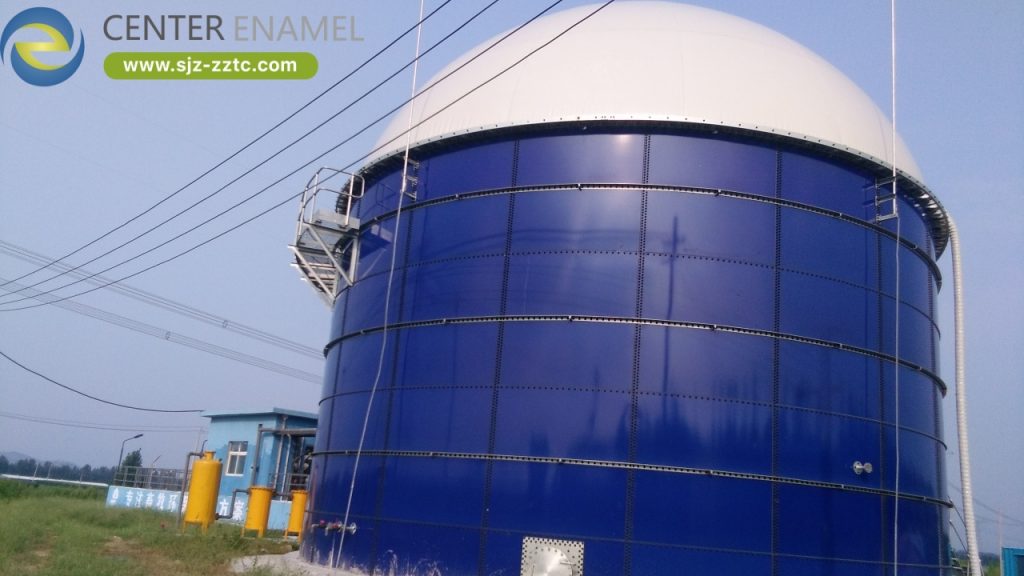
Shijiazhuang Zhengzhong Technology Co., Ltd, operating under the world-renowned brand Center Enamel, stands as a global pioneer in providing the engineering infrastructure necessary for this transition. With over thirty years of innovation and a project footprint extending to more than one hundred countries, we provide the turnkey containment and processing solutions that make high-efficiency biological recovery a reality. Our Glass-Fused-to-Steel (GFS) technology and integrated roofing systems are specifically engineered to handle the unique chemical profile of Goat Manure, ensuring long-term operational success for global agricultural producers.
The Biological and Strategic Profile of Goat Manure
To optimize the Anaerobic Digestion of Goat Manure, it is essential to understand the material's unique physical and biological properties. Goat residues are distinct from other livestock wastes and require specific management strategies to ensure peak methane production.
1. High Solids and Organic Density
Goat Manure is typically characterized by a higher dry matter content and smaller particle size compared to cattle manure. This high organic density represents a "concentrated" energy source. However, it also presents challenges in terms of pumpability and mixing. When processed in a controlled anaerobic environment, these organic solids are broken down by microbial consortia to yield biogas, which can be utilized to generate electricity, process heat, or renewable natural gas.
2. Nitrogen and Ammonia Management in Goat Waste
Goat residues often possess a specific carbon-to-nitrogen ratio that requires careful monitoring. High nitrogen levels can lead to the accumulation of ammonia, which, if left unmanaged, can inhibit the sensitive methanogenic bacteria. Center Enamel’s reactor designs incorporate advanced monitoring and dilution systems to maintain the perfect biological balance, ensuring that the Anaerobic Digestion of Goat Manure remains stable and productive even under high-loading conditions.
Technical Foundations of Advanced Energy Recovery
The transformation of Goat Manure into energy occurs through a complex biological sequence that must be protected from external environmental fluctuations.
1. The Four Critical Stages of Digestion
Hydrolysis: Enzymes break down complex organic polymers (fats, proteins, and carbohydrates) into soluble monomers. In goat manure, the breakdown of fibrous bedding materials often makes this the rate-limiting step.
Acidogenesis: These monomers are converted into volatile fatty acids and alcohols by acidogenic bacteria.
Acetogenesis: The intermediates are further refined into acetic acid, hydrogen, and carbon dioxide.
Methanogenesis: Specialized microorganisms convert these precursors into methane, the primary component of biogas. This stage is the most sensitive to pH changes and temperature drops.
2. CSTR Technology: Optimizing Mixing Dynamics
Because Goat Manure is often collected in a solid or semi-solid state, effective pre-treatment and mixing are essential. Center Enamel’s Continuous Stirred-Tank Reactor (CSTR) configurations utilize high-torque mechanical mixers. These systems are strategically positioned to prevent the formation of floating crusts and the sedimentation of heavy particles, ensuring that every particle of manure is exposed to the microbial population.
Center Enamel: Engineering Excellence in Containment
At Center Enamel, we specialize in the foundational infrastructure that makes the Anaerobic Digestion of Goat Manure both safe and profitable.
1. Glass-Fused-to-Steel (GFS) Tanks: Superior Longevity
Our flagship GFS tanks are the premier choice for agricultural biogas reactors. By fusing a high-tech glass enamel coating to specialized steel at temperatures exceeding 800 degrees, we create a material with unparalleled properties:
Inert Surface Technology: The glass interior is completely impervious to the organic acids and corrosive hydrogen sulfide produced during the digestion of Goat Manure.
Hardness and Abrasion Resistance: Goat waste can contain significant fibrous material and grit. Our GFS coating scores a 6.0 on the Mohs scale, ensuring the tank walls maintain structural integrity over a service life exceeding thirty years.
Global Compliance: Our tanks are manufactured to meet or exceed international standards, including AWWA D103-09, ISO 28765, and NSF/ANSI 61, providing peace of mind for international investors.
2. Integrated Gas Management with Double Membrane Roofs
Efficient energy recovery requires total gas capture. Our Double Membrane Roofs function as an integrated, variable-volume gas holder.
Inner Membrane: Serves as the primary gas storage vessel, expanding and contracting based on production and consumption.
Outer Membrane: Air-pressurized to provide a robust protective shell against wind, rain, and snow.
3. Aluminum Dome Roofs: The Ultimate Solution for Secondary Storage
For the storage of treated digestate—the nutrient-rich bio-fertilizer produced as a byproduct—our Aluminum Dome Roofs offer an unparalleled solution.
Self-Supporting Geodesic Design: These domes require no internal support columns, which prevents corrosion of internal structures and maximizes the usable volume.
Reflective and Durable: The aluminum alloy is naturally resistant to the humid farm atmosphere and reflects solar radiation, helping to maintain stable temperatures in the stored liquid.
Sustainability, ROI, and Market Competitiveness
Investing in Anaerobic Digestion of Goat Manure is a strategic decision that delivers significant long-term value to the producer.
Direct Energy Savings: By producing on-site electricity or heat, goat farms can significantly reduce their reliance on grid power and fossil fuels, insulating themselves from market volatility.
Premium Bio-Fertilizer Production: The process stabilizes the manure and reduces pathogens, creating an organic fertilizer that is superior to raw manure. This can be sold as a secondary revenue stream or used to reduce the farm's reliance on chemical fertilizers.
Green Brand Positioning: For dairy goat operations, implementing waste-to-energy systems enhances the brand's sustainability profile, appealing to eco-conscious consumers and retailers.
Global Project Excellence: Center Enamel in Action
Our reputation as a world leader is built on a foundation of successful projects in over one hundred countries. These non-fictitious projects highlight our capacity to deliver infrastructure for high-efficiency energy recovery:
Shandong Heze Biogas Project This regional initiative utilized 3 units of our high-performance GFS tanks. The project successfully transforms agricultural and livestock residues into a stable energy stream, demonstrating the reliability of our tanks in large-scale recovery operations.
Inner Mongolia Hinggan League Bio-Natural Gas Project A landmark project in a challenging climate, this installation integrated 4 units of our bolted steel tanks. These vessels provide the stable environment necessary for the high-efficiency production of bio-natural gas from agricultural waste, proving the resilience of our engineering against extreme temperature fluctuations.
Jiangsu Xuzhou Biogas Project This major industrial project involved the deployment of 4 units of our advanced GFS containment technology. The project serves as a prime example of how modular construction can be utilized to rapidly build the essential infrastructure for modern anaerobic digestion facilities.
Driving the Future of Sustainable Goat Farming
The implementation of Anaerobic Digestion of Goat Manure represents a transformative step toward a more sustainable and profitable agricultural industry. By converting a waste byproduct into a renewable energy asset, producers can secure their energy future while fulfilling their environmental responsibilities.
At Shijiazhuang Zhengzhong Technology Co., Ltd (Center Enamel), we are dedicated to providing the innovation and engineering excellence that make these projects a success. From our premier GFS tanks to our specialized Double Membrane Roofs and Aluminum Dome Roofs, we offer a total containment solution designed for the future of industrial sustainability.