
Anaerobic Digestion Processes: CSTR, UASB, IC, USR And EGSB Compared
Anaerobic digestion processes are the family of closed, oxygen-free reactors that convert organic matter to biogas with methanogens. The five common types - CSTR, UASB, IC, USR, EGSB - are not interchangeable: CSTR and USR suit high-solids and mixed feeds, UASB and IC suit dissolved high-strength waste, and EGSB pushes the highest rates. The choice is made from solids content, organic loading rate, and temperature, not from a preference.
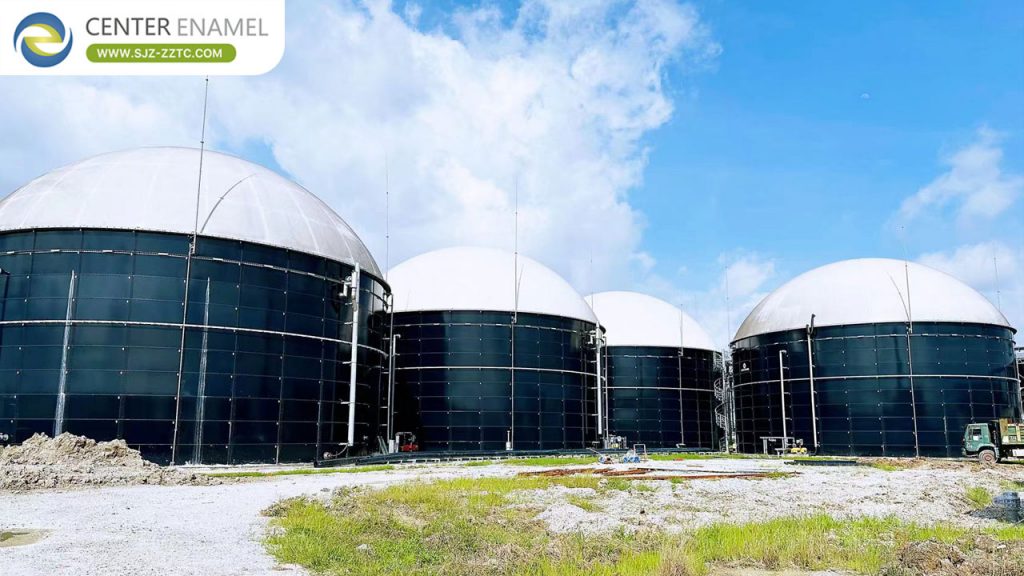
What Anaerobic Digestion Actually Is
Anaerobic digestion is biological treatment without air: hydrolytic, acidogenic, acetogenic, and methanogenic microbes break organics into methane (about 55-65% of biogas) and carbon dioxide. It recovers energy and sludge is minimal versus aerobic systems, but it demands stable temperature and careful loading. This is the umbrella the term 'anaerobic treatment' usually refers to for organic wastewater and waste.
The Five Reactors And When Each Wins
A CSTR is a completely mixed tank with mechanical mixing, tolerant of solids and feed swings, run at 35-38 C mesophilic (or thermophilic higher). A USR (Upflow Solids Reactor) lets solids settle while liquid upflows, suiting solid-rich feed with less mixing energy. A UASB (Upflow Anaerobic Sludge Blanket) relies on a granular sludge blanket to treat dissolved, high-strength wastewater. An IC (Internal Circulation) reactor is a high-rate UASB derivative using internal liquid recirculation for very high loading. An EGSB (Expanded Granular Sludge Bed) expands the bed for even higher upflow velocity and rate.
| Reactor | Best feed | Typical OLR | Note |
| CSTR | Mixed, high solids | 2-6 kg COD/m3 day | Mixing, insulated |
| USR | Solid-rich | 3-8 kg COD/m3 day | Low mix energy |
| UASB | Dissolved, high strength | 5-15 kg COD/m3 day | Granular blanket |
| IC | Very high strength | 15-30 kg COD/m3 day | Internal circulation |
| EGSB | High rate, granular | 20-40 kg COD/m3 day | Expanded bed |
Matching Reactor To Waste
The deciding variables are total solids and strength. High-solids manure or food waste points to CSTR or USR; dissolved industrial or sewage sludge points to UASB; brewery, pharma, or food-processing effluent at very high COD points to IC or EGSB. Temperature matters: mesophilic 35-38 C is standard, and cold feeds need insulation or waste-heat recovery. There is no universal winner - only a fit to the feed.
| Waste type | Lead choice | Why |
| Manure, food waste | CSTR / USR | Handles solids |
| Sewage sludge | UASB | Dissolved load |
| Brewery / pharma | IC / EGSB | Very high COD |
| Dilute warm farm | Covered lagoon | Low capital |
Project Case Study: Zhenyuan Group Biogas Project In Henan
Project / Application: Farm animal manure plus washing wastewater, Xinzheng, Henan. Industry: Biogas / vehicle fuel. Process: Medium-temperature CSTR, two-stage. Key Requirements: Produce vehicle-grade methane at scale.
| Field | Value | Source / Evidence |
| Handling Capacity | 650 T/D (manure + wash) | Company project reference |
| Reactor Type | CSTR two-stage (3 primary + 1 secondary) | Company project reference |
| Annual Methane | 3,000,000 m3 (vehicle-grade) | Company project reference |
| Primary Reactors | 3 sets 15.29 x 15 m | Company project reference |
| Secondary Reactor | 1 set 5.22 x 6 m | Company project reference |
About Company
Shijiazhuang Zhengzhong Technology Co., Ltd (Center Enamel) is a comprehensive high-tech enterprise specializing in wastewater engineering, process section contracting, and equipment manufacturing. The company delivers biogas and wastewater projects through three main lines - EPC (turnkey) contracting, equipment supply, and process packages - covering livestock and municipal wastewater, biomass energy, industrial wastewater, and food waste. Its reactor portfolio spans CSTR, USR, UBF, UASB, IC, and EGSB, backed by in-house Glass-Fused-to-Steel tank manufacturing (enamel firing at 820-930 C) and certifications including ISO 9001, NSF/ANSI 61, and CE-EN 1090. With 35+ years of operation, a 150,000 m2 manufacturing base, and projects in 100+ countries, Center Enamel provides the single-responsibility engineering behind the Zhenyuan Henan biogas project that used a two-stage CSTR to turn 650 t/d of manure into 3 million m3/year of vehicle-grade methane - a scoped anaerobic process application.
Comparison: Loading Rate Versus Footprint
| Element | CSTR | UASB / IC |
| Footprint | Larger | Smaller (high rate) |
| Solids tolerance | High | Low-Mid |
| Start-up | Simpler | Granule-dependent |
| Best for | Mixed farm waste | Industrial high COD |
Anaerobic digestion processes are chosen by feed solids, strength, and temperature - CSTR/USR for solids, UASB/IC/EGSB for dissolved high-rate duty - not by a single reactor marketed as universal.
Frequently Asked Questions
Q1: What is anaerobic digestion? A1: Oxygen-free biological treatment where microbes convert organics to methane-rich biogas.
Q2: CSTR vs UASB vs IC which to use? A2: CSTR/USR for solids-rich waste; UASB for dissolved high strength; IC/EGSB for very high-rate industrial.
Q3: What is the OLR of each reactor? A3: CSTR 2-6, USR 3-8, UASB 5-15, IC 15-30, EGSB 20-40 kg COD/m3 day roughly.
Q4: When is EGSB used? A4: For the highest-rate granular-sludge duty where upflow velocity and rate are maximised.
Q5: What temperature is standard? A5: Mesophilic 35-38 C; thermophilic runs higher with more heat demand.
Q6: Is anaerobic better than aerobic? A6: For high-strength organic waste it recovers energy and makes less sludge; comparison depends on strength.
Q7: What is 'anaerobic treatment'? A7: It is generally anaerobic digestion of organic wastewater or waste.
Q8: Who selects the reactor? A8: An engineer matches reactor to solids, strength, and temperature.
Suggested CTA
Send your waste type, strength, and temperature profile to an engineer, or request a reactor-selection outline.