
Anaerobic Digestion Solutions: How GFS Tanks Improve System Performance and Reliability
Anaerobic Digestion is an effective biological process for treating organic waste and wastewater while recovering valuable biogas. It is widely used in food processing, agriculture, pharmaceutical manufacturing, municipal wastewater treatment, and other industries that generate organic-rich waste streams.
However, successful anaerobic digestion depends on more than selecting the right biological process. Storage equipment must withstand corrosive operating environments, fluctuating organic concentrations, and long-term exposure to wastewater and fermentation materials. Poor tank performance can increase maintenance costs, interrupt operations, and affect overall treatment efficiency.
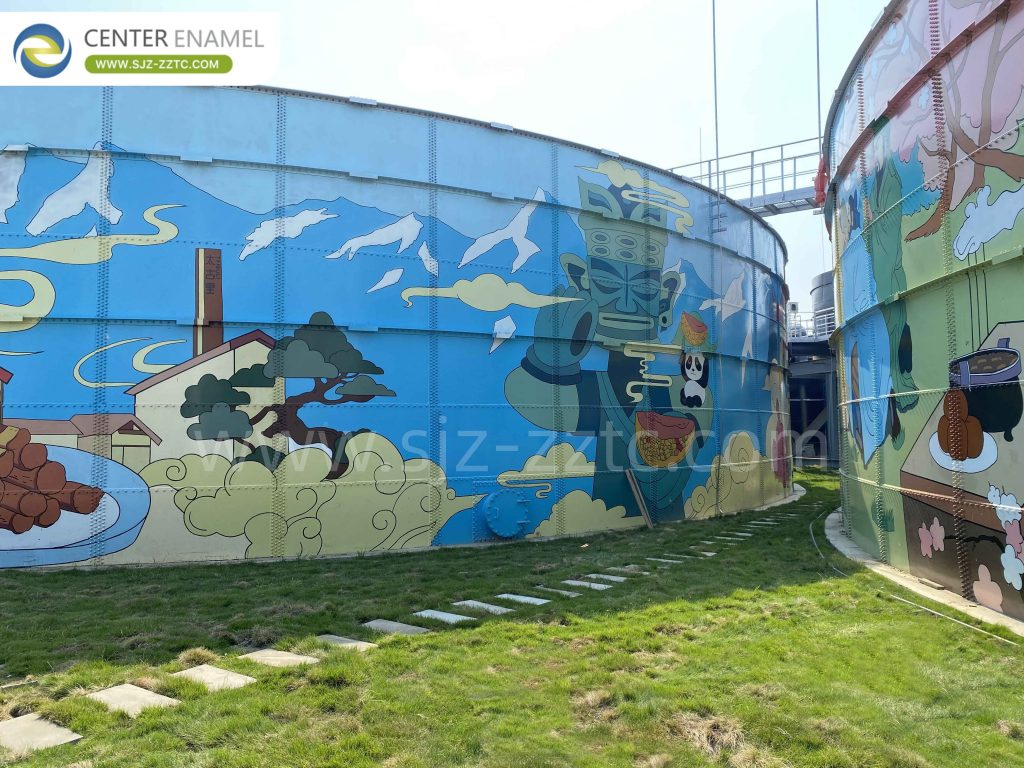
As a professional bolted tank manufacturer, Shijiazhuang Zhengzhong Technology Co., Ltd. (Center Enamel) provides advanced Glass-Fused-to-Steel (GFS) Tanks for anaerobic digestion and industrial environmental applications. Combining specialized enamel technology, modular tank construction, and international project experience, Center Enamel delivers customized storage solutions designed for demanding operating conditions.
From wastewater storage to anaerobic reactor applications, its GFS tank systems provide reliable infrastructure for modern environmental engineering projects.
Growing Demand for Efficient Anaerobic Digestion Systems
As environmental regulations become increasingly stringent, industries are placing greater emphasis on organic waste treatment, resource recovery, and sustainable wastewater management.
Anaerobic Digestion has become an important technology because it converts biodegradable organic matter into biogas under oxygen-free conditions. The process helps reduce organic pollution while creating opportunities for renewable energy recovery.
Common applications include:
Food and beverage processing wastewater.
Agricultural waste and livestock manure treatment.
Pharmaceutical fermentation wastewater.
Palm oil mill effluent treatment.
Municipal wastewater treatment.
Organic waste and food waste digestion.
Different industries generate wastewater with varying organic concentrations, temperatures, salinity levels, and pollutant characteristics. Therefore, treatment systems require carefully selected anaerobic technologies and storage equipment.
Among the most important considerations is tank durability. Corrosion resistance, structural reliability, and gas-tightness directly influence the long-term performance of anaerobic digestion facilities.
Why GFS Tanks Are Ideal for Anaerobic Digestion
Tank materials play a critical role in anaerobic digestion because storage and reaction environments may contain corrosive organic substances, acids, alkalis, and dissolved salts.
Center Enamel has independently developed more than 200 specialized enamel formulations and supporting patented technologies to accommodate different storage media.
Glass-Fused-to-Steel technology combines the structural strength of steel with the protective properties of a glass enamel coating. The glass coating is fused onto specially prepared steel plates at high temperatures, creating a durable surface designed for demanding industrial applications.
Key advantages include:
Excellent Corrosion Resistance
Specialized enamel formulations can be selected for environments involving strong acids, alkalis, high organic concentrations, and high salinity, subject to chemical compatibility evaluation.
Adaptability to Different Applications
GFS Tanks are suitable for anaerobic digestion, municipal wastewater, livestock manure, food processing waste, and industrial water treatment.
Modular Construction
Factory-manufactured panels allow convenient transportation and bolted assembly, making installation practical for overseas projects and locations with limited construction infrastructure.
Reduced Maintenance Requirements
The factory-applied glass coating does not require conventional repainting during normal service, helping reduce routine protective coating maintenance.
Flexible Project Configuration
Tank dimensions and structural configurations can be customized according to project capacity, site conditions, and operating requirements.
GFS Tanks Compared with Conventional Concrete Tanks
| Comparison Factor | GFS Tanks | Concrete Tanks |
| Corrosion Protection | Specialized glass enamel coating | Additional lining may be required |
| Chemical Adaptability | Customizable enamel formulations | Depends on concrete and lining compatibility |
| Installation | Modular bolted assembly | Conventional on-site construction |
| Transportation | Disassembled panels | Limited transportation flexibility |
| Maintenance | No conventional repainting under normal service | Protective lining may require inspection and repair |
| Application | Wastewater, biogas, and organic waste | Primarily depends on structural and lining design |
For anaerobic digestion facilities handling challenging organic waste streams, properly specified GFS Tanks provide a durable storage option while supporting long-term operational reliability.
EGSB Technology for Diverse Wastewater Applications
Besides tank materials, selecting an appropriate anaerobic treatment process is equally important.
Expanded Granular Sludge Bed (EGSB) technology is designed to improve contact between wastewater and active granular sludge through controlled upward flow.
Compared with conventional anaerobic systems, EGSB reactors provide advantages in mass transfer, operating flexibility, and sludge retention.
Where Is EGSB Anaerobic Digestion Used?
EGSB technology is suitable for medium- to low-concentration organic wastewater with moderate biodegradability. Its applications include:
Municipal wastewater anaerobic pretreatment.
Food processing and beverage wastewater.
Light industrial wastewater.
Textile wastewater.
Pharmaceutical industrial wastewater.
Wastewater containing small amounts of refractory organic compounds.
It is particularly useful in northern regions where low temperatures can reduce the efficiency of conventional anaerobic treatment processes.
EGSB systems can operate independently as a primary anaerobic treatment stage or be combined with aerobic processes to create an integrated wastewater treatment train.
Key EGSB Advantages
| Performance Factor | Technical Advantage |
| Mass Transfer | High upflow velocity improves wastewater-sludge contact |
| Sludge Retention | Granular sludge offers good activity and settling characteristics |
| Temperature Adaptability | Suitable for selected low-temperature wastewater applications |
| Energy Consumption | No mechanical mixing components required |
| Operating Stability | Good resistance to hydraulic and organic loading fluctuations |
| Process Flexibility | Can be integrated with aerobic treatment systems |
By combining suitable anaerobic technologies with corrosion-resistant tank structures, industrial facilities can establish more reliable wastewater treatment infrastructure.
Reducing Operating Costs Through Reliable Equipment
Although Anaerobic Digestion offers environmental and resource recovery benefits, industrial wastewater treatment can involve considerable operating expenses.
Chemical wastewater treatment, in particular, often requires segregated pretreatment, advanced oxidation, membrane separation, and hazardous sludge disposal.
Major cost factors include:
Chemical consumption for oxidation and pretreatment.
Electricity and steam consumption for evaporation and membrane treatment.
Hazardous sludge transportation and disposal.
Equipment corrosion, repairs, and replacement.
Continuous water quality monitoring and operational labor.
Hazardous sludge disposal can account for more than 30% of total treatment costs in certain chemical wastewater applications.
Consequently, equipment selection should consider not only initial investment but also maintenance requirements and expected service life.
Using appropriately engineered GFS Tanks can help reduce dependence on conventional protective coatings and minimize routine corrosion-related maintenance. Combined with suitable anaerobic treatment processes, this supports more efficient long-term facility management.
International Wastewater Project: Mali and Guinea
Center Enamel's international project experience demonstrates its ability to supply tank equipment for integrated wastewater treatment facilities in different operating environments.
In 2024, the company simultaneously implemented wastewater treatment projects for two beverage factories in Mali and Guinea.
Each facility was designed with a daily treatment capacity of 100 m³, addressing organic wastewater generated by beverage production.
Project Specifications
| Project Information | Details |
| Project Locations | Mali and Guinea |
| Implementation Year | 2024 |
| Number of Facilities | 2 |
| Capacity per Facility | 100 m³/day |
| Main Tank Equipment | Center Enamel GFS Tanks |
| Treatment Process | DAF + Hydrolysis Acidification + Biological Contact Oxidation + Sedimentation + Ozone Oxidation |
Treatment Process and Results
The treatment system begins with dissolved air flotation (DAF) to remove suspended solids. Hydrolysis acidification and biological contact oxidation subsequently degrade organic pollutants, while sedimentation and ozone oxidation provide additional treatment.
Center Enamel GFS Tanks were incorporated into both facilities, supporting wastewater treatment infrastructure with convenient installation and maintenance.
The projects demonstrate the company's ability to coordinate equipment supply and support wastewater treatment projects across international markets.
Although these projects focus on beverage wastewater rather than anaerobic digestion specifically, they demonstrate relevant experience in industrial wastewater equipment applications and overseas project delivery.
Global Installation and Technical Support
Reliable Anaerobic Digestion facilities require professional installation and ongoing technical support to maintain stable operation.
Center Enamel has established its own cross-border construction teams and a global network of localized agents to support international customers.
Its modular GFS tank assembly system offers several practical advantages:
Shorter on-site installation periods.
Convenient transportation of disassembled tank panels.
Flexible installation for remote project locations.
Potential dismantling and reuse when project requirements change.
Support for phased expansion and relocation projects.
Furthermore, Center Enamel provides full-lifecycle technical support to domestic and international customers.
Comprehensive After-Sales Services
The after-sales team provides 24/7 support covering remote fault diagnosis, process parameter adjustment, and tank corrosion protection guidance.
For overseas projects, technical personnel can be dispatched for on-site inspections, annual equipment inspections, and refurbishment when required.
The company also maintains customer feedback and operational data tracking mechanisms to support continuous product and service improvements.
External technical experts can provide additional assistance with anaerobic process commissioning, biogas upgrading operations, and wastewater treatment system upgrades.
This service model helps customers maintain equipment performance and address operational challenges throughout the project lifecycle.
Choose Center Enamel for Your Anaerobic Digestion Project
Successful Anaerobic Digestion requires the right combination of biological treatment technology, durable storage equipment, and professional engineering support.
With more than 200 specialized enamel formulations, extensive GFS tank manufacturing experience, and international project delivery capabilities, Center Enamel provides customized storage solutions for wastewater treatment, biogas production, and organic waste management.
Whether you are developing a new anaerobic digestion facility or upgrading an existing wastewater treatment plant, Center Enamel can help identify suitable GFS tank configurations for your operating conditions.
Planning a complete environmental engineering project? Get in touch with our professional team to explore a customized Turnkey Solution for your next project.
Frequently Asked Questions
1. What is Anaerobic Digestion used for?
Anaerobic Digestion is a biological process that breaks down organic matter without oxygen. It is commonly used to treat food processing wastewater, livestock manure, agricultural waste, and industrial organic wastewater while generating biogas as a potential renewable energy source.
2. Why are GFS Tanks suitable for anaerobic digestion?
GFS Tanks feature a durable glass enamel coating that provides corrosion protection when matched to the operating environment. Their modular construction, customizable design, and convenient installation make them suitable for various wastewater and biogas applications.
3. What industries use GFS Tanks for anaerobic digestion?
Common applications include food and beverage processing, agriculture, livestock farming, municipal wastewater treatment, pharmaceutical fermentation, and industrial wastewater management. Tank specifications should be selected according to the stored medium and operating conditions.