
How Anaerobic Digestion Technology and the USR Process Treat Kitchen Waste
The core challenges of industrial wastewater treatment center on the "three highs"-high difficulty, high cost, and high energy consumption. Wastewater from new energy, chemical, and pharmaceutical industries is complex in composition with numerous characteristic pollutants, and traditional treatment processes are difficult to remove effectively. Chinese companies have significant price advantages in the mid- to low-end equipment segment. The industry also faces continuous technological upgrade pressure from increasingly stringent emission standards, as well as new requirements for digitalization and low-carbon transformation on operational refinement management capabilities.
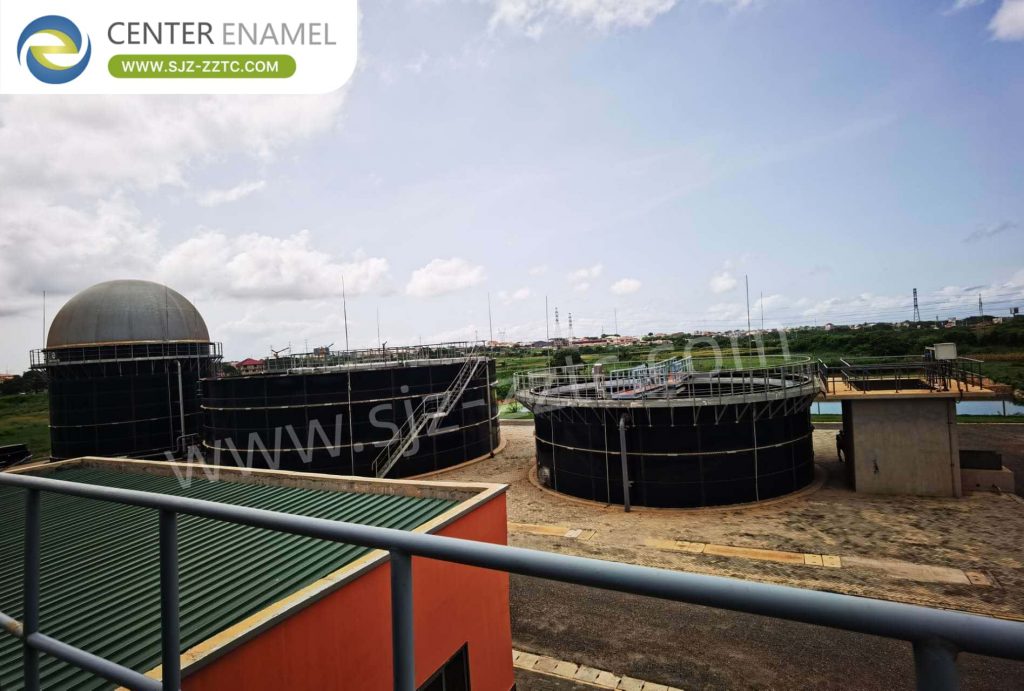
These pressures make advanced Anaerobic Digestion Technology essential-not only for pollutant removal but for energy recovery that offsets rising operational costs.
USR Process Advantages for High-Solids Wastewater
High solids tolerance, clog resistance, and strong adaptability make the USR Process perfectly suited for high-suspended-solids, high-impurity, high-solids organic wastewater. Extremely simple equipment structure, no precision wear parts, low capital investment, long service life, virtually no clogging failures, and extremely low subsequent maintenance costs.
No strict requirements on sludge morphology-no need to cultivate mature granular sludge, flocculent sludge can operate stably, with fast start-up and short sludge acclimation period for rapid commissioning. Gentle hydraulic disturbance results in low sludge washout and high sludge utilization, with stable organic pollutant degradation. Simple operation with low automation requirements and high error tolerance, suitable for remote sites, farms, and other settings with limited O&M capabilities-outstanding stability and practicality advantages.
USR Process Advantages Summary
| Advantage Category | Details | Practical Benefit |
| Solids Tolerance | Handles high suspended solids and impurities | Suits kitchen waste and manure |
| Equipment Simplicity | No precision wear parts | Low capital investment |
| Sludge Requirements | Flocculent sludge operates stably | Fast start-up, short acclimation |
| Operational Stability | Gentle hydraulic disturbance | Low sludge washout |
| Maintenance | Virtually no clogging failures | Extremely low maintenance costs |
| Automation | Low requirements, high error tolerance | Suits remote sites and farms |
Food Waste Environmental Toxicity of Pollutants
Pollutants are primarily natural organics with no synthetic toxic chemicals-low acute chemical toxicity, but biological pollution and eutrophication risks are significant. High-concentration oil discharged to natural waters forms a surface film blocking oxygen exchange, causing aquatic organism suffocation; oil adheres to gills and body surfaces, directly harming fish. High salinity causes osmotic imbalance in freshwater organisms, inhibiting growth and reproduction. High-concentration organics decompose consuming dissolved oxygen, causing oxygen depletion and black-odor conditions.
Food waste decomposition breeds pathogens, flies, and parasite eggs-posing public health risks. Long-term discharge causes oil scaling and pipe blockages, corrosion of sewer systems. Digestate with high nitrogen and phosphorus causes rapid eutrophication and algal blooms. Overall pollution is primarily organic pollution and ecological damage, with no heavy metal or persistent organic accumulation risks-environmental recovery periods are relatively short.
These risks explain why Anaerobic Digestion Technology is preferred for kitchen waste-it contains and treats pollutants while recovering energy, rather than simply transferring the problem downstream.
Center Enamel Core R&D Capabilities and Global Certifications
Technology R&D is Center Enamel's core competitive advantage. The company independently masters over 200 differentiated anti-corrosion enamel formulations, with full self-control over the enamel raw material chain, holding nearly 100 invention and utility patents. Products have passed NSF, WRAS, ASME, BSCI, CE, ISO9001, and other global certifications.
Company certifications and honors include National High-Tech Enterprise, National Specialized and Sophisticated "Little Giant," Hebei Manufacturing Single Champion, Provincial Smart Factory, and Provincial Green Factory, along with complete environmental engineering and special equipment manufacturing compliance qualifications. The company maintains long-term collaborative research with multiple universities through joint materials laboratories-continuously iterating anti-corrosion coatings and large bolted tank structural design technologies. The proprietary material technology barrier creates an irreplaceable competitive advantage, with product performance comparable to high-end imported European and American storage equipment.
Full-Process Standardized Installation Quality Control
Demonstrating high-standard installation quality through long-term stable global project performance, Center Enamel has established full-chain quality control standards across four dimensions: factory protection, on-site assembly construction, completion inspection, and long-term warranty-ensuring quality control for every GFS tank.
At the factory stage, all enameled panels, seals, and structural components receive rust-proof and moisture-proof independent packaging with dedicated protective supports-preventing damage during sea and land transport and avoiding enamel coating damage. On-site construction strictly follows unified assembly process specifications-panel by panel tightening and leak testing in layers, with air-tightness and verticality testing after each tank section completion-dual-membrane covers and anaerobic piping undergo simultaneous pressure testing and acceptance.
Differentiated quality acceptance standards are customized for different regions: EU and US projects follow stringent CE and NSF inspection criteria; Southeast Asian hot humid regions receive enhanced corrosion protection and sealing acceptance; remote African sites have additional foundation settlement re-inspection procedures. Upon project completion, complete construction inspection reports, pressure test records, and anti-corrosion appearance acceptance documents are issued, with full photo and video archives retained. Over 10,000 tanks delivered globally have operated long-term without large-scale leakage or structural deformation-preventing future O&M issues at source.
This quality discipline directly supports Anaerobic Digestion Technology performance-since gas-tightness and structural integrity determine whether biogas recovery remains viable over decades.
Installation and Construction Team Excellence
The installation team has practical experience from over 10,000 GFS tank projects globally, strictly following standardized construction procedures-full control over project mobilization, civil coordination, tank assembly, piping, and commissioning schedules and quality.
The team is proficient in complete standardized installation processes for GFS tanks, dual-membrane gas storage covers, USR/CSTR/IC anaerobic reactors, and biogas desulfurization and piping systems-adaptable to large-scale farms, industrial parks, remote mountainous sites, coastal high-corrosion sites, and other complex locations-strictly implementing unified global safety construction standards. For large overseas cross-border projects, the team can be deployed as complete units for on-site construction, technical training, and local worker practical instruction-full control over construction details, air-tightness testing, and corrosion protection-ensuring timely and stable commissioning of global environmental projects through standardized delivery capability.
Extensive Global Benchmark Project Cases
Center Enamel's project portfolio covers over 100 countries across Southeast Asia, Africa, Europe, and the Americas-30,000+ mature projects-accumulating complete industry solutions across palm oil, livestock, municipal, brewing, and food waste biogas-rapidly matching customized solutions for different regional climates, water quality, and regulations.
Ready to implement advanced Anaerobic Digestion Technology with the USR Process for your kitchen waste or wastewater project? Contact Center Enamel today for a customized plan covering design, manufacturing, installation, and long-term O&M support.
With 30,000+ projects across 100+ countries and 10,000+ GFS tanks delivered without large-scale leakage, we turn complex kitchen waste challenges into compliant, resource-recovery success. Reach out now and let's build your next project together.
FAQ
1. Why is the USR Process preferred for kitchen waste treatment?
The USR Process tolerates high suspended solids and impurities without complex separators or granular sludge cultivation. It prevents clogging, operates stably with flocculent sludge, and requires minimal automation-making it ideal for high-oil, high-salt kitchen waste with limited O&M resources.
2. What certifications support Center Enamel's global project delivery?
Center Enamel holds NSF, WRAS, ASME, BSCI, CE, and ISO9001 certifications, plus National High-Tech Enterprise and Provincial Green Factory honors. These credentials clear tender barriers in the EU, North America, Southeast Asia, and Africa.
3. How does installation quality affect Anaerobic Digestion Technology performance?
Gas-tightness and structural integrity determine whether biogas recovery remains viable over decades. Center Enamel applies four-stage quality control-factory protection, on-site assembly, completion inspection, and long-term warranty-with region-specific acceptance standards.