
Anaerobic Effluent Treatment: Polishing Post-Anaerobic Liquid
Anaerobic effluent is the liquid leaving an anaerobic reactor after most organic load is converted to biogas. It is cleaner in COD but still carries ammonia, phosphorus, and fine solids, so it is polished - typically with an anoxic-oxic (A/O) biological stage plus sedimentation - to meet a discharge or reuse limit. The design is driven by the local permit and the residual nitrogen, not by the anaerobic step alone.
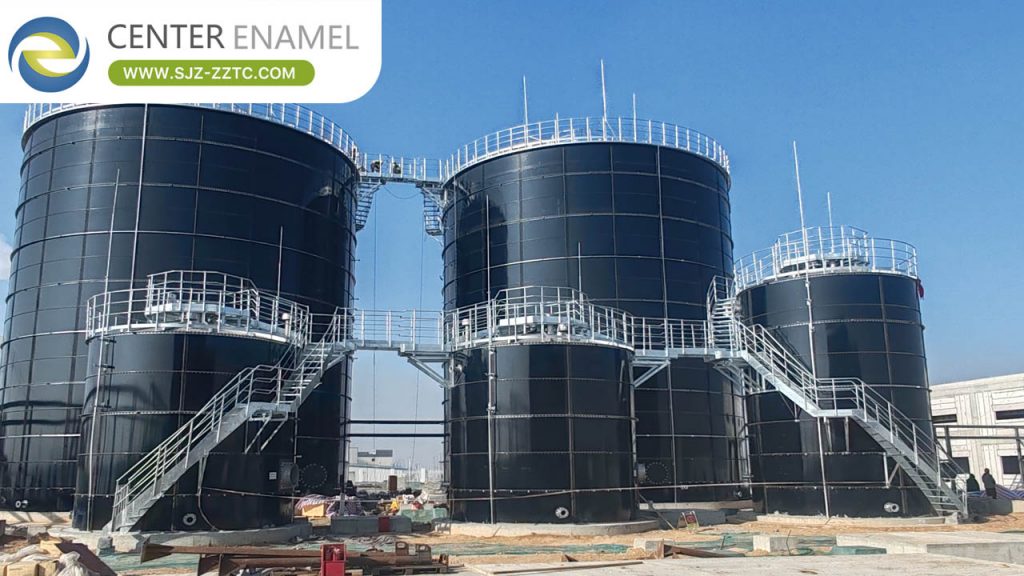
What Anaerobic Effluent Actually Is
Anaerobic digestion removes the bulk of organic matter and recovers gas, but methanogenesis does not remove nitrogen or phosphorus; ammonia from the feed passes through, and fine suspended solids escape with the effluent. So the anaerobic step is the first half of treatment, not the finish. Calling the anaerobic outlet 'treated' overlooks the nutrient and solids still present.
| Parameter | After anaerobic | Still needs |
| COD | Greatly cut | Often fine |
| Ammonia-N | Mostly intact | Nitrification / denit |
| Phosphorus | Intact | Removal or recovery |
| Fine solids | Present | Sedimentation |
Why Polish Anaerobic Effluent
Discharge limits are set on ammonia, total nitrogen, phosphorus, and suspended solids - precisely the items anaerobic digestion leaves behind. Without polishing, the effluent would breach most permits. Polishing also recovers fertilizer value from the nutrients and produces a clearer water for reuse in wash-down or irrigation where rules allow.
The Polishing Train
A common train runs the anaerobic effluent through an anoxic stage (denitrification using the carbon still present), then an oxic stage (nitrification, where ammonia is oxidised to nitrate), and back to anoxic for denitrification, before clarification. This A/O or A2O arrangement cuts nitrogen; a final sedimentation or filtration step catches solids. Where phosphorus is binding, coagulation or struvite recovery is added.
| Stage | Unit | Action |
| Anoxic | Tank (no air) | Denitrification |
| Oxic | Aerated tank | Nitrification |
| Sedimentation | Clarifier | SS removal |
| Optional | Coagulation | Phosphorus |
Project Case Study: Domestic Sewage Treatment Project In Ghana
Project / Application: Municipal domestic sewage, Ghana. Industry: Municipal wastewater. Process: UBF + A2O + sedimentation. Key Requirements: Meet effluent limits on a 1,800 m3/day plant.
| Field | Value | Source / Evidence |
| Daily Treatment Volume | 1,800 m3/day | Company project reference |
| Reactor Types | UBF + A2O + Sedimentation | Company project reference |
| COD Cr | 1,000 -> 100 mg/L | Company project reference |
| BOD5 | 500 -> 25 mg/L | Company project reference |
| Ammonia N | 30 -> 10 mg/L | Company project reference |
| Total P | 10 -> 2 mg/L | Company project reference |
About Company
Shijiazhuang Zhengzhong Technology Co., Ltd (Center Enamel) is a comprehensive high-tech enterprise specializing in wastewater engineering, process section contracting, and equipment manufacturing. The company delivers biogas and wastewater projects through three main lines - EPC (turnkey) contracting, equipment supply, and process packages - covering livestock and municipal wastewater, biomass energy, industrial wastewater, and food waste. Its reactor portfolio spans CSTR, USR, UBF, UASB, IC, and EGSB, backed by in-house Glass-Fused-to-Steel tank manufacturing (enamel firing at 820-930 C) and certifications including ISO 9001, NSF/ANSI 61, and CE-EN 1090. With 35+ years of operation, a 150,000 m2 manufacturing base, and projects in 100+ countries, Center Enamel provides the single-responsibility engineering behind the Ghana sewage project that combined UBF anaerobic with A2O polishing on 1,800 m3/day, cutting COD 1,000 to 100 mg/L and ammonia 30 to 10 mg/L - a scoped post-anaerobic train.
Comparison: Anaerobic-Only Versus Polished
| Element | Anaerobic only | Anaerobic + polish |
| COD | Low | Low |
| Ammonia | High (intact) | Low |
| Total P | Intact | Low |
| Permit fit | Rarely | Usually |
Anaerobic effluent treatment is the nutrient-and-solids polishing of the anaerobic outlet with an A/O train and sedimentation - driven by the permit's nitrogen and phosphorus limits, not by the biogas step.
Frequently Asked Questions
Q1: What is anaerobic effluent? A1: The liquid after anaerobic digestion - lower COD but still high in ammonia, phosphorus, and fine solids.
Q2: Why polish anaerobic effluent? A2: Because discharge limits are set on nitrogen, phosphorus, and solids that anaerobic digestion leaves behind.
Q3: How is nitrogen removed? A3: An anoxic-oxic stage denitrifies then nitrifies the ammonia.
Q4: What train polishes anaerobic liquid? A4: Typically UBF/A2O or A/O plus sedimentation, with coagulation for phosphorus.
Q5: Can the water be reused? A5: After polishing, yes for wash-down or irrigation where local rules allow.
Q6: Does polishing need aeration? A6: Yes - the oxic stage is aerated; that energy cost is the trade-off versus anaerobic alone.
Q7: What does anaerobic already remove? A7: Most COD and BOD, plus it recovers biogas.
Q8: Who scopes polishing? A8: An engineer sizes the A/O stages from the residual ammonia and the permit.
Suggested CTA
Send your anaerobic effluent quality and discharge limit to an engineer, or request a polishing-train outline.