
Anaerobic Solutions for Food Waste: GFS Tanks, USR Process, and Dome Roofs
The Asia-Pacific region, particularly China, has become the world's largest industrial wastewater treatment market, with the operation and maintenance service segment's contribution continuing to rise-marking a shift from project construction to long-term operational management. This shift is driving demand for durable, low-maintenance anaerobic solutions and reliable GFS tanks.
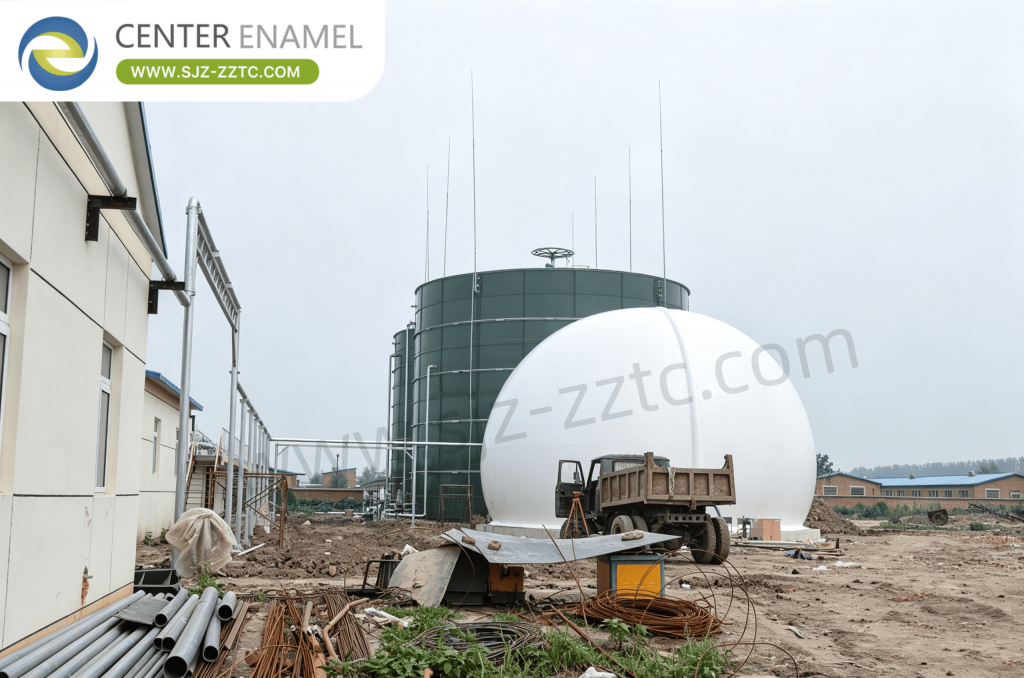
The North American market focuses on upgrading existing facilities, while Europe emphasizes high-value-added resource recovery technologies. Wastewater from the new energy industry chain (lithium batteries, photovoltaics, hydrogen) has become the most notable emerging growth area due to its complex composition and high treatment difficulty, generating significant demand for customized solutions. The maturity of third-party treatment models in industrial parks continues to improve, driving consolidation in the professional operation market.
The Middle East has strong demand for advanced treatment and reuse of industrial wastewater due to water scarcity; manufacturing transfer in Southeast Asia drives local industrial wastewater treatment facility construction demand.
| Region | Market Focus | Opportunity for Anaerobic Solutions |
| Asia-Pacific (esp. China) | Largest market, O&M services rising | Long-term operational projects, food waste biogas |
| North America | Upgrading existing facilities | Retrofit anaerobic systems, GFS tank replacement |
| Europe | High-value resource recovery | Nutrient recovery, biomethane upgrading |
| Middle East | Advanced treatment and reuse | Water scarcity drives closed-loop solutions |
| Southeast Asia | Manufacturing transfer, new facility construction | Food waste and industrial wastewater biogas |
GFS Tanks Adaptable to Extreme Climates
GFS tanks can undergo customized wind and seismic design based on project site climate and geological conditions, with environmental adaptability far superior to concrete tanks. This is a decisive advantage for food waste projects, which are often sited in coastal, tropical, or remote areas.
Concrete tanks are cast-in-place monolithic structures, with seismic and wind resistance entirely dependent on on-site construction quality. In remote areas, typhoon-prone zones, and earthquake belts, construction quality is difficult to control. Under strong earthquakes or typhoons, concrete tanks are prone to cracking and base settlement damage, with subsequent reinforcement costs equivalent to rebuilding.
GFS tanks undergo collection of local seismic intensity, maximum wind pressure, and foundation bearing capacity data before construction, with customized thickened steel panels, stiffening ribs, and anchored base components-all factory-prefabricated to standardized specifications. The bolted panel structure has excellent stress distribution capability, making it less prone to overall fracture under seismic and typhoon impacts, and minor foundation settlement will not cause through-cracking.
| Design Factor | Concrete Tanks | Center Enamel GFS Tanks |
| Seismic resistance | Dependent on on-site construction quality | Factory-prefabricated, bolted panel stress distribution |
| Wind resistance | Prone to cracking in typhoon zones | Customized thickened panels and stiffening ribs |
| Foundation settlement | Through-cracking risk | Minor settlement does not cause through-cracking |
| Remote area suitability | Difficult quality control | Factory-controlled, standardized assembly |
| Reinforcement cost after damage | Equivalent to rebuilding | Minimal, modular panel replacement |
Structural parameters can be flexibly adjusted for mountainous, coastal typhoon-zone, and high-seismic-zone projects, providing long-term protection against extreme natural climate damage.
USR Process Advantages: Why Anaerobic Solutions Excel on High-Solids Food Waste
Within anaerobic solutions, the USR process delivers high solids tolerance, clog resistance, and strong adaptability-perfectly suited for high-suspended-solids, high-impurity, high-solids organic wastewater such as food waste.
Key advantages include:
Extremely simple equipment structure - no precision wear parts, low capital investment, long service life, virtually no clogging failures, and extremely low subsequent maintenance costs
No strict requirements on sludge morphology - no need to cultivate mature granular sludge; flocculent sludge can operate stably, with fast start-up and short sludge acclimation period for rapid commissioning
Gentle hydraulic disturbance - low sludge washout, high sludge utilization, and stable organic pollutant degradation
Simple operation - low automation requirements and high error tolerance, suitable for remote sites and farms with limited O&M capabilities
These characteristics make USR one of the most practical anaerobic solutions for food waste and high-solids industrial applications.
Food Waste Environmental Toxicity of Pollutants
Understanding pollutant toxicity is essential when designing anaerobic solutions for food waste. Pollutants are primarily natural organics with no synthetic toxic chemicals-low acute chemical toxicity, but biological pollution and eutrophication risks are significant.
| Pollutant Type | Environmental Impact | Risk Level |
| High-concentration oil | Forms surface film blocking oxygen exchange; adheres to gills and body surfaces, harming fish | Significant |
| High salinity | Causes osmotic imbalance in freshwater organisms, inhibiting growth and reproduction | Moderate |
| High-concentration organics | Decompose consuming dissolved oxygen, causing oxygen depletion and black-odor conditions | Significant |
| Pathogens, flies, parasite eggs | Food waste decomposition breeds public health risks | Significant |
| Nitrogen and phosphorus in digestate | Rapid eutrophication and algal blooms | Significant |
| Heavy metals and persistent organics | No accumulation risk | Low |
Overall pollution is primarily organic pollution and ecological damage, with no heavy metal or persistent organic accumulation risks-environmental recovery periods are relatively short. Long-term discharge causes oil scaling and pipe blockages, corrosion of sewer systems. This profile makes GFS tanks with oil and salt corrosion resistance an ideal choice for food waste digester construction.
Core R&D Capabilities and Global Authoritative Certifications
Technology R&D is Center Enamel's core competitive advantage. The company independently masters over 200 differentiated anti-corrosion enamel formulations, with full self-control over the enamel raw material chain, holding nearly 100 invention and utility patents. Products have passed NSF, WRAS, ASME, BSCI, CE, ISO9001, and other global certifications.
| Certification / Honor | Scope | Project Benefit |
| NSF | North America | Recognized for water and environmental equipment |
| WRAS | United Kingdom | Water regulation compliance |
| ASME | North America | Pressure vessel manufacturing standards |
| BSCI | Global | Social compliance for supply chains |
| CE | European Union | Mandatory for EU market access |
| ISO9001 | Global | Quality management system |
| National High-Tech Enterprise | China | Recognized technology leadership |
| National "Little Giant" | China | Specialized and sophisticated enterprise |
| Hebei Manufacturing Single Champion | China | Manufacturing excellence |
| Provincial Smart Factory / Green Factory | China | Intelligent, sustainable production |
The company maintains long-term collaborative research with multiple universities through joint materials laboratories-continuously iterating anti-corrosion coatings and large bolted tank structural design technologies. The proprietary material technology barrier creates an irreplaceable competitive advantage, with product performance comparable to high-end imported European/American storage equipment. For clients seeking anaerobic solutions, these credentials directly reduce technical and procurement risk.
Installation and Construction Team
The installation team has practical experience from over 10,000 GFS tank projects globally, strictly following standardized construction procedures-full control over project mobilization, civil coordination, tank assembly, piping, and commissioning schedules and quality.
The team is proficient in complete standardized installation processes for GFS tanks, dual-membrane gas storage covers, USR/CSTR/IC anaerobic reactors, and biogas desulfurization/piping systems-adaptable to large-scale farms, industrial parks, remote mountainous sites, coastal high-corrosion sites, and other complex locations-strictly implementing unified global safety construction standards.
| Project Type | Team Capability | Delivery Assurance |
| Large-scale farms | Full unit deployment | Standardized assembly, air-tightness testing |
| Industrial parks | Multi-tank simultaneous installation | Coordinated scheduling, quality control |
| Remote mountainous sites | Self-sufficient construction units | Local worker training, on-site instruction |
| Coastal high-corrosion sites | Enhanced corrosion protection procedures | Long-term performance validation |
| Overseas cross-border projects | Complete unit deployment | Technical training, commissioning support |
For large overseas cross-border projects, the team can be deployed as complete units for on-site construction, technical training, and local worker practical instruction-full control over construction details, air-tightness testing, and corrosion protection-ensuring timely and stable commissioning of global environmental projects through standardized delivery capability.
Aluminum Geodesic Dome Roof: Sealing and Weather Protection for GFS Tanks
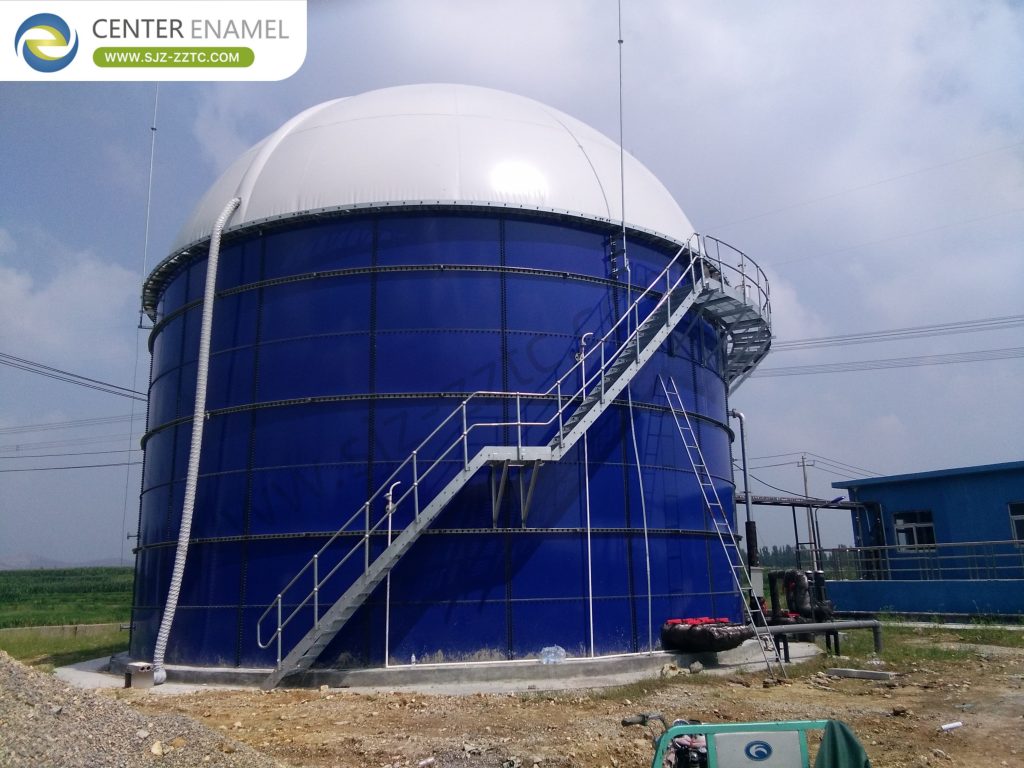
The Aluminum Geodesic Dome Roof independently developed by Center Enamel is manufactured using high-strength aluminum alloy plates through integral stamping. It features a triangular grid spherical self-supporting structure, enabling large-span full coverage without internal support columns.
| Feature | Specification | Benefit |
| Material | High-strength aluminum alloy | Excellent weather and corrosion resistance |
| Structure | Triangular grid spherical self-supporting | Large-span coverage without internal columns |
| Design standard | AWWA D108 | Verified by finite element stress analysis |
| Weight | One-third to one-half of steel roof | Reduces tank top load, no wall reinforcement needed |
| Sealing | Double sealing with specialized sealant strips and mechanical interlocking | Airtight gas storage and enclosed odor control |
| Maintenance | Aluminum does not support microbial growth | No anti-corrosion maintenance, low life-cycle cost |
| Compatibility | Support-column-free design | No interference with mixers and water distributors |
The roof offers excellent weather resistance and corrosion resistance, capable of long-term protection against acid rain, salt spray, and UV radiation, suitable for various extreme outdoor climate conditions. The structural design complies with international AWWA D108 standards, with aluminum plate thickness, rib cross-sections, and joint connections all verified by finite element stress analysis, ensuring wind and snow load resistance that meets building code requirements across different global regions.
The roof provides superior overall sealing performance, enabling both airtight gas storage and enclosed odor control-suitable for biogas collection and storage, wastewater tank odor control, and drinking water contamination prevention. Combined with GFS tanks, this forms a complete, durable anaerobic solution for food waste and industrial wastewater projects.
Frequently Asked Questions
What anaerobic solutions does Center Enamel offer for food waste?
We combine USR or CSTR anaerobic digestion with GFS tanks, pretreatment oil removal, and A/O or A²O polishing. This train handles high oil, high salt, and high organic loads while recovering biogas for energy.
Why are GFS tanks better than concrete for food waste projects?
GFS tanks are factory-prefabricated with customized wind and seismic design, resisting typhoons and earthquakes better than cast-in-place concrete. They resist oil and salt corrosion, provide airtight sealing, and suit remote sites where concrete quality is hard to control.
What certifications support overseas anaerobic solution tendering?
Center Enamel holds CE, NSF, WRAS, ISO9001, BSCI, and ASME certifications, clearing tendering barriers in the EU, North America, Southeast Asia, and Africa-reducing qualification risk for international projects.
Ready to Start Your Food Waste Anaerobic Solution?
Center Enamel combines 30+ years of engineering expertise with proven anaerobic solutions, USR reactors, and durable GFS tanks to deliver complete food waste treatment projects that meet strict discharge and resource recovery standards. Contact our team to discuss your feedstock characteristics, treatment targets, and site conditions-and receive a customized proposal.
Get your tailored biogas solution today-our engineers are ready to help.