
Reliable Anaerobic Solutions for Industrial Wastewater Treatment Projects Using Durable GFS Tanks
The competitive landscape shows divergence, with leading companies building integrated service capabilities through technical integration and capital operations, and industry concentration gradually increasing. This trend directly impacts how industrial wastewater treatment projects are procured and delivered, as clients increasingly seek partners who can offer comprehensive solutions rather than isolated equipment. Chinese companies continue to consolidate their advantages in mid-tier equipment exports, while international giants target high-end customers and complex industrial wastewater markets. Local players occupy the mid-to-low-end and industrial park centralized treatment markets with service responsiveness and cost advantages.
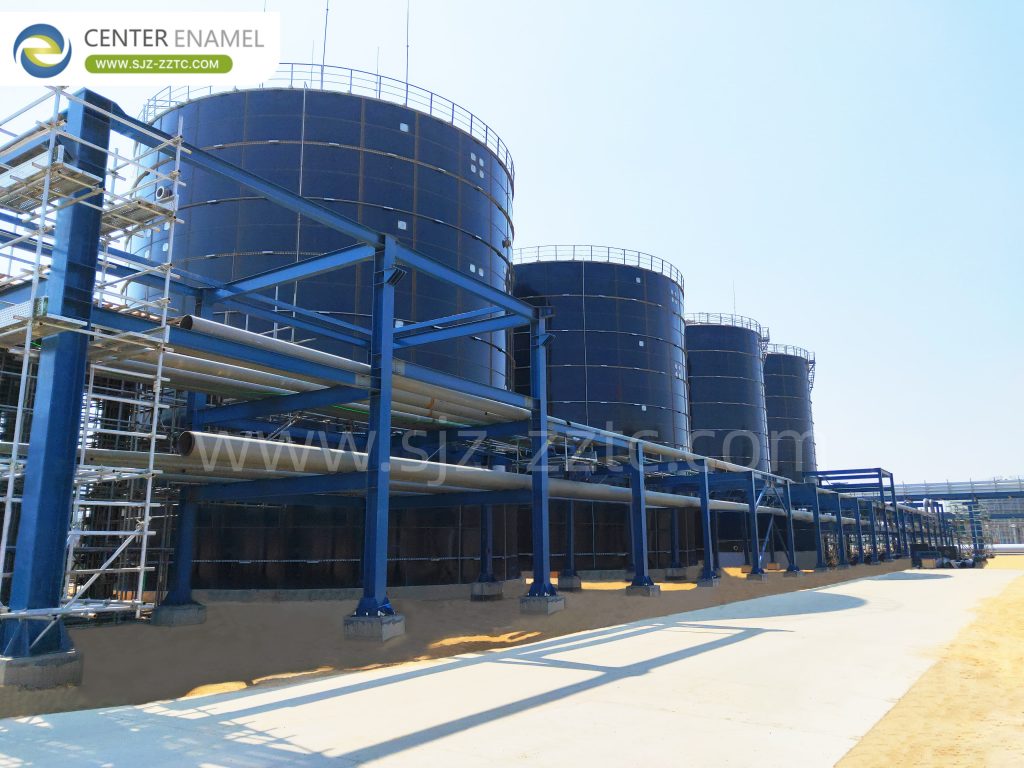
In the anaerobic process segment, UASB, EGSB, and IC anaerobic reactors, with advantages of high loading rates, small footprints, and stable operation, are widely used in high-concentration organic wastewater pretreatment in food processing, pharmaceutical fermentation, alcohol brewing, chemical, and other industries. These reactors use steel tank shells, and their corrosion resistance and gas-tightness directly determine long-term operational stability. The application value of glass-fused-to-steel tanks in such scenarios is increasingly prominent, making GFS tanks a preferred choice for the core infrastructure of any industrial wastewater treatment project.
Durable GFS Tanks for Diverse Industrial Wastewater Treatment
Given the demanding nature of industrial effluents and the competitive pressures of the market, the selection of appropriate storage and treatment infrastructure is critical for long-term project success. Center Enamel has independently developed over 200 specialized enamel frit formulations and supporting patents, capable of customizing anti-corrosion enamel based on customer storage media, with adaptability comprehensively superior to concrete tanks. This capability is particularly vital for any industrial wastewater treatment project that must handle corrosive or variable effluents. Concrete tanks use a single material, suitable primarily for neutral clean water storage, and when storing corrosive materials such as livestock manure, palm oil mill effluent, chemical wastewater, food waste digestate, high-salinity wastewater, etc., additional anti-corrosion linings must be applied. These linings are prone to failure, preventing long-term stable operation and cannot adapt to alternating high and low concentration storage conditions.
In contrast, GFS tanks can be specifically formulated with specialized enamels resistant to strong acids, strong alkalis, high organic content, and high salinity, a feature that is essential for the robust treatment of diverse industrial effluents. A single tank can switch between multiple wastewater and fermentation feedstock storage requirements, offering unparalleled operational flexibility. They are universally applicable across biogas anaerobic digestion, municipal wastewater, livestock farming, food processing, and industrial water treatment scenarios, eliminating the need to rebuild tanks for media changes, perfectly meeting the needs of diversified, multi-condition environmental protection projects. For any industrial wastewater treatment project seeking long-term reliability and adaptability, GFS tanks represent a cornerstone technology that directly addresses the core challenges of the industry.
UASB Process Definition and Its Role in Anaerobic Solutions
At the heart of many successful industrial wastewater treatment projects lies the UASB (Upflow Anaerobic Sludge Blanket) Reactor, a benchmark mainstream technology for medium-to-high concentration soluble organic wastewater treatment. This advanced anaerobic solution requires no mechanical mixing or media carriers, relying on the upward flow of wastewater to suspend and expand granular sludge within the reactor, forming a stable sludge bed layer. Highly active anaerobic granular sludge efficiently degrades pollutants, with excellent settleability and high microbial concentration. The UASB innovatively integrates reaction, sedimentation, and gas-liquid-solid separation functions, simplifying the anaerobic treatment process with advantages of high efficiency, energy savings, and compactness. It is widely used in various medium-to-high concentration soluble organic wastewater treatment applications, making it a versatile and proven choice for industrial settings.
Wastewater Sources and Characteristics in the Textile Industry
Understanding the specific characteristics of textile wastewater is crucial for designing an effective industrial wastewater treatment project. Textile wastewater originates from the entire production chain of textile printing and dyeing, covering spinning and weaving, pretreatment, dyeing and printing, and finishing for cotton, chemical fibers, wool, hemp, and silk. This makes it a typical high-color, high-alkalinity industrial wastewater in the light industry sector. Key pollution stages include desizing (removing warp sizing agents), scouring (removing fiber impurities and oils), bleaching (oxidative color removal), mercerizing (alkali treatment to improve fiber properties), dyeing (color fixation), printing (paste printing and washing), and finishing (softening, waterproofing, flame retardancy).
Water quality varies greatly between stages: desizing and scouring wastewater has high COD and strong alkalinity; dyeing wastewater has extremely high color with residual dyes; bleaching wastewater contains oxidant residues. Discharge is intermittent, alternating between different processes and dye types, with severe water quality and quantity fluctuations. These challenging characteristics necessitate a robust treatment train, with anaerobic solutions like the UASB process playing a critical role in reducing the organic load and improving biodegradability before downstream aerobic and polishing stages.
Professional Construction Team Manpower Reserve for Global Projects
To ensure the successful deployment of complex treatment systems, a skilled and experienced construction team is essential, particularly for large-scale industrial wastewater treatment projects. Center Enamel has established its own domestic and international certified construction teams, with regular practical training on GFS tank installation and overseas construction standards for various countries. This commitment to workforce development ensures that projects are executed to the highest quality standards. Domestically, regional construction teams cover multiple zones, capable of simultaneously deploying multiple teams for large tank farm projects. Internationally, cross-border professional installation teams are equipped to various country construction standards. This sufficient manpower reserve ensures uninterrupted construction delivery for remote African sites, high-standard European and American facilities, and other projects, demonstrating the company's capacity to manage projects of any scale and location.
Innovative Material Technology for Long-Term Durability
The long-term performance of any industrial wastewater treatment project depends heavily on the quality and durability of its core materials. Center Enamel has independently developed over 200 anti-corrosion enamel formulations, with proprietary double-sided double-layer enameling technology. This innovative approach ensures that the GFS tank anti-corrosion service life exceeds 30 years, far surpassing concrete and ordinary equipment. This extended lifespan makes GFS tanks suitable for global high-corrosion wastewater and biogas fermentation conditions, providing clients with a reliable, long-term infrastructure solution that minimizes the need for frequent replacement or major repairs.
Aluminum Alloy Trough Deck Roof for Cost-Effective Storage
In addition to core treatment and storage tanks, complementary components like roof covers play a significant role in the overall functionality of an industrial wastewater treatment project. The Aluminum Alloy Trough Deck Roof is a cost-effective economical tank cover solution for clean water and wastewater storage scenarios, primarily designed for drinking water, production wastewater, and firewater reserve tanks, balancing practicality and cost advantages. The main body is integrally formed from anti-corrosion aluminum alloy plates, paired with aluminum support trusses. Its lightweight design imposes less load on the tank foundation, reducing civil construction investment.
A naturally formed dense oxide protective layer on the surface resists rain and mild wastewater corrosion, withstands outdoor sun and rain exposure, and effectively blocks wind, rain, insects, fallen leaves, and odor volatilization, protecting water quality by preventing dust and debris from falling in and causing secondary contamination. The flat roof structure is neat and orderly, allowing installation of maintenance walkways, guardrails, vents, and level monitoring ports on top, facilitating daily inspection and equipment maintenance. The simple sealing structure enables straightforward installation with short construction timelines, and virtually eliminates the need for anti-corrosion painting maintenance, resulting in extremely low operational costs. It is suitable for various small, medium, and large atmospheric pressure water storage tanks, and has been widely implemented in waterworks clear water tanks, industrial circulating water tanks, park firewater tanks, and domestic wastewater temporary storage facilities. It is highly compatible with water storage applications that do not require biogas collection or high-pressure sealing, making it a practical choice for many aspects of an industrial wastewater treatment project.
Frequently Asked Questions (FAQs)
1. Why are anaerobic solutions preferred for high-concentration industrial wastewater?
Anaerobic solutions like the UASB process are preferred because they efficiently break down high-strength organic pollutants with low energy consumption, produce valuable biogas as a renewable energy source, and generate significantly less sludge than aerobic systems. This reduces operational costs and environmental impact, making them ideal for food processing, pharmaceutical, and chemical wastewater.
2. What makes GFS tanks superior for industrial wastewater treatment projects?
Glass-Fused-to-Steel (GFS) tanks offer superior corrosion resistance to the strong acids, alkalis, salts, and organics found in industrial wastewater. Their specialized enamel coating is durable, inert, and long-lasting (over 30 years), eliminating the need for frequent lining replacements required by concrete tanks, thus ensuring long-term structural integrity and low maintenance.
3. How does the UASB process handle variable textile wastewater quality?
The UASB process is designed to handle the severe water quality and quantity fluctuations typical of textile wastewater. Its high-concentration granular sludge bed provides excellent shock load resistance and stability. The integrated design allows for efficient treatment of intermittent discharges from different processing stages, effectively reducing organic load and color before downstream treatment.