
Sustainable Anaerobic Solutions for Textile Wastewater Treatment: Integrating UASB Process and GFS Tank Technology
The industrial wastewater treatment sector continues to grapple with complex challenges that demand innovative approaches. These core challenges center on what the industry identifies as the "three highs"-high difficulty, high cost, and high energy consumption-which collectively define the operational landscape for treatment facilities worldwide. Wastewater from new energy, chemical, and pharmaceutical industries is particularly complex in composition, containing numerous characteristic pollutants that traditional treatment processes struggle to remove effectively. Chinese companies have established significant price advantages in the mid-to-low-end equipment segment, yet the industry faces continuous technological upgrade pressure from increasingly stringent emission standards. New requirements for digitalization and low-carbon transformation further challenge operational refinement management capabilities.
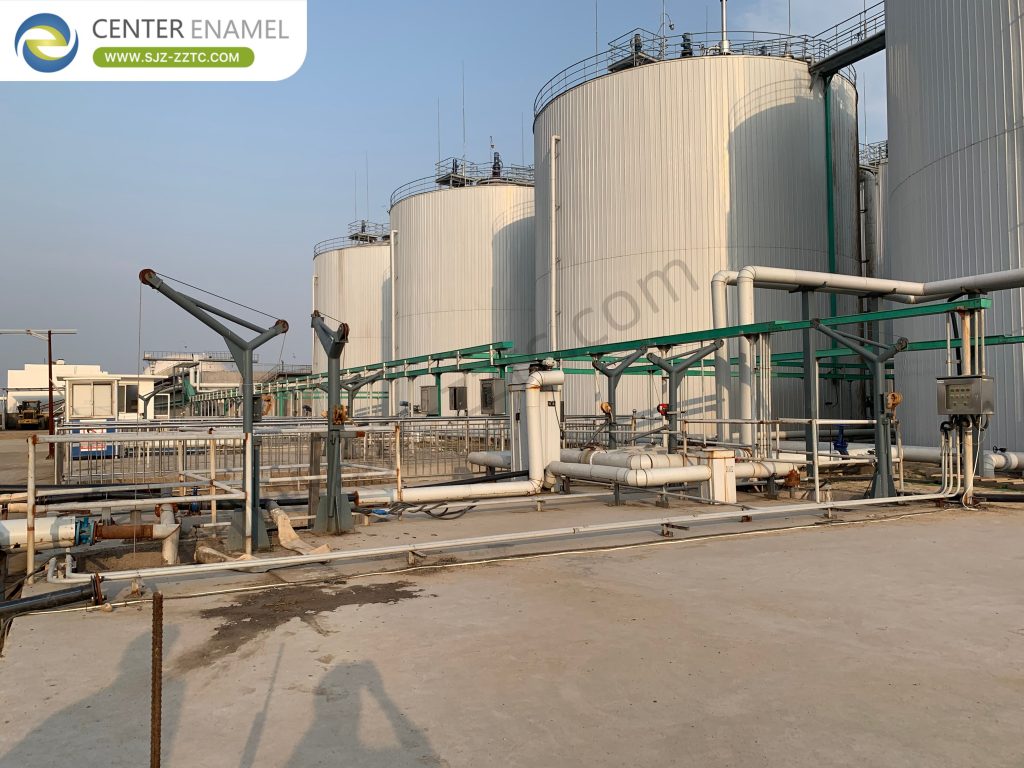
In addressing these challenges, sustainable anaerobic solutions have emerged as a critical response pathway. Among these, the UASB process stands out as a proven biological treatment technology that effectively reduces organic pollutant loads while generating biogas as a renewable energy byproduct. This approach directly addresses the "three highs" by reducing energy consumption and operational costs while managing difficult-to-treat wastewater streams.
Adaptable Infrastructure for Modern Treatment Facilities
Modern industrial treatment plants demand infrastructure that can adapt to evolving operational requirements. Glass-Fused-to-Steel tanks offer flexible customization of size and appearance, with higher land utilization rates that are ideally suited for modern compact plant layouts. This represents a significant advantage over fixed poured concrete tanks, which cannot alter volume or shape after pouring, with heavy bases occupying large areas that make placement difficult on narrow or irregular plots. Their rough, uniform appearance similarly cannot match modern facility aesthetic requirements.
The adaptability of GFS tanks enables treatment facilities to implement anaerobic solutions that align with site-specific constraints. GFS tank volume can be precisely customized as needed, with capacities ranging from dozens of cubic meters to 50,000 cubic meters freely selectable. Tank height and diameter can be flexibly combined to fit narrow or irregularly shaped plots, effectively saving plant land occupation. Enamel color customization is also supported, achieving visual harmony with plant buildings and environmental facilities. During later plant expansion, GFS tanks can be directly adjusted in layout and expanded, whereas concrete tanks, being monolithic structures, must be demolished and rebuilt, offering less flexibility in land resource utilization.
UASB Process Applications in Textile and Industrial Wastewater
The UASB process serves as a cornerstone technology within the broader family of anaerobic solutions for industrial wastewater management. This technology is suitable for soluble medium-to-high concentration organic wastewater, covering light industrial wastewater from brewing, sugar refining, starch, papermaking, food processing, printing and dyeing, and related sectors. It is particularly well-suited for wastewater where organics are predominantly soluble with low suspended solids content, though not suitable for high-solids, high-viscosity wastewater. The UASB process can be used alone as the primary treatment process or as a pretreatment for high-strength wastewater to reduce downstream aerobic load.
For textile wastewater treatment specifically, the UASB process has demonstrated remarkable efficacy. Research confirms that UASB reactors can achieve over 90% chemical oxygen demand removal and over 92% color removal through biodegradation in real textile wastewater applications . This performance is particularly significant given that textile manufacturing generates effluent containing synthetic dyes, detergents, and heavy metals resistant to conventional treatment . With its low cost and stable operation advantages, the UASB process is suitable for long-term continuous, large-flow industrial wastewater treatment projects, making it an ideal choice for textile facilities requiring reliable performance.
Understanding Operational Economics and Maintenance Requirements
When evaluating anaerobic solutions for textile wastewater treatment, operational economics play a crucial role in technology selection. Operations and maintenance costs are moderate to high, with generally moderate overall economics. Pretreatment requires pH adjustment chemicals, coagulants, and decolorizing agents, contributing to moderate to high chemical costs. The anaerobic plus aerobic process combination is mature and stable, with controllable equipment operations and maintenance costs.
However, advanced decolorization steps using ozone generators and Fenton oxidation present high energy consumption and chemical costs, representing a major cost driver. Membrane water reuse systems require high capital investment and frequent membrane replacement, resulting in high maintenance costs. Dye and sizing sludge production is substantial, with significant disposal costs. High-temperature wastewater requires heat exchange cooling, though heat recovery can offset some energy costs. Frequent water quality fluctuations necessitate frequent parameter adjustments, requiring moderate labor requirements. While water reuse can offset some costs, overall resource recovery benefits remain limited.
Proven Global Implementation of Anaerobic Solutions
The practical application of anaerobic solutions and GFS tank technology is well-demonstrated through successful global projects. One notable example is the Indonesia Palm Oil Biogas Upgrade Project, commissioned in 2013 as the core anaerobic digestion reactor for the POME treatment station. This installation comprises three GFS tanks in two sizes: 17.58 meters diameter by 8.4 meters height, and 16.82 meters diameter by 7.2 meters height. The tanks serve as the core anaerobic reaction equipment specifically for high-organic palm oil production wastewater, where anaerobic digestion degrades pollutants and recovers biogas.
The tanks are adapted to local palm industry wastewater needs, with assembly convenience and corrosion resistance suitable for Southeast Asia's hot, humid, high-corrosion environment. This project represents a mature biomass energy environmental benchmark that validates the effectiveness of integrated anaerobic solutions in challenging industrial contexts.
Center Enamel's Global Market Presence and Delivery Capability
The delivery of anaerobic solutions and GFS tank technology relies on robust global infrastructure. Center Enamel's global business covers over 100 countries and regions, with more than 30,000 successful overseas projects. Products are exported to all major regions including Europe, the Americas, the Middle East, Africa, Southeast Asia, and Latin America, with a well-established global localized service network.
Domestically, the company is organized into North, South, Central, East, and Southwest marketing regions, covering environmental, water utility, livestock, and petrochemical customers nationwide. Internationally, the company adopts a "standardized products plus localized adaptation" model, adjusting tank corrosion protection, sealing, and pressure standards for different national water quality and environmental regulations. Multiple global landmark projects demonstrate this capability: large-volume GFS tanks in Italy, 20-meter tower water supply tanks in Colombia, coastal seawater treatment tanks in Costa Rica, and large municipal wastewater aluminum dome projects in Saudi Arabia. The company has established long-term stable strategic partnerships with many Fortune 500 companies.
Center Enamel is the pioneer of Chinese GFS equipment exports, with installation service coverage across over 100 countries and regions, possessing full delivery capability across climates, regulations, and geographies. Overseas coverage includes Southeast Asia, Africa, Europe and the Americas, the Middle East, and Latin America, with adaptability to tropical rainy high-salt spray, high-altitude mountainous, Nordic severe cold, and high-standard European and American facility conditions. The company uses a dual-service model of "own cross-border construction teams plus overseas local agent coordination," providing one-stop services including on-site survey, on-site installation, process commissioning, and operator training for clients in both developed countries and remote developing regions. Complete coverage encompasses biogas engineering, municipal wastewater, industrial wastewater, livestock manure, drinking water storage, and other global mainstream environmental engineering projects.
Frequently Asked Questions
Q: What makes the UASB process effective for textile wastewater treatment?
The UASB process achieves over 90% COD removal and more than 92% color removal in textile wastewater through anaerobic biodegradation, with stable operation even when treating complex dye-containing effluent .
Q: How do GFS tanks support anaerobic solutions in industrial settings?
GFS tanks offer superior corrosion resistance, rapid modular installation, and customizable configurations ideal for anaerobic digestion applications. The glass-fused coating withstands the acidic and corrosive conditions common in industrial wastewater treatment .
Q: What are the primary operational challenges in textile wastewater treatment?
The main challenges include high chemical costs for pretreatment, elevated energy consumption for advanced oxidation processes, frequent parameter adjustments due to water quality fluctuations, and significant sludge disposal costs.