
Anaerobic Solutions in Kenya: GFS Tanks + Double Membrane Roof for Slaughterhouse Wastewater Treatment
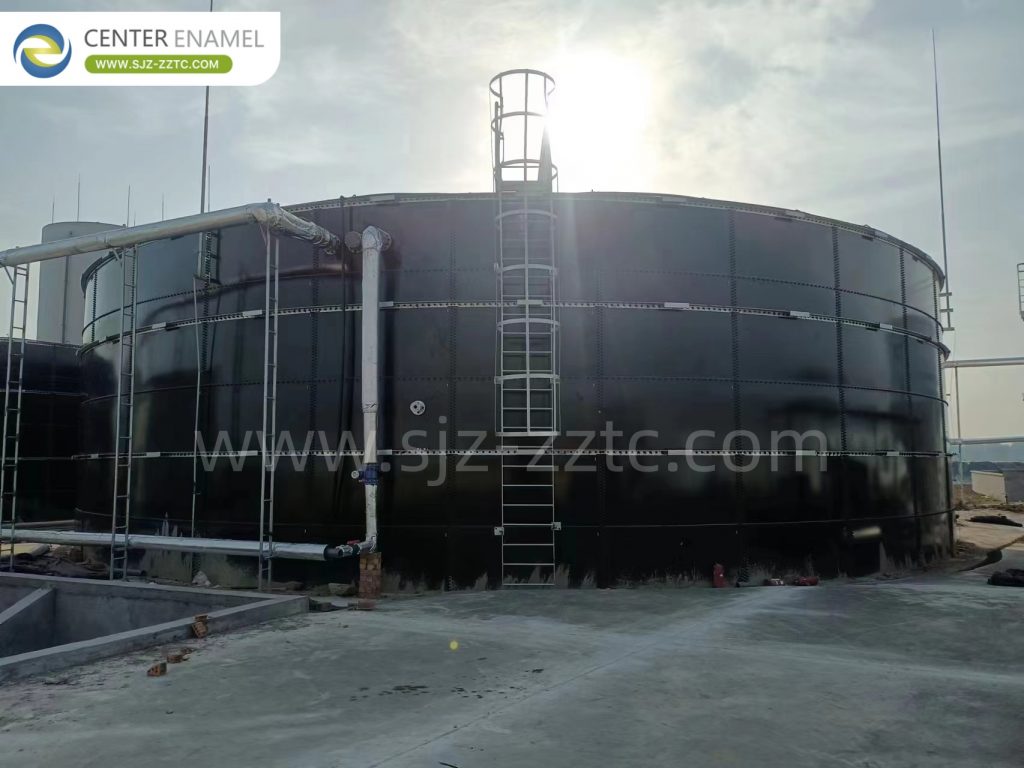
Kenya's livestock sector is a cornerstone of the national economy, with major meat processing hubs located in cities such as Nairobi, Athi River, Nakuru, and Eldoret, as well as numerous smaller slaughterhouses serving rural communities across the country. These facilities collectively generate substantial volumes of high-strength slaughterhouse wastewater daily. The effluent is rich in blood, fat, protein residues, undigested feed, and suspended solids, resulting in extremely high Chemical Oxygen Demand (COD) and Biological Oxygen Demand (BOD).
The primary challenge for Kenyan slaughterhouse operators is the lack of affordable and effective treatment infrastructure. Many facilities discharge untreated or partially treated wastewater directly into local rivers, such as the Nairobi River and Athi River, leading to severe water pollution, fish kills, and health risks for downstream communities.
The National Environment Management Authority (NEMA) of Kenya has enforced strict regulations requiring proper effluent treatment, yet conventional methods often fail due to clogging, high energy consumption, and inability to handle organic loads. There is a clear and urgent need for reliable, cost-effective Anaerobic Solutions that can transform this waste challenge into an opportunity for energy recovery and environmental compliance.
Advantages of Converting Slaughterhouse Wastewater into Biogas
Implementing Anaerobic Solutions for slaughterhouse wastewater offers Kenyan meat processors a powerful way to turn an expensive environmental liability into a profitable energy asset. The most significant advantage is the capture of methane-a potent greenhouse gas-that would otherwise escape into the atmosphere. Instead, this methane is converted into usable biogas, reducing the facility's carbon footprint and supporting Kenya's national climate commitments under the Paris Agreement.
For slaughterhouses in Kenya, where electricity costs are high and grid power can be unreliable, the produced biogas can be used on-site for multiple applications. It can generate heat for scalding tanks, sterilization, and boiler operations, or produce electricity through biogas generators to power refrigeration, lighting, and processing equipment. This directly reduces monthly energy bills and provides energy security. Furthermore, the anaerobic digestion process naturally stabilizes the waste, eliminating the foul odors that often lead to community complaints and regulatory fines.
The remaining digestate is a nutrient-rich liquid fertilizer containing nitrogen, phosphorus, and potassium, which can be sold to local farmers or used on-site, creating an additional revenue stream. By adopting Anaerobic Solutions, Kenyan slaughterhouses achieve regulatory compliance, cost savings, and a stronger circular economy model.
Center Enamel's Professional Design Solutions for Biogas Projects
Center Enamel has been committed to water, wastewater, and biogas projects , and today stands as Asia's largest manufacturer of Glass-Fused-to-Steel (GFS) tanks. With a 150,000㎡ R&D and production base, over 500 employees, and an annual production capacity of 250,000 tank sheets, the company brings world-class expertise to the Kenyan biogas market. For slaughterhouse wastewater treatment, Center Enamel provides professional design solutions tailored specifically to local conditions.
Their engineering team conducts detailed assessments of each client's operations, calculating specific organic loading rates, hydraulic retention times, and expected biogas yields based on daily slaughter volumes and wastewater characteristics. By utilizing advanced international design standards such as AWWA D103, EN28765, and EuroCode, Center Enamel ensures that every tank and roof structure is robust enough to withstand Kenya's diverse climate-from the dry heat of Turkana to the heavy rains of the highlands and the humidity of coastal Mombasa. Whether the project serves a large municipal slaughterhouse in Kiambu or a smaller processing unit in Kisumu, Center Enamel delivers precise, reliable, and bankable Anaerobic Solutions.
Biogas Generation Principle and Pre-treatment Process Introduction
The fundamental principle behind biogas generation is anaerobic digestion-a natural biological process in which microorganisms break down organic matter in an oxygen-free environment to produce methane-rich biogas. However, raw slaughterhouse wastewater contains various impurities that must be removed before efficient digestion can occur. The pre-treatment stage is therefore essential for system performance.
The process begins with a screen that intercepts large solids such as hair, feathers, bone fragments, and undigested tissue. These materials would otherwise clog pumps, pipes, and the main reactor. Following screening, a crushing device reduces the size of remaining organic particles, increasing the surface area available for microbial attack and accelerating the digestion process. Next, a sand settling tank or homogenization unit removes heavy inorganic particles like grit, sand, and small stones that could cause abrasion and damage mechanical equipment over time.
This entire pre-treatment stage is designed to initially clean and simplify the waste, significantly reducing the burden on the subsequent core treatment equipment. Finally, the wastewater is pumped to a collection and mixing tank where flow and load are equalized, ensuring stable and continuous operation of the downstream processes regardless of daily fluctuations in slaughterhouse activity.
Introduction to the CSTR Process
At the core of any effective Anaerobic Solutions for slaughterhouse wastewater lies the CSTR (Continuous Stirred-Tank Reactor) . This advanced anaerobic treatment technology ensures that fermentation raw materials and microorganisms remain in a completely mixed state inside a sealed tank, maximizing biogas production. The CSTR reactor is equipped with a mechanical stirring device that includes mixers, paddles, and an agitator shaft. These components operate continuously to prevent solids from settling at the bottom and to prevent fats and oils from forming a floating scum layer that would block gas release.
The reactor operates at a constant temperature-typically in the mesophilic range of 35-37°C or thermophilic range of 50-55°C-with continuous or semi-continuous feeding. This design allows the CSTR to handle the high suspended solids and high organic concentrations typical of slaughterhouse wastewater very effectively. Additional features include a shell-breaking device to disrupt any floating layers that may form, a sludge discharge port for removing fully digested material, and a biogas pipeline connected to a positive and negative pressure protector for operational safety. The complete mixing action ensures maximum contact between anaerobic bacteria and organic matter, leading to higher degradation rates, greater biogas yields per ton of wastewater, and more stable operation compared to simple lagoon systems.
GFS Tanks and Double Membrane Roof for Anaerobic Solutions
For the digestion, storage, and gas collection components of a slaughterhouse wastewater treatment system in Kenya, Center Enamel supplies two primary products: GFS Tanks and the Double Membrane Roof.
GFS Tanks (Glass-Fused-to-Steel) are the preferred bolted tank solution for anaerobic digesters. The enamel coating is fused to steel at temperatures exceeding 800°C, creating a hard, inert, and exceptionally smooth surface. This glass coating provides outstanding corrosion resistance, which is essential for slaughterhouse applications where the digester environment is acidic and chemically aggressive. The smooth surface also prevents biofilm buildup, reduces cleaning requirements, and ensures consistent performance over decades of service. GFS Tanks are delivered as prefabricated panels and bolted together on-site, allowing for rapid assembly even in remote locations across Kenya where access for heavy construction equipment may be limited.
The Double Membrane Roof serves as the standard gas holder for the biogas produced. Under normal working conditions, this roof type is the preferred solution due to several key advantages. First, it offers significant cost optimization by directly reducing the roof budget compared to rigid steel alternatives. Second, it provides excellent space efficiency by eliminating the need for a separate ground-mounted gas holder-the biogas is stored directly within the double membrane chamber on top of the GFS Tank. This integrated design reduces the overall footprint of the treatment plant, saves foundation construction costs, and simplifies site layout. The outer membrane is weather-resistant, protecting against Kenya's sun, rain, and wind, while the inner membrane maintains constant gas pressure for stable delivery to downstream equipment.
Supporting Equipment for a Complete Biogas System
A fully functional slaughterhouse wastewater treatment plant requires more than just the main reactor and tank. The following supporting equipment ensures smooth, reliable, and safe operation:
Gas Holder: Stores the produced biogas to balance supply with fluctuating demand from generators, boilers, or other utilization equipment.
Black Membrane: Used for lined lagoons or secondary digesters when additional hydraulic retention time or storage capacity is required for larger facilities.
Solid-liquid Separator: Separates the digested effluent into solid organic fertilizer (cake) and liquid fertilizer, both of which have agricultural value for Kenyan farms.
Torch System: A safety flare that automatically and safely burns excess biogas when production exceeds usage or during maintenance periods, preventing unsafe pressure buildup.
Lifting Pump: Transfers wastewater from the collection tank to the CSTR and recirculates digestate for mixing, heating, or solids suspension.
Dehydration and Desulfurization Tank: Removes corrosive hydrogen sulfide (H₂S) and moisture from raw biogas before it enters generators, boilers, or other utilization equipment, protecting them from damage.
Screw Sludge Dewatering Machine: Reduces the volume of waste sludge from the treatment process, minimizing disposal costs, reducing handling effort, and preparing sludge for composting or final disposal.
Center Enamel's Efficient Equipment Installation Capability
For slaughterhouses across Kenya, project timelines are critical. Environmental compliance deadlines, operational pressures, and return on investment expectations all demand rapid implementation. Center Enamel boasts a highly efficient installation capability supported by its massive production capacity of 250,000 GFS sheets per year and a skilled team of over 500 employees. The modular bolted design of GFS Tanks completely eliminates the need for on-site welding, heavy concrete pouring with extended curing times, or specialized construction equipment.
All tank components are precision-fabricated in Center Enamel's ISO-certified factory and shipped directly to the project site anywhere in Kenya. For a typical slaughterhouse biogas project-for example, a 3,000m³ to 5,000m³ GFS Tank with a Double Membrane Roof-a trained local crew can complete the erection in just 2-3 weeks under the guidance of Center Enamel's experienced technical supervisors. These supervisors ensure proper torque settings, sealant application, panel alignment, and roof installation. This rapid installation capability significantly reduces labor costs, minimizes disruption to ongoing slaughterhouse operations, and allows the biogas system to become operational and begin generating returns much faster than traditional construction methods. Given Kenya's ambitious Vision 2030 development goals, this speed is a major advantage for meat processors seeking to modernize their waste management infrastructure.
Center Enamel: A One-Stop Solution Provider for Kenyan Biogas Projects
Beyond supplying individual products, Center Enamel acts as a true one-stop EPC (Engineering, Procurement, and Construction) provider for the Kenyan market. For a slaughterhouse in Kenya-whether located in an industrial area near Nairobi's Athi River EPZ, a processing hub in Thika, a facility in Nakuru's agricultural zone, or a plant in Mombasa-Center Enamel delivers a complete turnkey biogas project package. This includes initial site assessment, civil design, process engineering, equipment manufacturing, transportation, installation, commissioning, and staff training.
The client works with a single, accountable contractor for the entire scope: pre-treatment equipment (screens, crushers, sand settling tanks), the CSTR reactor, GFS Tanks, Double Membrane Roof, gas holder, torch system, dehydration and desulfurization units, solid-liquid separator, lifting pumps, and all electrical controls. Center Enamel holds internationally recognized certifications including CE/EN1090, ISO9001, NSF61, and EN28765, and adheres to strict design standards such as AWWA D103, OSHA, and EuroCode. This ensures that Kenyan customers receive a bankable, high-quality facility that meets all National Environment Management Authority (NEMA) requirements. With a presence in over 100 countries and 36+ years of history, Center Enamel brings global best practices to every local Kenyan project, providing a hassle-free Anaerobic Solution for converting waste into wealth.
Conclusion
Implementing modern Anaerobic Solutions for slaughterhouse wastewater treatment in Kenya is a practical, profitable, and environmentally responsible decision. By utilizing Center Enamel's durable GFS Tanks and cost-effective Double Membrane Roof, combined with efficient CSTR reactor technology, meat processors can overcome the challenges of high-organic wastewater. The system reduces environmental pollution, eliminates odors, ensures compliance with NEMA regulations, and generates valuable biogas for on-site energy use. The remaining digestate serves as organic fertilizer for Kenya's vast agricultural sector. With Center Enamel's fast installation capability and complete one-stop EPC service, slaughterhouses across Kenya can confidently turn their wastewater problem into a renewable energy asset.
Frequently Asked Questions (FAQs)
1. Can this anaerobic solution work for smaller slaughterhouses in Kenyan towns like Naivasha or Kericho?
Yes. Center Enamel offers modular and scalable designs suitable for facilities of all sizes. Smaller slaughterhouses can start with a compact system and expand later as operations grow, making the technology accessible even for rural meat processors.
2. What maintenance is required for the double membrane roof under Kenyan weather conditions?
The double membrane roof is made from UV-resistant, weatherproof materials. Routine visual inspection twice per year-typically before and after the rainy seasons-and checking the air blower system for consistent pressure are usually sufficient. The outer membrane has a typical service life of 10-15 years.
3. How is the biogas utilized if the slaughterhouse does not have a generator?
Biogas can be used directly for thermal applications. It can fire boilers to produce hot water for cleaning and scalding, or be used in direct burners for space heating. Center Enamel can design the gas utilization system based on the specific needs of each Kenyan slaughterhouse, whether for heat, electricity, or both.