
How Do Anaerobic Solutions Transform Chemical Wastewater Treatment?
Chemical wastewater is among the most complex streams any treatment facility will face-it combines high organic loads, toxic intermediates, fluctuating salinity and stubborn pollutants that defeat conventional processes. Meeting discharge standards while controlling cost requires more than isolated equipment; it demands an integrated strategy. This is why anaerobic solutions have moved to the center of modern chemical wastewater treatment design, delivering robust organic removal, energy recovery and operational stability in a single engineered approach.
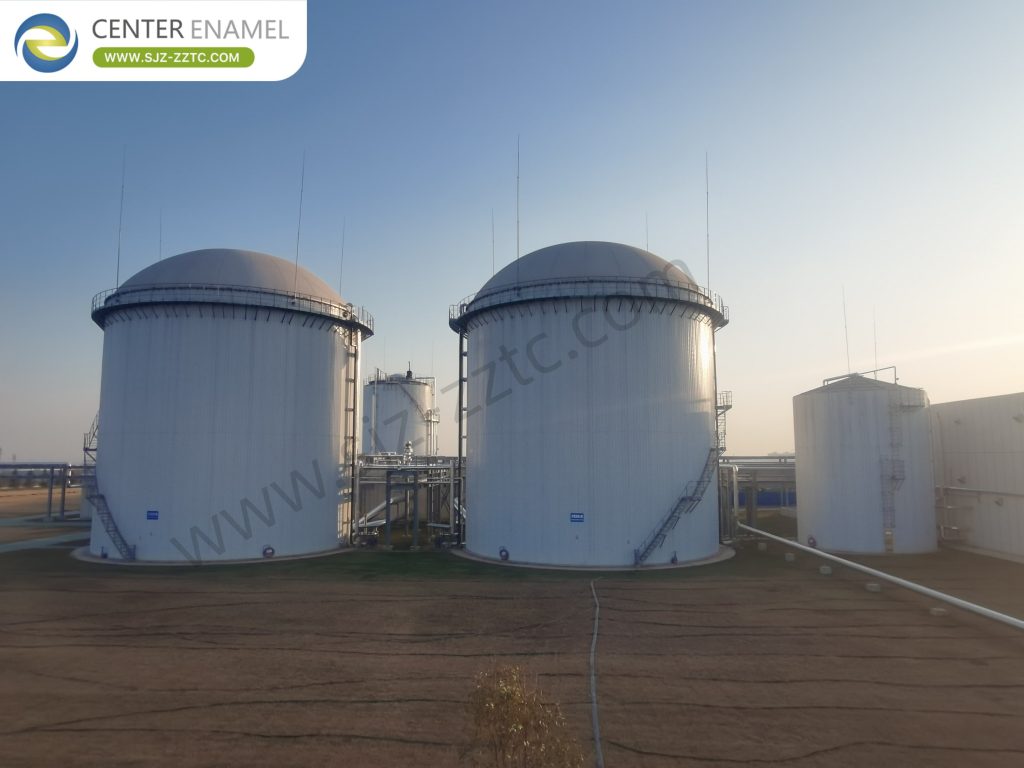
Drawing on 10,000+ completed projects-including 2,000+ wastewater and 1,000+ biogas installations-Center Enamel (Shijiazhuang Zhengzhong Technology Co., Ltd) applies exactly this strategy across the globe. This article walks through the market forces reshaping chemical wastewater treatment, the treatment trains that achieve compliance, the equipment that powers them, and the proof points from a delivered brewery project.
The Shifting Global Landscape of Chemical Wastewater Treatment
Demand for chemical wastewater treatment is no longer confined to mature economies, and the shape of the market reflects this. The Asia-Pacific region, led by China, has grown into the world's largest industrial wastewater treatment market, and its focus is visibly shifting from project construction toward long-term operation and maintenance-a transition that rewards suppliers who can guarantee performance over decades, not just deliver hardware. North America, by contrast, concentrates on upgrading aging facilities, while Europe pursues high-value-added resource recovery from wastewater streams. Beneath these regional differences lies a common driver: the rapid rise of the new energy supply chain. Wastewater from lithium battery, photovoltaic and hydrogen production is complex, variable and hard to treat, generating strong demand for customized anaerobic solutions and pushing the industry toward specialized engineering.
Emerging markets reinforce the trend. The Middle East, constrained by water scarcity, prioritizes advanced treatment and reuse of industrial wastewater, while Southeast Asia's expanding manufacturing base is creating a wave of new treatment facility construction. In parallel, third-party treatment models in industrial parks continue to mature, consolidating the professional operations market and raising the bar for certified, large-scale suppliers. For plant owners and developers, the practical question is no longer whether advanced treatment is needed, but which anaerobic solutions deliver the lowest total cost of ownership.
Why Anaerobic Solutions Anchor the Complete Treatment Train
Given this market context, it is worth asking why anaerobic technology occupies the center of chemical wastewater treatment design. The answer lies in the pollutant profile itself. Chemical wastewater typically combines high COD with toxic or recalcitrant compounds-exactly the conditions where anaerobic solutions excel. Anaerobic digestion converts organic pollutants into biogas while consuming no oxygen and producing far less sludge than aerobic-only systems, and it is highly resilient to shock loads and temperature fluctuation. By front-loading the organic load in an anaerobic stage, plant operators reduce downstream aerobic energy demand, shrink sludge handling costs and recover renewable energy-a combination of economic and environmental returns that aerobic treatment alone cannot match. That is why standardized chemical wastewater treatment solutions today almost always begin by asking how the anaerobic stage will be engineered, rather than treating it as an afterthought.
The Standardized Treatment Train Behind Reliable Chemical Wastewater Treatment
For chemical wastewater, no single process can deliver compliance alone; the reliable answer is a combined treatment train built in sequence: segregated pretreatment → advanced oxidation → anaerobic digestion → aerobic treatment → advanced treatment. The train begins with segregated pretreatment, because wastewater streams differ fundamentally. Oily wastewater passes through oil separation and dissolved air flotation; phenolic wastewater is treated by solvent extraction; high-salinity streams are concentrated by evaporation crystallization; cyanide-bearing flows undergo cyanide destruction; and heavy-metal wastewater is removed by chemical precipitation.
Only after this conditioning step does the wastewater enter advanced oxidation-Fenton, ozone catalytic oxidation or electrochemical oxidation-which breaks down macromolecular toxic organics and improves biodegradability for the biochemical stages that follow. The heart of the train is anaerobic digestion, typically an IC or UASB reactor, coupled with an aerobic stage such as A/O or SBR for polishing. Where salinity is high, halophilic bacteria acclimation keeps the biology stable. Finally, advanced treatment using activated carbon adsorption, reverse osmosis membrane separation and evaporation crystallization secures effluent compliance or enables on-site reuse.
Because this train is long, equipment-heavy and tightly controlled, tank selection becomes a decisive engineering choice. Tanks throughout the system-and especially in the aggressive chemical environment-preferentially use Center Enamel GFS tanks, whose enamel coating withstands high salinity, strong acids and alkalis, and powerful oxidants without corrosion failure.
Core Equipment That Makes Anaerobic Solutions Work
The performance of any anaerobic solution rests on the reactor and its supporting equipment. At the core of Center Enamel's IC systems is the GFS tank with a built-in gas-lift internal circulation and upper and lower three-phase separators-the components that drive autonomous circulation and efficient sludge-water separation. A bottom precision distribution system and pressure-regulating feed device ensure uniform, stable influent flow, while influent lift pumps, equalization tanks and flow meters give operators precise control from the first stage. Up top, high-efficiency biogas collection, desulfurization, dehydration and storage equipment captures the energy value of the treatment process, and high-precision online monitors track temperature, pH, COD and liquid level in real time.
Maintenance is simplified by dedicated sludge discharge pipes at the bottom and mid-section, plus recirculation control devices that eliminate the need for external return pumps. The result is a fully integrated, compact system with a high degree of automation-fewer external components, fewer failure points and easier operation for plant teams. It is this integration, engineered around the GFS tank, that allows anaerobic solutions to scale from pilot to full industrial duty without losing stability.
From Design to Discharge: A Brewery Wastewater Case in South Africa
The practical value of this approach is best illustrated by a delivered project. In South Africa, Center Enamel addressed high-concentration organic wastewater from the brewing industry-a stream defined by high COD, high sugar content and rapid biodegradability, ideal for anaerobic treatment. The project combined two equipment families: GFS tanks as the primary anaerobic digestion system, efficiently converting the brewery's organic load into biogas, and stainless steel tanks for wastewater transfer and chemical storage in the supporting process. The complete package offered excellent corrosion resistance and flexible on-site assembly, providing long-term stable treatment of both production and cleaning wastewater while solving a long-standing pollution challenge for the local industry. Today, this mature brewery wastewater project stands as a reference case for anaerobic solutions across Africa.
| Project Element | Details |
| Industry | Brewing (high-strength organic wastewater) |
| Wastewater Profile | High COD, high sugar content, readily biodegradable |
| Core Treatment Stage | Anaerobic digestion (GFS tanks) |
| Supporting Equipment | Stainless steel tanks for wastewater transfer and chemical storage |
| Key Equipment Features | Corrosion resistance, flexible modular assembly |
| Project Outcome | Long-term stable treatment of production and cleaning wastewater; mature reference case in Africa |
One-Stop Supply: The Center Enamel Product Matrix
Delivering complete anaerobic solutions requires control over every component, which is why Center Enamel has built a full-category product matrix-"core storage tanks + supporting covers + specialty pressure vessels + complete environmental engineering services." The company is the only manufacturer worldwide to integrate enamel frit R&D, self-manufacturing and GFS tank application under one roof, and the matrix breaks down as follows:
| Category | Products | Typical Applications |
| Core Tanks | Proprietary GFS tanks (double-sided hot-rolled double-layer enamel) | Strong-acid/alkali, high-salinity and microbial-corrosion duty in wastewater, biogas and chemical applications; modular quick assembly |
| Supporting Tanks | Fusion bonded epoxy tanks | Drinking water, fire water and neutral medium storage |
| Sealing Covers | Aluminum dome covers (self-supporting high-strength alloy) | Tank sealing and biogas collection to international waterproof and load-bearing standards |
| Other Vessels | Carbon steel tanks, stainless steel tanks, composting tanks, non-standard pressure vessels | Site-specific storage and process duties |
| Engineering Services | Environmental EPC general contracting, anaerobic process subcontracting | Food waste, leachate, municipal wastewater, livestock biogas, petrochemical/metallurgical, seawater desalination |
The GFS tank is the flagship of this matrix, using proprietary double-sided hot-rolled double-layer enamel anti-corrosion technology to resist strong acids and alkalis, high salinity and microbial corrosion-while modular quick assembly keeps construction schedules short even in remote locations. With engineering services spanning food waste, leachate, municipal wastewater, livestock biogas, petrochemical, metallurgical and seawater desalination industries, every project can be customized in tank volume, corrosion protection grade and complete process solution, combining in-house equipment manufacturing with turnkey construction.
Global Certifications That Back Every Delivery
Equipment is only half the story in international chemical wastewater treatment; credentials decide whether a solution can be tendered at all. Center Enamel holds CE, NSF, WRAS, ISO9001, BSCI and ASME certifications, clearing qualification barriers in European, North American, Southeast Asian and African tenders. For EPC contractors and plant owners, these certifications provide the hard credential advantage needed for large overseas bidding-and the quality assurance that anaerobic solutions will perform as designed.
Cover Systems That Complete the Treatment Solution
No treatment system is complete without proper containment, and the Aluminum Alloy Trough Deck Roof is Center Enamel's cost-effective answer for clean water and wastewater storage. Integrally formed from corrosion-resistant aluminum alloy plates on aluminum support trusses, this lightweight roof reduces foundation load and civil construction investment, while a naturally formed dense oxide layer resists rain and mild wastewater corrosion for decades of outdoor service. The flat structure blocks wind, rain, insects, leaves and odor volatilization, preventing secondary contamination of stored water, and it accommodates maintenance walkways, guardrails, vents and level-monitoring ports for easy daily inspection. With simple sealing, short construction timelines and virtually no anti-corrosion painting maintenance, the trough deck roof keeps operating costs extremely low-ideal for waterworks clear water tanks, industrial circulating water tanks, park firewater tanks and temporary domestic wastewater storage where biogas collection or high-pressure sealing is not required.
Frequently Asked Questions
Q1: What makes anaerobic solutions suitable for chemical wastewater treatment?
Anaerobic digestion handles the high organic loads, shock loads and variable salinity typical of chemical wastewater while producing far less sludge and consuming no oxygen. It converts organic pollutants into biogas, cutting energy and sludge disposal costs and improving overall treatment stability.
Q2: Which anaerobic reactor systems does Center Enamel supply?
Center Enamel supplies IC and UASB anaerobic systems built on proprietary GFS tanks, complete with internal circulation, three-phase separation, biogas collection and online monitoring-plus full supporting equipment for integrated installation.
Q3: Can Center Enamel deliver chemical wastewater treatment projects internationally?
Yes. As an EPC contractor with CE, NSF, WRAS, ISO9001, BSCI and ASME certifications, Center Enamel has delivered 10,000+ projects worldwide, including complete design-to-handover industrial wastewater treatment plants.
Ready to put proven anaerobic solutions to work in your chemical wastewater treatment project? Contact Center Enamel today for a tailored proposal-and let our global engineering team design the right treatment train for your site.