
Biogas Solution Provider | Advanced Anaerobic Technologies and UASB Process for Industrial Wastewater
The industrial wastewater treatment sector continues to face persistent operational and technical hurdles that demand innovative approaches. The core challenges center on the "three highs"-high difficulty, high cost, and high energy consumption-which collectively define the operational landscape for treatment facilities worldwide. Wastewater from new energy, chemical, and pharmaceutical industries is particularly complex in composition, containing numerous characteristic pollutants that traditional treatment processes struggle to remove effectively. Chinese companies have established significant price advantages in the mid-to-low-end equipment segment, yet the industry faces continuous technological upgrade pressure from increasingly stringent emission standards.
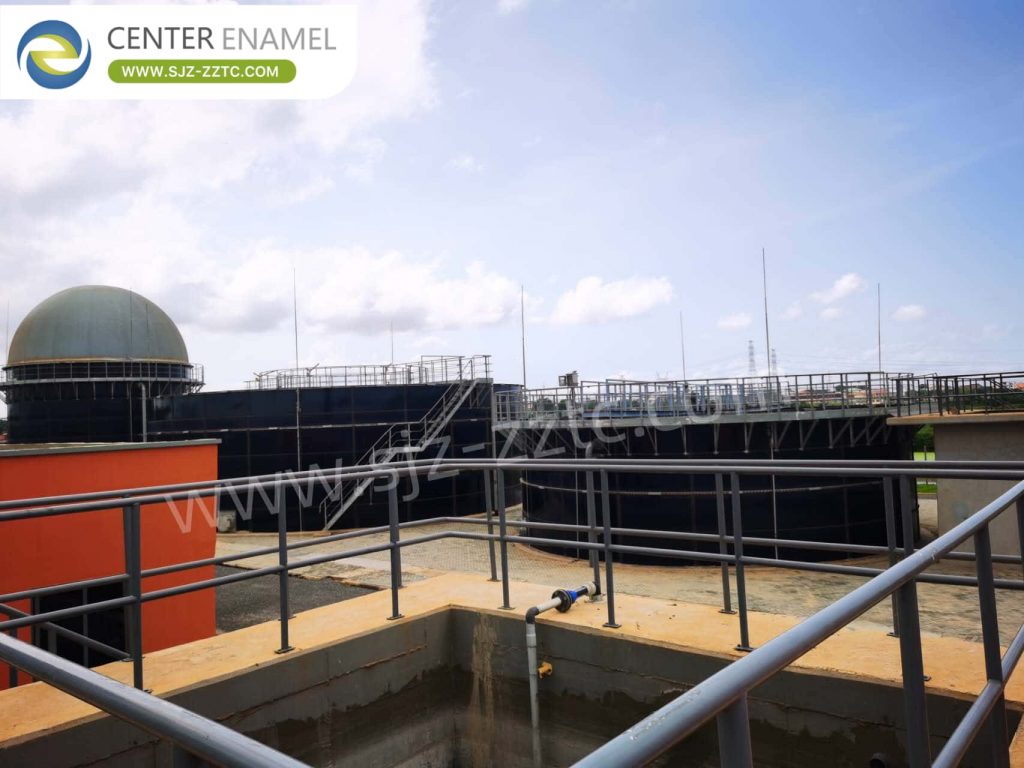
As a leading biogas solution provider, we recognize that advanced anaerobic technologies offer a direct pathway to overcoming these challenges. New requirements for digitalization and low-carbon transformation further challenge operational refinement management capabilities, making the adoption of efficient biological treatment systems more critical than ever. The UASB process, in particular, has emerged as a proven technology that addresses the "three highs" by reducing energy consumption and operational costs while effectively managing difficult-to-treat wastewater streams.
UASB Process Advantages Deliver Superior Treatment Performance
Among the various anaerobic technologies available, the UASB process stands out for its exceptional operational and economic benefits. No mechanical mixing equipment is required, with sludge suspension achieved through hydraulic action, resulting in very low overall energy consumption. High-concentration anaerobic granular sludge can be cultivated, providing high sludge concentration, strong activity, excellent settleability, low sludge washout, and low sludge yield that significantly reduces sludge disposal costs.
For any biogas solution provider, the UASB process represents a cornerstone technology for industrial applications. The integrated design combines reaction, sedimentation, and separation simultaneously, with small footprint and moderate capital investment. The simple structure delivers low failure rates and convenient maintenance, while the high volumetric loading rate ensures excellent organic pollutant degradation efficiency and good shock load resistance. Stable biogas production with high resource recovery value makes this process particularly attractive. The mature technology is widely adopted, with well-established construction, commissioning, and O&M systems suitable for large-scale industrial wastewater treatment.
Environmental Toxicity of Textile Wastewater Pollutants
Textile wastewater presents significant environmental risks that require effective treatment through advanced anaerobic technologies. The primary concerns are color and organic pollution with some chemical toxicity. High-color wastewater discharged to natural waters blocks sunlight penetration, inhibiting aquatic plant photosynthesis and disrupting self-purification capacity and aquatic food chains. Some dyes and intermediates have biological toxicity-azo dye reductive cleavage can produce carcinogenic aromatic amines with chronic toxicity risks.
High-alkalinity desizing and scouring wastewater causes elevated pH in receiving waters, directly harming fish and disrupting aquatic acid-base balance. Surfactants and PVA sizing agents are water-soluble polymers difficult to naturally degrade, increasing water viscosity and affecting aquatic organism respiration. Moderate salinity with long-term discharge causes soil salinization. Some dyes contain heavy metal complexes such as copper and chromium, with chronic toxicity risks from environmental accumulation. Overall pollution is primarily ecological damage, with sustained discharge causing colored water pollution and ecological degradation. These characteristics make textile wastewater an ideal application for the UASB process and other anaerobic technologies.
Proven Global Implementation of Anaerobic Technologies with GFS Tanks
The practical application of anaerobic technologies and robust tank infrastructure is well-demonstrated through successful global projects. One notable example is the Indonesia Palm Oil Biogas Upgrade Project, commissioned in 2013 as the core anaerobic digestion reactor for the POME treatment station. This installation comprises three GFS tanks in two sizes: 17.58 meters diameter by 8.4 meters height, and 16.82 meters diameter by 7.2 meters height. The tanks serve as the core anaerobic reaction equipment specifically for high-organic palm oil production wastewater, where anaerobic digestion degrades pollutants and recovers biogas.
As a biogas solution provider, Center Enamel has demonstrated that GFS tanks are ideally adapted to local palm industry wastewater needs. The tanks offer convenient assembly with corrosion resistance suitable for Southeast Asia's hot, humid, high-corrosion environment. This project represents a mature biomass energy environmental benchmark that validates the effectiveness of integrated anaerobic technologies in challenging industrial contexts, showcasing how the UASB process and GFS tanks work together to deliver sustainable treatment solutions.
Core R&D Capabilities and Global Authoritative Certifications
Delivering reliable anaerobic technologies requires strong research and development foundations. Technology R&D is Center Enamel's core competitive advantage. The company independently masters over 200 differentiated anti-corrosion enamel formulations, with full self-control over the enamel raw material chain, holding nearly 100 invention and utility patents. Products have passed NSF, WRAS, ASME, BSCI, CE, ISO9001, and other global certifications.
Company certifications and honors include National High-Tech Enterprise, National Specialized and Sophisticated "Little Giant," Hebei Manufacturing Single Champion, Provincial Smart Factory, and Provincial Green Factory, along with complete environmental engineering and special equipment manufacturing compliance qualifications. The company maintains long-term collaborative research with multiple universities through joint materials laboratories, continuously iterating anti-corrosion coatings and large bolted tank structural design technologies. The proprietary material technology barrier creates an irreplaceable competitive advantage, with product performance comparable to high-end imported European and American storage equipment. This R&D strength positions Center Enamel as a premier biogas solution provider serving global markets.
Extensive Global Benchmark Project Cases
A track record of successful implementations demonstrates the reliability of any biogas solution provider. Center Enamel's project portfolio covers over 100 countries across Southeast Asia, Africa, Europe, and the Americas, with more than 30,000 mature projects. This extensive experience has accumulated complete industry solutions across palm oil, livestock, municipal, brewing, and food waste biogas applications.
The company can rapidly match customized solutions for different regional climates, water quality, and regulations. This global footprint validates the versatility of the UASB process and other anaerobic technologies across diverse operating conditions. From tropical environments with high humidity to temperate regions with seasonal variations, the combination of GFS tanks and advanced biological treatment consistently delivers reliable performance and biogas recovery.
Aluminum Alloy Trough Deck Roof for Cost-Effective Tank Cover Solutions
Tank roofing solutions play an important role in protecting water quality and ensuring long-term system integrity. The Aluminum Alloy Trough Deck Roof is a cost-effective economical tank cover solution for clean water and wastewater storage scenarios, primarily designed for drinking water, production wastewater, and firewater reserve tanks, balancing practicality and cost advantages. The main body is integrally formed from anti-corrosion aluminum alloy plates, paired with aluminum support trusses.
Its lightweight design imposes less load on the tank foundation, reducing civil construction investment. A naturally formed dense oxide protective layer on the surface resists rain and mild wastewater corrosion, withstands outdoor sun and rain exposure, and effectively blocks wind, rain, insects, fallen leaves, and odor volatilization. This protects water quality by preventing dust and debris from falling in and causing secondary contamination. The flat roof structure is neat and orderly, allowing installation of maintenance walkways, guardrails, vents, and level monitoring ports on top, facilitating daily inspection and equipment maintenance.
The simple sealing structure enables straightforward installation with short construction timelines, and virtually eliminates the need for anti-corrosion painting maintenance, resulting in extremely low operational costs. It is suitable for various small, medium, and large atmospheric pressure water storage tanks, and has been widely implemented in waterworks clear water tanks, industrial circulating water tanks, park firewater tanks, and domestic wastewater temporary storage facilities. It is highly compatible with water storage applications that do not require biogas collection or high-pressure sealing.
Frequently Asked Questions
Q: What makes Center Enamel a leading biogas solution provider?
Center Enamel combines over 200 proprietary enamel formulations, nearly 100 patents, and 30,000+ global projects. With NSF, CE, ASME, and ISO9001 certifications, the company delivers complete biogas solutions integrating UASB process systems with corrosion-resistant GFS tanks for reliable long-term performance.
Q: How does the UASB process contribute to biogas recovery?
The UASB process efficiently converts organic pollutants in high-strength wastewater into biogas through anaerobic digestion. This renewable energy can be captured and utilized for power generation or heating, providing both treatment and resource recovery benefits while reducing operational costs.
Q: What industries benefit most from advanced anaerobic technologies?
Industries generating high-concentration organic wastewater including food processing, pharmaceutical fermentation, alcohol brewing, chemical manufacturing, textile dyeing, and palm oil processing benefit significantly from UASB process and other anaerobic technologies. These solutions achieve over 90% COD removal while recovering valuable biogas.