
How Do Anaerobic Technologies and GFS Tanks Build Reliable Industrial Wastewater Treatment Systems?
The Asia-Pacific region, particularly China, has become the world's largest industrial wastewater treatment market, with the operation and maintenance service segment's contribution continuing to rise, marking a shift from project construction to long-term operational management. The North American market focuses on upgrading existing facilities, while Europe emphasizes high-value-added resource recovery technologies.
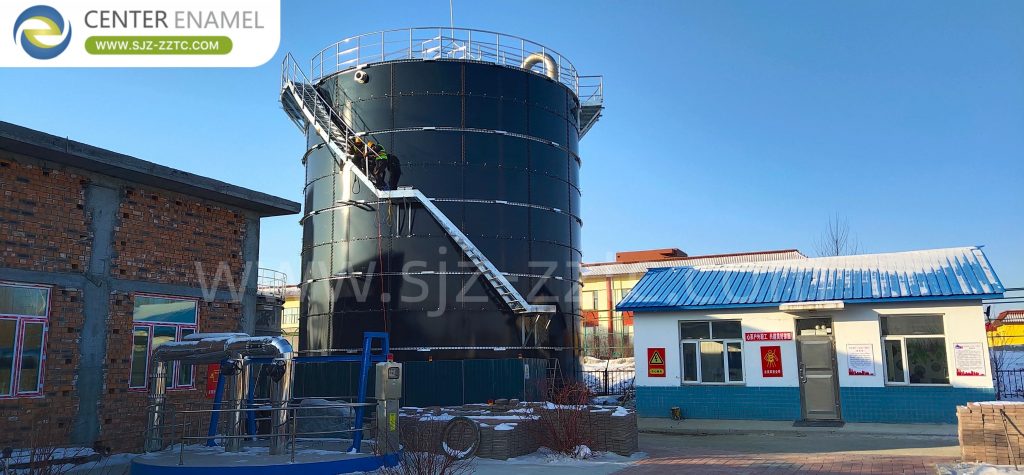
Wastewater from the new energy industry chain (lithium batteries, photovoltaics, hydrogen) has become the most notable emerging growth area due to its complex composition and high treatment difficulty, generating significant demand for customized solutions. The maturity of third-party treatment models in industrial parks continues to improve, driving consolidation in the professional operation market. The Middle East has strong demand for advanced treatment and reuse of industrial wastewater due to water scarcity, while manufacturing transfer in Southeast Asia drives local industrial wastewater treatment facility construction demand.
These regional shifts are accelerating adoption of advanced Anaerobic Technologies, particularly for high-strength organic streams where energy recovery and compact footprints matter most. Equally important is the equipment that contains these biological processes-GFS Tanks must deliver decades of corrosion resistance under aggressive conditions. The sections below examine both the process technology and the tank engineering that together determine project success.
Factory-Prefabricated GFS Tanks: Consistent Quality by Design
GFS tanks are fully factory-prefabricated to standardized specifications, with finished product quality stability far exceeding cast-in-place concrete tanks. All concrete tank processes are completed in the open air, with rebar tying, concrete pouring, and curing heavily influenced by worker skill, temperature, and rainfall. Wall thickness, density, and strength vary significantly between batches, with hidden defects like honeycombing, voids, and insufficient wall thickness common-quality cannot be uniformly controlled.
Center Enamel's GFS tank steel panels, seals, and reinforcement components are all mass-produced in automated factories. Steel stamping, high-temperature enameling, and dimensional cutting are all controlled by CNC equipment, with each panel's parameters and enamel thickness strictly following unified national standards. All components are uniformly packaged and transported to site, with assembly strictly following standardized construction drawings. Full-process quality inspection from raw materials to finished components ensures highly consistent product performance parameters, completely eliminating the uncontrollable quality risks of on-site concrete construction, with every tank delivering stable, consistent performance.
| Quality Factor | GFS Tanks (Factory-Prefabricated) | Concrete Tanks (Cast-in-Place) |
| Production Environment | Automated factory, CNC-controlled | Open air, weather-dependent |
| Quality Consistency | Highly uniform, standardized | Batch-to-batch variation |
| Common Defects | Minimal, controlled by inspection | Honeycombing, voids, thin walls |
| Enamel / Coating Control | Uniform thickness, national standards | Not applicable |
| On-Site Assembly | Standardized drawings, bolted | Skilled labor dependent |
| Performance Reliability | Stable and repeatable | Variable |
What Is the IC Process in Anaerobic Technologies?
IC, or Internal Circulation Anaerobic Reactor, is the third-generation high-efficiency anaerobic treatment technology built upon UASB. Its core innovation is the built-in gas-lift internal circulation system, enabling autonomous wastewater recirculation without external return pumps. The reactor features a dual-zone configuration with a lower main reaction zone and an upper polishing zone. Biogas gas-lift creates hydraulic internal circulation, significantly increasing upflow velocity and enhancing sludge-wastewater contact. With extremely high compactness, it is specifically designed for high-concentration, high-flow industrial organic wastewater, combining high efficiency, energy savings, and minimal footprint-the core process for modern industrial high-strength wastewater treatment. Among available Anaerobic Technologies, the IC Process offers the best combination of loading capacity and space efficiency.
Sources of Pharmaceutical Wastewater
Pharmaceutical wastewater originates from the entire production process of chemical synthesis, fermentation antibiotics, traditional Chinese medicine, and biopharmaceuticals, representing a typical high-difficulty industrial wastewater. Key pollution-generating stages include raw material washing, reaction synthesis, fermentation culture, extraction crystallization, and filtration separation. Auxiliary wastewater includes equipment washing, workshop floor cleaning, laboratory testing, and exhaust gas scrubbing. Fermentation wastewater mainly consists of bacterial cell residues and spent culture media; chemical synthesis wastewater is rich in reaction byproducts and organic solvent residues; TCM wastewater is concentrated in herb decoction and alcohol precipitation or concentration stages. Wastewater generation is continuous, with significant variations due to drug type and production batch changes. Small and medium-sized pharmaceutical companies lack stable production conditions, causing extreme fluctuations in water quality and quantity-the highest industry-wide pollution control difficulty, and a strong argument for robust Anaerobic Technologies paired with durable GFS Tanks.
Pakistan Food Waste and Napier Grass Biogas Demonstration
Center Enamel is the general contractor, with CSTR as the core anaerobic process using food waste and Napier grass as mixed fermentation feedstock. The system is equipped with a mechanical mixing system ensuring thorough mixing of feedstock and anaerobic microorganisms-efficient organic degradation with stable daily biogas production of 100 m³. This is the local official demonstration project for validating gas production efficiency and long-term continuous operational stability. After successful pilot operation, multiple large-scale Napier grass biogas projects are planned locally to promote biomass clean energy and support regional low-carbon development.
| Project Parameter | Specification |
| Location | Pakistan |
| Feedstock | Food Waste + Napier Grass |
| Core Process | CSTR Anaerobic Digestion |
| Mixing System | Mechanical Mixing |
| Daily Biogas Output | 100 m³ |
| Project Status | Official Demonstration, Pilot Complete |
| Future Development | Multiple Large-Scale Projects Planned |
Three Decades of Center Enamel Development
Center Enamel has been deeply engaged in the environmental bolted storage equipment field for over 30 years. Starting with proprietary enamel anti-corrosion material technology, the company has gradually completed the full-industry-chain upgrade from a single tank manufacturer to a comprehensive environmental EPC service provider. Throughout its 30+ year history, the company has been recognized as a National High-Tech Enterprise, National Specialized and Sophisticated "Little Giant," Manufacturing Single Champion, and Provincial Green Factory. It has successfully delivered over 30,000 environmental projects globally, establishing itself as a leading enterprise in the global GFS tank storage industry. The company has fully integrated the entire chain from enamel frit R&D, intelligent environmental equipment manufacturing, to EPC project contracting-every business breakthrough has been achieved through proprietary core anti-corrosion technology.
| Development Milestone | Achievement |
| Years in Industry | 30+ |
| Total Environmental Projects | 30,000+ |
| National Recognition | High-Tech Enterprise, Specialized "Little Giant," Manufacturing Single Champion |
| Provincial Recognition | Green Factory |
| Business Scope | Enamel frit R&D, equipment manufacturing, EPC contracting |
| Core Technology | Proprietary anti-corrosion enamel formulations |
Professional Construction Team Manpower Reserve
Center Enamel has established its own domestic and international certified construction teams, with regular practical training on GFS tank installation and overseas construction standards for various countries. Domestically, regional construction teams cover multiple zones, capable of simultaneously deploying multiple teams for large tank farm projects. Internationally, cross-border professional installation teams are equipped to various country construction standards-sufficient manpower reserves ensure uninterrupted construction delivery for remote African sites, high-standard European and American facilities, and other projects.
Frequently Asked Questions
What are Anaerobic Technologies and why are they used in industrial wastewater?
Anaerobic Technologies use microorganisms to break down organic pollutants without oxygen, producing biogas as a byproduct. They cut sludge production by 70–90%, recover energy, and handle high-strength wastewater efficiently.
Why are GFS Tanks preferred over concrete for wastewater projects?
GFS Tanks are factory-prefabricated with CNC-controlled enameling, delivering uniform quality and 30+ year anti-corrosion life. Concrete tanks suffer from weather-dependent construction and hidden defects.
Which industries benefit most from IC Process technology?
The IC Process suits brewery, beverage, starch, chemical, papermaking, and pharmaceutical wastewater-especially land-constrained sites with high-strength, high-flow organic loads.
Partner with Center Enamel for Your Next Project
Our engineers can match the right Anaerobic Technologies and GFS Tank specification to your wastewater profile and site conditions. Reach out today to discuss your treatment objectives with our technical team.
Contact us now to request a feasibility assessment and preliminary design for your industrial wastewater or biogas project.