
Anaerobic Technologies for Chemical Wastewater: How GFS Tanks Support Efficient Industrial Treatment
Chemical manufacturing generates some of the most challenging industrial wastewater streams. High organic concentrations, toxic pollutants, extreme salinity, and fluctuating pH levels make conventional treatment processes difficult to operate efficiently. For chemical manufacturers, selecting suitable treatment technologies and reliable equipment is essential to maintaining stable operations and meeting environmental requirements.
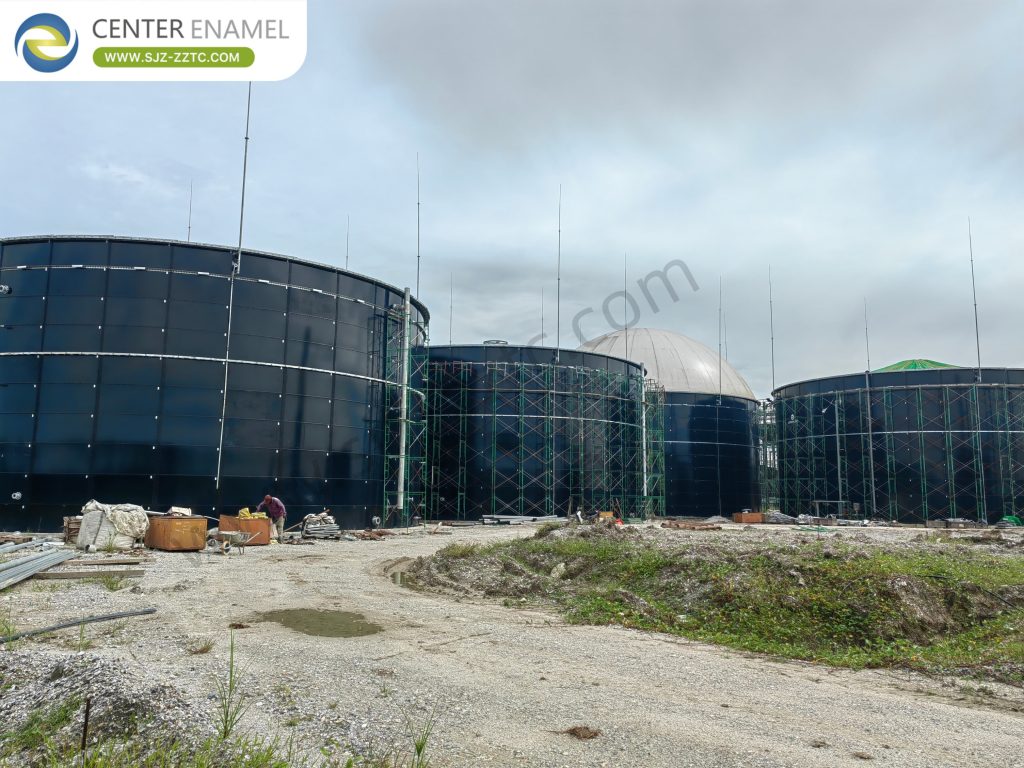
Among various treatment methods, Anaerobic Technologies play an important role in treating high-strength organic wastewater while offering opportunities for biogas recovery. However, successful treatment depends on more than biological process selection. Reactor structures, corrosion resistance, gas-tightness, and equipment reliability also influence long-term performance.
Shijiazhuang Zhengzhong Technology Co., Ltd. (Center Enamel) provides advanced Glass-Fused-to-Steel (GFS) Tanks and integrated engineering solutions for industrial wastewater and anaerobic treatment applications. Combining specialized enamel technology, modular tank manufacturing, and global EPC capabilities, Center Enamel supports industrial projects with reliable equipment solutions for demanding operating environments.
Chemical Wastewater: Complex Characteristics and Treatment Challenges
Chemical Wastewater is among the most difficult industrial wastewater categories to manage because its composition varies significantly across manufacturing processes.
Unlike conventional municipal wastewater, chemical effluent may contain high concentrations of toxic organic compounds, inorganic salts, heavy metals, and poorly biodegradable substances.
Typical characteristics include:
| Water Quality Parameter | Typical Characteristics |
| COD | Generally 5,000–80,000 mg/L |
| High-Strength COD | Coal chemical wastewater can exceed 100,000 mg/L |
| BOD/COD Ratio | Generally below 0.25 |
| Organic Pollutants | Benzene compounds, phenols, cyanides, sulfides, and halogenated hydrocarbons |
| Salinity | Can reach tens of thousands to over 100,000 mg/L |
| pH | Alternating strongly acidic and alkaline conditions |
| Wastewater Quality | Significant fluctuations and frequent shock loads |
These characteristics create several treatment challenges.
Poor Biodegradability: Synthetic macromolecular compounds and refractory organics can limit biological degradation efficiency.
High Toxicity: Phenols, cyanides, and other characteristic pollutants may inhibit anaerobic microorganisms and affect biological system stability.
Extreme Salinity: High concentrations of sodium chloride and sodium sulfate can create osmotic stress for microorganisms.
Unstable Influent Conditions: Production batch changes cause substantial fluctuations in wastewater volume and composition, making biological acclimation and process control more difficult.
Consequently, chemical manufacturers need carefully selected treatment technologies supported by durable and chemically compatible equipment.
Choosing the Right Anaerobic Technologies
Anaerobic Technologies are widely applied in industrial wastewater treatment, particularly for wastewater containing high concentrations of biodegradable organic matter.
Under oxygen-free conditions, anaerobic microorganisms convert organic pollutants into biogas, treated water, and a relatively small amount of residual sludge.
Common technologies include UASB, EGSB, and IC anaerobic reactors. These systems offer advantages such as relatively high organic loading capacity, compact structures, and opportunities for energy recovery.
| Technology | Main Characteristics | Typical Applications |
| UASB | Upflow anaerobic sludge blanket process | High-strength organic wastewater |
| EGSB | Expanded granular sludge bed with enhanced sludge-water contact | Industrial wastewater with suitable biodegradability |
| IC | Internal circulation anaerobic reactor | High-concentration organic wastewater |
However, not every Chemical Wastewater stream can be treated directly through anaerobic processes. High toxicity, excessive salinity, and refractory compounds may require segregated pretreatment, detoxification, or dilution before biological treatment.
Therefore, process selection should be based on wastewater analysis, biodegradability assessment, and laboratory testing.
How the EGSB Anaerobic Reaction Process Works
Expanded Granular Sludge Bed (EGSB) technology improves contact between wastewater and anaerobic microorganisms through controlled upward flow.
After pretreatment and flow equalization, wastewater enters the reactor through a bottom distribution system. The increased upflow velocity expands and suspends the granular sludge bed, creating an active reaction zone.
As wastewater moves upward, organic pollutants come into contact with highly active anaerobic microorganisms and are progressively degraded.
Biogas generated during the reaction further promotes sludge suspension and mass transfer. The mixture then enters the upper three-phase separator, where gas, liquid, and solid phases are separated.
The operating sequence includes:
Influent Distribution: Pretreated wastewater enters the reactor uniformly.
Sludge Bed Expansion: Upward hydraulic flow expands the granular sludge.
Anaerobic Degradation: Microorganisms convert biodegradable organic compounds into biogas and treated water.
Three-Phase Separation: The separator separates biogas, effluent, and granular sludge.
Sludge Recirculation: Settled sludge returns to the reaction zone, while excess sludge is periodically discharged.
This configuration supports efficient substrate contact and stable biological operation when influent characteristics and operating parameters are properly controlled.
Why GFS Tanks Matter in Anaerobic Treatment
While biological technology determines how organic pollutants are degraded, tank materials provide the structural foundation for long-term system operation.
Anaerobic reactors and wastewater storage facilities may be exposed to corrosive wastewater, organic acids, sulfides, high salinity, and other aggressive substances. Conventional materials may require additional protective systems to withstand these conditions.
Center Enamel's Glass-Fused-to-Steel (GFS) Tanks combine steel strength with the corrosion-resistant properties of glass enamel.
The company has independently developed more than 200 specialized enamel formulations and supporting patented technologies, allowing coating specifications to be customized according to different storage media.
Key advantages include:
Customized Corrosion Protection
Specialized enamel formulations can be selected for environments involving acids, alkalis, high organic concentrations, and elevated salinity, subject to chemical compatibility evaluation.
Reliable Structural Performance
The steel structure provides mechanical strength, while the fused glass coating protects the tank surface against suitable corrosive environments.
Modular Installation
Factory-manufactured panels allow convenient transportation and bolted assembly, making GFS Tanks suitable for overseas projects and remote construction locations.
Flexible Industrial Applications
GFS Tanks are used in biogas anaerobic digestion, municipal wastewater, livestock farming, food processing, and industrial water treatment.
Unlike conventional concrete tanks that may require additional protective linings for corrosive media, properly specified GFS Tanks provide an integrated protective coating system.
Global EPC Experience and Project Delivery
Selecting an experienced engineering partner is important for industrial wastewater projects, particularly when construction takes place across different countries and operating environments.
Center Enamel has accumulated more than a decade of international installation experience, supporting projects across Southeast Asia, Africa, the Americas, and other global markets.
Its international project milestones include:
| Year | Project Milestone | Significance |
| 2009 | First overseas GFS tank installation in Niger, Africa | Established international installation experience |
| 2015 | First GFS tank export and installation project in the United States | Passed strict US project acceptance requirements |
| 2009–Present | Projects across multiple international markets | Expanded applications in biogas, POME, wastewater, and drinking water storage |
Through projects involving livestock biogas, palm oil mill effluent (POME), municipal wastewater, and drinking water storage, Center Enamel has developed practical experience in different geographical and climatic conditions.
These include mountainous terrain, coastal salt spray, tropical temperatures, and projects with demanding European and American acceptance requirements.
Such experience helps the company adapt tank design, packaging, transportation, and installation procedures to different project environments.
Integrated EPC Capabilities for Industrial Projects
Beyond manufacturing GFS Tanks, Center Enamel integrates several essential stages of project delivery.
Its capabilities cover proprietary enamel frit research and development, tank manufacturing, engineering design, cross-border logistics, overseas construction, and post-installation operation and maintenance support.
This integrated model helps reduce coordination between multiple suppliers and improves project management efficiency.
For customers developing industrial wastewater treatment or anaerobic digestion facilities, the company can provide equipment and engineering support based on project requirements, site conditions, and storage specifications.
Aluminum Alloy Trough Deck Roof Solutions
Tank roofing is another important consideration for wastewater storage facilities.
Center Enamel's Aluminum Alloy Trough Deck Roof is designed for drinking water, production wastewater, and firewater storage applications.
Its lightweight aluminum construction reduces structural loading on tank foundations, while the naturally formed oxide layer provides resistance to outdoor exposure and mild corrosive conditions.
Additional advantages include:
Protection against dust, rain, insects, and fallen leaves.
Reduced odor volatilization.
Convenient installation and short construction periods.
Compatibility with maintenance walkways, guardrails, vents, and monitoring ports.
Low routine anti-corrosion painting requirements.
This roof type is suitable for atmospheric water storage applications that do not require biogas collection or high-pressure sealing.
Professional Technical Support Throughout the Project Lifecycle
Reliable equipment requires consistent technical support after installation.
Center Enamel provides global after-sales services covering remote fault diagnosis, technical consultation, tank maintenance guidance, and on-site inspections when required.
For anaerobic treatment projects, external technical experts can also provide support for process commissioning, biogas upgrading operations, and wastewater system upgrades.
Combined with its international construction teams and localized agent network, this service model helps customers address operational challenges and maintain long-term equipment reliability.
Partner with Center Enamel for Advanced Anaerobic Technologies
Effective Chemical Wastewater treatment requires a combination of suitable biological processes, reliable equipment, and professional engineering coordination.
Center Enamel combines GFS tank manufacturing expertise, specialized enamel technology, and international EPC experience to support industrial wastewater and anaerobic treatment projects.
Planning an industrial wastewater treatment facility? Contact Center Enamel to discuss your wastewater characteristics, tank specifications, and project requirements with our engineering team.
Frequently Asked Questions
1. What are the main Anaerobic Technologies used in industrial wastewater treatment?
Common technologies include UASB, EGSB, and IC reactors. They use anaerobic microorganisms to degrade biodegradable organic pollutants and generate biogas. Selection depends on wastewater concentration, biodegradability, toxicity, and operating conditions.
2. Can Chemical Wastewater be treated directly using anaerobic processes?
Not always. Highly toxic compounds, refractory organics, extreme salinity, and unstable pH may inhibit microorganisms. Pretreatment, detoxification, and wastewater equalization are often necessary before anaerobic treatment.
3. Why are GFS Tanks suitable for anaerobic wastewater projects?
GFS Tanks combine steel structural strength with a factory-applied glass enamel coating. Their modular construction and customizable corrosion protection make them suitable for many wastewater and anaerobic digestion applications, subject to chemical compatibility assessment.