
How a Global Biogas Project Contractor Applies Anaerobic Technologies to Food Waste
Industrial wastewater treatment continues to face mounting pressure. New energy, chemical, and pharmaceutical industries generate increasingly complex wastewater, while stricter emission standards and low-carbon goals reshape what operators must deliver. Meeting these demands requires more than conventional equipment-it calls for an experienced Biogas Project Contractor with proven Anaerobic Technologies and adaptable tank systems.
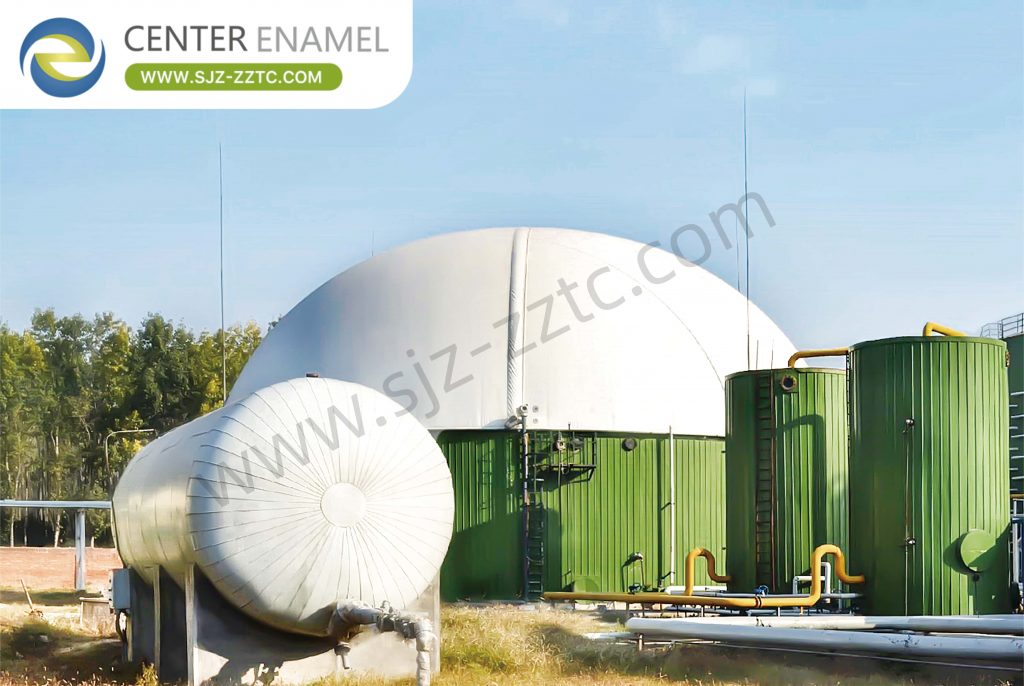
This article explores how Center Enamel combines GFS tanks, USR process design, and full-cycle service to address these challenges across industrial and agricultural applications worldwide.
Core Industry Challenges Facing Industrial Wastewater Treatment
The core challenges of industrial wastewater treatment center on the "three highs"-high difficulty, high cost, and high energy consumption. Wastewater from new energy, chemical, and pharmaceutical industries is complex in composition with numerous characteristic pollutants, and traditional treatment processes are difficult to remove effectively. Chinese companies have significant price advantages in the mid- to low-end equipment segment. The industry also faces continuous technological upgrade pressure from increasingly stringent emission standards, as well as new requirements for digitalization and low-carbon transformation on operational refinement management capabilities.
These pressures make advanced Anaerobic Technologies essential-not only for pollutant removal but for energy recovery that offsets rising operational costs.
GFS Tanks Adaptable to Modern Intensive Plant Layouts
GFS tanks offer flexible customization of size and appearance, with higher land utilization rates, ideally suited for modern compact plant layouts, with significant advantages over fixed poured concrete tanks. Concrete tanks cannot alter volume or shape after pouring, with heavy bases occupying large areas, making placement difficult on narrow or irregular plots. Their rough, uniform appearance cannot match modern facility aesthetic requirements.
GFS tank volume can be precisely customized as needed, with capacities ranging from dozens of cubic meters to 50,000 cubic meters freely selectable. Tank height and diameter can be flexibly combined to fit narrow or irregularly shaped plots, effectively saving plant land occupation. Enamel color customization is also supported, achieving visual harmony with plant buildings and environmental facilities. During later plant expansion, GFS tanks can be directly adjusted in layout and expanded; concrete tanks, being monolithic structures, must be demolished and rebuilt, offering less flexibility in land resource utilization. This aligns well with the intensive construction and aesthetic operation and maintenance needs of industrial parks.
This layout flexibility is particularly valuable for Biogas Project Contractor engagements where space constraints and future expansion must both be anticipated.
USR Applicable Scenarios for Agricultural High-Solids Wastewater
USR is a dedicated process for agricultural high-solids wastewater, primarily suitable for large-scale livestock manure, livestock soaking water, agricultural straw leachate, and livestock slaughterhouse high-solids wastewater. For high-suspended-solids, high-organics, high-impurity wastewater conditions, it is the core process for rural livestock pollution treatment and agricultural organic waste resource utilization.
It is suitable for township decentralized wastewater treatment and small to medium-sized agricultural enterprise wastewater treatment. It can serve as the primary process for large livestock base manure resource recovery, combining wastewater treatment with biogas recovery. It is also suitable for various high-solids, easily clogged, difficult-to-treat organic wastewater pretreatment, with superior suitability in agricultural environmental applications compared to other anaerobic processes.
As a specialized branch of Anaerobic Technologies, the USR process extends treatment capability to waste streams that conventional reactors cannot handle reliably.
Food Waste Operation and Maintenance Cost Analysis
O&M costs are moderate to high, but resource recovery benefits are substantial-good overall economics. Pretreatment oil removal equipment and three-phase separators have high capital investment, but recovered oil can be sold-biodiesel feedstock oil has good market value, providing core revenue for food waste treatment. Stable biogas from anaerobic digestion can be used for power generation or heating, offsetting energy costs. CSTR process has simple equipment with no precision wear parts-low maintenance costs. High-salt, high-oil conditions require premium corrosion protection (GFS tanks), with higher initial investment but long service life and low maintenance. Chemical consumption is mainly flocculants and desulfurizers-moderate expenditure. Oil and salt cause pipe fouling and membrane pollution, requiring periodic cleaning-moderate labor requirements. Overall resource recovery revenues (oil sales + biogas energy + digestate fertilizer) generally cover O&M costs-good overall economics.
Food Waste Treatment Cost and Revenue Breakdown
| Cost or Revenue Category | Details | Economic Impact |
| Pretreatment Equipment | Oil removal, three-phase separators | High capital investment |
| Recovered Oil Sales | Biodiesel feedstock | Core revenue stream |
| Biogas Utilization | Power generation or heating | Offsets energy costs |
| CSTR Maintenance | Simple equipment, no precision wear parts | Low maintenance costs |
| Corrosion Protection | GFS tanks for high-salt, high-oil conditions | Higher initial investment, long service life |
| Chemical Consumption | Flocculants, desulfurizers | Moderate expenditure |
| Pipe and Membrane Cleaning | Periodic due to oil and salt | Moderate labor requirements |
| Overall Resource Recovery | Oil sales plus biogas energy plus digestate fertilizer | Generally covers O&M costs |
Center Enamel Global Market Presence
Center Enamel's global business covers over 100 countries and regions, with 30,000+ successful overseas projects. Products are exported to all major regions including Europe, the Americas, the Middle East, Africa, Southeast Asia, and Latin America, with a well-established global localized service network.
Domestically, the company is organized into North, South, Central, East, and Southwest marketing regions, covering environmental, water utility, livestock, and petrochemical customers nationwide. Internationally, the company adopts a "standardized products + localized adaptation" model-adjusting tank corrosion protection, sealing, and pressure standards for different national water quality and environmental regulations-with multiple global landmark projects: large-volume GFS tanks in Italy, 20 m tower water supply tanks in Colombia, coastal seawater treatment tanks in Costa Rica, large municipal wastewater aluminum dome projects in Saudi Arabia, etc. The company has established long-term stable strategic partnerships with many Fortune 500 companies.
Center Enamel Global Project Footprint
| Region | Representative Projects | Application Type |
| Europe | Large-volume GFS tanks in Italy | Industrial storage |
| Latin America | 20 m tower water supply tanks in Colombia | Municipal water supply |
| Central America | Coastal seawater treatment tanks in Costa Rica | Seawater treatment |
| Middle East | Large municipal wastewater aluminum dome projects in Saudi Arabia | Municipal wastewater |
| Global | 30,000+ projects across 100+ countries | Biogas, wastewater, livestock, petrochemical |
This global footprint reflects the delivery capability expected of a world-class Biogas Project Contractor.
After-Sales and Technical Support Team
The after-sales team adheres to the service principles of rapid response, professional efficiency, and full-cycle support-providing 24/7 full-lifecycle O&M support to global clients.
Standard remote services include fault diagnosis, process parameter adjustment, and tank anti-corrosion maintenance guidance. For domestic and long-distance overseas clients, overseas technical service personnel can be dispatched for on-site inspection, annual inspection, and equipment refurbishment as needed. The team also maintains long-term client feedback tracking mechanisms-regularly collecting tank and anaerobic equipment operational data to continuously optimize product structure and support processes.
Supporting external technical expert teams provide specialized support for anaerobic process commissioning, biogas upgrading O&M, and wastewater upgrade/retrofit projects-ensuring long-term stable operation of domestic and overseas projects, continuously improving global client satisfaction and repurchase rates.
FRP Roof Cover Solution for Atmospheric Pressure Tanks
FRP Roof is a general-purpose economical roof for atmospheric pressure storage tanks without air-tightness requirements, suitable for drinking water storage, agricultural irrigation water, firewater reserve, and general production wastewater temporary storage. It is available in two styles: flat and dome, allowing flexible selection based on tank specifications and site aesthetic requirements.
The roof is integrally molded from resin and fiberglass, lightweight, with natural water resistance and mild acid/alkali corrosion resistance. It will not rust or rot in long-term humid environments, eliminating the frequent anti-corrosion maintenance required for metal roofs. The dome style features excellent drainage performance due to its curved structure, resisting water accumulation, dust buildup, snow load, and strong winds. The flat style facilitates the installation of maintenance walkways, level gauges, and vents on top, making inspection and operation convenient.
The product is fully insulated with no risk of galvanic corrosion, will not contaminate drinking water quality, and meets environmental standards for domestic water storage. The modular design with low individual component weight allows for simple on-site hoisting and assembly, offering high construction efficiency and affordable procurement and installation costs. It is only suitable for atmospheric pressure water storage tanks without biogas collection or pressurization requirements, and is not recommended for anaerobic fermentation gas-producing conditions. It is widely used in rural agricultural water storage tanks, industrial park firewater tanks, waterworks buffer tanks, and small to medium-sized domestic wastewater temporary storage facilities, making it a cost-effective general-purpose roof choice for conventional water storage applications.
FAQ
1. What makes the USR process suitable for high-solids agricultural wastewater?
USR is designed for high-suspended-solids, high-impurity wastewater such as livestock manure, straw leachate, and slaughterhouse waste. It tolerates high solids without complex separators, prevents clogging, and combines wastewater treatment with biogas recovery-ideal for rural and agricultural applications.
2. How does Center Enamel support global projects as a Biogas Project Contractor?
Center Enamel has delivered 30,000+ projects across 100+ countries, with localized adaptation of tank corrosion protection, sealing, and pressure standards. The company provides 24/7 after-sales support, on-site inspection, and specialized anaerobic process commissioning worldwide.
3. Why are GFS tanks preferred over concrete for compact plant layouts?
GFS tanks offer flexible volume customization from dozens to 50,000 cubic meters, with adjustable height and diameter to fit narrow or irregular plots. They support enamel color customization and can be expanded directly-unlike concrete tanks, which must be demolished and rebuilt.
Contact Us
Ready to work with a proven Biogas Project Contractor that integrates advanced Anaerobic Technologies into every project? Contact Center Enamel today for a customized solution covering design, manufacturing, installation, and long-term O&M support.
With 30,000+ projects across 100+ countries and 24/7 global service, we turn complex wastewater challenges into compliant, resource-recovery success. Reach out now and let's build your next project together.