
Leading Anaerobic Technologies for Textile Wastewater Treatment Projects Using Durable GFS Tanks
The Asia-Pacific region, particularly China, has become the world's largest industrial wastewater treatment market, with the operation and maintenance service segment's contribution continuing to rise, marking a significant shift from project construction to long-term operational management. This regional dominance directly impacts how textile wastewater treatment projects are planned and executed, as China's massive textile industry generates substantial effluent that requires advanced treatment solutions. The North American market focuses on upgrading existing facilities, while Europe emphasizes high-value-added resource recovery technologies, reflecting different regulatory and maturity levels across global markets.
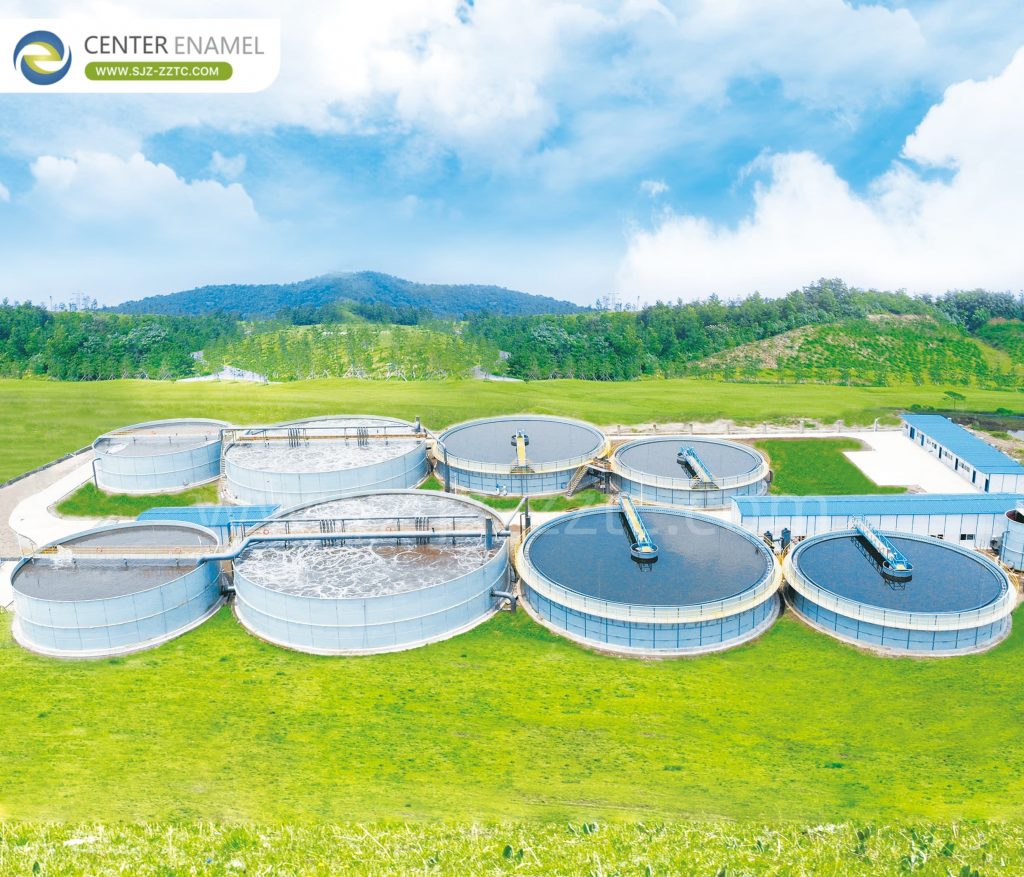
In parallel with these regional trends, wastewater from the new energy industry chain (lithium batteries, photovoltaics, hydrogen) has become the most notable emerging growth area due to its complex composition and high treatment difficulty, generating significant demand for customized solutions. The maturity of third-party treatment models in industrial parks continues to improve, driving consolidation in the professional operation market. The Middle East has strong demand for advanced treatment and reuse of industrial wastewater due to water scarcity; manufacturing transfer in Southeast Asia drives local industrial wastewater treatment facility construction demand, including textile wastewater treatment projects. These diverse regional drivers underscore the need for versatile and robust technologies like anaerobic digestion and GFS tanks that can adapt to varying conditions and requirements.
GFS Tanks: The Durable Core of Diverse Industrial Wastewater Treatment
Given the varied and often corrosive nature of industrial effluents, the selection of appropriate storage and treatment infrastructure is critical for long-term project success. Center Enamel has independently developed over 200 specialized enamel frit formulations and supporting patents, capable of customizing anti-corrosion enamel based on customer storage media, with adaptability comprehensively superior to concrete tanks. This capability is particularly vital for textile wastewater treatment projects, which often involve complex and corrosive effluents containing dyes, alkalis, and salts. Concrete tanks use a single material, suitable primarily for neutral clean water storage, and when storing corrosive materials such as livestock manure, palm oil mill effluent, chemical wastewater, food waste digestate, and high-salinity wastewater, additional anti-corrosion linings must be applied. These linings are prone to failure, preventing long-term stable operation and cannot adapt to alternating high and low concentration storage conditions.
The superior performance of GFS tanks makes them an ideal choice for the demanding environments of textile wastewater and other industrial applications. GFS tanks can be specifically formulated with specialized enamels resistant to strong acids, strong alkalis, high organic content, and high salinity, a feature that is essential for the robust treatment of dyehouse effluents. A single tank can switch between multiple wastewater and fermentation feedstock storage requirements, offering unparalleled operational flexibility. They are universally applicable across biogas anaerobic digestion, municipal wastewater, livestock farming, food processing, and industrial water treatment scenarios, eliminating the need to rebuild tanks for media changes, perfectly meeting the needs of diversified, multi-condition environmental protection projects. Consequently, for any textile wastewater treatment project seeking long-term reliability and adaptability, GFS tanks represent a cornerstone technology.
The UASB Process and Its Advantages for Industrial Effluents
At the heart of many successful textile wastewater treatment projects lies the UASB (Upflow Anaerobic Sludge Blanket) process, a highly effective biological treatment stage that leverages advanced anaerobic technologies. One of the key advantages of the UASB process is that no mechanical mixing equipment is required, with sludge suspension achieved through hydraulic action, resulting in very low overall energy consumption, which significantly reduces operational costs for textile mills. High-concentration anaerobic granular sludge can be cultivated, with high sludge concentration, strong activity, excellent settleability, low sludge washout, and low sludge yield, significantly reducing sludge disposal costs.
The integrated design of the UASB process combines reaction, sedimentation, and separation simultaneously, with small footprint and moderate capital investment, making it particularly suitable for industrial sites where space may be limited. The simple structure results in low failure rates and convenient maintenance, ensuring high uptime for continuous treatment operations. High volumetric loading rate with excellent organic pollutant degradation efficiency and good shock load resistance allows the system to handle the variable flow and concentration typical of textile production. Stable biogas production with high resource recovery value provides an additional revenue stream or energy source for the facility. The process is mature and widely adopted, with well-established construction, commissioning, and O&M systems, suitable for large-scale industrial wastewater treatment, making it a reliable and proven choice for textile wastewater treatment projects globally.
Environmental Toxicity of Textile Pollutants and Treatment Imperatives
Understanding the environmental toxicity of textile pollutants reinforces the critical need for effective treatment using anaerobic technologies and robust infrastructure. Textile wastewater primarily has color and organic pollution with some chemical toxicity, posing significant risks to receiving water bodies. High-color wastewater discharged to natural waters blocks sunlight penetration, inhibiting aquatic plant photosynthesis and disrupting self-purification capacity and aquatic food chains. Some dyes and intermediates have biological toxicity, and azo dye reductive cleavage can produce carcinogenic aromatic amines with chronic toxicity risks, highlighting the importance of complete degradation.
High-alkalinity desizing and scouring wastewater causes elevated pH in receiving waters, directly harming fish and disrupting aquatic acid-base balance. Surfactants and PVA sizing agents are water-soluble polymers difficult to naturally degrade, increasing water viscosity and affecting aquatic organism respiration. Moderate salinity with long-term discharge can cause soil salinization, and some dyes contain heavy metal complexes (copper, chromium), with chronic toxicity risks from environmental accumulation. Overall pollution is primarily ecological damage, and sustained discharge causes colored water pollution and ecological degradation. These environmental impacts necessitate comprehensive treatment trains, with anaerobic technologies playing a crucial role in breaking down recalcitrant organic compounds and reducing the overall toxicity of textile effluents before discharge or reuse.
Proven Global Impact: Case Studies in Industrial Wastewater Treatment
The effectiveness of these integrated solutions is best demonstrated through real-world applications. In Indonesia, a landmark palm oil biogas upgrade project commissioned in 2013 serves as a benchmark for biomass energy and environmental sustainability. The project utilized three GFS tanks as the core anaerobic digestion reactors specifically for high-organic palm oil production wastewater, where anaerobic digestion degrades pollutants and recovers valuable biogas. The tanks are adapted to local palm industry wastewater needs, and their convenient assembly and superior corrosion resistance make them ideally suited for Southeast Asia's hot, humid, and highly corrosive environment. This project exemplifies the maturity and reliability of GFS-based anaerobic treatment systems in challenging industrial sectors, mirroring the demands of textile wastewater treatment projects and demonstrating the applicability of these technologies across diverse industrial contexts.
Professional Installation and Construction Team for Global Projects
To ensure the successful deployment of complex treatment systems, a skilled and experienced installation and construction team is essential. The installation team has practical experience from over 10,000 GFS tank projects globally, strictly following standardized construction procedures, with full control over project mobilization, civil coordination, tank assembly, piping, and commissioning schedules and quality. This extensive experience directly benefits every textile wastewater treatment project, ensuring that timelines are met and quality standards are upheld.
The team is proficient in complete standardized installation processes for GFS tanks, dual-membrane gas storage covers, and various anaerobic reactors including USR, CSTR, and IC systems, as well as biogas desulfurization and piping systems. They are adaptable to large-scale farms, industrial parks, remote mountainous sites, coastal high-corrosion sites, and other complex locations, strictly implementing unified global safety construction standards. For large overseas cross-border projects, the team can be deployed as complete units for on-site construction, technical training, and local worker practical instruction, ensuring full control over construction details, air-tightness testing, and corrosion protection. This standardized delivery capability ensures timely and stable commissioning of global environmental projects, including textile wastewater treatment projects, through rigorous quality control and technical expertise.
Extensive Global Benchmark Project Cases and One-Stop Solutions
Center Enamel's extensive project portfolio demonstrates its capability to deliver comprehensive solutions across diverse industries and regions. The project portfolio covers over 100 countries across Southeast Asia, Africa, Europe, and the Americas, with more than 30,000 mature projects completed to date. This wealth of experience has accumulated complete industry solutions across palm oil, livestock, municipal, brewing, and food waste biogas sectors, enabling rapid matching of customized solutions for different regional climates, water quality, and regulations. For any textile wastewater treatment project, this global footprint ensures that the company can draw upon proven methodologies and adapt them to local conditions, providing a reliable and efficient path to compliance and sustainability.
Frequently Asked Questions (FAQs)
1. Why are anaerobic technologies preferred for textile wastewater treatment?
Anaerobic technologies like the UASB process are preferred because they efficiently break down high-strength organic pollutants and complex dye molecules found in textile effluents. They require less energy than aerobic systems, produce valuable biogas, generate less sludge, and improve the biodegradability of recalcitrant compounds, making subsequent treatment more effective.
2. What makes GFS tanks suitable for corrosive industrial wastewater?
Glass-Fused-to-Steel (GFS) tanks feature a specialized enamel coating that is highly resistant to the strong acids, alkalis, salts, and organic compounds present in industrial wastewater. This inert, durable surface prevents corrosion and maintains structural integrity, offering a long service life and low maintenance compared to concrete or carbon steel tanks.
3. How does the UASB process contribute to environmental sustainability?
The UASB process contributes to sustainability by reducing the organic pollutant load in wastewater, thus preventing ecological damage to receiving waters. It also recovers biogas (methane) as a renewable energy source, which can replace fossil fuels, and produces significantly less sludge than aerobic treatments, thereby lowering disposal costs and environmental footprint.