
Advanced GFS Tanks and Anaerobic Technologies for Textile Wastewater Treatment Projects
The global textile industry is under unprecedented pressure to modernize its wastewater treatment infrastructure. Textile wastewater treatment projects must now navigate a complex landscape of escalating environmental regulations, rising energy costs, and increasing demands for resource recovery. Center Enamel addresses these challenges through its integrated approach, combining superior GFS tank corrosion resistance with proven anaerobic technologies to deliver durable, high-performance solutions that transform textile effluent from an environmental liability into a renewable energy asset.
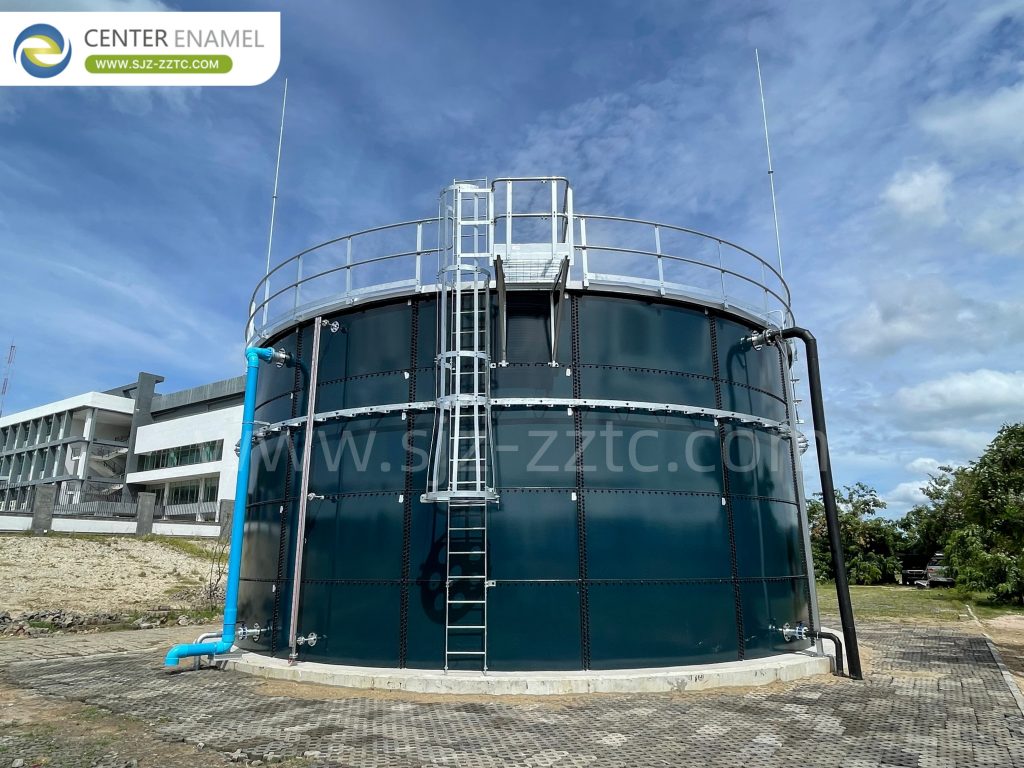
Global Policy Framework Drives Demand for Advanced Industrial Wastewater Treatment
Global industrial wastewater treatment policies are escalating from "compliance discharge" to mandatory "resource recovery" and "zero liquid discharge." The EU, through its Circular Economy Action Plan, requires member states to increase industrial wastewater reuse rates and extends carbon footprint accounting to the full life cycle of wastewater treatment. China continuously updates and tightens industrial water pollutant discharge standards, with increasingly stringent limits on total nitrogen, total phosphorus, and characteristic pollutants for industries such as chemicals, pharmaceuticals, and printing and dyeing. Some water-scarce regions and highly polluting industries are mandated to adopt zero or near-zero liquid discharge technologies. Germany has established a differentiated pretreatment technical standard system by industry, requiring industrial wastewater to meet specific quality requirements before discharge into municipal wastewater treatment plants, implementing strict source control.
These converging regulatory trends directly impact textile wastewater treatment projects, where complex effluent streams containing dyes, sizing agents, and inorganic salts demand robust treatment trains. The policy push toward resource recovery aligns perfectly with anaerobic technologies, which convert organic pollutants into biogas-a renewable energy source that offsets operational costs while reducing carbon emissions. Center Enamel's GFS tanks provide the durable infrastructure needed to meet these stringent requirements over decades of service.
GFS Tanks Deliver Superior Corrosion Resistance for Demanding Textile Effluents
Center Enamel's independently developed double-sided double-layer enameling technology is the industry's leading coating anti-corrosion technology, with corrosion resistance completely surpassing concrete tanks. Concrete tank interiors are riddled with pores, allowing wastewater and acid/alkaline media to easily penetrate and corrode the structural layer. Long-term use leads to irreversible problems such as internal wall spalling, water seepage, and rebar corrosion, which are difficult to repair and cannot be fundamentally resolved. These issues are particularly acute in textile wastewater treatment projects, where aggressive chemicals and high temperatures accelerate concrete degradation.
GFS tanks feature high-temperature enameling on both the interior and exterior surfaces of steel panels, with a dense, non-porous enamel finish that completely blocks corrosive liquids and biogas permeation. The enamel layer has extremely strong chemical stability, resisting acids, alkalis, salts, and microbial corrosion. Concrete tanks will develop extensive corrosion and leakage after 5-8 years of use, while GFS tank anti-corrosion service life can exceed 30 years, with no need for frequent internal lining repairs throughout the service life. This significantly reduces long-term anti-corrosion maintenance investment and fundamentally eliminates environmental risks of medium leakage contaminating sites and groundwater. Compared to traditional concrete and FRP tanks, GFS tank coatings have no risk of peeling or blistering, and are adaptable to highly corrosive conditions such as palm oil mill effluent, livestock manure, and chemical high-salinity wastewater, with outstanding long-term comprehensive cost advantages.
For textile wastewater characterized by high alkalinity from mercerizing processes and variable pH from dyeing operations, this robust containment infrastructure is essential. The non-porous enamel surface also prevents biofilm accumulation and simplifies cleaning, further reducing operational downtime and maintenance costs over the project lifecycle.
Comprehensive UASB Supporting Equipment Ensures Process Reliability
Core equipment includes the GFS anaerobic reactor tank, with the internal three-phase separator being the key component for gas-liquid-solid separation and sludge retention. The bottom high-precision distribution system (distribution pipes, distributors, pressure regulators) ensures uniform influent distribution, preventing short-circuiting and sludge accumulation. Supporting equipment includes influent lift pumps, equalization tanks, and flow meters to stabilize influent conditions. The top biogas collection system includes gas collection hoods, gas piping, desulfurization/dehydration equipment, and gas storage. Online temperature, pH, and COD monitoring instruments are integrated. Bottom sludge discharge pipes and pumps periodically remove excess sludge. The complete equipment package is compact, with no rotating wear parts, low equipment loss, and high operational stability.
This integrated equipment suite is specifically designed for textile wastewater treatment projects, where flow and organic loading can fluctuate dramatically between batch dyeing processes. The robust GFS tank construction provides the structural integrity needed to accommodate these variations while maintaining the optimal hydraulic conditions for anaerobic digestion. The online monitoring instruments enable real-time process optimization, ensuring consistent treatment performance even as influent characteristics change.
Standardized Treatment Solutions for Textile Wastewater Challenges
Uses a combined treatment train of "pretreatment + anaerobic digestion + aerobic treatment + advanced decolorization," primarily addressing high color, high alkalinity, and recalcitrant dye pollution. Pretreatment uses screens and equalization tanks to balance quality and flow, with acid addition to neutralize pH to neutral. Coagulation/sedimentation and DAF remove suspended solids, some dyes, and colloidal impurities-reducing color. The main stage uses UASB/IC anaerobic processes for high-concentration organic degradation-the anaerobic environment can break down some dye molecular structures to improve biodegradability. Subsequent A/O, contact oxidation, or SBR aerobic processes deeply degrade residual organics and remove nitrogen/phosphorus. Final advanced decolorization uses coagulation decolorization, chemical oxidation (ozone, Fenton), or activated carbon adsorption to ensure color compliance. Membrane treatment is added where water reuse is required. Anaerobic digesters use Center Enamel GFS tanks resistant to high alkalinity and dye auxiliaries. High-temperature wastewater requires heat exchange cooling to control biological system temperatures.
This multi-stage approach exemplifies how Center Enamel's GFS tanks and anaerobic technologies integrate into comprehensive textile wastewater treatment projects. The anaerobic stage provides the critical first defense against high organic loads while generating biogas, significantly reducing the energy demand of downstream aerobic treatment. The corrosion resistance of GFS tanks ensures the anaerobic reactor maintains peak performance despite the challenging chemical environment, providing a stable foundation for the entire treatment train.
Indonesia Palm Oil Biogas Upgrade Project
Commissioned in 2013 as the core anaerobic digestion reactor for the POME treatment station, with 3 GFS tanks in two sizes: 17.58 m dia. × 8.4 m height / 16.82 m dia. × 7.2 m height. The tanks serve as the core anaerobic reaction equipment specifically for high-organic palm oil production wastewater-anaerobic digestion degrades pollutants and recovers biogas. Tanks are adapted to local palm industry wastewater needs. GFS tank assembly is convenient with corrosion resistance for Southeast Asia's hot humid high-corrosion environment-a mature biomass energy environmental benchmark project.
The success of this project, spanning over a decade of continuous operation, demonstrates the durability and effectiveness of GFS tanks and anaerobic technologies in tropical, high-corrosion environments similar to those found in many textile manufacturing regions. The project exemplifies how Center Enamel's solutions provide reliable, long-term performance while enabling energy recovery from high-strength organic wastewater-a model directly transferable to textile wastewater treatment projects worldwide.
Center Enamel Marketing Team Provides Global Expertise
The marketing team brings together environmental industry multi-skilled professionals and multilingual foreign trade specialists, with deep expertise in global biogas, wastewater treatment, and biomass new energy markets-accumulating extensive practical project experience in Southeast Asia, Africa, Europe, and the Americas. This global perspective is invaluable for textile wastewater treatment projects, which often involve international stakeholders and must comply with diverse regulatory frameworks.
The team is proficient in various countries' wastewater discharge regulations, biogas subsidy policies, and carbon trading rules-providing one-stop preliminary site survey, solution planning, and investment return analysis consulting services. With multilingual capabilities (English, French, Spanish, Arabic), the team effectively communicates with clients worldwide-precisely matching regional industrial resources, project budgets, and environmental requirements-customizing high-cost-performance GFS tanks and anaerobic reactor solutions based on client production capacity, treatment targets, and gas production expectations. Leveraging extensive overseas project experience, the team proactively helps clients avoid risks in overseas approvals, equipment import, and construction implementation-building a globally adaptable integrated environmental equipment business service system.
Comprehensive International Authoritative Certifications Ensure Quality and Compliance
Center Enamel holds CE, NSF, WRAS, ISO9001, BSCI, ASME, and other global certifications-fully clearing EU, North American, Southeast Asian, and African project tendering barriers-providing critical hard credential advantages for large overseas project bidding. These certifications are particularly important for textile wastewater treatment projects, which increasingly require internationally recognized quality assurance to satisfy brand owner sustainability requirements and export market regulations.
Frequently Asked Questions
1. Why are GFS tanks preferred over concrete for textile wastewater treatment projects?
GFS tanks provide superior corrosion resistance through a non-porous glass enamel coating fused at 860°C, preventing chemical attack from aggressive textile effluents. Unlike concrete tanks that corrode and leak within 5-8 years, GFS tanks maintain integrity for over 30 years with no internal lining repairs, significantly reducing long-term costs and environmental risks.
2. How do anaerobic technologies benefit textile wastewater treatment?
Anaerobic technologies like the UASB process reduce COD by 50-65%, break down recalcitrant dye structures to improve biodegradability, and produce biogas for energy recovery. This lowers operational costs, reduces sludge production, and helps facilities meet tightening discharge standards while generating renewable energy.
3. What certifications should textile wastewater treatment equipment have for international projects?
For global textile wastewater treatment projects, equipment should hold CE, NSF, ISO9001, and ASME certifications to ensure quality and facilitate international tendering. Center Enamel's comprehensive certifications clear barriers in EU, North American, Southeast Asian, and African markets, providing essential credentials for large-scale projects.