
Leading Biogas Project Contractor Delivers Anaerobic Technologies for Textile Wastewater Treatment
The industrial wastewater treatment market continues to evolve, creating new opportunities for experienced project contractors. The competitive landscape shows divergence, with leading companies building integrated service capabilities through technical integration and capital operations, and industry concentration gradually increasing. Chinese companies continue to consolidate their advantages in mid-tier equipment exports, while international giants target high-end customers and complex industrial wastewater markets. Local players occupy the mid-to-low-end and industrial park centralized treatment markets with service responsiveness and cost advantages.
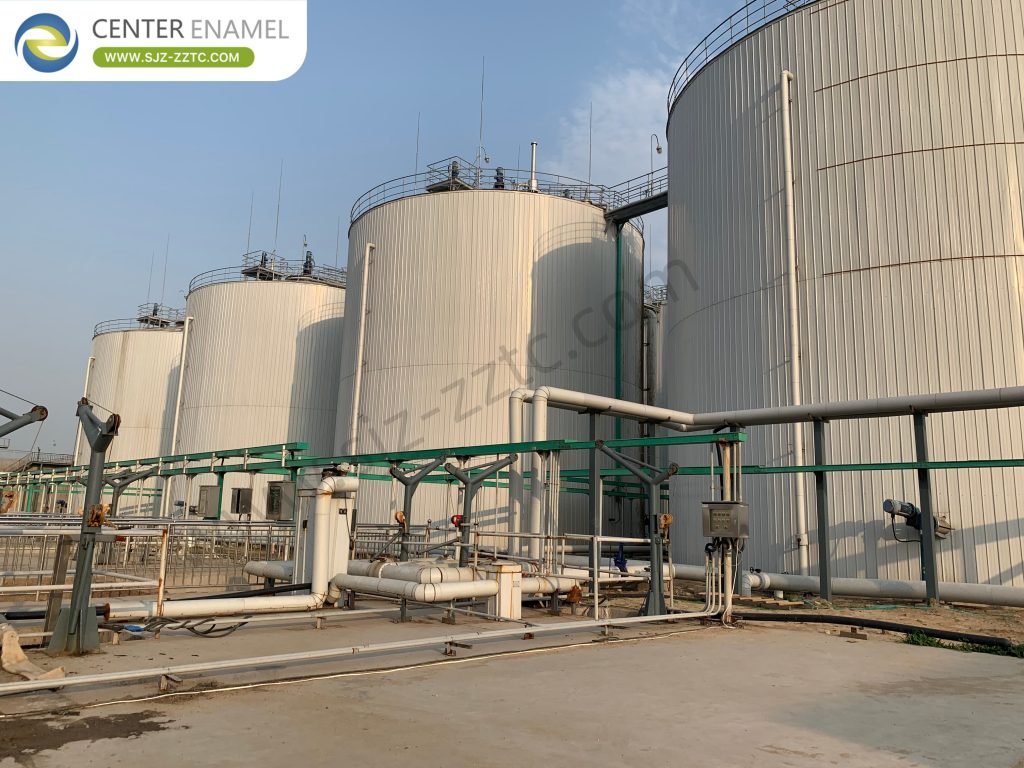
For any biogas project contractor, understanding these market dynamics is essential for positioning service offerings effectively. In the anaerobic process segment, UASB, EGSB, and IC anaerobic reactors, with advantages of high loading rates, small footprints, and stable operation, are widely used in high-concentration organic wastewater pretreatment in food processing, pharmaceutical fermentation, alcohol brewing, chemical, and other industries. These reactors use steel tank shells, and their corrosion resistance and gas-tightness directly determine long-term operational stability. The application value of glass-fused-to-steel tanks in such scenarios is increasingly prominent, making GFS tanks the preferred choice for biogas and anaerobic treatment projects worldwide.
UASB Process Applicability Across Diverse Industrial Sectors
The UASB process demonstrates remarkable versatility across a wide range of industrial applications. It is suitable for soluble medium-to-high concentration organic wastewater, covering light industrial wastewater from brewing, sugar refining, starch, papermaking, food processing, printing and dyeing, and related sectors. The technology is particularly well-suited for wastewater where organics are predominantly soluble with low suspended solids content, though not suitable for high-solids, high-viscosity wastewater.
As a biogas project contractor, selecting the appropriate anaerobic technologies for each application is critical. The UASB process can be used alone as the primary treatment process or as a pretreatment for high-strength wastewater to reduce downstream aerobic load. It is also suitable for municipal wastewater anaerobic pretreatment and low-solids livestock wastewater treatment. With its low cost and stable operation advantages, it is suitable for long-term continuous, large-flow industrial wastewater treatment projects, making it an ideal choice for textile wastewater treatment and other demanding industrial applications.
Operation and Maintenance Cost Analysis for Treatment Systems
Understanding operational economics is essential for any biogas project contractor evaluating treatment solutions. O&M costs are moderate to high with generally moderate overall economics. Pretreatment requires pH adjustment chemicals, coagulants, and decolorizing agents, contributing to moderate to high chemical costs. The anaerobic plus aerobic process combination is mature and stable, with controllable equipment O&M costs that provide reliable long-term performance.
However, advanced decolorization steps using ozone generators and Fenton oxidation present high energy consumption and chemical costs, representing a major cost driver. Membrane water reuse systems require high capital investment and frequent membrane replacement, resulting in high maintenance costs. Dye and sizing sludge production is substantial, with significant disposal costs. High-temperature wastewater requires heat exchange cooling, though heat recovery can offset some energy costs. Frequent water quality fluctuations necessitate frequent parameter adjustments, requiring moderate labor requirements. While water reuse can offset some costs, overall resource recovery benefits remain limited. These cost considerations highlight the importance of selecting efficient anaerobic technologies that minimize downstream treatment burdens.
Proven Global Implementation of Anaerobic Technologies with GFS Tanks
The practical application of anaerobic technologies and robust tank infrastructure is well-demonstrated through successful global projects. One notable example is the Indonesia Palm Oil Biogas Upgrade Project, commissioned in 2013 as the core anaerobic digestion reactor for the POME treatment station. This installation comprises three GFS tanks in two sizes: 17.58 meters diameter by 8.4 meters height, and 16.82 meters diameter by 7.2 meters height. The tanks serve as the core anaerobic reaction equipment specifically for high-organic palm oil production wastewater, where anaerobic digestion degrades pollutants and recovers biogas.
As a biogas project contractor with extensive global experience, Center Enamel has demonstrated that GFS tanks are ideally adapted to local palm industry wastewater needs. The tanks offer convenient assembly with corrosion resistance suitable for Southeast Asia's hot, humid, high-corrosion environment. This project represents a mature biomass energy environmental benchmark that validates the effectiveness of integrated anaerobic technologies in challenging industrial contexts, showcasing how the UASB process and GFS tanks work together to deliver sustainable treatment solutions for textile wastewater treatment and other applications.
Overseas Installation Coverage and Global Delivery Capability
Delivering successful biogas projects requires robust global service infrastructure. Center Enamel is the pioneer of Chinese GFS equipment exports, with installation service coverage across over 100 countries and regions, possessing full delivery capability across climates, regulations, and geographies. Overseas coverage includes Southeast Asia, Africa, Europe and the Americas, the Middle East, and Latin America, with adaptability to tropical rainy high-salt spray, high-altitude mountainous, Nordic severe cold, and high-standard European and American facility conditions.
For any biogas project contractor, this global reach ensures reliable project execution regardless of location. The company uses a dual-service model of "own cross-border construction teams + overseas local agent coordination," providing one-stop services including on-site survey, on-site installation, process commissioning, and operator training for clients in both developed countries and remote developing regions. Complete coverage encompasses biogas engineering, municipal wastewater, industrial wastewater, livestock manure, drinking water storage, and other global mainstream environmental engineering projects, possessing the full delivery capability to undertake large-scale tank farm projects in any country worldwide.
After-Sales and Technical Support Team Ensures Long-Term Performance
Long-term operational success depends on robust after-sales support. The after-sales team adheres to the service principles of rapid response, professional efficiency, and full-cycle support, providing 24/7 full-lifecycle O&M support to global clients. Standard remote services include fault diagnosis, process parameter adjustment, and tank anti-corrosion maintenance guidance. For domestic and long-distance overseas clients, overseas technical service personnel can be dispatched for on-site inspection, annual inspection, and equipment refurbishment as needed.
The team also maintains long-term client feedback tracking mechanisms, regularly collecting tank and anaerobic equipment operational data to continuously optimize product structure and support processes. Supporting external technical expert teams provide specialized support for anaerobic process commissioning, biogas upgrading O&M, and wastewater upgrade and retrofit projects, ensuring long-term stable operation of domestic and overseas projects, continuously improving global client satisfaction and repurchase rates. This comprehensive support infrastructure reinforces the value proposition of selecting an experienced biogas project contractor.
Aluminum Geodesic Dome Roof for Superior Tank Coverage
Tank roofing systems play a vital role in biogas collection, odor control, and overall system integrity. The Aluminum Geodesic Dome Roof independently developed by Center Enamel is manufactured using high-strength aluminum alloy plates through integral stamping. It features a triangular grid spherical self-supporting structure, enabling large-span full coverage without internal support columns. Made of aluminum alloy, the roof offers excellent weather resistance and corrosion resistance, capable of long-term protection against acid rain, salt spray, and UV radiation, suitable for various extreme outdoor climate conditions.
The structural design complies with international AWWA D108 standards, with aluminum plate thickness, rib cross-sections, and joint connections all verified by finite element stress analysis, ensuring wind and snow load resistance that meets building code requirements across different global regions. The roof weight is only one-third to one-half of a steel roof with the same span, significantly reducing the load on the tank top and allowing direct installation without tank wall reinforcement.
The roof provides superior overall sealing performance, with double sealing between panels using specialized sealant strips and mechanical interlocking, enabling both airtight gas storage and enclosed odor control. For any biogas project contractor, this technology is essential for biogas collection and storage, wastewater tank odor control, and drinking water contamination prevention. The support-column-free design does not interfere with the installation and operation of internal equipment such as mixers and water distributors, while the aluminum material does not support microbial growth and requires no anti-corrosion maintenance over long-term use, resulting in low total life-cycle costs.
Frequently Asked Questions
Q: What makes Center Enamel a leading biogas project contractor?
Center Enamel combines 30,000+ global projects, installation coverage across 100+ countries, and comprehensive certifications including CE, NSF, and ISO9001. With in-house construction teams and local agent networks, the company delivers complete biogas projects from design through commissioning.
Q: How do anaerobic technologies benefit textile wastewater treatment?
Anaerobic technologies like the UASB process effectively break down complex dye molecules, reduce COD loads by over 90%, and generate biogas as a renewable energy source. This approach addresses the high color, high alkalinity, and recalcitrant pollutant challenges typical of textile effluent.
Q: What after-sales support does a biogas project contractor provide?
Comprehensive after-sales support includes 24/7 remote fault diagnosis, process parameter adjustment guidance, on-site inspection and refurbishment services, and long-term operational data monitoring to optimize system performance throughout the project lifecycle.