
How Center Enamel Leverages Anaerobic Technologies to Treat Brewery Wastewater
Brewing generates large volumes of strong organic effluent that, if mishandled, erodes profit margins and environmental compliance. At Center Enamel, we combine decades of experience in glass-fused-to-steel (GFS) tank manufacturing with a full portfolio of Anaerobic Technologies to turn brewery effluent into a treatable, resource-recovering stream. At the core of our modern solution sits the IC Process-a compact, high-load internal circulation reactor engineered precisely for the demands of alcohol and beverage production.
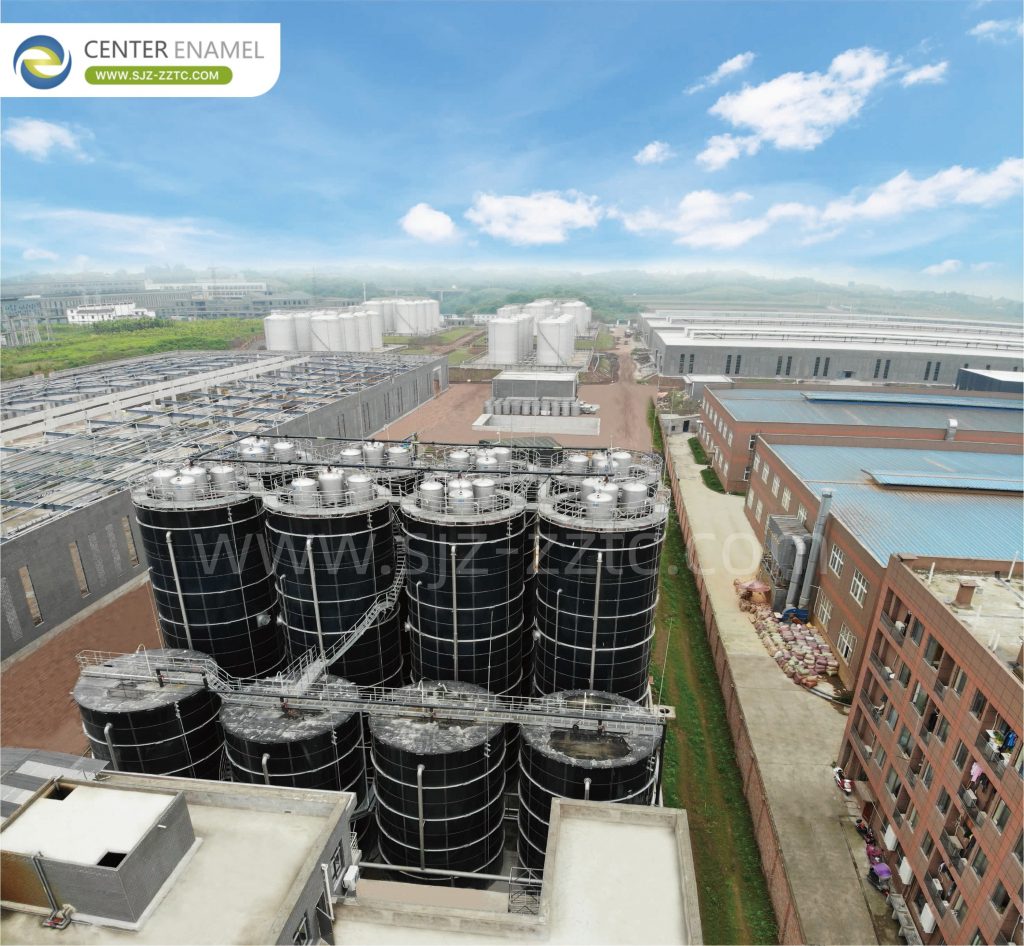
The Brewing Wastewater Treatment Landscape
Across the global water treatment market, the competitive landscape is diverging: international engineering groups target high-end, complex industrial effluent, while regional players compete on responsiveness and cost. Chinese manufacturers, in particular, have consolidated a strong position in mid-tier equipment exports, and industry concentration continues to rise. Within this context, Anaerobic Technologies have become the default pretreatment choice for high-concentration organic streams. UASB, EGSB, and especially the IC Process are favored for their high organic loading rates, small footprint, and operational stability-now widely deployed in food processing, pharmaceutical fermentation, alcohol brewing, and chemical plants. Because these reactors rely on steel tank shells, the corrosion resistance and gas-tightness of the shell directly determine long-term performance. This is precisely why GFS reactors are displacing concrete and epoxy-lined alternatives in modern brewery projects.
Where Brewery Wastewater Comes From
Before selecting a treatment train, it is essential to understand what is actually flowing through the discharge. Brewery wastewater is a high-strength organic stream generated across beer, liquor, and wine production-and it is one of the largest wastewater categories in the food industry. Pollution concentrates in raw material soaking and washing, saccharification and fermentation, distillation and purification, and filling and packaging. The major waste streams include still bottoms, fermentation yellow water, spent mash, and grain soaking liquor, supplemented by equipment and pipeline washing, floor cleaning, line maintenance, and cooling water. Discharge is highly intermittent and seasonal: volumes surge during peak production and drop sharply in the off-season. Large breweries typically operate centralized collection systems, while small and medium facilities suffer from dispersed collection and uneven, often uncontrolled discharge concentrated around the brewhouse floor. This variability is exactly why a robust, shock-load-tolerant anaerobic system like the IC Process outperforms simpler UASB designs in brewery settings.
Inside the IC Process: How the Reactor Works
So what is the IC Process, and why has it become the workhorse for brewery effluent? IC stands for Internal Circulation Anaerobic Reactor-the third-generation high-efficiency anaerobic technology built upon the UASB concept. Its defining innovation is a built-in gas-lift internal circulation system that recycles wastewater autonomously, without external return pumps. The reactor is divided into two zones: a lower main reaction zone where organic matter is intensely degraded, and an upper polishing zone that polishes the effluent before discharge. Biogas captured in the lower separator drives an airlift effect, creating hydraulic internal circulation that sharply increases upflow velocity and improves contact between sludge and wastewater. The result is an extremely compact reactor purpose-built for high-concentration, high-flow industrial organic wastewater-delivering high efficiency, energy savings, and minimal footprint. For breweries facing tightening effluent standards and volatile production schedules, the IC Process provides both the loading capacity and the stability that older anaerobic designs cannot match.
Why Anaerobic Technologies Fit Brewery Effluent
The pairing of Anaerobic Technologies with brewery wastewater is not coincidental. Brewery effluent is rich in carbohydrates, ethanol, and proteins-ideal substrates for methanogenic consortia. Anaerobic treatment removes 80–90% of COD at a fraction of the aeration cost of aerobic systems, and the captured biogas can be recycled into boiler fuel or power generation, offsetting brewery energy bills. The IC Process amplifies these benefits: its internal circulation handles fluctuating loads from cleaning-in-place cycles and seasonal production swings, while its sludge bed retains high biomass concentrations, reducing required reactor volume. Center Enamel packages this biological core inside corrosion-resistant GFS tanks, ensuring that the reactor shell resists organic acids, sulfides, and humid biogas environments for decades-protecting both the investment and the biogas recovery.
Real-World Performance: Center Enamel Project Cases
The strongest evidence for how Anaerobic Technologies perform in practice comes from completed field projects. The table below summarizes representative Center Enamel installations, including the Pakistan food-waste and Napier grass biogas demonstration that validates our CSTR and anaerobic reactor delivery model.
| Project | Location | Core Anaerobic Process | Feedstock / Effluent | Key Performance Result |
| Food Waste + Napier Grass Biogas Demo | Pakistan | CSTR (mixed anaerobic digestion) | Food waste + Napier grass | Stable daily biogas production of 100 m³, official local demonstration project |
| High-Strength Industrial Effluent Reactor | Global (EPC) | IC Process | Alcohol / distillery / brewery wastewater | High COD loading, compact footprint, biogas recovery |
| POME Treatment Train | Southeast Asia | EGSB / UASB + polishing | Palm oil mill effluent | Acid- and sulfide-resistant GFS containment, stable long-term operation |
| Livestock Manure Biogas Plant | Asia-Pacific | CSTR + mechanical mixing | Pig / dairy manure | Efficient organic degradation, continuous gas supply |
The Pakistan project, where Center Enamel serves as general contractor, pairs a CSTR core with a mechanical mixing system that ensures intimate contact between feedstock and anaerobic microbes, delivering stable daily biogas output of 100 m³. After successful pilot operation, multiple large-scale Napier grass biogas projects are planned locally, proving that our anaerobic solutions scale from demonstration to commercial deployment.
Engineered Containment: GFS Tanks and Aluminum Dome Roofs
A top-tier IC Process is only as reliable as the vessel that contains it. Center Enamel manufactures glass-fused-to-steel reactors whose dual-glass coating bonds to steel at over 800°C, delivering corrosion resistance unmatched by paint or epoxy-critical in acidic, sulfide-laden brewery digesters. On top of each anaerobic reactor, we install our independently developed Aluminum Geodesic Dome Roof: high-strength aluminum alloy plates are integrally stamped into a triangular-grid, self-supporting spherical structure that spans the full tank diameter without internal columns.
| Feature | Aluminum Geodesic Dome Roof Benefit |
| Structure | Triangular grid spherical self-supporting, no interior columns |
| Weight | Only 1/3 to 1/2 of an equivalent steel roof, no tank wall reinforcement needed |
| Standards | Complies with AWWA D108; FEM-validated for wind and snow loads |
| Sealing | Double-sealed panel joints with specialized gaskets + mechanical interlock |
| Materials | Aluminum alloy resists acid rain, salt spray, UV, and microbial growth |
| Lifecycle cost | No anti-corrosion maintenance required over decades of service |
The dome's double sealing supports both airtight biogas storage and enclosed odor control, while its column-free interior does not interfere with mixers, water distributors, or three-phase separators inside the IC Process reactor-delivering the gas capture and odor compliance that modern breweries require.
Center Enamel: Your EPC Partner for Anaerobic Projects
Delivering a successful brewery anaerobic plant demands more than equipment-it demands integrated engineering, fabrication, installation, and after-sales capability. Center Enamel has built a full-chain professional team spanning R&D, design, marketing, installation, and after-sales. Our R&D group is led by national-level materials technology experts specializing in enamel frit and tank anti-corrosion, reinforced by retained senior environmental and structural engineers focused on anti-corrosion formulations, specialty corrosion-resistant tanks, and integrated anaerobic supporting equipment. Proprietary laboratories, paired with long-term university collaboration, conduct year-round durability pilots and long-cycle corrosion simulation-tailoring enamel formulations for high-salinity wastewater, strong acid/alkali POME, and high-organic livestock manure, and feeding a continuous pipeline of invention and utility patents.
On site, our domestically and internationally certified construction teams conduct regular training on GFS tank installation and overseas construction codes. Regional crews deploy simultaneously for large tank farms, while cross-border installation teams meet country-specific standards-ensuring uninterrupted delivery from remote African sites to high-standard European and American facilities. From process design to reactor commissioning, Center Enamel stands behind every brewery that chooses our Anaerobic Technologies.
Frequently Asked Questions
Q1: What is the difference between the IC Process and a UASB reactor?
The IC Process adds a built-in gas-lift internal circulation loop that recycles effluent without external pumps, raising upflow velocity and sludge-wastewater contact. Compared with UASB, it handles higher organic loads, fluctuating brewery discharges, and seasonal production swings in a smaller footprint.
Q2: Can anaerobic technology treat brewery wastewater to discharge standard?
Anaerobic Technologies remove 80–90% of brewery COD and recover biogas, but a downstream aerobic polishing stage is usually added to meet strict nitrogen and final COD limits. Center Enamel designs the complete pretreatment plus polishing train as a single EPC package.
Q3: Why use GFS tanks for anaerobic reactors instead of concrete?
Glass-fused-to-steel shells resist the organic acids, sulfides, and humid biogas inside digesters without recurring coating maintenance. They install faster, tolerate ground movement, and pair directly with our aluminum geodesic dome for airtight biogas capture and odor control.
Ready to upgrade your brewery effluent treatment? Send us your wastewater characteristics and discharge limits-our process engineers will size the ideal IC Process or anaerobic configuration and return a tailored proposal within 48 hours.
Talk to our EPC specialists today and discover how Center Enamel turns your brewery discharge into recoverable biogas, compliant water, and a lower total cost of ownership.