
How Anaerobic Technologies Are Transforming Municipal Wastewater Treatment
With growing urban populations and increasingly demanding environmental requirements, efficient wastewater management has become essential for sustainable urban development. Municipal wastewater contains organic pollutants, nitrogen, phosphorus, suspended solids, and microorganisms that require effective treatment before discharge or reuse.
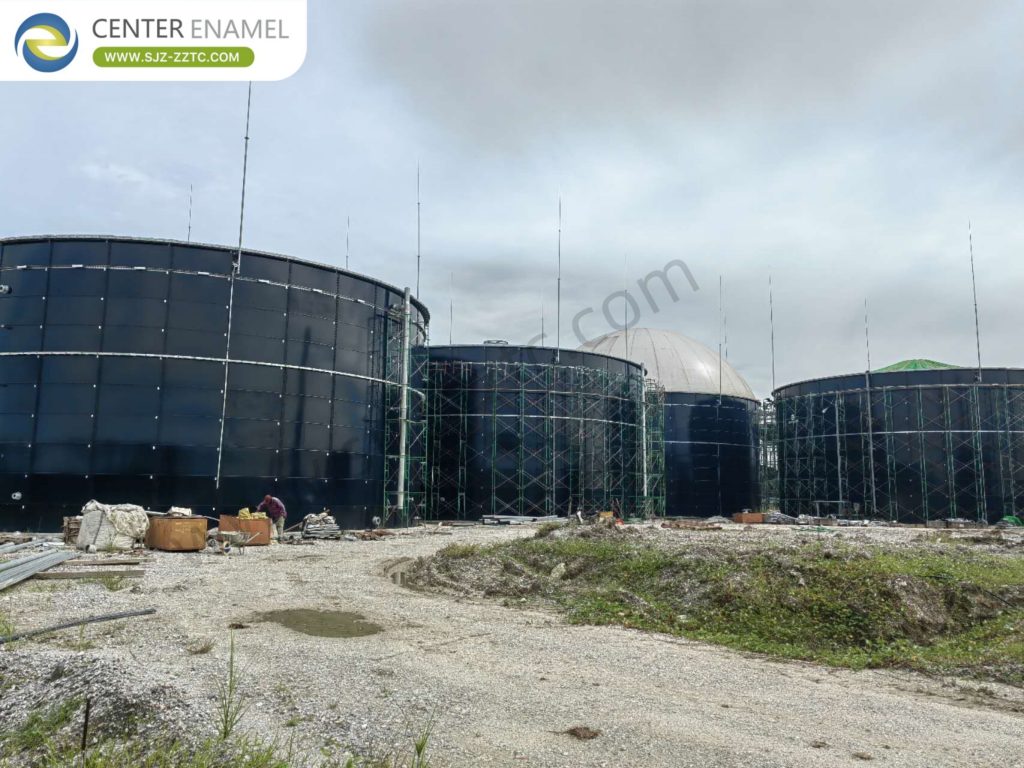
Modern Municipal Wastewater Treatment is moving beyond conventional pollution control toward resource recovery, water recycling, and lower-carbon operation. Among the available treatment approaches, Anaerobic Technologies play an important role in reducing organic pollution while recovering renewable energy from biodegradable waste.
As a professional provider of environmental equipment and engineering solutions, Center Enamel integrates advanced anaerobic processes with high-performance Glass-Fused-to-Steel (GFS) tanks, delivering reliable equipment and customized solutions for wastewater and biogas projects worldwide.
Understanding Municipal Wastewater and Its Characteristics
Municipal wastewater is collected through urban drainage and sewer networks. Its primary sources include residential sewage, commercial wastewater, public facilities, and limited amounts of pretreated industrial wastewater and urban stormwater overflow.
Different sources contribute different pollutants, making wastewater composition an important consideration when selecting treatment technologies.
| Wastewater Source | Typical Examples | Main Characteristics |
| Residential wastewater | Bathing, laundry, kitchens, toilets | Organic matter, nitrogen, phosphorus, suspended solids |
| Commercial wastewater | Hotels, restaurants, shopping malls | Organic pollutants, grease, detergents |
| Public facilities | Schools, offices, public buildings | Domestic sewage and biodegradable pollutants |
| Urban runoff | Road washing, initial stormwater runoff | Suspended solids and variable pollutant concentrations |
Municipal wastewater is generally generated continuously throughout the day, with variations in flow and pollutant concentrations depending on population density, commercial activities, and seasonal conditions.
Understanding these characteristics helps engineers determine the appropriate combination of biological treatment, solid separation, and advanced purification processes.
How Anaerobic Technologies Improve Wastewater Treatment
Anaerobic treatment is a biological process in which microorganisms break down biodegradable organic matter in an oxygen-free environment. Unlike conventional aerobic treatment, anaerobic systems do not require continuous aeration for the biological degradation stage.
During anaerobic digestion, complex organic compounds are progressively converted into simpler substances, ultimately producing biogas containing methane and carbon dioxide.
This process offers several advantages for wastewater treatment projects:
Organic Pollutant Reduction: Anaerobic microorganisms break down biodegradable organic matter, reducing the organic load entering subsequent treatment stages.
Biogas Recovery: Methane-rich biogas can be collected and utilized as a renewable energy source.
Reduced Aeration Demand: The anaerobic stage operates without mechanical aeration, helping reduce energy requirements associated with oxygen supply.
Resource Recovery: Organic pollutants are transformed into useful energy rather than being treated solely as waste.
Flexible Engineering Applications: Different reactor configurations can be selected according to wastewater characteristics, treatment capacity, and project requirements.
Common anaerobic technologies include UASB (Upflow Anaerobic Sludge Blanket), CSTR (Continuous Stirred-Tank Reactor), and USR (Upflow Solid Reactor). Each process has different operating characteristics and application requirements.
For municipal wastewater applications, anaerobic treatment can serve as an important stage in an integrated treatment system, particularly when combined with appropriate downstream biological treatment.
A²O Process for Nitrogen and Phosphorus Removal
Although anaerobic digestion effectively reduces biodegradable organic matter, municipal wastewater often requires additional treatment to control nitrogen, phosphorus, and residual organic pollutants.
The A²O process, also known as the Anaerobic-Anoxic-Oxic process, is a widely established biological nutrient removal technology. It combines three reaction zones to support different microbial activities and achieve simultaneous nitrogen and phosphorus removal.
| Treatment Zone | Main Biological Function | Treatment Objective |
| Anaerobic Zone | Phosphorus release and organic matter hydrolysis/acidification | Creates conditions for biological phosphorus removal |
| Anoxic Zone | Denitrification | Converts nitrate into nitrogen gas |
| Oxic Zone | Organic degradation, nitrification, and phosphorus uptake | Removes residual organics and supports nitrogen and phosphorus removal |
The three zones work together through controlled dissolved oxygen conditions and biological reactions. The anaerobic zone supports phosphorus release, the anoxic zone facilitates denitrification, and the oxic zone promotes ammonia oxidation and excess phosphorus uptake.
For Municipal Wastewater Treatment facilities seeking improved effluent quality, A²O can be integrated with other treatment technologies according to influent characteristics and discharge requirements.
Sweden Organic Waste Biogas Project: A Practical Application
Center Enamel's international project experience demonstrates how anaerobic processes and GFS tank technology can support organic waste treatment and renewable energy recovery.
In 2024, Center Enamel supplied GFS tanks for an organic waste biogas project in Sweden. The project adopted the UASB anaerobic process, with GFS tanks serving as the main reaction equipment.
The tanks were designed to accommodate the project's operating conditions, including low temperatures and corrosive environments associated with organic waste fermentation.
| Project Parameter | Project Details |
| Project Location | Sweden |
| Installation Year | 2024 |
| Treatment Technology | UASB Anaerobic Process |
| Main Equipment | Glass-Fused-to-Steel Tanks |
| Tank Diameter | 19.11 m |
| Tank Height | 19.2 m |
| Main Application | Organic Waste Treatment and Biogas Recovery |
The UASB process efficiently retains granular sludge, allowing anaerobic microorganisms to degrade organic pollutants and generate biogas. Meanwhile, the GFS tank structure provides corrosion protection and reliable containment under demanding operating conditions.
With convenient modular assembly and long-term corrosion resistance, Center Enamel's GFS tanks provide an adaptable equipment solution for anaerobic treatment projects in challenging climates.
This project illustrates the potential of combining anaerobic biological processes with durable tank infrastructure to support waste treatment and clean energy recovery.
Why Choose Center Enamel for Anaerobic Treatment Projects?
Selecting suitable biological processes is only one part of a successful wastewater treatment project. Equipment quality, material durability, engineering design, installation expertise, and long-term technical support also influence overall project performance.
Center Enamel has established professional teams covering research and development, engineering design, manufacturing, installation, and after-sales services.
Its R&D capabilities focus on enamel frit formulations, corrosion-resistant materials, specialized tank structures, and supporting equipment for anaerobic applications. Through proprietary laboratories and university research collaborations, the company conducts material durability and corrosion simulation testing under different operating conditions.
Center Enamel also maintains domestic and international certified construction teams. Regular practical training and experience with overseas installation standards enable the company to coordinate multiple construction teams for projects in different regions.
Key capabilities include:
Professional R&D: Continuous development of enamel materials and corrosion-resistant tank technologies.
Customized Engineering: Tank configurations and structural designs adapted to project specifications and site conditions.
International Installation: Experienced teams supporting GFS tank assembly and overseas construction.
Integrated Project Support: Coordination across design, manufacturing, installation, and after-sales services.
These capabilities help Center Enamel provide dependable equipment and engineering support for municipal wastewater, industrial wastewater, and biogas projects.
GFS Tank Roof Options for Different Treatment Applications
In addition to tank structures, roof selection is an important consideration in wastewater and water storage projects. The appropriate roof depends on operating pressure, environmental exposure, maintenance requirements, and whether biogas collection is necessary.
Center Enamel offers FRP (Fiberglass Reinforced Plastic) roof solutions for atmospheric-pressure storage applications.
| Feature | FRP Roof Characteristics |
| Available Designs | Flat and dome |
| Main Materials | Resin and fiberglass |
| Corrosion Resistance | Water-resistant with mild acid and alkali resistance |
| Structural Advantages | Lightweight and modular |
| Maintenance | No rusting or rotting in humid environments |
| Typical Applications | Drinking water, irrigation water, firewater, and temporary wastewater storage |
The dome design provides effective drainage, helping prevent water accumulation, dust buildup, and exposure to environmental loads. The flat design allows convenient installation of maintenance walkways, vents, and level gauges.
However, FRP roofs are intended for atmospheric-pressure storage tanks without airtightness requirements. They are not suitable for anaerobic fermentation tanks requiring biogas collection or pressurization. For these applications, an appropriately engineered gas-tight roof system should be selected.
Choosing the correct roof configuration helps ensure that the storage system matches its intended treatment and operating conditions.
Building More Sustainable Wastewater Treatment Systems
The future of Municipal Wastewater Treatment depends on integrating effective pollution control, energy recovery, durable infrastructure, and responsible water resource management.
From anaerobic digestion and A²O biological nutrient removal to GFS tank manufacturing and professional installation, Center Enamel provides equipment and engineering capabilities to support diverse environmental treatment applications.
By combining suitable Anaerobic Technologies with reliable tank infrastructure, wastewater treatment facilities can improve organic pollutant management, recover valuable biogas, and support more sustainable operational strategies.
Whether developing a new municipal wastewater facility or upgrading an existing treatment system, Center Enamel is committed to delivering customized solutions that address project-specific technical and environmental requirements.
Frequently Asked Questions
1. What are Anaerobic Technologies in wastewater treatment?
Anaerobic Technologies use microorganisms to break down biodegradable organic matter without oxygen. Common processes include UASB, CSTR, and USR. They can reduce organic pollution and generate biogas for energy recovery.
2. Can anaerobic treatment be used for Municipal Wastewater Treatment?
Yes. Anaerobic treatment can be incorporated into municipal wastewater systems, depending on wastewater characteristics and treatment objectives. Additional biological or advanced treatment may be required to meet final discharge or reuse standards.
3. Why are GFS tanks suitable for anaerobic treatment projects?
GFS tanks combine the structural strength of steel with the corrosion resistance of glass enamel. Their modular bolted design supports efficient installation, while their durable coating makes them suitable for demanding wastewater and biogas applications.
Partner with Center Enamel for Your Next Wastewater Project
Looking for reliable Anaerobic Technologies and customized GFS tank solutions? Contact Center Enamel to discuss your wastewater characteristics, project capacity, and engineering requirements.
Reach out to our professional team today to explore suitable Municipal Wastewater Treatment solutions and build a more efficient, sustainable wastewater infrastructure.