
Struggling with High-Concentration Wastewater? Anaerobic Technologies & Turnkey Treatment Project Solutions
The global wastewater treatment industry is undergoing a significant transformation. As environmental regulations tighten and industries seek sustainable operations, the demand for advanced treatment solutions has never been greater. Center Enamel stands at the forefront of this shift, combining decades of manufacturing expertise with proprietary Anaerobic Technologies to deliver reliable Industrial Wastewater Treatment Project solutions across more than 100 countries. From high-concentration organic effluent to complex pharmaceutical streams, our integrated approach ensures compliance, durability, and resource recovery.
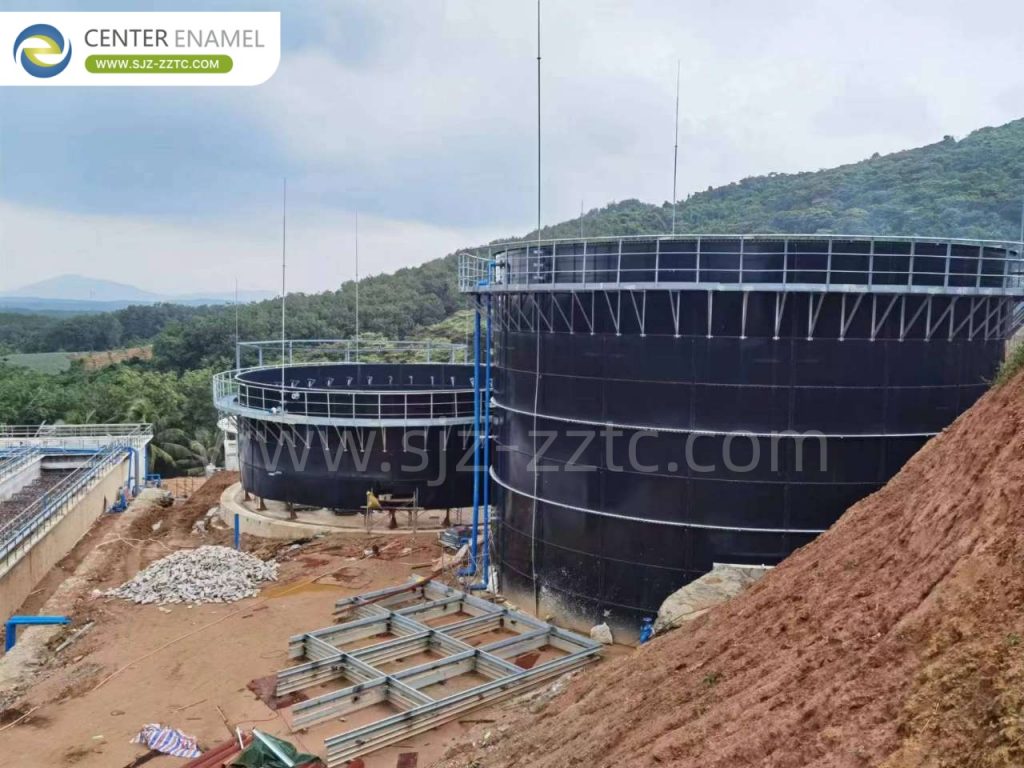
The Evolving Landscape of Industrial Wastewater Treatment
The competitive landscape of industrial wastewater treatment shows clear divergence. Leading companies are building integrated service capabilities through technical integration and capital operations, driving gradual industry concentration. Chinese companies continue consolidating advantages in mid-tier equipment exports. International giants target high-end customers and complex industrial wastewater markets, while local players occupy mid-to-low-end segments with service responsiveness and cost advantages.
In the anaerobic process segment, UASB, EGSB, and IC reactors are widely applied for high-concentration organic wastewater pretreatment in food processing, pharmaceutical fermentation, alcohol brewing, and chemical industries. These reactors offer high loading rates, small footprints, and stable operation. Their steel tank shells make corrosion resistance and gas-tightness critical to long-term operational stability. This is precisely where the application value of Glass-Fused-to-Steel tanks becomes increasingly prominent.
Core Components of Anaerobic Reactor Systems
Successful Industrial Wastewater Treatment Project execution depends on precise equipment integration. The core equipment for IC systems centers on the GFS tank with built-in gas-lift internal circulation and upper/lower three-phase separators—key components for autonomous circulation and sludge-water separation. Bottom precision distribution systems and pressure-regulating feed devices ensure uniform, stable influent.
Supporting equipment includes influent lift pumps, equalization tanks, and flow meters for precise influent control, alongside top-mounted high-efficiency biogas collection, desulfurization, dehydration, and storage integrated equipment. High-precision online monitoring provides real-time temperature, pH, COD, and level tracking. Bottom and mid-section dedicated sludge discharge pipes and recirculation control devices eliminate the need for external return pumps in internal circulation systems. The complete system is highly integrated with compact structure and high automation.
Pharmaceutical Wastewater Standardized Treatment Solutions
Pharmaceutical wastewater cannot be treated by a single process. Compliance requires a combined treatment train: pretreatment plus anaerobic digestion plus aerobic treatment plus advanced treatment. Pretreatment uses coagulation/sedimentation, DAF, advanced oxidation, and desalination to remove macromolecular organics, suspended impurities, and toxic/inhibitory substances, reducing biological toxicity and improving biodegradability.
The main stage uses IC/CSTR anaerobic plus A/O coupled processes to target high-concentration organic pollutants. End-stage Fenton oxidation, activated carbon adsorption, and UF/RO advanced treatment remove residual recalcitrant pollutants and salts.
This full treatment train is lengthy, equipment complex, and operation demanding. Chemical and energy consumption run high, and toxic sludge hazardous waste disposal costs are substantial—requiring strict O&M expertise and equipment corrosion resistance. For this reason, tanks preferentially use Center Enamel GFS tanks to withstand high-salinity, highly corrosive pharmaceutical wastewater.
Pakistan Food Waste + Napier Grass Biogas Demonstration Project
Center Enamel served as general contractor for this official local demonstration project, with CSTR as the core anaerobic process using food waste and Napier grass as mixed fermentation feedstock. The system is equipped with a mechanical mixing system ensuring thorough contact between feedstock and anaerobic microorganisms, achieving efficient organic degradation with stable daily biogas production of 100 m³.
This project validates gas production efficiency and long-term continuous operational stability. After successful pilot operation, multiple large-scale Napier grass biogas projects are planned locally to promote biomass clean energy and support regional low-carbon development. The project demonstrates how co-digestion pairs complementary feedstocks to balance carbon-to-nitrogen ratios and stabilize biogas output .
Project Data Summary:
| Project Parameter | Specification |
| Location | Pakistan |
| Application | Food waste + Napier grass co-digestion |
| Core Process | CSTR anaerobic digestion |
| Daily Biogas Output | 100 m³ |
| Tank Material | Glass-Fused-to-Steel (GFS) |
| Status | Delivered reference project |
Complete Product Matrix for Anaerobic Technologies
Center Enamel has built a complete product matrix of "core storage tanks + supporting covers + specialty pressure vessels + complete environmental engineering services"—the only company globally to achieve integrated enamel frit R&D, self-manufacturing, and GFS tank application.
Core: Proprietary GFS Tanks utilize proprietary double-sided hot-rolled double-layer enamel anti-corrosion technology, resistant to strong acids/alkalis, high salinity, and microbial corrosion. The modular quick assembly design suits all strong-corrosion conditions in wastewater, biogas, and chemical applications .
Supporting: Fusion Bonded Epoxy Tanks are produced on China's first intelligent standardized production line, primarily for drinking water, fire water, and neutral medium storage.
Sealing: Aluminum Dome Covers feature proprietary high-strength aluminum alloy self-supporting structures meeting international waterproof and load-bearing standards, suitable for tank sealing and biogas collection.
Other Tanks include Carbon Steel Tanks, Stainless Steel Tanks, Composting Tanks, and Various Non-Standard Pressure Vessels.
Engineering Services and EPC Capabilities
Center Enamel provides Environmental EPC General Contracting and Anaerobic Process Section Subcontracting—one-stop coverage across food waste, leachate, municipal wastewater, livestock biogas, petrochemical/metallurgical, and seawater desalination industries. We offer customizable tank volume, corrosion protection grade, and complete process solutions with integrated equipment manufacturing and engineering construction.
Our verified project portfolio demonstrates the scale and diversity of our capabilities:
| Project | Location | Application | Scale/Output |
| Malaysia Biogas Project | Malaysia | POME anaerobic digestion | 5 GFS tanks, 27,000 m³ total; 22,000 m³/day biogas |
| Swaziland Alcohol Wastewater | Swaziland | Industrial wastewater EPC | 42,188 m³ total project volume |
| Zhenyuan Group Biogas | Henan, China | Vehicle-grade methane | 650 T/D feedstock; 3 million m³ annual methane |
| Zhaqi Biogas Project | Inner Mongolia | CSTR manure + straw | 900 m³/D; 20,000 m³/day biogas |
Comprehensive International Certifications
Center Enamel holds CE, NSF, WRAS, ISO9001, BSCI, ASME, and other global certifications—fully clearing EU, North American, Southeast Asian, and African project tendering barriers. These credentials provide critical hard advantages for large overseas Industrial Wastewater Treatment Project bidding .
FRP Roof Cover Solution for Atmospheric Storage
FRP Roof is a general-purpose economical roof for atmospheric pressure storage tanks without air-tightness requirements. Applications include drinking water storage, agricultural irrigation water, firewater reserve, and general production wastewater temporary storage.
Available in flat and dome styles, the roof is integrally molded from resin and fiberglass—lightweight, with natural water resistance and mild acid/alkali corrosion resistance. It will not rust or rot in long-term humid environments, eliminating the frequent anti-corrosion maintenance required for metal roofs.
The dome style features excellent drainage due to its curved structure, resisting water accumulation, dust buildup, snow load, and strong winds. The flat style facilitates installation of maintenance walkways, level gauges, and vents on top. The product is fully insulated with no risk of galvanic corrosion, will not contaminate drinking water quality, and meets environmental standards for domestic water storage.
The modular design with low individual component weight allows for simple on-site hoisting and assembly, offering high construction efficiency and affordable procurement and installation costs. It is only suitable for atmospheric pressure water storage tanks without biogas collection or pressurization requirements and is not recommended for anaerobic fermentation gas-producing conditions. It is widely used in rural agricultural water storage tanks, industrial park firewater tanks, waterworks buffer tanks, and small to medium-sized domestic wastewater temporary storage facilities.
Comparison: GFS Tank vs. Alternative Anaerobic Digester Technologies
| Parameter | Center Enamel GFS Tanks | Concrete Digesters | Welded Steel Tanks |
| Corrosion Resistance | pH 1-14; inert glass barrier | Vulnerable to acid attack | Requires coatings; degrades |
| Gas Tightness | Engineered for 100% capture | Prone to micro-cracking | Degrades as welds corrode |
| Installation | Modular bolted; weeks | Months of curing required | Slow field welding |
| Service Life | 30+ years | 15-20 years | 10-15 years |
Partner with Center Enamel for Your Next Project
Ready to transform your industrial wastewater challenge into a compliant, resource-recovering asset? Contact Center Enamel today to discuss how our Anaerobic Technologies and GFS tank solutions can be tailored to your specific effluent profile and project requirements.
Our engineering team is available to provide feasibility assessments, process recommendations, and detailed proposals for your Industrial Wastewater Treatment Project anywhere in the world.
Frequently Asked Questions
Q1: What anaerobic technologies does Center Enamel offer for industrial wastewater?
Center Enamel provides a comprehensive range of Anaerobic Technologies including UASB, EGSB, IC, and CSTR reactors, tailored to specific effluent characteristics and treatment objectives.
Q2: How does Center Enamel ensure GFS tank corrosion resistance for aggressive wastewater?
Our GFS tanks fuse glass enamel to steel at 820–930°C, creating an inert barrier resistant to pH 1–14, hydrogen sulfide, and organic acids, with a 30+ year design life .
Q3: What is the typical scope of an Industrial Wastewater Treatment Project EPC contract with Center Enamel?
Center Enamel provides turnkey EPC services covering process design, proprietary GFS tank manufacturing, equipment procurement, on-site construction, commissioning, and performance verification.