
Anaerobic Treatment: UASB, CSTR, USR And EGSB Process Reference
Anaerobic treatment is biological purification without added oxygen, where microbes convert dissolved and colloidal organics into biogas (about 55-65% methane) and a stabilized residue. The four workhorse reactors are UASB (Upflow Anaerobic Sludge Blanket) for dissolved load, CSTR (Continuous Stirred-Tank) for solid-rich feed, USR (Upflow Solids Reactor) for high solids, and EGSB (Expanded Granular Sludge Bed) for high-rate duty. Selection turns on feed solids, organic loading rate (OLR), and hydraulic retention time (HRT).
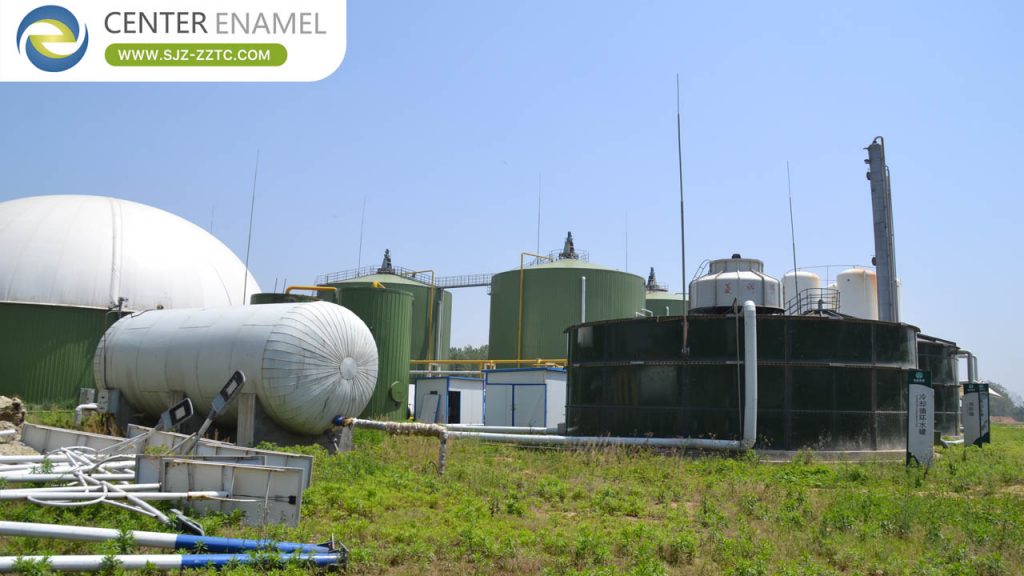
The Reactor Family, At A Glance
UASB and EGSB rely on dense granular sludge and need a relatively clear feed; CSTR and USR handle thicker, solid-laden streams with mixing. All share the anaerobic principle - no aeration, low energy, biogas as a by-product - but they differ in how they hold the biomass and tolerate solids.
| Reactor | Best Feed | Solids Tolerance | Note |
| UASB | Dissolved COD | Low | Granular sludge blanket |
| EGSB | Dissolved COD | Low-Medium | High-rate, tall bed |
| CSTR | Slurry / manure | High | Mixed, heated |
| USR | High solids | High | Solid uptow, simple |
The Numbers That Drive Design
Two ratios decide sizing: OLR (organic loading rate, typically 5-15 kg COD per m3 per day for granular systems) sets how much reactor volume the organics need, while HRT sets how long the feed must stay. Temperature matters too - mesophilic operation around 35-38 C is the sweet spot; colder feeds need more volume or insulation.
| Parameter | Typical Range | Effect |
| OLR | 5-15 kg COD/m3/day | Sets reactor volume |
| HRT | Hours to days | Sets residence time |
| Temperature | 35-38 C mesophilic | Rate doubles per 10 C |
| Methane yield | 0.30-0.45 m3/kg COD | Biogas energy |
Project Case Study: Zhaqi Biogas Project, Inner Mongolia
Project / Application: Farm animal manure + agricultural waste, Inner Mongolia, China. Industry: Biogas / agriculture. Reactors: 4 CSTR. Key Requirements: Medium-temperature anaerobic fermentation for cold-climate operation; 900 m3/day.
| Field | Value | Source / Evidence |
| Handling Capacity | 900 m3/D (manure + agricultural waste) | Company project reference |
| Treatment Type | Medium Temperature Anaerobic Fermentation | Company project reference |
| Reactor Type | CSTR (Continuous Stirred-Tank Reactor) | Company project reference |
| Reactor Size | 4 sets of O25.98 x 8.4 m | Company project reference |
| Daily Biogas Output | 20,000 m3/day | Company project reference |
| Feedstock | Animal manure + grass straw | Company project reference |
About Company
Shijiazhuang Zhengzhong Technology Co., Ltd (Center Enamel) is a comprehensive high-tech enterprise specializing in wastewater engineering, process section contracting, and equipment manufacturing. The company delivers biogas and wastewater projects through three main lines - EPC (turnkey) contracting, equipment supply, and process packages - covering livestock and municipal wastewater, biomass energy, industrial wastewater, and food waste. Its reactor portfolio spans CSTR, USR, UBF, UASB, IC, and EGSB, backed by in-house Glass-Fused-to-Steel tank manufacturing (enamel firing at 820-930 C) and certifications including ISO 9001, NSF/ANSI 61, and CE-EN 1090. With 35+ years of operation, a 150,000 m2 manufacturing base, and projects in 100+ countries, Center Enamel provides the single-responsibility engineering behind the Zhaqi biogas project that ran four CSTR reactors on farm manure and straw at 900 m3/day in a cold climate - a reference for anaerobic reactor selection and design.
Comparison: Aerobic Vs Anaerobic
| Element | Anaerobic | Aerobic |
| Energy | Produces biogas | Consumes aeration |
| Sludge | Low excess | High excess |
| Best for | High COD | Low COD / polish |
Anaerobic treatment is the low-energy way to destroy high organic load and recover methane; UASB, EGSB, CSTR, and USR each fit a different feed and solids profile, and the design is set by OLR, HRT, and temperature - a process reference, not a single product.
Frequently Asked Questions
Q1: What is anaerobic treatment? A1: Oxygen-free biological purification that turns organics into methane-rich biogas and a stabilized residue.
Q2: Which reactor type fits? A2: UASB/EGSB for clear feed, CSTR/USR for solid-rich manure and slurry.
Q3: What is OLR and HRT? A3: OLR (5-15 kg COD/m3/day) sizes the volume; HRT sets residence time.
Q4: What methane yield is typical? A4: About 0.30-0.45 m3 of biogas per kg COD removed, 55-65% methane.
Q5: What temperature is best? A5: Mesophilic 35-38 C; colder feeds need more volume or insulation.
Q6: Does anaerobic make excess sludge? A6: No - far less than aerobic, which lowers handling cost.
Q7: Which tank resists the digester? A7: A Glass-Fused-to-Steel tank is corrosion-resistant and bolts on site.
Q8: Who selects the reactor? A8: An engineer matches feed solids and OLR to the reactor before sizing.
Suggested CTA
Send your feed type, COD, and temperature to an engineer, or request an anaerobic reactor selection note.