
Balloon-Type Digester: Flexible Design, Working Principle, and Applications
In the field of decentralized renewable energy and organic waste management, accessibility and affordability are critical for rural adoption. The balloon-type digester—often classified alongside tubular or bag digesters—represents one of the most cost-effective and straightforward anaerobic digestion technologies available. By combining the digestion chamber and the gas storage container into a single flexible envelope, this system simplifies manufacturing, transport, and installation.
Understanding the structural configuration, working mechanics, and operational limitations of balloon digesters is essential for agricultural planners, rural developers, and sustainability technicians.
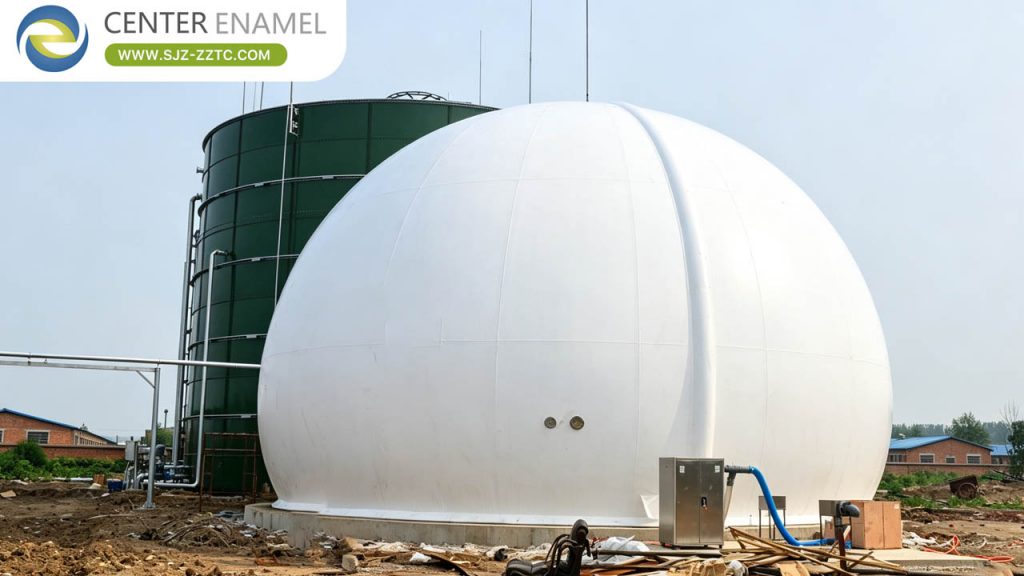
Core Structural Anatomy of a Balloon Digester
A balloon-type digester consists of a single, continuous, elongated envelope manufactured from durable, UV-resistant flexible polymers—typically polyvinyl chloride (PVC), reinforced polyethylene (PE), or synthetic rubber like neoprene.
- The Flexible Envelope: A sealed tubular or pillow-shaped balloon that houses both the fermenting organic slurry at the bottom and the accumulated biogas in the upper headspace.
- Inlet and Outlet Sleeves: Rigid or semi-rigid pipes sealed directly into opposing ends of the balloon for continuous daily feeding and automatic digestate overflow.
- Gas Outlet Valve: A secure gas valve mounted on the top surface of the balloon, connected to delivery piping or storage bladders.
Working Principle and Operational Dynamics
The operation of a balloon-type digester relies on continuous horizontal flow and flexible containment:
- Feedstock Injection: Liquid organic waste (such as diluted animal manure or food processing slurry) is fed regularly into the inlet pipe.
- Plug-Flow Digestion: As new waste enters, it pushes older material horizontally toward the outlet in a continuous plug-flow pattern, ensuring proper retention duration.
- Anaerobic Breakdown: Microorganisms decompose the organic matter in an oxygen-free environment, generating a mixture of methane (CH4) and carbon dioxide (CO2).
- Flexible Gas Storage: The generated biogas collects in the upper portion of the balloon. Because the flexible plastic membrane expands slightly under low internal pressure, the gas is safely contained and ready for immediate utilization.
Comparative Data Table: Balloon-Type Digester vs. Rigid Systems
| Evaluation Parameter | Balloon-Type Digester | Fixed-Dome Biogas Plant | CSTR / GFS Tank |
| Primary Material | Flexible PVC / PE / Neoprene sheeting | Underground brick and concrete masonry | Glass-Fused-to-Steel (GFS) panels |
| Digester & Gasholder | Combined into a single flexible balloon | Separated (underground pit + rigid dome) | Separated (tank + external double-membrane) |
| Capital Investment | Extremely Low | Moderate | High (Industrial commercial grade) |
| Installation Speed | Fast (Hours to set up) | Slow (Weeks of masonry curing) | Moderate (Modular bolted assembly) |
| Expected Lifespan | 3 to 8 years (dependent on UV exposure) | 20 to 30+ years | 30+ years |
| Thermal Insulation | Low (susceptible to ambient shifts) | High (subterranean placement) | High (can include internal heating coils) |
Frequently Asked Questions (FAQ)
Q1: What is a balloon-type digester?
A: A balloon-type digester is a flexible anaerobic bioreactor where the digestion chamber and the gas storage gasholder are combined into a single, continuous, pillow-shaped envelope made of durable, UV-resistant plastic or synthetic rubber.
Q2: How does a balloon digester manage internal gas pressure?
A: Balloon digesters operate under very low, natural gas pressure created by the gentle elasticity and weight of the flexible membrane. If higher pressure is required for long-distance piping or specific burners, an external low-pressure biogas booster pump is utilized.
Q3: Are balloon digesters suitable for cold climates?
A: Balloon digesters perform best in warm, tropical climates because flexible plastic membranes offer minimal thermal insulation. In colder regions, subterranean trench placement or greenhouse enclosures are necessary to maintain stable mesophilic digestion temperatures.