
Best Feedstock for Commercial Biogas Production: Maximizing Yield and Operational Stability
In any commercial-scale anaerobic digestion (AD) facility, the success of the operation boils down to one fundamental element: the feedstock. Unlike traditional industrial plants that rely on uniform, synthetic materials, biogas facilities process heterogeneous organic matter. The choice of raw material dictates the volume of methane produced, the chemical stability of the biological process, and the ultimate financial return on investment (ROI).
Selecting the best feedstock for commercial biogas production requires balancing high methane yield, continuous year-round supply availability, handling ease, and proper nutrient balancing.
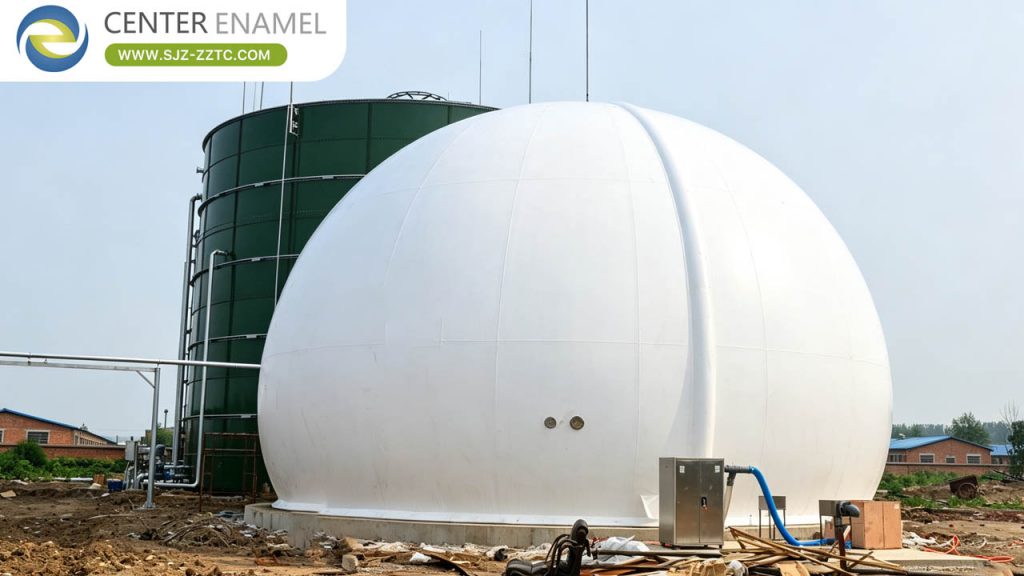
Top-Performing Feedstocks for Commercial Biogas Plants
Different organic waste streams bring distinct chemical and physical advantages to the anaerobic digester:
1. Commercial Food Waste
- Why it ranks high: Food waste sourced from supermarkets, commercial kitchens, and food processing plants is exceptionally energy-dense and degrades rapidly, yielding high volumes of methane per ton.
- Operational challenge: It degrades so quickly that it can trigger sudden volatile fatty acid (VFA) spikes, lowering reactor pH and causing the system to "sour" if not carefully buffered.
2. Poultry Litter and Livestock Manure
- Why it ranks high: Manure serves as the biological foundation for most farm-scale and commercial plants. Cattle and swine slurries provide natural buffering agents, active micro-nutrients, and essential methanogenic microbes that stabilize reactor chemistry. Poultry litter delivers a high nutrient load and exceptional methane potential.
- Operational challenge: Pure poultry manure carries a low carbon-to-nitrogen ratio, risking ammonia toxicity if not co-digested.
3. Agro-Industrial Effluents and Spent Wash
- Why it ranks high: Industries such as breweries, dairies, and starch-processing plants generate high-strength liquid wastewaters loaded with soluble sugars, starches, and organic compounds, driving high gas yields in specialized high-rate reactors like UASB systems.
4. Agricultural Crop Residues and Silage
- Why it ranks high: Abundant materials like corn stover, wheat straw, and grass silage offer massive carbon reserves. While slower to degrade due to lignin structures, they provide long-term structural stability when blended into co-digestion recipes.
Comparative Data Table: Commercial Biogas Feedstocks
| Feedstock Substrate | Typical Methane Yield (m3/ton VS) | Supply Stability | Handling Ease | Primary Operational Characteristic |
| Commercial Food Waste | 450 – 600 | Year-round | Moderate (Requires depackaging) | Exceptional gas yield; high risk of rapid acidification. |
| Poultry Litter | 350 – 450 | Year-round | Moderate | High nitrogen and energy density; requires careful C:N balancing. |
| Dairy / Cattle Slurry | 200 – 350 | Daily / Year-round | High (Pumps easily) | Low energy density, but provides essential buffering agents. |
| Agricultural Straw / Residues | 250 – 350 | Seasonal (Requires storage) | Low (Requires shredding) | Abundant carbon source; tough lignocellulosic matrix. |
| Agro-Industrial Effluent | 400 – 700+ | Variable / Continuous | High (Liquid pipeline flow) | High COD load; ideal for high-rate liquid anaerobic reactors. |
Why Co-Digestion Outperforms Mono-Digestion
Relying on a single feedstock (mono-digestion) often creates a fragile biological environment. For instance, energy-dense food waste is too acidic, while poultry litter contains excessive nitrogen.
Modern commercial plants utilize co-digestion—systematically blending multiple waste streams. Pairing alkaline, buffer-rich livestock manure with acidic, high-energy food waste neutralizes pH levels, optimizes the Carbon-to-Nitrogen (C:N) ratio to the ideal 20:1–30:1 range, and maximizes overall system efficiency and methane output.
Frequently Asked Questions (FAQ)
Q1: What is considered the single best feedstock for biogas production?
A: Commercial food waste and poultry litter are widely considered top-tier feedstocks due to their exceptionally high methane yields. However, because they can cause operational instability on their own, they perform best when blended with stable, buffer-rich substrates like livestock manure.
Q2: How does feedstock availability impact a commercial biogas plant?
A: Stable, year-round feedstock supply is critical for continuous microbial activity. Seasonal materials like crop residues require adequate dry storage and careful inventory planning to prevent starvation phases inside the digester.
Q3: Can inorganic contaminants ruin a commercial biogas system?
A: Yes. Impurities such as plastics, glass, metals, and excessive sand or grit can clog piping, accumulate as dead volume in the bottom of digester tanks, and severely damage internal pumps and mechanical mixers.