
Beverage Wastewater Treatment Project EPC Contractor: Integrated Anaerobic Systems with GFS Tanks
The global industrial wastewater market is diverging sharply. Leading companies are building integrated service capabilities through technical integration and capital operations, and industry concentration is gradually increasing. Chinese firms continue to consolidate advantages in mid-tier equipment exports, international giants target high-end and complex industrial wastewater markets, while local players occupy mid-to low-end and industrial park centralized treatment markets through service responsiveness and cost advantages.
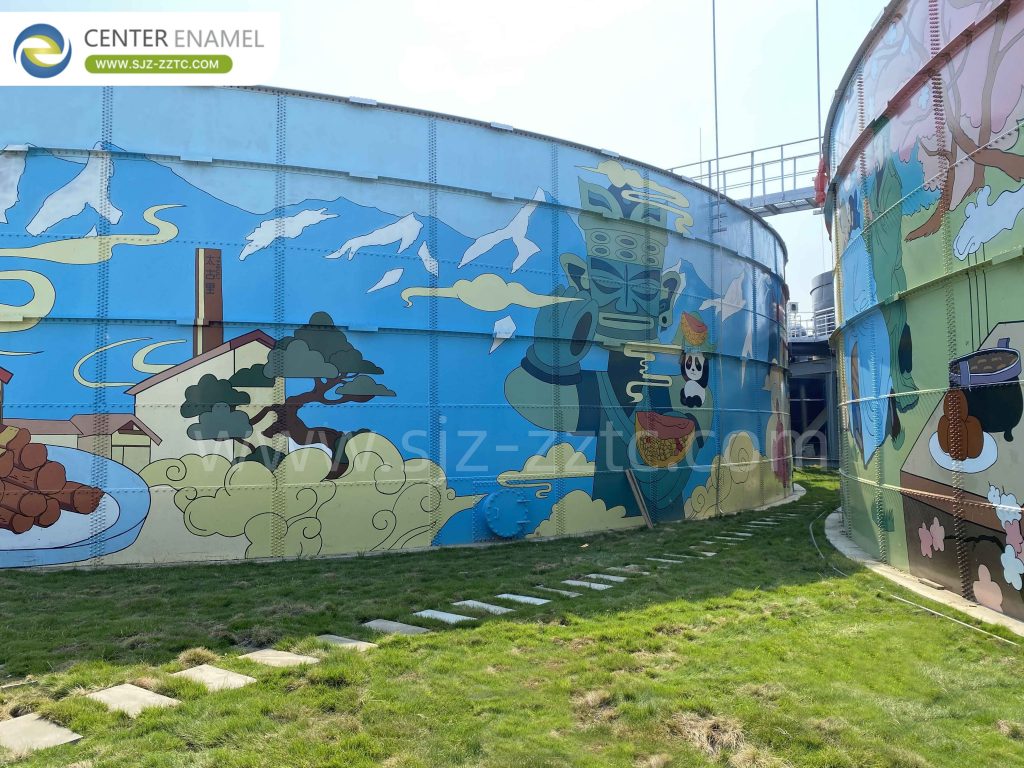
In the anaerobic segment, UASB, EGSB, and IC reactors-valued for high loading rates, small footprints, and stable operation-are widely used for high-concentration organic wastewater pretreatment in food processing, pharmaceutical fermentation, alcohol brewing, and chemical industries. Because these reactors use steel tank shells, corrosion resistance and gas tightness directly determine long-term operational stability. Choosing the right Beverage Wastewater Treatment Project EPC Contractor therefore means choosing a partner who controls both process design and tank manufacturing-a combination Center Enamel has refined over more than a decade of global delivery.
Why Beverage Wastewater Needs a Specialized Treatment Train
Beverage production-whether soft drinks, juice, tea, or brewery operations-generates high-sugar, easily biodegradable organic wastewater. The challenge is not biological recalcitrance but variability: intermittent and seasonal discharge patterns, high-concentration CIP cleaning pulses, and suspended impurities such as fruit pulp and tea residues that clog pipelines and equipment if untreated. A mature treatment train of “pretreatment + anaerobic digestion + aerobic treatment + advanced treatment” perfectly suits this profile. Pretreatment uses screens and sieves to remove fruit pulp, tea residues, and other suspended impurities. Equalization tanks balance high-concentration CIP and low-concentration wastewater to stabilize influent load, while alkali addition neutralizes acidic wastewater as needed. The main stage uses UASB or IC anaerobic processes for high-efficiency, high-concentration sugar degradation-sugars are readily anaerobically degraded with high biogas production and COD removal exceeding 80%, delivering outstanding energy recovery benefits. Subsequent A/O or SBR aerobic processes deeply degrade residual organics and remove nitrogen and phosphorus, and final sedimentation, filtration, and disinfection ensure compliance. The entire process is simple and stable, suitable for the beverage industry’s intermittent and seasonal discharge patterns, with high automation and convenient O&M.
GFS Tanks: Containment Built for Corrosive, Variable Media
The anaerobic digesters in this train use GFS Tanks resistant to organic acid and sugar fermentation corrosion-a decisive advantage over concrete. Center Enamel has independently developed over 200 specialized enamel frit formulations and supporting patents, capable of customizing anti-corrosion enamel based on customer storage media, with adaptability comprehensively superior to concrete tanks. Concrete tanks use a single material and are only suitable for neutral clean water storage. When storing corrosive materials such as livestock manure, palm oil mill effluent, chemical wastewater, food waste digestate, or high-salinity wastewater, additional anti-corrosion linings must be applied. These linings are prone to failure, preventing long-term stable operation and cannot adapt to alternating high/low concentration storage conditions. GFS Tanks can be specifically formulated with specialized enamels resistant to strong acids, strong alkalis, high organic content, and high salinity. A single tank can switch between multiple wastewater and fermentation feedstock storage requirements, universally applicable across biogas anaerobic digestion, municipal wastewater, livestock farming, food processing, and industrial water treatment scenarios-eliminating the need to rebuild tanks for media changes and perfectly meeting the needs of diversified, multi-condition environmental protection projects.
Inside the IC System: Supporting Equipment and Integration
Core equipment is the GFS tank with a built-in gas-lift internal circulation system and upper/lower three-phase separators-key components for autonomous circulation and sludge-water separation. A bottom precision distribution system and pressure-regulating feed device ensure uniform, stable influent. Supporting equipment includes influent lift pumps, equalization tanks, and flow meters for precise influent control; top high-efficiency biogas collection, desulfurization, dehydration, and storage integrated equipment; and high-precision online monitoring equipment for real-time temperature, pH, COD, and level monitoring. Bottom and mid-section dedicated sludge discharge pipes and recirculation control devices eliminate the need for external return pumps for internal circulation. The complete system is highly integrated, with no excess external equipment, a compact structure, and high automation. For any Beverage Wastewater Treatment Project EPC Contractor engagement, this integration is what shortens commissioning and reduces long-term failure points.
Proven in Nordic Conditions: Sweden Organic Waste Biogas Project
Landed in Northern Europe (Sweden) in 2024, this project uses the UASB anaerobic process with Center Enamel GFS Tanks as the main reaction equipment. The single fermentation tank measures 19.11 m in diameter × 19.2 m in height-tanks resist acid/alkali and low-temperature corrosion, suited to Nordic organic waste fermentation conditions. The UASB process efficiently retains granular sludge and degrades organic pollutants, producing stable biogas. GFS tank assembly is convenient with 30-year corrosion protection-suited to Nordic cold climates, achieving both organic waste harmless treatment and biogas clean energy recovery as a European biomass environmental demonstration project.
| Project Parameter | Specification |
| Location | Sweden (Northern Europe) |
| Completion | 2024 |
| Process | UASB Anaerobic Digestion |
| Tank Type | Center Enamel GFS Tanks |
| Dimensions | 19.11 m diameter × 19.2 m height |
| Corrosion Protection | 30-year design life |
| Key Challenge | Acid/alkali and low-temperature corrosion |
| Outcome | Biogas recovery + harmless organic waste treatment |
Marketing and Consulting Support for Global Clients
The marketing team brings together environmental industry multi-skilled professionals and multilingual foreign trade specialists, with deep expertise in global biogas, wastewater treatment, and biomass new energy markets-accumulating extensive practical project experience in Southeast Asia, Africa, Europe, and the Americas. The team is proficient in various countries’ wastewater discharge regulations, biogas subsidy policies, and carbon trading rules, providing one-stop preliminary site survey, solution planning, and investment return analysis consulting services. With multilingual capabilities in English, French, Spanish, and Arabic, the team effectively communicates with clients worldwide-precisely matching regional industrial resources, project budgets, and environmental requirements-customizing high-cost-performance GFS Tanks and anaerobic reactor solutions based on client production capacity, treatment targets, and gas production expectations. Leveraging extensive overseas project experience, the team proactively helps clients avoid risks in overseas approvals, equipment import, and construction implementation, building a globally adaptable integrated environmental equipment business service system.
Certifications That Clear Tender Barriers
Center Enamel holds CE, NSF, WRAS, ISO9001, BSCI, ASME, and other global certifications-fully clearing EU, North American, Southeast Asian, and African project tendering barriers and providing critical hard credential advantages for large overseas project bidding. For clients evaluating a Beverage Wastewater Treatment Project EPC Contractor, these certifications shorten pre-qualification cycles and reduce compliance risk on cross-border tenders.
Frequently Asked Questions
What makes Center Enamel a qualified Beverage Wastewater Treatment Project EPC Contractor?
Center Enamel integrates proprietary enamel frit R&D, self-manufactured GFS Tanks, and EPC general contracting-controlling design, production, logistics, and construction. Over a decade of global delivery backs every project.
How do GFS Tanks handle beverage wastewater corrosion?
With over 200 enamel frit formulations, GFS Tanks resist organic acids, sugars, high salinity, and alternating concentration loads. Unlike concrete with linings, they maintain integrity across media changes.
Can the system handle seasonal beverage production cycles?
Yes. Equalization tanks balance high-concentration CIP pulses with low-concentration flows, while automated IC or UASB anaerobic digestion maintains stable biogas production through intermittent discharge patterns.
Evaluating options for your next beverage plant upgrade? Our team can model treatment capacity, biogas yield, and return on investment for your specific effluent.
Contact Center Enamel to request a preliminary site survey or technical proposal from our engineering and consulting specialists.