
Beverage Wastewater Treatment under Stricter Rules: Why Anaerobic Digestion Wins
Regulation has moved on. Discharging treated water is no longer the finish line for a food or beverage plant; recovery, reuse and carbon accounting now sit in the same permit. Beverage effluent happens to be one of the easiest streams to recover value from, because its pollutants are sugar, juice and tea rather than solvents or heavy metals. The right Beverage Wastewater Treatment design captures that load as biogas through Anaerobic Digestion, and Center Enamel builds the reactors and tanks that make it durable.
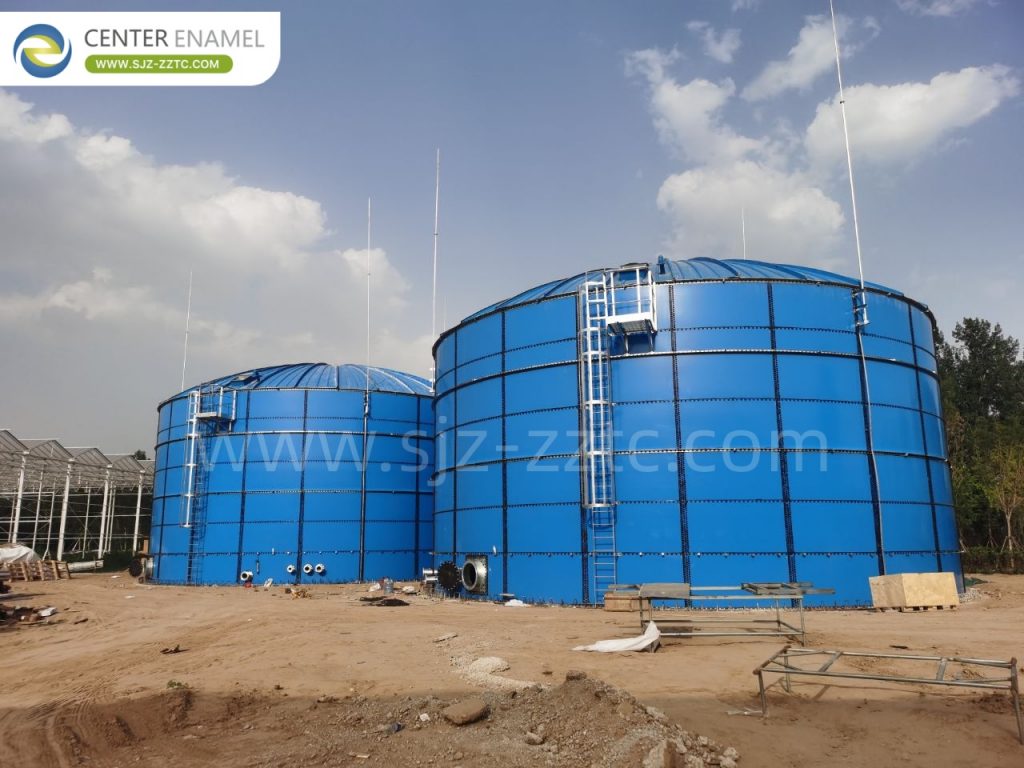
Regulation Is Rewriting the Rules
Global policy is escalating from "compliance discharge" to mandatory resource recovery and zero liquid discharge. The EU's Circular Economy Action Plan pushes member states to raise industrial wastewater reuse rates and extends carbon footprint accounting across the whole treatment life cycle. China keeps tightening pollutant limits, especially total nitrogen, total phosphorus and characteristic pollutants in chemicals, pharmaceuticals and printing and dyeing, with zero or near-zero liquid discharge required in water-scarce regions and high-pollution sectors.
| Region | Regulatory direction | Practical consequence |
| EU | Circular Economy Action Plan | Higher reuse rates, full life-cycle carbon accounting |
| China | Tightened discharge standards | Stricter TN, TP and characteristic pollutant caps; ZLD mandates in stressed regions |
| Germany | Industry-specific pretreatment rules | Effluent must meet defined quality before entering municipal plants |
Between them, these three regimes point in one direction: treat at source, recover what you can, and prove it.
Beverage Effluent: Benign Chemistry, Heavy Oxygen Demand
Beverage wastewater is unusual in that its pollutants are entirely natural food components, sugars, fruit juice and tea, with no synthetic toxic chemicals, so chemical toxicity is extremely low. The problem is oxygen demand. High concentrations of soluble sugar are non-toxic to aquatic life, yet direct discharge triggers rapid aerobic decomposition that strips dissolved oxygen and suffocates fish.
| Pollutant | Character | Environmental effect |
| Soluble sugars: sucrose, fructose, glucose | Non-toxic, rapidly biodegradable | Severe oxygen depletion, fish kills |
| Fruit-juice organic acids | Lower receiving-water pH | Stress on aquatic organisms |
| Tea polyphenols | Trace colour and taste | Aesthetic and taste impairment |
| Pulp, tea residue, fibre | Low suspended solids | Settling and sludge build-up |
Beyond sugar, juice acids depress receiving-water pH, tea polyphenols tint the water even at trace levels, and residual sugar encourages mould and odour. Long-term discharge feeds algal blooms and eutrophication, yet because nothing persists, the environment recovers quickly once the load stops. That combination, high strength but fast biodegradability, is exactly what biological treatment handles best.
Why Anaerobic Digestion Fits Beverage Plants
Every Beverage Wastewater Treatment train faces the same question: not whether to treat the load biologically, but which biology to use. Anaerobic Digestion degrades sugars without aeration, so no blowers run to supply oxygen, and the carbon removed from the water leaves as methane-rich biogas instead of surplus sludge. For a plant paying both for electricity and for sludge disposal, that changes the operating economics twice over. Sealed reactors also contain odour and gas, which matters on sites close to housing, and the process tolerates the intermittent, high-strength pulses that CIP cleaning creates far better than a fixed-film aerobic line.
IC Reactors: One-Third the Footprint, Full Load Resilience
Inside the reactor family, the IC design earns its place in beverage wastewater treatment on constrained sites. Its footprint is about one-third that of a traditional anaerobic process at the same treatment capacity, and the built-in gas-lift internal circulation needs no external recirculation equipment, mixing sludge and water by itself. Strong hydraulic mixing keeps microbes in contact with pollutants, lifting degradation efficiency and absorbing shock loads. A dual-zone layout pairs high-efficiency degradation with deep polishing, so effluent quality stays stable, while high sludge granulation and low washout keep the biomass where it belongs. Automation is high, failure rates low, biogas output large, and long-term energy and maintenance costs stay low.
GFS Tanks for Media That Change Weekly
The vessel around that process has to survive whatever the product schedule throws at it. Concrete offers a single material suited to neutral, clean water; store manure, palm oil mill effluent, chemical wastewater, food waste digestate or high-salinity liquor in it and an added anti-corrosion lining becomes necessary, one that tends to fail and cannot cope with alternating high and low concentrations. Center Enamel has developed more than 200 specialised enamel frit formulations with supporting patents, so GFS Tanks can be built for strong acid, strong alkali, high organic content or high salinity, and one tank can switch between several wastewater and fermentation feedstocks. Biogas digestion, municipal wastewater, livestock, food processing and industrial water treatment all draw on the same platform, so a product change never means a new tank, a flexibility rarely found in beverage wastewater treatment.
Patents, Labs and Certifications Behind the Steel
Coating performance is the company's core competence rather than a purchased input. Center Enamel controls the enamel raw material chain, holds nearly 100 invention and utility patents, and has passed NSF, WRAS, ASME, BSCI, CE and ISO 9001 certification. Recognitions include National High-Tech Enterprise, National Specialized and Sophisticated "Little Giant," Hebei Manufacturing Single Champion, Provincial Smart Factory and Provincial Green Factory, plus full environmental engineering and equipment manufacturing qualifications. Joint materials laboratories with several universities keep iterating anti-corrosion coatings and large bolted tank structural design.
Crews That Deliver, Site After Site
A specification only becomes a plant through the people on site. Center Enamel's installation teams carry experience from more than 10,000 GFS tank projects worldwide and follow standardised procedures covering mobilisation, civil coordination, tank assembly, piping and commissioning. They are fluent in complete installation processes for GFS tanks, dual-membrane gas storage covers, USR, CSTR and IC reactors, and biogas desulfurisation and piping systems, which suits large farms, industrial parks, remote mountain sites and corrosive coastal locations alike. On cross-border projects the team deploys as a complete unit, delivering construction, technical training and hands-on instruction for local workers, with airtightness testing and corrosion protection verified on site.
When an FRP Roof Is the Right Choice
Not every tank needs gas containment, and paying for pressure-rated sealing where it adds nothing is waste. The FRP Roof is an economical general-purpose cover for atmospheric tanks without air-tightness requirements: drinking water storage, irrigation, firewater reserve and temporary production wastewater holding. It comes flat or domed, is moulded from resin and fibreglass, and resists mild acid and alkali without rusting or rotting in humid conditions, so the recurring anti-corrosion maintenance of metal roofs disappears. The dome sheds water, dust and snow and stands up to wind, the flat version accepts walkways, level gauges and vents, and the insulated structure carries no galvanic corrosion risk or drinking-water contamination. Light modules hoist and assemble easily, keeping construction fast and cost low. It is deliberately not specified for anaerobic gas-producing duty, where a sealed aluminium or dual-membrane cover belongs instead.
Frequently Asked Questions
Is beverage wastewater actually hazardous?
Its pollutants are food components, sugars, juice acids and tea polyphenols, so chemical toxicity is very low and no heavy metals or persistent organics are involved. The real risk is oxygen demand: concentrated sugar discharge can strip dissolved oxygen from a receiving water within hours and kill fish. In practice the permit limit, not toxicity, drives the design, so sizing starts from COD load and flow pattern.
Does Anaerobic Digestion work when production stops and starts?
Yes, provided the reactor keeps its biomass. IC and UASB designs retain granular sludge with low washout, so they recover quickly after CIP peaks or weekend shutdowns. Feed equalisation upstream smooths the pulses further, and a buffered, pH-controlled feed keeps the culture stable through product changeovers. Reactor volume then follows organic load rather than hydraulic flow.
Do I need a sealed roof on every tank?
Only where gas is collected or pressure is held. Anaerobic reactors need airtight aluminium dome or dual-membrane covers. Atmospheric storage such as firewater, irrigation or buffer tanks is better served by an economical FRP Roof, flat or domed. Matching cover class to tank duty keeps both capital and maintenance cost in proportion.
Send your discharge permit limits and effluent profile, and our engineers will map a treatment train around them. Talk to Center Enamel about your beverage wastewater treatment scope, or ask for an anaerobic digestion feasibility review before the next permit cycle begins.