
Biogas and Biological Digester: Understanding the System Behind Renewable Gas Production
Biogas and the biological digester are two inseparable concepts in renewable energy. Biogas is the combustible gas produced when microorganisms decompose organic matter in the absence of oxygen, while the biological digester is the engineered system-a sealed tank, lagoon, or reactor-where this natural process is contained and controlled . Understanding how these two elements work together is essential for anyone evaluating anaerobic digestion for waste management, energy recovery, or agricultural operations.
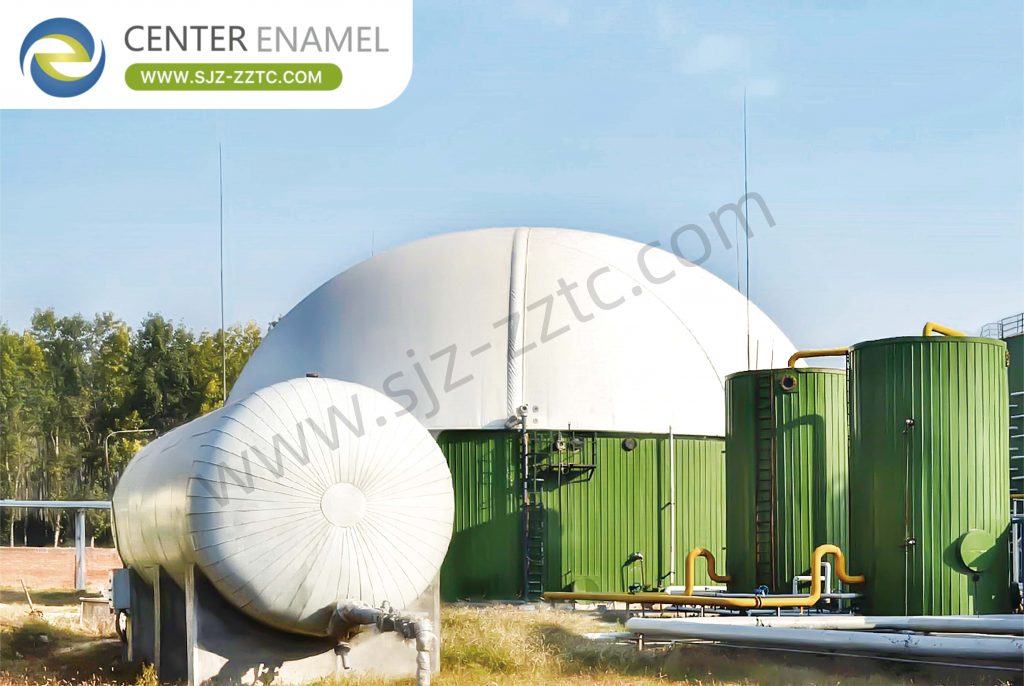
This article examines the relationship between biogas and biological digesters, covering the types of systems available, the components that make up a digester, and the operational conditions required to keep the biological process productive and stable.
What Is a Biological Digester and How Does It Relate to Biogas?
A biological digester-also called an anaerobic digester, biodigester, or anaerobic digestion system-is a built structure where anaerobic digestion takes place under controlled conditions . Its primary purpose is to create an oxygen-free environment in which naturally occurring microorganisms can break down organic matter, producing biogas as a metabolic byproduct .
The relationship between biogas and the digester is analogous to the relationship between a product and its manufacturing facility. The digester provides the physical containment, temperature regulation, and mixing necessary for the microbial communities to thrive. Without a properly designed digester, the biological process would still occur in nature-as it does in swamps and landfills-but the biogas would escape into the atmosphere rather than being captured for beneficial use .
A well-designed digester accomplishes several objectives simultaneously: it captures methane that would otherwise contribute to climate change, it reduces odors from raw organic materials, it reduces pathogens in the treated material, and it produces a nutrient-rich digestate suitable for use as fertilizer or soil amendment .
The Key Components of a Biological Digester System
While digester designs vary widely by scale and application, most systems share a common set of functional components. Understanding these components helps clarify how the digester supports the biological process that generates biogas.
The fermentation chamber or reactor vessel is the central component where anaerobic digestion occurs. It must be sealed to exclude oxygen and constructed from materials that resist corrosion from the organic acids and hydrogen sulfide present in the digestion environment .
The inlet system delivers feedstock into the digester. In wet systems, feedstock is typically introduced as a pumpable slurry, while dry digesters may use augers or conveyors to feed stackable materials .
The gas storage area collects biogas as it rises from the digesting material. In fixed-dome digesters, gas accumulates in the upper portion of the sealed chamber, creating pressure that pushes digested slurry into an outlet chamber. Floating-drum designs use a movable gas holder that rises as gas production increases .
The outlet chamber allows digested material (digestate) to be removed without breaking the gas seal. This is typically achieved through a hydraulic design where the slurry level in the outlet chamber rises and falls in response to gas pressure inside the digester .
The gas pipeline conveys captured biogas from the storage area to its point of use-whether a cooking stove, boiler, generator, or upgrading system .
Table 1: Core Components of a Biological Digester
| Component | Function | Design Consideration |
| Fermentation chamber | Contains anaerobic digestion | Must be sealed and corrosion-resistant |
| Inlet system | Delivers feedstock | Slurry pumping or solids handling |
| Gas storage area | Captures and holds biogas | Pressure management essential |
| Outlet chamber | Removes digestate | Must not break gas seal |
| Gas pipeline | Transports biogas to use | Sized for flow, leak-proof |
Types of Biological Digesters: Wet vs. Dry Systems
Biological digesters are commonly classified by the moisture content of the feedstock they process. This distinction has significant implications for system design, feedstock handling, and operational complexity.
Wet anaerobic digesters process feedstocks with total solids content below approximately 15 percent . The material is handled as a slurry and can be pumped through the system. Wet digesters are the more common configuration globally and are widely used for manure slurries, sewage sludge, and food waste that has been macerated or diluted. Continuous stirred-tank reactors (CSTRs) are the standard configuration for wet digestion, providing uniform mixing and consistent contact between microorganisms and substrate.
Dry anaerobic digesters handle feedstocks with solids content exceeding 15 percent, often materials that can be stacked or loaded with front-end equipment . Dry systems are used for the organic fraction of municipal solid waste, yard waste, and stacked manure. While dry digestion reduces water requirements and can simplify digestate handling, mixing and heat transfer are more challenging in high-solids systems.
A third important distinction is between single-stage and two-stage configurations. In single-stage digesters, all four biological stages-hydrolysis, acidogenesis, acetogenesis, and methanogenesis-occur in a single vessel. Two-stage systems separate these stages into different reactors, allowing each microbial community to operate under its optimal conditions. While more complex and costly, two-stage systems can improve stability for challenging feedstocks and potentially increase methane yields.
Feedstock Requirements for Biological Digesters
The biological digester is only as productive as the feedstock it receives. While many organic materials can be digested, the composition of the feedstock directly affects biogas yield, process stability, and the frequency of operational problems.
Animal manures are among the most widely used feedstocks for agricultural digesters. Manure offers several advantages: it contains the microbial populations needed for digestion, it provides natural buffering capacity that helps maintain stable pH, and it is readily available on livestock operations . However, methane yield from manure alone is moderate compared to more energy-dense materials.
Food waste and food processing by-products have high methane potential due to their readily degradable content. However, these feedstocks are prone to rapid acidification, which can overwhelm the methanogenic population if introduced too quickly or in excessive quantities. Successful digesters that use food waste typically employ gradual feeding strategies or co-digest food waste with more stable materials like manure .
Fats, oils, and greases (FOG) from restaurants and food processing have very high methane yields but can cause process inhibition if overloaded. Long-chain fatty acids can coat microbial cells and interfere with substrate access. Digesters using FOG require careful monitoring and gradual introduction.
Sewage sludge from wastewater treatment is a consistent and well-established feedstock. Many municipal treatment plants incorporate anaerobic digestion primarily for sludge stabilization, with biogas capture providing energy savings that offset operational costs .
Crop residues such as corn stover, straw, and rice hulls are abundant but challenging. Their high lignocellulose content makes them resistant to hydrolysis, often requiring pretreatment-mechanical, thermal, chemical, or biological-to improve digestibility.
Table 2: Feedstock Suitability for Biological Digesters
| Feedstock | Methane Potential | Key Challenge | Typical Digester Type |
| Animal manure | Moderate | Low energy density | Wet (CSTR) |
| Food waste | High | Rapid acidification | Wet or dry, often co-digested |
| FOG | Very high | Inhibition at high loads | Wet, gradual feeding |
| Sewage sludge | Moderate | Consistent but low yield | Wet |
| Crop residues | Low–moderate | Recalcitrant lignocellulose | Dry or pretreated wet |
Operating Conditions That Keep the Digester Productive
The biological digester must maintain conditions that support the growth and activity of the microbial consortium. When these conditions drift outside acceptable ranges, biogas production declines and process recovery can be slow and difficult.
Temperature is the most critical parameter for methanogen activity. Anaerobic digestion can operate in the mesophilic range (approximately 35–38°C) or the thermophilic range (approximately 47–55°C) . Mesophilic digestion is more stable and easier to maintain, particularly in smaller or less sophisticated systems. Thermophilic digestion achieves faster reaction rates and greater pathogen destruction but is more sensitive to temperature fluctuations. In household-scale digesters in warm climates, ambient temperature fermentation is sometimes practiced, though gas production is lower and more seasonal .
pH and alkalinity must remain within a narrow range for stable digestion. The optimal pH is approximately 6.8–7.4. Acidogenesis can outpace methanogenesis when the digester is overloaded or when feedstock composition shifts abruptly, leading to volatile fatty acid accumulation and pH depression. Adequate alkalinity-often provided by manure or supplemented with buffering agents-helps prevent this failure mode.
Carbon-to-nitrogen (C/N) ratio affects nutrient availability for microbial growth. A C/N ratio of approximately 25–30:1 is generally recommended for biogas digesters . Feedstocks with high carbon content can be balanced by co-digesting with nitrogen-rich materials.
Mixing is important for maintaining contact between microorganisms and substrate, preventing scum formation and sedimentation, and ensuring uniform temperature and pH distribution. However, excessive mixing can disrupt microbial structures and syntrophic relationships, so moderate or intermittent mixing is often preferred over continuous high-intensity agitation.
Organic loading rate (OLR) describes how much organic matter is fed per unit of digester volume per day. Overloading is a common cause of digester failure, as it causes volatile fatty acids to accumulate faster than methanogens can consume them. Underloading, while safe, results in underutilization of digester capacity and lower biogas output.
Scale and Application: From Household to Industrial Systems
Biological digesters are deployed across an enormous range of scales, each adapted to its context and feedstock availability.
Household-scale digesters are common in rural areas of developing countries, particularly in Asia and Africa. These systems, typically ranging from less than one cubic meter to about 20 cubic meters in capacity, convert animal manure and kitchen waste into cooking fuel and fertilizer for a single family . Fixed-dome and floating-drum designs are the most common configurations for household systems. The biogas produced typically supplies a family’s daily cooking needs and may provide a few hours of lighting .
Farm-scale digesters on livestock operations manage manure and other agricultural residues while producing energy for on-farm use or sale. These systems range from small units serving a few dozen animals to large plants generating hundreds of kilowatts of electricity. Farm digesters frequently use complete-mix or plug-flow designs and may incorporate co-digestion of off-farm organic waste to increase biogas output and revenue.
Industrial and municipal digesters process sewage sludge, food waste, or industrial organic by-products at large scale. These facilities typically employ continuous stirred-tank reactors, often with pretreatment and gas upgrading systems to produce pipeline-quality renewable natural gas or electricity for grid export. Wastewater treatment plants have used anaerobic digestion for sludge stabilization for decades, and many now capture and utilize the biogas for heat and power.
Community and institutional digesters serve schools, hospitals, prisons, and other facilities with consistent organic waste generation. These mid-scale systems typically use designs similar to household digesters but scaled up, and they can significantly reduce an institution’s waste disposal costs and energy expenses.
Biogas Utilization and Digestate Management
The biological digester produces two valuable outputs: biogas and digestate. How each is managed determines the overall economic and environmental performance of the system.
Raw biogas can be used directly in appropriately designed equipment for heat generation. Boilers and furnaces can be modified to burn biogas, and combined heat and power (CHP) units can generate both electricity and useful heat from the gas. Direct use requires attention to hydrogen sulfide, which is corrosive and can damage equipment if not removed or controlled.
Biogas upgrading removes carbon dioxide, hydrogen sulfide, water vapor, and other impurities to produce biomethane with methane content exceeding 95 percent. Upgraded biomethane-also called renewable natural gas-can be injected into natural gas pipelines or used as vehicle fuel, enabling broader utilization beyond the immediate vicinity of the digester .
Digestate is the solid and liquid material remaining after digestion. It contains plant-available nitrogen, phosphorus, potassium, and organic matter. When properly managed, digestate is a valuable organic fertilizer and soil amendment. Its use on agricultural land closes the nutrient loop, reducing dependence on synthetic fertilizers and diverting waste from landfills .
Frequently Asked Questions
What is the difference between biogas and a biological digester?
Biogas is the combustible gas produced by microbial decomposition of organic matter in the absence of oxygen. A biological digester is the engineered system-a sealed tank or vessel-that contains and controls the digestion process to capture biogas and manage digestate. The digester is the facility; biogas is its primary product.
How long does a biological digester take to start producing biogas?
Startup time varies with temperature, feedstock, and whether the digester is inoculated with active microbial material. Mesophilic digesters inoculated with manure or digestate from an operating system may begin producing biogas within days to a few weeks. Cold-starting a digester without inoculation, or operating at ambient temperatures in cool climates, can extend startup to several weeks or longer. Stable gas production typically requires a period of acclimation as the microbial community establishes itself.
Can any organic material be put into a biological digester?
Most biodegradable organic materials can be digested, but not all are suitable without consideration. Woody materials with high lignin content digest very slowly without pretreatment. Materials contaminated with plastics, metals, or toxic chemicals should be excluded. High-fat feedstocks can inhibit digestion if overloaded. Feedstock selection and blending should match the digester’s design and the operator’s ability to monitor and adjust the process.
Ready to determine whether a biological digester is right for your waste stream and energy needs? Contact our team to discuss system sizing, feedstock assessment, and a customized anaerobic digestion solution for your operation.